
Key Takeaways
- TMEIC, a Japan-based company with a strong U.S. presence, has introduced its E-Tanker mobile charging solution, designed to electrify diesel-powered Rubber-Tired Gantry (RTG) cranes in port terminals.
- The innovative system bypasses traditional infrastructure challenges, allowing terminals to transition to battery-electric power quickly and cost-effectively without extensive yard redesigns or significant operational downtime.
- Key components include a mobile lithium-ion battery charging unit, compact high-energy battery blocks adaptable to existing cranes, and an intelligent Fleet Management System (FMS) for real-time operational optimization.
- Diesel RTG cranes are major contributors to port emissions, accounting for up to 75% of a terminal’s fuel consumption, making them a critical target for decarbonization initiatives.
- The E-Tanker aims to enhance operational efficiency, reduce environmental impact, and support the maritime industry’s global push towards more sustainable logistics.
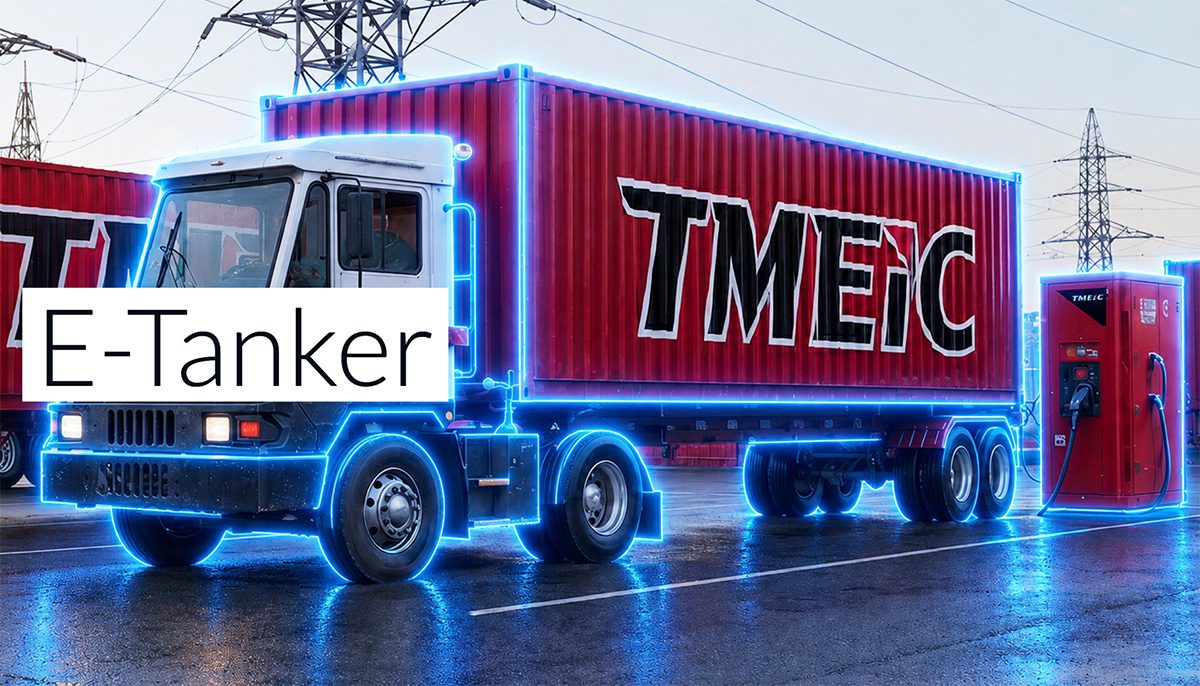
In a significant step towards decarbonizing global port operations, TMEIC, the U.S. subsidiary of Japan-based Toshiba Mitsubishi-Electric Industrial Systems Corporation, has officially launched an innovative mobile charging system. Named the E-Tanker, this solution is engineered to empower port terminals to swiftly convert their diesel-powered Rubber-Tired Gantry (RTG) cranes to battery-electric power, addressing a critical challenge in maritime sustainability.
The introduction of the E-Tanker signifies a strategic shift in how port infrastructure can adapt to cleaner energy sources. Its design directly tackles the complexities and high costs traditionally associated with electrifying heavy port machinery, paving the way for more efficient and environmentally responsible logistics chains worldwide.
Revolutionizing Port Electrification with the E-Tanker
The newly unveiled E-Tanker system represents a comprehensive approach to crane electrification. It integrates several advanced components working in unison, all orchestrated by TMEIC’s proprietary intelligent Fleet Management System (FMS).
At its core, the system comprises a mobile lithium-ion battery charging unit, which eliminates the need for fixed charging infrastructure that often requires substantial civil engineering work. Complementing this are high-energy battery blocks specifically designed for adaptability, and dedicated charging stations strategically placed within the terminal.
The Mobile Charging Unit: A Game Changer
The defining feature of the E-Tanker is its mobility. The entire mobile charging unit is ingeniously housed within a standard 40-foot container, allowing it to be effortlessly transported across the terminal by existing terminal tractors. This design ensures that the charging infrastructure can be deployed precisely where and when it is needed, minimizing disruptions to ongoing port activities.
This inherent flexibility is crucial for bustling port environments where space is at a premium and operational continuity is paramount. A single E-Tanker unit possesses the capacity to serve multiple RTG cranes, thereby offering a scalable solution that can support broader electrification initiatives across an entire terminal or even multiple facilities.
Adaptable Battery Blocks for Seamless Integration
Another key innovation lies in the E-Tanker’s compact battery blocks. These units are engineered for seamless adaptation to existing crane structures. This design philosophy is critical as it eradicates the necessity for extensive yard redesigns or costly grid upgrades, which are often significant deterrents to electrification projects.
By integrating with current crane models, the system effectively preserves terminal capacity and uptime. Port operators can upgrade their fleets without facing prolonged periods of machinery downtime, which translates directly into sustained operational efficiency and profitability.
Intelligent Fleet Management for Optimized Operations
Central to the E-Tanker’s effectiveness is its integration with TMEIC’s advanced Fleet Management System (FMS). This intelligent platform provides port operators with real-time, comprehensive visibility into their yard operations, transforming how battery-electric fleets are managed.
The FMS offers critical data points, including the battery state of charge for each crane, current job assignments, precise charging schedules, and overall operational priorities. Such detailed insights empower terminals to optimize the utilization of their assets, ensure cranes are charged efficiently, and maximize productivity across the entire port environment.
Addressing the Decarbonization Imperative in Ports
The global maritime industry is under increasing pressure to reduce its carbon footprint, with ports serving as critical nexus points for emissions. Diesel-powered RTG cranes are recognized as significant contributors to this environmental challenge, accounting for a substantial portion of a terminal’s fuel consumption.
Suraj Mishra, Business Development Manager at TMEIC, emphasized the profound impact of these cranes. “Diesel-powered RTG cranes can account for up to 75% of a terminal’s fuel consumption, making them a high-impact starting point for decarbonization,” Mishra stated. This highlights the strategic importance of targeting these machines for electrification to achieve meaningful environmental benefits.
Overcoming Traditional Electrification Hurdles
Historically, electrifying large-scale port equipment like RTG cranes has been fraught with challenges. Traditional methods, such as installing cable reels or bus bar systems, often present significant logistical and infrastructural hurdles.
These conventional approaches frequently clash with existing yard layouts, necessitating extensive civil engineering work. Such projects typically involve substantial retrofit downtime, which is a major concern for terminals that operate 24/7 and cannot afford prolonged interruptions to their cargo handling operations.
The E-Tanker solution fundamentally redefines this paradigm. As Mishra elaborated, “While traditional cable reel and bus bar approaches clash with yard layout constraints and involve significant civil work and retrofit downtime, the E-Tanker solution introduces a new crane electrification paradigm. Terminals can transition to cleaner, battery-electric operations quickly and cost-effectively without redesigning their yards or taking cranes offline for weeks.”
Impact on Operational Efficiency and Sustainability Goals
The rapid and cost-effective transition offered by the E-Tanker system is expected to yield substantial benefits for port operators. Beyond the immediate reduction in diesel fuel consumption and associated emissions, the system promises enhanced operational agility and improved resource management.
By facilitating an easier shift to battery-electric power, terminals can not only meet increasingly stringent environmental regulations but also bolster their sustainability credentials. This positions them favorably within a global supply chain that is increasingly valuing eco-friendly practices and reduced carbon intensity.
Furthermore, the data-driven insights provided by the FMS enable more predictive maintenance, optimized charging cycles, and better overall planning of crane movements. This integration of smart technology with mobile power solutions represents a significant leap forward in smart port development, contributing to both environmental stewardship and economic viability.
The launch of TMEIC’s E-Tanker mobile charging system offers a compelling solution for the global maritime industry’s ambitious decarbonization targets, particularly within the critical segment of port logistics. It demonstrates a practical pathway for existing terminals to embrace cleaner energy without sacrificing operational continuity or incurring prohibitive costs.
FAQ Section
What is TMEIC’s E-Tanker mobile charging system?
The E-Tanker is a mobile charging solution introduced by TMEIC’s U.S. subsidiary, designed to convert diesel-powered Rubber-Tired Gantry (RTG) cranes at port terminals to battery-electric power. It comprises a mobile lithium-ion charging unit, adaptable battery blocks, charging stations, and an intelligent Fleet Management System.
How does the E-Tanker help ports decarbonize?
It enables terminals to replace diesel fuel with battery-electric power for RTG cranes, which account for up to 75% of a terminal’s fuel consumption. This significantly reduces greenhouse gas emissions and reliance on fossil fuels, aligning with global sustainability goals for the maritime industry.
What makes the E-Tanker different from traditional electrification methods?
Unlike traditional cable reel or bus bar systems, the E-Tanker does not require extensive civil work, yard redesigns, or significant retrofit downtime. Its mobile nature and adaptable battery blocks allow for quick, cost-effective integration into existing terminal operations without disrupting capacity or uptime.
Can one E-Tanker unit serve multiple cranes?
Yes, the E-Tanker mobile charging unit is designed to serve multiple RTG cranes. This feature provides scalability and flexibility for terminals looking to electrify their crane fleets, optimizing asset utilization and minimizing infrastructure investment per crane.
What role does the Fleet Management System (FMS) play in the E-Tanker solution?
The intelligent FMS provides real-time visibility into yard operations, tracking battery state of charge, job assignments, charging schedules, and operational priorities. This data allows terminals to optimize asset use, enhance operational efficiency, and make informed decisions for battery-electric crane deployment and charging.
Will the E-Tanker require significant changes to existing port infrastructure?
No, a key benefit of the E-Tanker is its design to minimize infrastructure impact. Its compact battery blocks adapt to existing cranes, and the mobile charging unit eliminates the need for extensive yard redesigns or major grid upgrades, preserving current terminal capacity and operational flow.
When was the TMEIC E-Tanker system introduced?
TMEIC introduced its mobile charging system, the E-Tanker, on June 3, 2026. This launch marks a notable advancement in providing practical, scalable solutions for electrifying heavy machinery in the global port and logistics sector.