
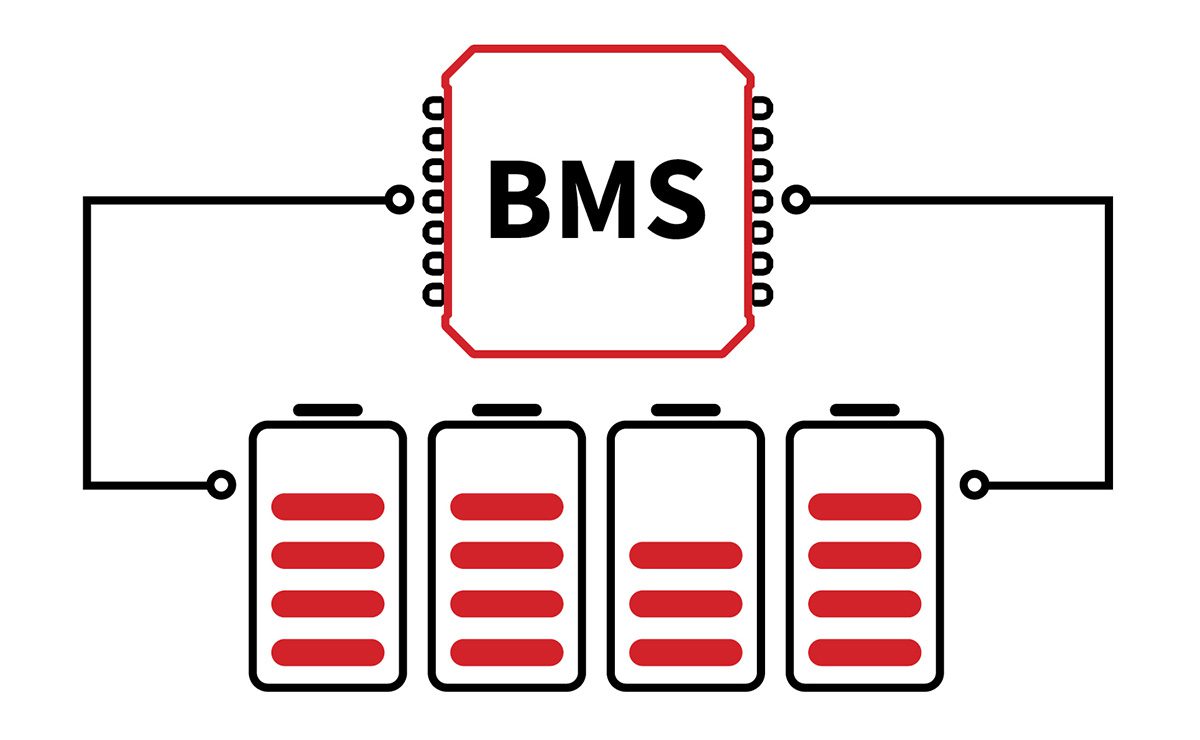
E-mobility engineers are increasingly relying on off-the-shelf Battery Management Systems (BMS) equipped with third-party functional safety certifications. These solutions, often advertised as SIL-rated or ASIL-rated, present an appealing ‘drop-in’ answer for complex battery pack designs.
However, a critical assessment reveals that this reliance might be fostering a false sense of security, potentially overlooking fundamental aspects of e-mobility battery safety.

Industry experts are now cautioning that such certifications, while valuable, frequently fail to address the specific, intricate failure modes inherent to lithium-ion battery chemistry at a granular level.
The Deceptive Promise of Off-the-Shelf Certifications
The allure of a certified BMS is undeniable. It suggests that the challenging problem of ensuring battery safety has been comprehensively solved by a third party, simplifying the design process for e-mobility applications.
Yet, this perception may not align with the actual scope of many existing certifications. Rich Byczek, Global Chief Engineer for Batteries at Intertek, has highlighted a significant blind spot in this approach.

During a recent webinar, Byczek underscored the limitations, stating, “Certified BMS systems, meaning certified systems that have functional safety certifications from a third party, don’t necessarily address these functions. They just look at the controller as a more generic electrical system.”
The Gap in Functional Safety Assessment
The core issue lies in the typical focus of these certifications. Most evaluations assess the controller hardware against general integrity standards, such as IEC 61508 for functional safety of electrical/electronic/programmable electronic safety-related systems, ISO 26262 for road vehicles, or ISO 13849 for safety of machinery.
These standards are crucial for verifying the overall reliability and robustness of the electronics. They confirm that the hardware is built to a certain quality and will generally perform as intended under specified conditions.
However, what they often omit is the verification of critical battery-specific functions. This includes the monitoring of individual cell voltages, the precise management of cell-level temperature limits, and the intelligent handling of the specific failure modes unique to lithium-ion chemistry.
Without explicit assessment of these battery-centric parameters, a certified BMS might be functionally safe as a generic controller but potentially inadequate for the nuanced requirements of e-mobility battery safety.
Beyond the Pack: The Criticality of Cell-Level Monitoring
One of the most significant shortcomings of relying solely on generic certifications manifests in the realm of passive protection mechanisms. Many battery packs incorporate a fuse designed to interrupt a gross overcurrent event, acting as a critical safety measure.
While such pack-level fuses are essential, they offer a macro-level safety net. They are inherently blind to events occurring at the individual cell level within a series string of batteries.
Dangers of Passive Protection in E-Mobility
An individual cell pushed past its voltage limits, whether due to overcharge or overdischarge, or experiencing localized overheating, represents a significant hazard. A pack-level fuse cannot detect or react to such localized anomalies until they escalate to a catastrophic pack-wide event.
Effective e-mobility battery safety necessitates active, per-cell monitoring. This involves sophisticated BMS architectures capable of continuously measuring and managing parameters for each individual cell.
A generic certified controller, designed without specific consideration for lithium-ion battery characteristics, may simply lack the necessary inputs, outputs, and internal logic to deliver this vital per-cell monitoring capability.
Byczek elaborated on this distinction, emphasizing the need for a granular approach. “We look at those at the cell level, not only at the macro or battery pack level,” he stated, highlighting the inadequacy of only monitoring at the broader pack level.
The implications of this oversight are particularly severe in e-mobility. Unlike a stationary battery or a small portable device, an e-mobility battery powers a vehicle upon which a user is physically present.
Legacy standards like IEC 62133, designed for portable devices, often rely on type tests and single-fault evaluations. These were conceived for products a user could easily set down and walk away from if a fault occurred.
E-mobility presents an entirely different risk profile. “You’re literally riding on top of that battery, potentially going at a fairly high speed,” Byczek explained, underscoring that in such scenarios, one “can’t just get away from it.” This fundamental difference elevates the imperative for robust, cell-level e-mobility battery safety.
Elevating Safety: A New Paradigm for E-Mobility
Addressing this ‘certified BMS trap’ requires a more proactive and battery-specific approach to functional safety. The solution, while not overly complex, demands a dedicated effort from engineering teams.
The focus must shift from merely selecting a certified component to rigorously validating its suitability for the unique demands of lithium-ion e-mobility battery systems at every critical juncture.
FMEA: The Indispensable First Step
The foundational step in achieving comprehensive e-mobility battery safety is to initiate a thorough Failure Modes and Effects Analysis (FMEA). This FMEA must specifically cover every safety-critical function that the Battery Management System is expected to perform.
Crucially, this analysis must be conducted at the individual cell level, not just at the broader battery pack level. The FMEA should systematically evaluate potential failure modes such as overvoltage, undervoltage, overcharge, overdischarge, over- and under-temperature conditions, short circuits, and excessive current flows.
Once these cell-level hazards and their effects are identified, engineers must then rigorously verify that their chosen controller, regardless of its existing certifications, possesses the architectural capability and necessary inputs/outputs to detect, mitigate, and respond to each identified hazard effectively.
A certified controller should be viewed as a foundational building block, an excellent starting point for reliable hardware. However, it should never be considered the ultimate finish line for e-mobility battery safety certification or design.
Navigating Functional Safety Standards
For engineering teams working on e-mobility battery safety, understanding the interplay of various functional safety standards is crucial. Standards like Safety Integrity Level (SIL) from IEC 61508, Automotive Safety Integrity Level (ASIL) from ISO 26262, and Performance Levels (PL) from ISO 13849 do not offer a direct one-to-one mapping.
However, regulators and certification bodies increasingly accept cross-framework approaches. The key requirement is that the overall risk assessment demonstrably covers every identified hazard across the battery system’s lifecycle.
For BMS systems in e-mobility, the typical target safety levels often fall within SIL 2, ASIL B, or PLc. It is important to note that the specific designation of the safety level is often less critical than the demonstrable proof that the system is designed to fail safely.
This includes robust handling of scenarios where a sensor drifts out of calibration, a resistor opens prematurely, or a communication link drops unexpectedly. The ability of the system to revert to a safe state or prevent a hazardous condition under various fault conditions is paramount.
Extending Safety Protocols to Diverse E-Mobility Applications
The insights regarding rigorous e-mobility battery safety are particularly pertinent for engineering teams transitioning from established automotive EV programs into adjacent markets. These markets include, but are not limited to, forklifts, floor scrubbers, autonomous guided vehicles, and a wide array of personal mobility devices.
While the batteries in these applications might be physically smaller or operate at lower power levels compared to passenger electric vehicles, the fundamental safety obligations remain consistently high. The potential for injury, property damage, or operational disruption from battery failures does not diminish with the size of the battery.
Engineers entering these burgeoning e-mobility sectors must carry forward the lessons learned from automotive safety, adapting them meticulously to their specific product applications. This ensures that the robust safety culture, developed for mainstream EVs, permeates all segments of the expanding e-mobility landscape.
Charting a Safer Future for E-Mobility
The proliferation of e-mobility solutions across various industries underscores the urgent need for a sophisticated and comprehensive approach to battery management system design and certification. Relying solely on general functional safety certifications for BMS components risks undermining the foundational principles of e-mobility battery safety.
The expert perspectives shared by figures like Rich Byczek serve as a vital call to action for the industry. They highlight that true functional safety in e-mobility batteries is achieved not just through generic compliance, but through a deep, cell-level understanding and mitigation of specific lithium-ion failure modes.
Engineers are encouraged to adopt a paradigm where a certified controller is seen as an excellent starting point, but a rigorous, cell-level safety analysis and architectural verification remain the ultimate determinants of a genuinely safe and reliable e-mobility battery system. For further in-depth understanding, Rich Byczek’s complete presentation on applying functional safety to e-mobility battery systems is available on demand, offering invaluable insights for practitioners.