
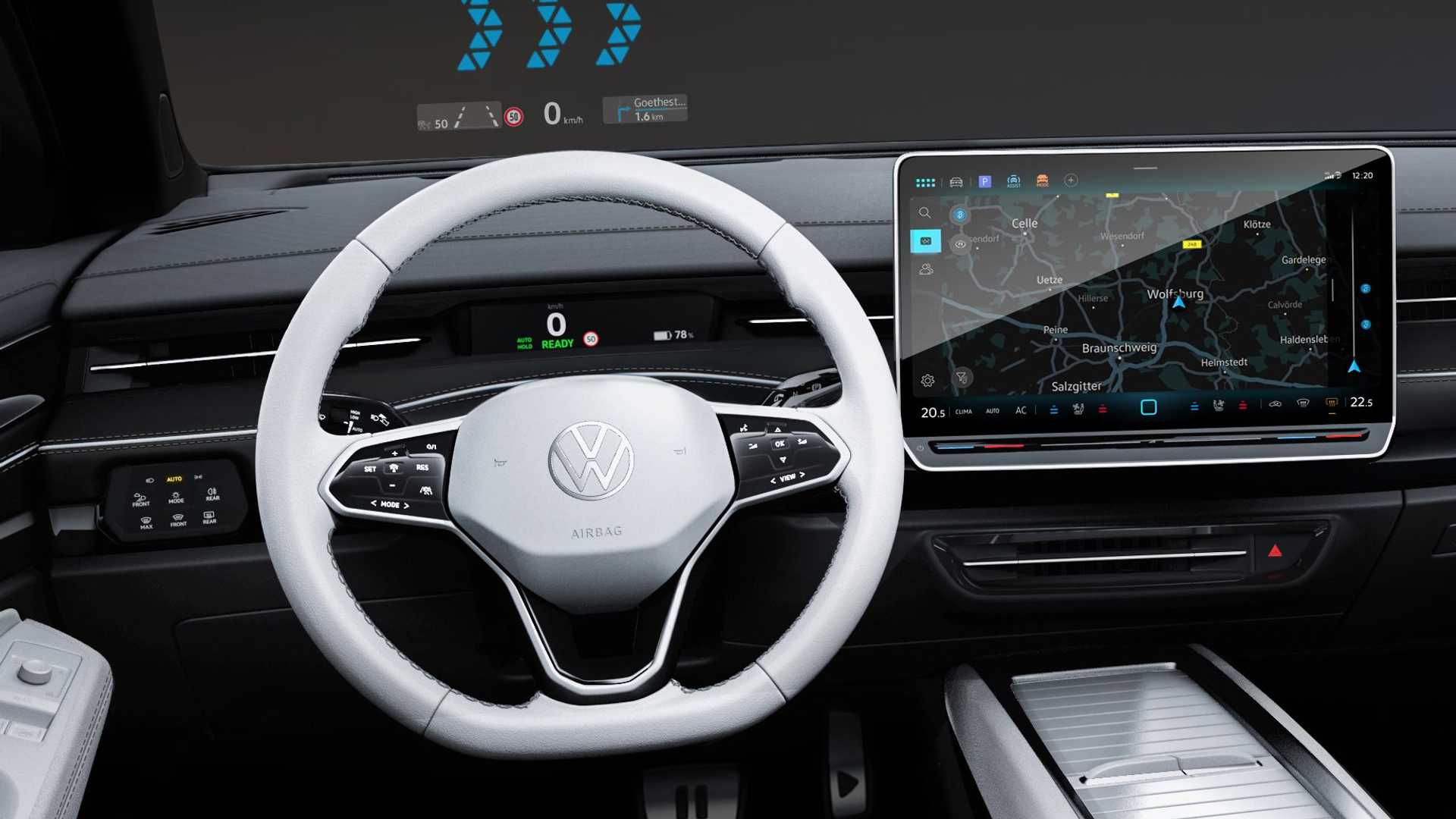
Volkswagen Group’s dedicated software arm, Cariad, faces a formidable challenge as its financial performance continues to register significant operating losses. The division, once envisioned as a pivotal enabler for the German automotive giant’s digital future, has accumulated over $7.5 billion in operating losses over the past three years, prompting a strategic recalibration that includes substantial workforce reductions.
Key Takeaways (TL;DR)
- Volkswagen Group’s Cariad software division reported an operating loss of $2.64 billion (€2.431 billion) in the past year, marking its third consecutive year of significant losses.
- Despite increasing revenue to $1.44 billion (€1.327 billion), the operating deficit widened compared to the previous year.
- Cumulatively, Cariad has recorded over $7.5 billion in operating losses since 2022 against nearly $3.5 billion in revenue.
- Software issues at Cariad have directly led to market launch delays for critical electric vehicles like the Porsche Macan Electric and Audi Q6 E-Tron.
- Volkswagen Group plans to lay off 1,600 employees at Cariad by the end of the year, acknowledging a necessary ‘rescaling of operations’.
- The division’s future strategy involves leveraging external expertise, including a significant investment in Rivian, to develop its next-generation electrical architecture and Level 4 driver assistance systems.
Cariad’s Mounting Financial Headwinds
Volkswagen Group’s software division, Cariad, has consistently underperformed financially since its inception. The latest figures from Volkswagen Group’s 2024 financial report reveal an operating loss of $2.64 billion (€2.431 billion) for the past year alone.

This substantial deficit comes despite an increase in sales revenue, which reached $1.44 billion (€1.327 billion) last year, up from $1.17 billion (€1.078 billion) in 2023. The rising revenue, attributed to higher licensing fees from vehicles utilising Cariad software, was insufficient to offset the escalating operational costs.
Three Years of Deepening Losses
The trend of deepening financial losses for Volkswagen Group’s Cariad software division has been persistent. In 2023, the company posted a $2.6 billion (€2.392 billion) loss, following a $2.28 billion (€2.1 billion) loss in 2022. During that same 2022 period, revenue stood at $870 million (€800 million).
Collectively, the division has racked up over $7.5 billion in operating losses between 2022 and 2024. This contrasts sharply with total revenues of nearly $3.5 billion over the same timeframe, underscoring a significant challenge in achieving profitability and operational efficiency.

The increase in sales revenue last year, while positive, did not correspond with an increase in overall vehicle sales for the Volkswagen Group. The group’s total sales figures dipped from 9.24 million cars in 2023 to 9.02 million, representing a 2.3% decrease. This suggests that while more existing vehicles are running Cariad software, the broader market dynamics also play a role in the division’s performance.
Operational Challenges and Project Delays
The financial struggles of Volkswagen Group’s Cariad software division are inextricably linked to significant operational challenges and software development hurdles. These issues have directly impacted the market launch schedules of several high-profile electric vehicles (EVs) across the Volkswagen portfolio.
Both the Porsche Macan Electric and the Audi Q6 E-Tron, critical models in the premium EV segment, experienced year-long delays. These postponements were explicitly attributed to software troubles originating from Cariad, highlighting the central role and responsibility of the division in the Group’s product roadmap.
Early Software Issues and Leadership Shakeup
Beyond new model delays, early software versions embedded in existing Volkswagen EVs, such as the ID.4 and ID.5, were widely criticised for freezing and glitching. These initial quality issues further cemented concerns regarding the software division’s capabilities and its impact on customer experience.
The persistent problems led to a major restructuring within Cariad’s leadership. In 2023, a new chief operating officer, chief technology officer, and finance director were appointed. This significant shakeup signalled Volkswagen Group’s intent to address the deep-rooted issues and steer the software division towards more effective development and delivery.
Following these leadership changes, there have been improvements, with newer and more stable software versions being released. However, the path to full operational health and optimal performance for the Volkswagen Group’s Cariad software division remains ongoing and complex.
Strategic Rescaling and Workforce Adjustments
In response to the persistent financial losses and operational inefficiencies, Volkswagen Group is implementing a significant restructuring within Cariad. A key component of this overhaul involves substantial workforce reductions, impacting a notable portion of the division’s employees.
According to a report by *Handelsblatt*, Volkswagen Group plans to lay off 1,600 people at Cariad by the end of the year. This move aligns with the Group’s official acknowledgment in its 2024 financial results, where it stated that a “rescaling of operations is planned.”
These layoffs represent a critical step in streamlining the Volkswagen Group’s Cariad software division, aiming to reduce overheads and refocus its strategic priorities. With nearly 6,000 employees worldwide, this workforce adjustment will significantly alter the division’s structure and operational capacity, underscoring the severity of the challenges faced.
Cariad’s Genesis and Evolving Mandate
Cariad was established in 2020, initially known as the Car.Software Organization. Its foundational purpose was to centralise and innovate software development across the vast Volkswagen Group, aiming to create a uniform operating system and a standardised electrical architecture for all future vehicles.
This ambitious mandate sought to bring software development in-house, reducing reliance on external suppliers and enhancing control over the digital experience offered in Volkswagen vehicles. The vision was to transform Volkswagen into a technology company, not just an automotive manufacturer.
Project Trinity and the Shift in Strategy
One of Cariad’s flagship assignments was to develop the software for Volkswagen’s highly anticipated EV, Project Trinity. However, repeated delays and developmental setbacks forced the Volkswagen Group to revise its strategy, ultimately leading to the decision to restart the project from scratch.
This strategic pivot highlighted the immense complexities of modern automotive software development and the challenges faced by an established automotive giant in rapidly scaling up its digital capabilities. The setback with Project Trinity underscored the need for a revised approach to accelerate development.
Future Trajectory: Leveraging External Expertise
The future trajectory for Volkswagen Group’s Cariad software division will increasingly involve strategic partnerships and the integration of external expertise. A significant development in this regard is Volkswagen Group’s substantial $5.8 billion investment in Rivian, an American electric vehicle manufacturer.
This investment is not merely financial; it signals a critical shift towards leveraging Rivian’s established software capabilities. According to *Automotive News*, the revamped flagship architecture for future Volkswagen EVs will integrate Rivian’s software know-how.
This collaboration is particularly crucial for advanced functionalities, including Level 4 driver assistance systems. By integrating proven technology and expertise, Volkswagen aims to accelerate its software development cycle, reduce time-to-market for advanced features, and mitigate the risks associated with entirely in-house development. This strategic alliance represents a pragmatic approach to overcoming past challenges and achieving the ambitious software goals central to Volkswagen Group’s long-term EV strategy.
The Broader Implications for Volkswagen Group
The performance of Volkswagen Group’s Cariad software division is more than just a departmental issue; it has profound implications for the entire automotive conglomerate. In an era where software defines the user experience, vehicle functionalities, and even safety, the successful integration of advanced digital systems is paramount for Volkswagen’s competitive standing.
Addressing Cariad’s challenges effectively is crucial for the Group’s transition into the electric and digitally connected vehicle future. The strategic overhaul, including workforce adjustments and the Rivian partnership, represents Volkswagen’s firm commitment to resolving these issues and ensuring that its software capabilities can truly underpin its ambitious EV roadmap, securing its position in the evolving global automotive landscape.
Frequently Asked Questions (FAQ)
What is Volkswagen Group’s Cariad software division?
Cariad is the Volkswagen Group’s dedicated software subsidiary, established in 2020. Its primary mission is to develop a uniform operating system, electrical architecture, and advanced software features for all vehicles across the Group’s diverse brands, aiming to standardise and innovate digital capabilities.
Why has Cariad been facing financial losses?
Cariad has incurred significant operating losses due to high research and development costs, the complexities of creating a unified software platform, and operational inefficiencies. Despite increasing revenue from software licensing, expenses have consistently outpaced income, leading to over $7.5 billion in losses since 2022.
How have Cariad’s software issues affected Volkswagen Group vehicles?
Software development challenges at Cariad have led to substantial delays in key electric vehicle launches, including the Porsche Macan Electric and Audi Q6 E-Tron. Earlier software versions in models like the Volkswagen ID.4 and ID.5 also experienced bugs and glitches, impacting initial customer satisfaction.
What steps is Volkswagen Group taking to address Cariad’s problems?
Volkswagen Group has implemented a major leadership shakeup at Cariad, appointing new executives to key roles. Additionally, the Group plans to lay off 1,600 employees by the end of the year as part of a significant ‘rescaling of operations’ to improve efficiency and refocus strategic priorities.
How will Volkswagen’s investment in Rivian impact Cariad?
Volkswagen’s $5.8 billion investment in Rivian is a strategic move to leverage external software expertise. The partnership aims to integrate Rivian’s proven software know-how into Cariad’s development of the next-generation electrical architecture and advanced Level 4 driver assistance systems, accelerating progress and mitigating risks.
What is Project Trinity and its relevance to Cariad?
Project Trinity was Volkswagen’s ambitious flagship EV, for which Cariad was initially tasked with developing the software. Due to multiple delays and developmental setbacks, the Group decided to restart Project Trinity from scratch, signifying a major hurdle in Cariad’s early development efforts and prompting a re-evaluation of its approach.