
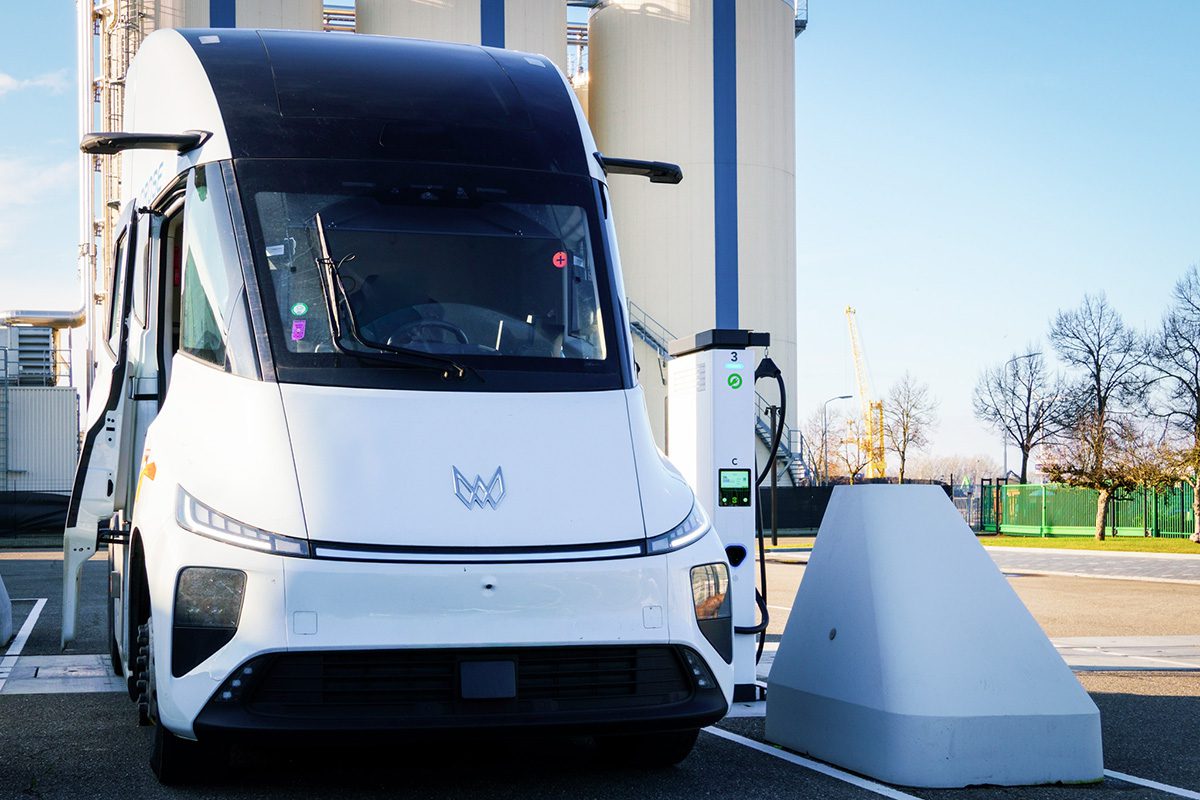
In a significant development for the electric heavy-duty vehicle sector, Chinese electric truck manufacturer Windrose and European EVSE (Electric Vehicle Supply Equipment) provider Autel Europe have successfully demonstrated a real-world Megawatt Charging System (MCS) session. The trial took place at a customer site in Roosendaal, Netherlands, marking a crucial step in the transition of MCS technology from pilot projects to commercial application.
Advancing Megawatt Charging for Heavy-Duty Electric Trucks
The Megawatt Charging System is designed to deliver power levels of up to 3.75 megawatts, a necessity for rapidly charging large, heavy-duty electric trucks. This latest collaboration between Windrose and Autel showcases the reliable interoperability between Autel’s advanced charging infrastructure and Windrose’s electric truck platform, all operating under the MCS standard in actual site conditions.

This successful deployment is vital for accelerating the adoption of electric trucks in commercial fleets, addressing the critical need for fast and efficient charging solutions that can support demanding operational schedules. The ability to charge at megawatt speeds significantly reduces downtime, making electric trucking a more viable and competitive option.
Technical Specifications of the Roosendaal Installation
The charging installation in Roosendaal is a sophisticated setup, highlighting the modular and scalable nature of Autel’s MCS solutions. It comprises three Autel MaxiCharger DS480 charging cabinets. These cabinets are connected in parallel to create a powerful 1,440 kW charging system.
Complementing the charging cabinets is an Autel MaxiCharger DT1500 dispenser. This dispenser is engineered to deliver up to 1.2 MW of power through its MCS interface, capable of handling a maximum current of 1,500 A. This high current capability is a hallmark of the MCS standard, enabling the rapid energy transfer required for large batteries.

In addition to its megawatt charging capabilities, the dispenser also supports CCS (Combined Charging System) charging. It can deliver up to 650 A continuously via CCS, offering flexibility and compatibility with a wider range of electric vehicles, including those that may not yet be equipped with MCS connectors.
Key Innovations in Power Delivery and Thermal Management
The advanced system integrates several critical technologies to ensure reliable and efficient megawatt charging. A key feature is the use of liquid-cooled cable technology. This is essential for managing the significant heat generated when delivering such high power levels, ensuring the safety and longevity of the equipment and the vehicle’s charging port.
Furthermore, the installation benefits from coordinated power conversion, which optimizes the flow of electricity from the grid to the vehicle. A stable communication architecture is also integrated, ensuring seamless and secure data exchange between the charging station and the electric truck. This communication is crucial for managing the charging process safely and effectively, particularly at high power levels.
Industry Perspective on Megawatt Charging System Deployment
Andreas Lastei, Vice President of Autel Smart Energy Europe, emphasized the comprehensive nature of megawatt charging. He stated, “Megawatt charging is not defined solely by higher power levels. It requires coordinated system design across power conversion, thermal management, communication stability and site integration.”
Lastei further elaborated on the importance of collaboration with vehicle manufacturers. “Collaborating with vehicle manufacturers such as Windrose allows us to validate interoperability under real operating conditions and align infrastructure architecture with actual heavy-duty vehicle requirements. This type of technical collaboration is essential to ensuring that megawatt infrastructure can be deployed reliably and scaled sustainably across Europe.”
This statement highlights that the successful implementation of MCS goes beyond just the charging hardware; it necessitates a holistic approach involving close cooperation between charging infrastructure providers and vehicle manufacturers. This ensures that the infrastructure meets the specific, demanding needs of heavy-duty electric vehicles and can be scaled effectively to support the growing electric truck market across Europe and beyond.
The Future of Heavy-Duty Electric Mobility
The successful demonstration of the Megawatt Charging System by Windrose and Autel in a real-world setting is a clear indicator of the rapid progress in electrifying the heavy-duty transport sector. As more electric trucks enter the market and charging infrastructure like this becomes more widespread, the transition to sustainable freight transport is set to accelerate.
The MCS standard is poised to become a critical enabler for long-haul electric trucking, tackling the range and charging time challenges that have previously limited adoption. This development is a significant positive step for fleet operators looking to reduce their carbon footprint and operational costs.