
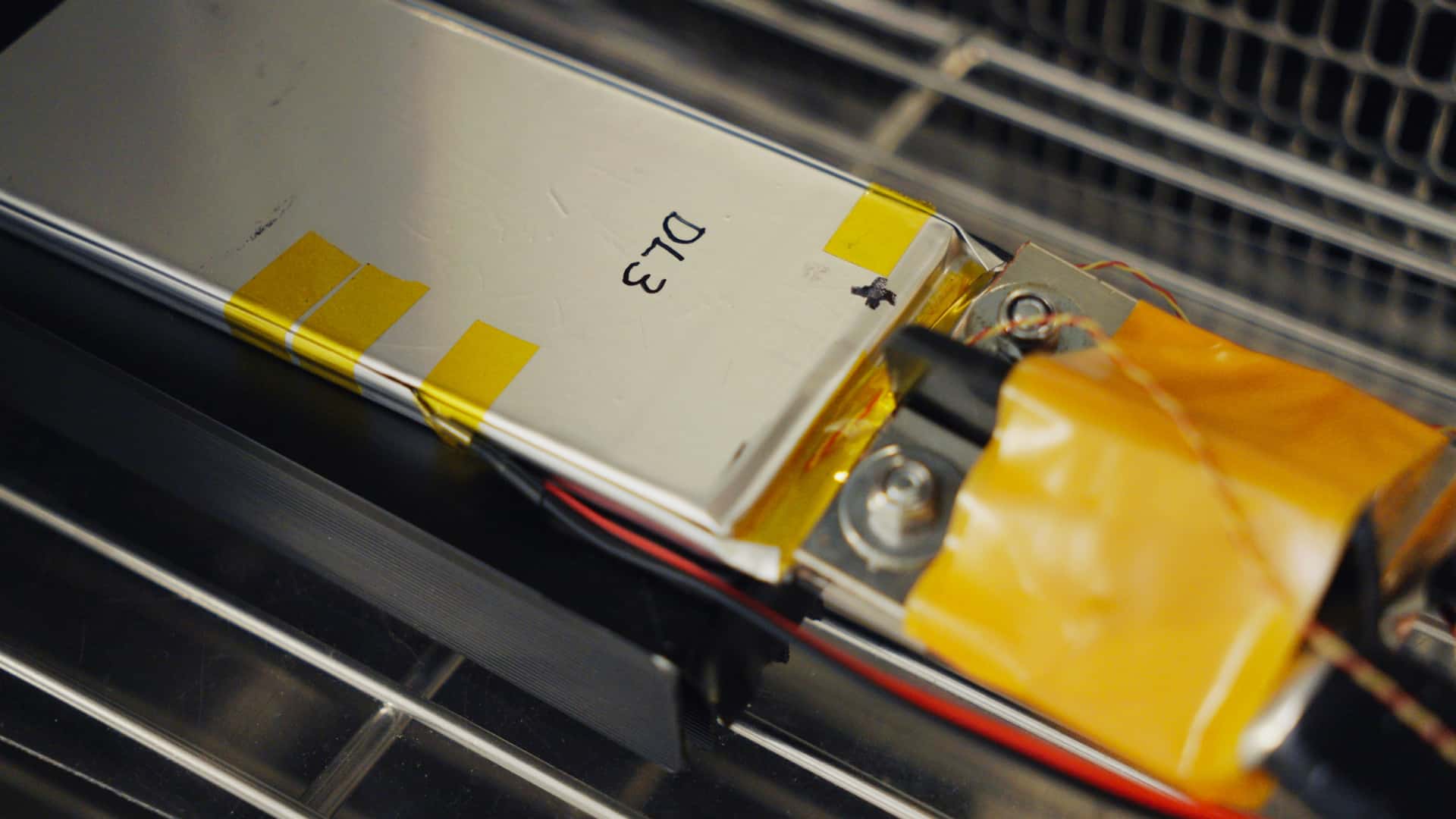
Finnish startup Donut Lab has released the second set of independent test results for its purported solid-state electric vehicle (EV) battery. While the latest data showcases the battery’s performance at extreme temperatures, industry experts remain cautious, citing a lack of comprehensive information necessary to validate the company’s ambitious claims about real-world viability.
High-Temperature Stability Under Scrutiny
The recent tests, conducted by the VTT Technical Research Centre of Finland, subjected Donut Lab’s solid-state battery cell to temperatures reaching up to 100 degrees Celsius (212 degrees Fahrenheit) – significantly higher than the optimal operating range for conventional lithium-ion batteries.
At 80 degrees Celsius (176 degrees Fahrenheit), the battery reportedly delivered 110.5% of its capacity compared to its performance at 20 degrees Celsius (68 degrees Fahrenheit). This suggests that the battery’s chemistry may operate more efficiently at elevated temperatures. Following this high-temperature discharge, the cell was recharged without apparent damage, indicating continued normal performance.
The testing was further intensified by raising the temperature to 100 degrees Celsius (212 degrees Fahrenheit), the boiling point of water. In this extreme condition, the battery cell again outperformed its room-temperature benchmark, providing 107% of its normal capacity. It subsequently recharged without issue.
This resilience at high temperatures is a notable contrast to standard lithium-ion batteries, which typically experience reduced efficiency and can become unstable or suffer permanent damage as temperatures rise. Studies indicate that the ideal operating range for lithium-ion batteries is between 25-40 degrees Celsius (77-104 degrees Fahrenheit).

Potential Concerns Emerge Amidst Positive Results
Despite the seemingly positive outcomes at high temperatures, a significant observation was made following the 100 degrees Celsius test: the outer pouch of the Donut Lab battery lost its “vacuum.” This development has raised concerns among battery scientists.
Eric Wachsman, a professor at the University of Maryland’s Department of Materials Science and Engineering specializing in solid-state batteries, explained that the loss of vacuum could indicate a breach in the cell’s “hermetic seal.” This seal is crucial for preventing external air from contaminating the sensitive internal chemistry of the battery.
Wachsman noted, “Pouch cells will tend to expand due to internal pressure as they can give off gas during cycling. It’s clear they experienced excessive swell after a few cycles,” he commented, referencing images that appeared to show swelling after high-temperature tests when compared to earlier fast-charging demonstrations.
While the implications of this pouch issue for safety and long-term performance are not yet fully understood, it adds another layer of complexity to the ongoing evaluation of Donut Lab’s technology.
Expert Skepticism Over Limited Data
Industry experts have consistently voiced skepticism regarding Donut Lab’s extraordinary claims, particularly due to the perceived lack of verifiable proof, patent disclosures, or live demonstrations since the initial announcement. The company has stated its solid-state battery is production-ready, with specifications including 400 watt-hours of energy density (double that of current lithium-ion cells), a five-minute charge time, a wide operating temperature range of -30C to 100C (-22F to 212F), a lifespan of 100,000 cycles, and the absence of rare earth materials. These claims are intended to address common EV anxieties related to range and charging speed.
The company is currently responding to this skepticism by releasing independent test results. The recent high-temperature test follows a prior demonstration of its fast-charging capabilities.
However, a significant point of contention remains the limited scope of the provided data. Professor Wachsman emphasized that for a battery to be considered commercially relevant, it must demonstrate stability with minimal capacity fade (less than 10-20%) over thousands of cycles. “Without that, the tests are essentially meaningless,” he stated.
The application of a 2.4-kilogram steel plate for mechanical pressure during charging and discharging in these tests, while potentially relevant for certain structural considerations, does not fully replicate the complex operational environment of an EV battery pack over its lifespan.
The Path Forward for Solid-State Batteries
Solid-state batteries are widely regarded as a “holy grail” technology in the EV sector, promising greater driving range, reduced charging times, and enhanced safety compared to existing lithium-ion technology. However, achieving mass production of these batteries without defects presents substantial manufacturing challenges, a problem acknowledged by numerous CEOs in the solid-state battery startup space.
Donut Lab has indicated that further independent test results are forthcoming. The company’s disclosures regarding energy density figures and battery chemistry remain key areas of interest for the industry. Until these crucial details are provided and thoroughly validated through extensive testing over thousands of cycles, the definitive performance and viability of Donut Lab’s solid-state battery technology will remain subject to ongoing scrutiny and debate.