
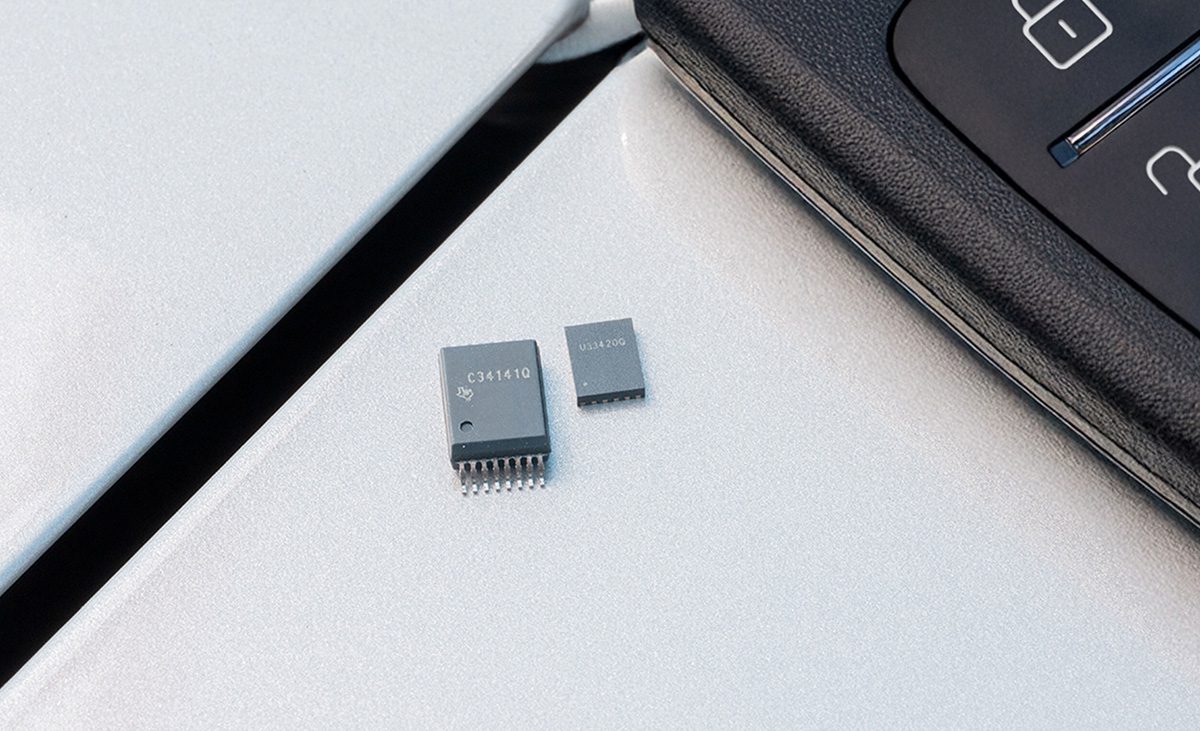
In a significant advancement for high-growth sectors like electric vehicles (EVs) and data centers, Texas Instruments (TI) has unveiled two innovative isolated power modules. These new components leverage TI’s proprietary IsoShield packaging technology, promising to deliver unprecedented levels of power density and remarkable space-saving capabilities for critical electronic designs.
The newly introduced UCC34141-Q1 and UCC33420 modules represent a pivotal step in power management. By integrating a planar transformer and an isolated power stage within a single, compact multichip package, TI has engineered a solution capable of achieving up to three times the power density compared to conventional discrete isolated-power designs. This innovative approach also results in a substantial reduction in solution size, shrinking designs by as much as 70%.

Revolutionizing Power Management with IsoShield Technology
The core of this innovation lies in TI’s IsoShield packaging technology. This advanced packaging integrates multiple crucial components into a single, highly optimized unit. Traditional isolated power designs often rely on numerous discrete components, which consume considerable board space and can complicate thermal management. By consolidating these elements, IsoShield simplifies design, enhances reliability, and significantly boosts performance metrics.
Each module is designed to provide up to 2 Watts (W) of power, catering to a range of low to mid-power isolation requirements. A critical feature is their robust isolation capabilities, supporting functional, basic, and reinforced isolation. This versatility ensures they can be deployed across various applications where electrical separation is paramount for safety, signal integrity, and system reliability.
Impact on Electric Vehicle Power Electronics
The automotive industry, particularly the EV sector, stands to benefit immensely from these advancements in power density and miniaturization. EV engineers are constantly challenged to design lighter and more efficient systems to extend range, improve performance, and reduce overall vehicle weight. The compact nature of TI’s new isolated power modules directly addresses these demands.

In EV power electronics, these modules are ideal for distributed power architectures. Modern electric vehicles increasingly rely on a network of interconnected electronic control units (ECUs) and power conversion systems. Ensuring robust isolation within these distributed systems is crucial for protecting sensitive electronics from high-voltage transients and ensuring passenger safety.
Furthermore, the high power density of the UCC34141-Q1 and UCC33420 can contribute to more compact onboard chargers, battery management systems (BMS), and auxiliary power supplies. By shrinking the physical footprint of these components, engineers can allocate more space for critical elements like battery cells or passenger comfort, or simply reduce the vehicle’s overall weight, thereby enhancing energy efficiency.
TI emphasizes that this packaging approach also plays a vital role in avoiding single-point failures, a critical consideration in functional-safety-oriented designs prevalent in the automotive industry. Achieving high levels of functional safety (e.g., ISO 26262 compliance) requires components that offer inherent reliability and fault tolerance, which these new isolated power modules are engineered to provide.
Enhancing Data Center Efficiency and Footprint
Beyond automotive applications, the burgeoning data center industry is another key beneficiary. Data centers are under relentless pressure to cram more processing power into smaller footprints while simultaneously improving energy efficiency and maintaining uncompromising levels of reliability and safety. The ability of TI’s new modules to deliver more power from a significantly smaller package is a game-changer for this sector.
In data centers, every millimeter of rack space is valuable. These compact isolated power modules enable power supply designers to create more power-dense solutions, facilitating higher computational density within existing infrastructure. This can lead to reduced operational costs, improved thermal management, and a more sustainable computing environment.
The enhanced power density allows for the deployment of more servers, storage units, or networking equipment within the same physical space, directly impacting a data center’s capacity and throughput. Moreover, the robust isolation properties contribute to the overall reliability of data center infrastructure, protecting sensitive digital circuits from common-mode noise and ground potential differences, which are pervasive in large-scale power distribution networks.
Product Details and Availability
Texas Instruments has launched two distinct modules to cater to varying application requirements. The UCC34141-Q1 is engineered as a mid-voltage device, supporting input voltages ranging from 6 V to 20 V. It is housed in a compact 5.85 mm x 7.5 mm x 2.6 mm package, making it suitable for a wide array of industrial and automotive applications where moderate voltage isolation is necessary.
Conversely, the UCC33420 is a low-voltage 5 V module, presented in an even smaller 4 mm x 5 mm x 1 mm package. Its diminutive size makes it ideal for highly space-constrained applications, such as power-over-ethernet (PoE) systems, compact sensing solutions, or wherever minimal board space is available without compromising isolation integrity.
Both the UCC34141-Q1 and UCC33420 isolated power modules are currently available for purchase, enabling immediate integration into new designs. To support rapid development cycles, TI is also providing comprehensive resources including evaluation modules, detailed reference designs, and sophisticated simulation models. These tools are designed to assist engineers in quick prototyping, validation, and optimization of their power management solutions using the new IsoShield technology.
Texas Instruments’ Commitment to Innovation
This launch underscores Texas Instruments’ enduring commitment to pushing the boundaries of analog and embedded processing technology. As industries like EV and data centers continue their rapid evolution, the demand for highly efficient, compact, and reliable power electronics solutions will only intensify. TI’s IsoShield technology addresses these critical market needs by offering a foundational component that enables next-generation designs.
By focusing on innovative packaging and integration, TI is not only delivering higher performance but also simplifying the design process for engineers worldwide. The ability to achieve superior power density and reduce solution size by a significant margin positions these new isolated power modules as crucial enablers for future technological advancements across diverse high-voltage and power-sensitive applications.