
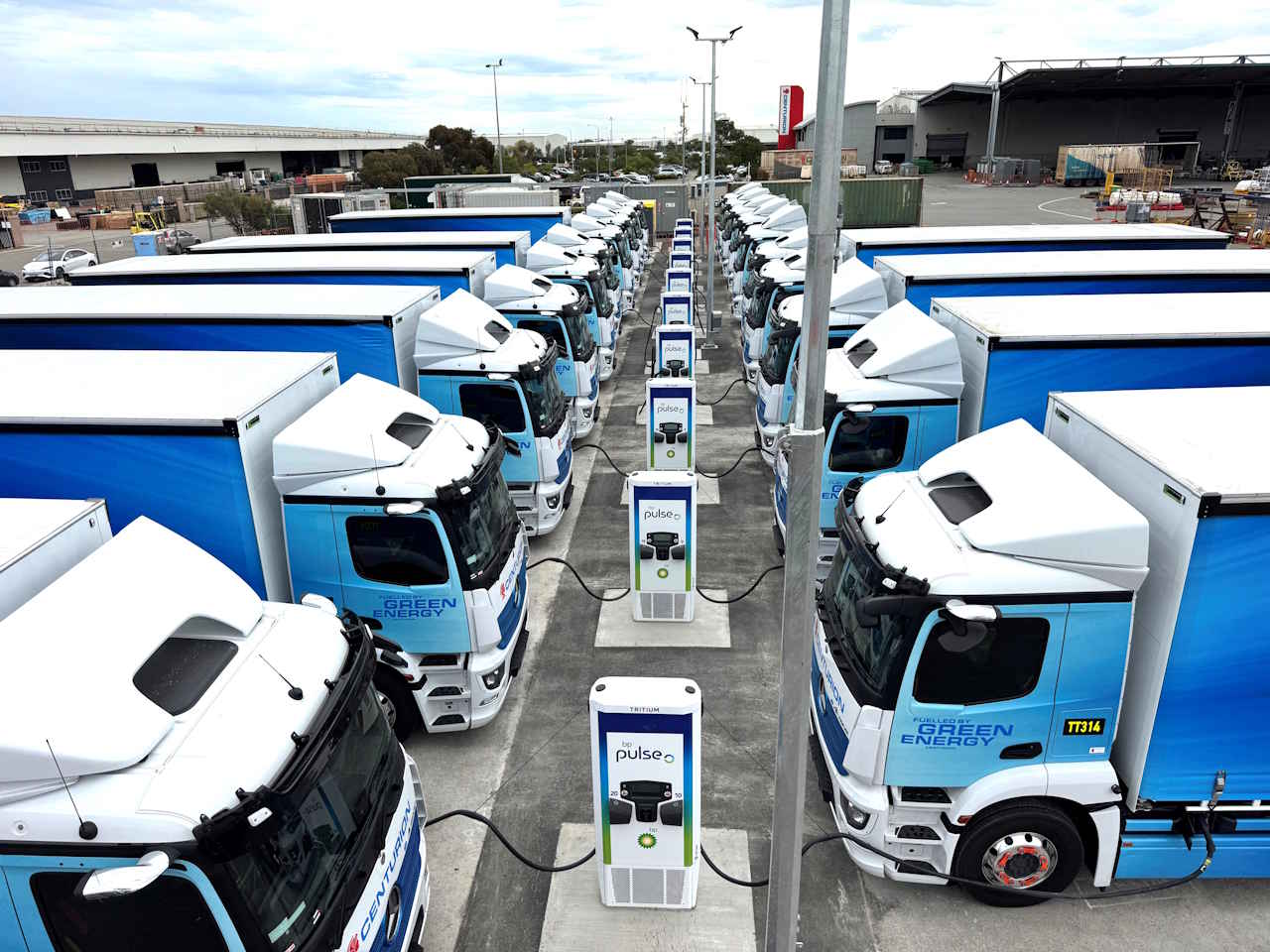
Melbourne, Victoria – In a strategic move to bolster its vital freight industry, the Victorian Labor government has unveiled two comprehensive programs designed to steer businesses towards greater fuel independence and embrace cleaner transport options. The initiatives aim to alleviate the financial pressures of soaring fuel costs while simultaneously modernising fleets and operations across the state.
Applications are now officially open for these groundbreaking programs, which are set to empower freight operators with crucial investments in low- and zero-emission vehicles, essential infrastructure, and cutting-edge technology. This dual approach underscores the government’s commitment to supporting the sector through immediate economic challenges and fostering long-term environmental sustainability.

Driving Economic Relief and Environmental Progress
The newly launched Freight Decarbonisation Co-Investment Program and the Victorian Electric Heavy Vehicle Trial collectively target a dual objective: significantly reducing operational costs for freight businesses and enhancing their efficiency. This strategic intervention is particularly timely, offering a direct response to the persistent pressures of the recent global fuel crisis that has impacted operators across the supply chain.
Melissa Horne, the state minister for ports and freight, underscored the urgency and benefits of these initiatives. “We know the cost of fuel is hurting our freight operators which is why rolling out these programs will help freight businesses cut costs, boost efficiency and modernise their fleets for the future,” Minister Horne stated. She further emphasised the practical advantages for businesses: “We’re making it easier for operators to save on running costs while transitioning to cleaner, more reliable technology.”
Victoria’s Crucial Freight Sector: A Snapshot
Victoria’s freight industry is an indispensable pillar of the state’s economy, serving as the backbone for commerce and connectivity. The sector is a significant employer, providing livelihoods for approximately 240,000 individuals across various roles, from logistics to transportation.

Annually, this robust network is responsible for moving an staggering volume of goods, with approximately 440 million tonnes of freight transported each year. Experts project this figure to continue its upward trajectory in the coming decades, highlighting the critical need for resilient, cost-effective, and environmentally responsible transport solutions.
The Freight Decarbonisation Co-Investment Program: Empowering SMEs
A cornerstone of Victoria’s commitment to cleaner transport is the Freight Decarbonisation Co-Investment Program, backed by an substantial $8 million in funding. This program is specifically tailored to support small- and medium-sized freight businesses engaged in the movement of goods by road or rail.
Eligible businesses can secure grants of up to $300,000, designed to facilitate significant investments. These funds can be directed towards acquiring cleaner, low- and zero-emission vehicles, developing essential charging infrastructure, transitioning to low-emissions fuels, and integrating innovative new technologies into their operations.
A key feature of the program is its co-investment requirement, ensuring a shared commitment to the transition. Successful grant recipients are required to contribute cash at a rate of 1:5. This means that for a maximum grant of $300,000, businesses must provide a co-investment of $60,000 in cash, demonstrating a tangible stake in their decarbonisation journey.
The expression of interest phase for the Freight Decarbonisation Co-Investment Program is currently underway, with a critical deadline approaching. Interested parties must submit their expressions of interest by 4:00pm on Wednesday, 22 April 2026. Further detailed information regarding eligibility criteria, application guidelines, and program specifics is available here.
The Victorian Electric Heavy Vehicle Trial: Real-World Experience
Complementing the co-investment program is the $1.5 million Victorian Electric Heavy Vehicle Trial. This initiative is being delivered in close partnership with the Victorian Transport Association (VTA), a key industry body representing the state’s transport and logistics sector.
The trial’s primary objective is to equip freight businesses with invaluable real-world experience in operating electric heavy vehicles. This practical exposure is crucial for understanding the operational nuances, performance capabilities, and infrastructure requirements associated with zero-emission heavy transport, thereby building industry confidence and knowledge.
As of the time of this report, the Victorian government has indicated that additional details regarding the structure, participants, and specific outcomes of the trial are yet to be publicly disclosed. Further updates will be provided as information becomes available, allowing for a clearer understanding of the trial’s scope and expected impact.
Industry Endorsement and Future Vision
The announcement of these pivotal programs has been met with significant approval from industry leaders. The Victorian Transport Association (VTA) was among the first to warmly welcome the initiatives, highlighting the government’s forward-thinking approach.
Peter Anderson, CEO of the VTA, commended the state government for its understanding of the challenges ahead. He praised the administration for “recognising the scale of the decarbonisation challenge and for supporting freight operators with meaningful, hands‑on programs.” This endorsement from a leading industry voice underscores the perceived value and practicality of the new support schemes.
Anderson further elaborated on the VTA’s consistent advocacy for a carefully planned transition towards cleaner technologies. “The VTA has consistently advocated for a measured, informed transition so that freight companies can adopt cleaner technologies when it makes operational and commercial sense,” he stated. This perspective highlights the importance of practical, commercially viable solutions for businesses.
Reflecting on the long-term nature of this industry shift, Anderson concluded, “While this shift will take years, the most important step is beginning with knowledge, clarity, and a plan.” His remarks underscore the foundational importance of these government programs in providing the necessary framework and support for Victoria’s freight sector to embark on a sustained journey towards a more sustainable and fuel-independent future.