
Key Takeaways:
- Walmart is rapidly expanding its proprietary electric vehicle (EV) fast charging network across the United States.
- The retail giant increased its DC fast charging stations by 50% in just two months, demonstrating a significant acceleration in deployment.
- Currently, the network boasts over 200 high-powered connectors, with ambitions to install thousands more across its vast retail footprint by 2030.
- These state-of-the-art stations exclusively feature 400-kilowatt chargers, supporting both NACS and CCS1 standards for broad compatibility.
- Texas leads with the highest concentration of Walmart’s EV charging network, indicating strategic regional focus in its initial rollout.
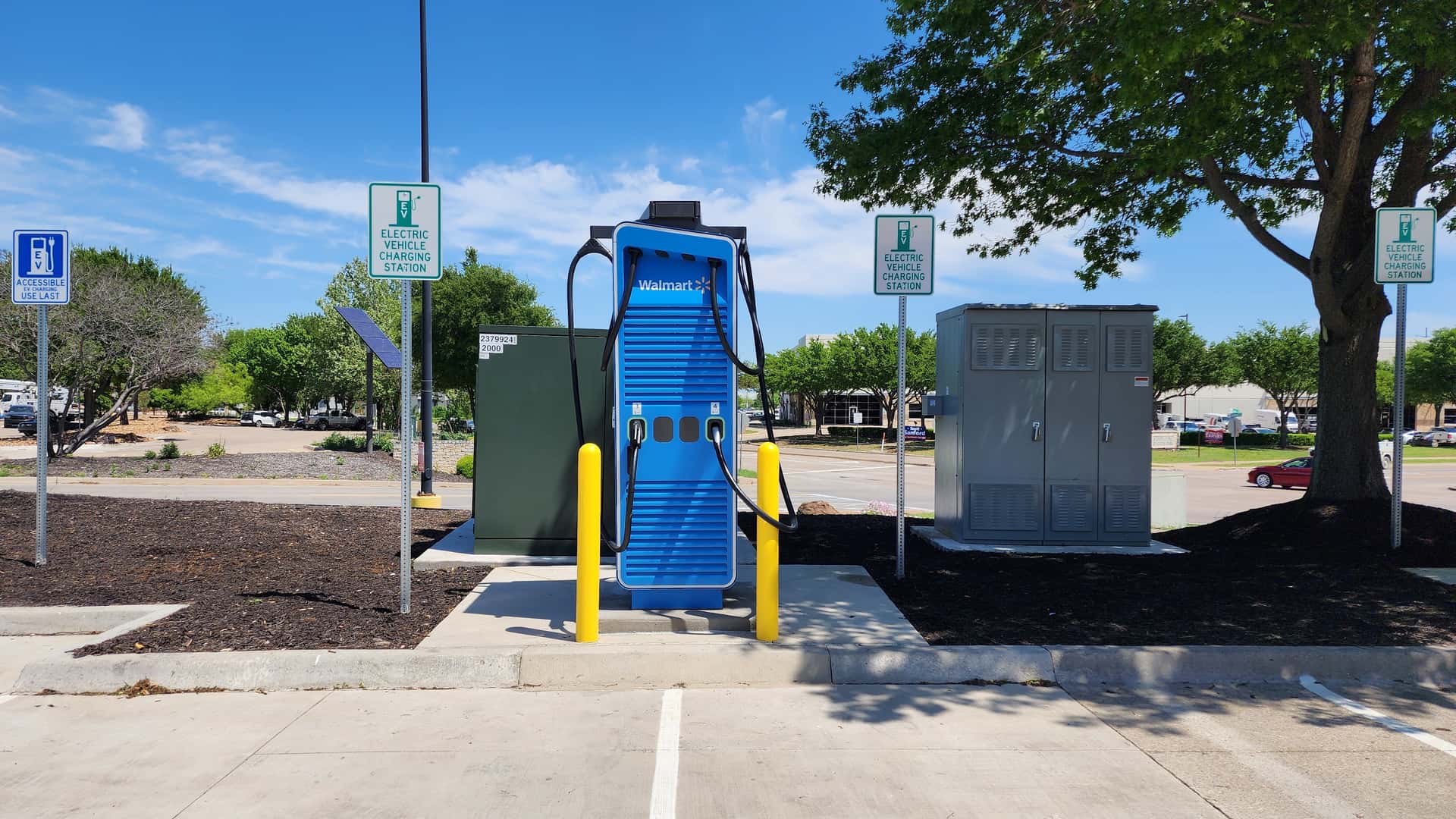
BENTONVILLE, ARKANSAS – Walmart, the world’s largest retailer, is significantly accelerating its commitment to electric vehicle infrastructure, rapidly expanding its proprietary DC fast charging network across the United States. The company has dramatically increased its number of operational stations, signaling a robust entry into the competitive EV charging market.

In a span of just two months, Walmart’s dedicated EV charging network has seen a remarkable 50% growth, reaching over 200 ports. This aggressive expansion underscores the retail behemoth’s strategic push to integrate sustainable transportation solutions within its extensive retail ecosystem.
Rapid Expansion Trajectory and Ambitious Targets
Data from the Department of Energy’s Alternative Fuels Data Center, corroborated by insights from EVChargingStations.com, confirms that Walmart now operates 31 DC fast charging stations. These stations collectively offer 224 high-powered connectors, which translate to 112 individual dispensers strategically positioned at various store locations nationwide.
The pace of this expansion marks a distinct shift from the initial rollout phase. The first Walmart-branded charging locations became operational in April of last year, with the network reaching 10 stations by November 2023. This figure doubled to 20 stations by February, demonstrating a progressive scaling.

The recent surge to 31 stations within two months highlights an invigorated focus on infrastructure development. The company has made it clear that this is merely the beginning, with plans to install fast chargers at “thousands of its locations by 2030,” and a vision for even more extensive coverage in the subsequent decade.
Technological Edge: High-Powered, Universal Charging
Walmart’s commitment to cutting-edge technology is evident in its choice of charging hardware. The company exclusively deploys 400-kilowatt chargers, sourcing them from industry leaders such as Alpitronic or ABB. These high-power units are designed to deliver rapid charging speeds, significantly reducing the time electric vehicle owners spend recharging.
Each individual charging stall is equipped with dual compatibility, featuring both a North American Charging Standard (NACS) cable and a Combined Charging System 1 (CCS1) port. This dual provision ensures that a broad spectrum of electric vehicles, irrespective of their charging port design, can access Walmart’s EV charging network, offering maximum convenience for a diverse customer base.
The adoption of 400-kilowatt charging capabilities positions Walmart at the forefront of DC fast charging technology. Such high-power output is critical for reducing charging times, making long-distance travel and quick top-ups more feasible for EV drivers. This technological choice also future-proofs the network, anticipating the growing battery capacities and faster charging capabilities of next-generation EVs.
Strategic Entry into the EV Charging Business
While Walmart stores have historically hosted thousands of DC fast chargers from third-party operators, notably Electrify America, the retail giant initiated its own branded EV charging network in 2023. This strategic pivot signifies a move towards greater control over the customer experience and an opportunity to leverage its vast real estate portfolio more directly.
By operating its own charging infrastructure, Walmart aims to create a seamless experience for its customers, integrating EV charging with their shopping routines. This move allows the company to differentiate its offering and directly contribute to the nationwide charging ecosystem, rather than solely relying on external partners.
This vertical integration into the EV charging sector aligns with global trends where major corporations are actively investing in sustainable technologies and infrastructure. For Walmart, it represents an opportunity to enhance its brand image, attract a growing segment of EV-driving consumers, and potentially create new revenue streams.
Geographical Footprint and Accessibility
The current deployment of Walmart’s EV charging network demonstrates a targeted geographical rollout. Texas currently leads all states with 15 Walmart EV charging stations, highlighting its importance as a key market for electric vehicle adoption and infrastructure development.
Following Texas, Arizona hosts six stations, Florida has three, and Oklahoma is equipped with two. Additionally, states such as Alabama, Arkansas, Georgia, New Jersey, and South Carolina each have one Walmart EV charging station. This distribution indicates a strategic approach to cover major regions and provide essential charging stops along key transportation corridors.
The placement of these charging stations at Walmart stores offers unparalleled convenience for electric vehicle owners. Shoppers can top up their vehicle’s battery while running errands, transforming what was once a dedicated stop into a productive multi-tasking opportunity. This integration of charging with daily activities is crucial for accelerating broader EV adoption.
User Experience, Pricing, and Future Implications
Accessing Walmart’s EV chargers is streamlined through the company’s dedicated smartphone application. The network currently operates without physical card readers at its stalls, making the app the exclusive method for initiating and completing charging sessions. This digital-first approach aligns with modern consumer preferences for app-based services and payments.
While specific pricing may vary by location, the average cost for utilizing Walmart’s EV charging network stands at $0.48 per kilowatt-hour. This pricing structure positions Walmart within the competitive landscape of public DC fast charging, aiming to provide a value-driven service to its customers.
Walmart’s ambitious plans for its EV charging network are set to have a significant impact on the wider electric vehicle market. By drastically increasing the availability of high-speed charging options at its ubiquitous retail locations, the company directly addresses one of the primary concerns for potential EV buyers: range anxiety.
The scale of Walmart’s operations means that its investment in EV charging infrastructure could substantially expand access to reliable and convenient charging, particularly in areas where such facilities might currently be sparse. This retail-led expansion is a crucial component in building a robust national charging ecosystem, supporting the ongoing transition to electric mobility.
Frequently Asked Questions (FAQ)
What is Walmart doing with EV charging?
Walmart is aggressively expanding its own branded DC fast charging network across the U.S. The company aims to install fast chargers at thousands of its store locations by 2030, significantly increasing access to high-speed electric vehicle charging for consumers.
How many EV charging stations does Walmart currently have?
As of recent reports, Walmart operates 31 DC fast charging stations in its proprietary network, which collectively provide 224 high-powered connectors. This represents 112 individual dispensers available for electric vehicle owners to use.
What type of chargers does Walmart use?
Walmart exclusively installs 400-kilowatt DC fast chargers, sourced from reputable manufacturers like Alpitronic or ABB. These chargers are designed for high-speed replenishment of electric vehicle batteries and support both NACS and CCS1 charging standards.
Which states have Walmart EV charging stations?
Currently, Texas leads with 15 Walmart EV charging stations. Other states with stations include Arizona (6), Florida (3), Oklahoma (2), and individual locations in Alabama, Arkansas, Georgia, New Jersey, and South Carolina.
How do I pay for charging at a Walmart EV station?
To use Walmart’s EV chargers, drivers must utilize the store’s dedicated smartphone application. The charging stalls do not feature physical card readers, making the app the sole method for payment and initiating charging sessions.
What is the average cost to charge at Walmart’s EV network?
While pricing can vary by location, the average price for charging at Walmart’s EV network is approximately $0.48 per kilowatt-hour. This pricing is competitive within the broader public DC fast charging market.
Why is Walmart investing in its own EV charging network?
Walmart is strategically investing in its own EV charging network to enhance customer convenience, leverage its extensive real estate, and directly contribute to sustainable transportation infrastructure. This move allows the company to integrate charging with shopping, improving the overall customer experience and attracting EV owners.