
Key Takeaways:
- Walmart’s dedicated EV fast charging network has achieved significant growth, establishing a substantial presence across the United States.
- Within just 15 months of its inception, the retail giant’s charging infrastructure now extends to 17 states, featuring over 600 individual fast charging stalls.
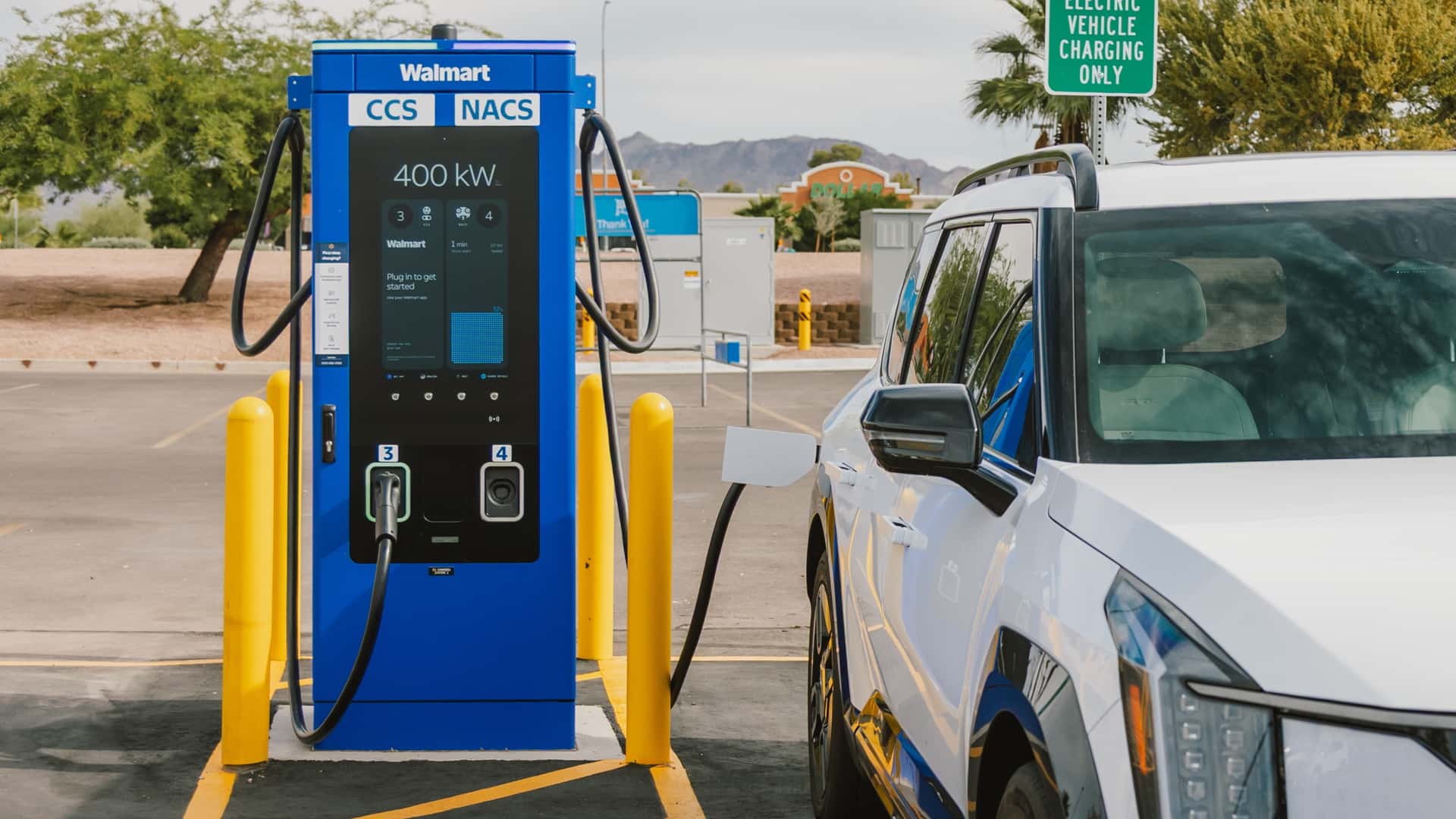
- The network exclusively deploys powerful 400 kW chargers, offering both CCS and NACS connectors to cater to a wide range of electric vehicles.
- Walmart is strategically integrating payment options, including app-based transactions with a 10% discount for Walmart Plus members, and is piloting built-in card readers.
- This rapid expansion signals Walmart’s long-term commitment to enhancing electric vehicle charging accessibility, positioning it as a key player in the evolving EV ecosystem despite fluctuating adoption rate predictions.
Bentonville, Arkansas – Walmart, the prominent American retail conglomerate, is rapidly cementing its position as a major contributor to the nation’s electric vehicle (EV) infrastructure. Its proprietary EV fast charging network has demonstrated impressive growth, achieving significant milestones within just 15 months since its launch.

The retail giant’s proactive venture into electric vehicle charging infrastructure highlights a strategic commitment to sustainability and customer convenience. This initiative aims to address a critical need for accessible and reliable fast charging options, leveraging Walmart’s extensive footprint across the country.
Rapid Expansion and Significant Milestones
Since its launch in April 2025, the Walmart EV charging network has expanded its reach to 17 U.S. states. As of July, the network boasts 73 operational locations, collectively offering 612 individual charging connectors, according to data compiled by YouTuber The Arkansas eTraveler, drawing from PlugShare and various community sources.
While official figures from the Department of Energy’s Alternative Fuels Data Center (AFDC) indicate slightly lower numbers—66 locations and 528 ports for Walmart’s DC charging network—the trend of aggressive expansion remains clear. These discrepancies often reflect the time lag in data updates across different platforms, with community-driven databases sometimes providing more current snapshots.

The growth trajectory has been particularly steep in recent months. In May, the company reported over 300 individual ports across 50 stores in the U.S. This means that, in a span of approximately two months, Walmart effectively doubled its number of available ports for electric vehicle drivers, underscoring the swift pace of its deployment strategy.
Advanced Charging Technology and Universal Compatibility
Central to Walmart’s strategy is its exclusive deployment of high-power 400-kilowatt (kW) chargers. These state-of-the-art units are sourced from leading manufacturers like ABB and Alpitronic, known for their robust and efficient charging solutions.
Each charging stall within the Walmart EV charging network is equipped with dual charging cords, ensuring broad compatibility across the diverse range of electric vehicles currently on the market. One cord features a Combined Charging System (CCS) connector, while the other offers a North American Charging Standard (NACS) connector, catering to both legacy and newer EV models, including those from Tesla.
This dual-connector approach significantly enhances user convenience, removing potential barriers for EV owners concerned about connector compatibility. By offering both standards, Walmart positions its network as a versatile and future-proof charging solution for a wide customer base.
Streamlined Payment Options and Member Benefits
To facilitate a seamless charging experience, Walmart primarily relies on its dedicated smartphone application for managing and processing charging sessions. This app-centric approach allows for quick initiation of charging and efficient payment processing.
In a move to further enhance accessibility, Walmart is also actively trialing chargers equipped with built-in card readers. This innovation aims to provide alternative payment methods for drivers who prefer not to use a smartphone app or for those who may not have downloaded it yet, broadening the network’s appeal.
A significant incentive for loyal customers is the exclusive 10% discount offered to Walmart Plus members. This discount is accessible when payment is processed through the smartphone app. However, it is important to note that EV drivers opting to pay via credit card directly at the charger, where available, will not be eligible for this specific membership benefit, encouraging app usage and membership sign-ups.
Competitive Pricing and Cost Efficiency for EV Drivers
The pricing structure for using the Walmart EV charging network is designed to be competitive, with an average cost of $0.46 per kilowatt-hour (kWh) for energy. This rate is reflective of the high-speed DC fast charging capabilities offered across the network.
Furthermore, several Walmart stations provide off-peak rates, which can significantly reduce the cost of charging for drivers who can schedule their visits during less busy hours. When combined with the aforementioned 10% Walmart Plus membership discount, drivers could potentially save as much as $0.20 per kWh, making charging at Walmart an economically attractive option for many.
These pricing strategies underscore Walmart’s effort to not only build out infrastructure but also to make EV ownership more affordable and convenient for its vast customer base. The ability to combine errands with a fast and reasonably priced charge adds tangible value for EV owners.
Strategic Vision Amidst Evolving EV Adoption Landscape
Walmart’s steadfast investment in its electric vehicle charging network is particularly noteworthy given the current market dynamics. Recent predictions have indicated a potentially weaker-than-expected EV adoption rate in the U.S. for the coming years, leading some companies to re-evaluate their electrification strategies.
However, Walmart’s aggressive expansion signals a long-term commitment that transcends immediate market fluctuations. The company has articulated ambitious plans to blanket the country with thousands of fast chargers across as many of its stores as possible. This vision positions Walmart as a critical facilitator of the broader transition to electric mobility.
By integrating charging stations directly into its retail locations, Walmart provides an invaluable convenience for shoppers. Customers can charge their electric vehicles while they shop, effectively turning what would otherwise be a dedicated charging stop into a productive use of time. This strategy enhances the customer experience and incentivizes EV ownership by reducing range anxiety and improving charging accessibility in everyday routines.
Impact on National EV Infrastructure
The rapid growth of the Walmart EV charging network represents a substantial contribution to the overall electric vehicle infrastructure of the United States. Its strategic placement in diverse locations, often in areas underserved by other charging providers, helps to fill critical gaps in the national charging landscape.
Moreover, the commitment to high-power 400 kW chargers ensures that drivers can achieve significant range replenishment in a short amount of time, a crucial factor for long-distance travel and urban commuting alike. This focus on fast charging capabilities directly addresses a primary concern for many potential EV adopters.
As major retailers continue to invest in this space, the combined efforts will significantly accelerate the availability of reliable charging solutions. Walmart’s initiative is not just about expanding its own services; it’s about playing a vital role in building the robust, accessible infrastructure necessary for the widespread adoption of electric vehicles nationwide.
The Broader Retailer Role in EV Charging
Walmart’s foray into large-scale EV charging is part of a growing trend among major retailers who recognize the strategic advantage of offering electric vehicle charging. By providing charging options, retailers can attract a new demographic of environmentally conscious consumers, encourage longer dwell times at their stores, and enhance overall customer loyalty.
The presence of reliable charging at retail destinations makes the transition to electric vehicles more practical for consumers, embedding charging seamlessly into daily life. This integration helps to normalize EV ownership and reduces the logistical challenges associated with maintaining an electric vehicle.
Walmart’s continued investment, despite prevailing market sentiment regarding EV adoption rates, reinforces the long-term vision that electric vehicles are an integral part of future transportation. Its ambitious plans to expand its network to thousands of locations will undoubtedly play a pivotal role in shaping the accessibility and convenience of EV charging for millions of Americans.
Frequently Asked Questions (FAQs)
Q1: When did Walmart launch its EV charging network?
Walmart launched its dedicated electric vehicle fast charging network in April 2025. In just over a year, it has expanded rapidly to become a significant player in the U.S. EV charging landscape, reflecting the company’s commitment to supporting sustainable transportation solutions for its customers.
Q2: How many charging stalls does Walmart currently have?
As of July, Walmart’s EV charging network features over 600 individual fast charging stalls, spread across 73 locations in 17 U.S. states. The network is undergoing continuous expansion, with the number of ports doubling in just two months recently.
Q3: What type of chargers does Walmart use?
Walmart exclusively uses high-power 400-kilowatt (kW) DC fast chargers. These advanced units are supplied by reputable manufacturers such as ABB and Alpitronic. Each stall is equipped with dual charging cords, offering both CCS and NACS connectors for broad compatibility with various EV models.
Q4: What are the payment options and discounts available?
Payment for charging sessions is primarily managed through Walmart’s smartphone app. A key benefit includes a 10% discount for Walmart Plus members when using the app. The company is also piloting chargers with built-in card readers to offer more diverse payment methods.
Q5: How much does it cost to charge an EV at Walmart?
The average cost to charge an electric vehicle at Walmart’s stations is approximately $0.46 per kilowatt-hour (kWh). Drivers can potentially reduce this cost by up to $0.20/kWh by taking advantage of off-peak rates and the 10% Walmart Plus membership discount, making it a competitive option.
Q6: What are Walmart’s future plans for its EV charging network?
Walmart has ambitious plans to significantly expand its EV charging infrastructure. The company aims to install thousands of fast chargers across as many of its stores as possible nationwide. This aggressive growth strategy underscores its commitment to enhancing EV accessibility and supporting the transition to electric vehicles.
Q7: Why is Walmart investing in EV charging despite market predictions?
Despite some predictions of a weaker-than-expected EV adoption rate in the U.S. for the coming years, Walmart’s continued investment signals a long-term strategic commitment. The retail giant recognizes the long-term growth potential of the EV market and aims to provide convenient services that attract and retain customers, leveraging its extensive physical presence.