
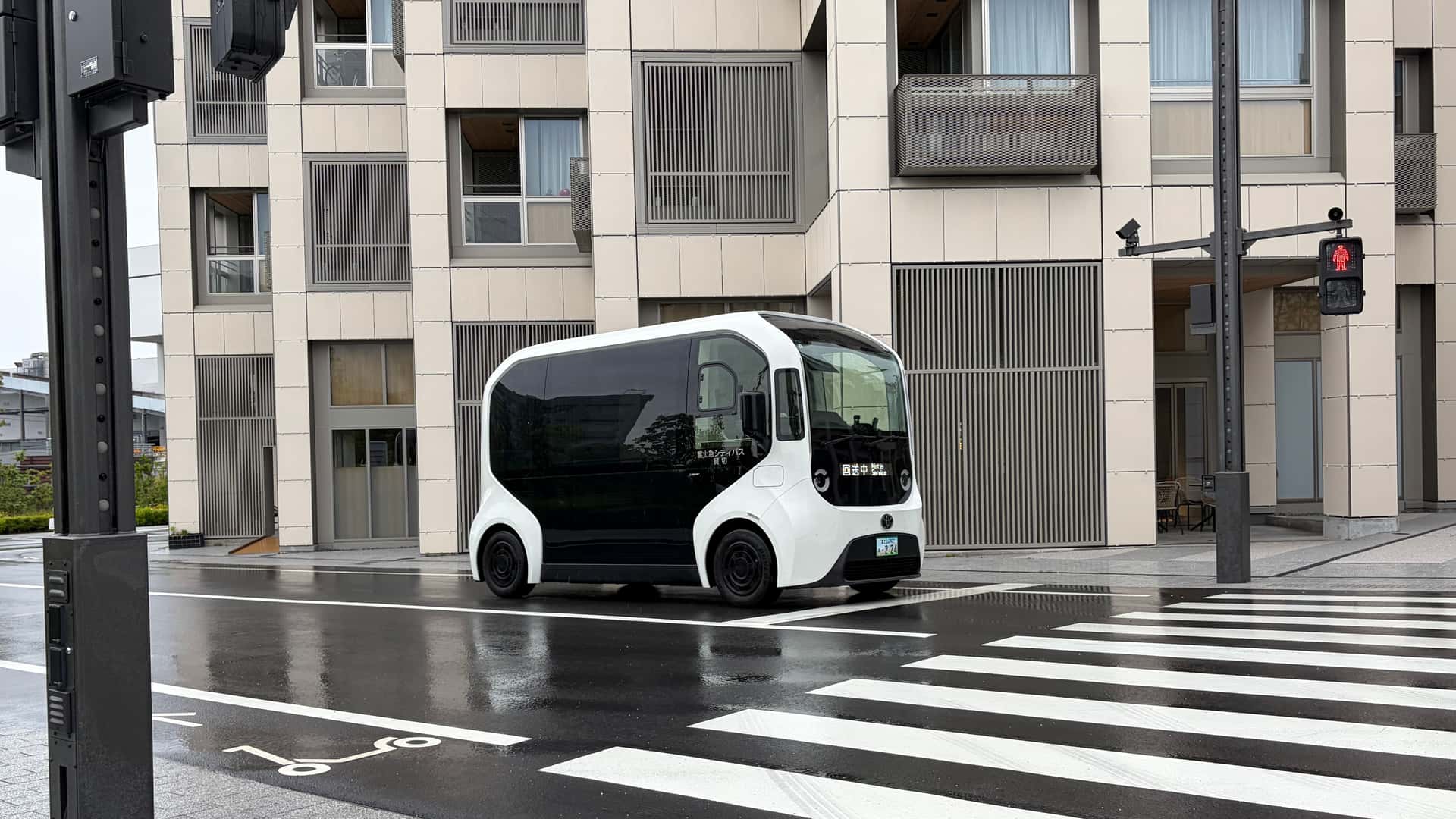
Toyota’s Woven City, an ambitious ‘proving ground for mobility’ situated at the base of Mount Fuji, recently opened its doors, revealing a complex urban laboratory still very much in its nascent stages. From persistent traffic light malfunctions to unexpected city-wide power surges, the challenges highlight the intensive development underway in this futuristic smart city.
Six months since its first residents, dubbed ‘Weavers’, moved in, the living experiment is actively testing a diverse array of advanced technologies. These innovations span autonomous systems, robotics, sustainable energy, and intelligent infrastructure, all aimed at shaping the next generation of urban living and transportation.
Key Takeaways
- Pioneering Urban Laboratory: Toyota Woven City is a real-world ‘proving ground’ near Mount Fuji, designed to test future mobility, smart city concepts, and sustainable living technologies.
- Early Operational Challenges: The city is openly acknowledged as a ‘work in progress,’ with initial glitches like traffic light failures and robotic malfunctions being transparently addressed as part of the learning process.
- Diverse Technological Integration: Projects range from wireless EV charging and autonomous e-Palette buses to advanced delivery robots, hydrogen-powered micromobility, and a virtual power plant.
- Phased Development: Currently in its first phase with 100 residents, Toyota Woven City plans a significant tenfold expansion and a population increase to around 2,000, broadening its research scope.
- Toyota’s Strategic Vision: The initiative underscores Toyota’s transformation from a traditional carmaker into a comprehensive mobility company, confronting evolving industry challenges from EVs to autonomous driving.
The Genesis of Toyota’s Future City Vision
The concept for Toyota Woven City was unveiled six years ago by Akio Toyoda, then-President and now Chairman of Toyota, as a bold commitment to creating a living laboratory for new mobility technologies. This initiative reflects Toyota’s strategic pivot towards becoming a holistic mobility solutions provider, moving beyond its traditional role as an automotive manufacturer.
This forward-looking venture aims to integrate people, buildings, and vehicles in a connected ecosystem, facilitating the continuous development and real-world testing of innovations. The underlying philosophy is to create a ‘human-centric’ city where technology enhances daily life and sustainability.
A Glimpse Inside the Living Laboratory
During a recent visit, the initial impression of Toyota Woven City was one of pristine modernity, characterized by sleek, uniform architecture and an almost serene emptiness. This quietude, partly attributed to the weather during the tour, largely stems from its current stage of development and limited occupancy.
The first phase of the city spans a plot equivalent to a few city blocks, housing several key buildings. Toyota has outlined ambitious plans for future expansion, projecting a tenfold increase in its physical footprint and a resident population growing to approximately 2,000 individuals.
‘Weavers’ and Community Life
Currently, an initial cohort of 100 ‘Weavers’ — all affiliated with Toyota — inhabit the 50 households established within the city. These residents are not merely inhabitants but active participants in the ongoing experiment, providing vital feedback on the technologies integrated into their daily lives.
The city’s environment is meticulously designed to support innovation. At its heart lies the ‘Inventor Garage,’ a repurposed Toyota factory building now serving as a collaborative maker space. Here, various companies involved in projects at Toyota Woven City can develop, refine, and test their products, fostering a dynamic ecosystem of technological advancement.
Pioneering Mobility Technologies on Display
Toyota Woven City serves as a crucible for a broad spectrum of cutting-edge technologies, many of which extend beyond conventional automotive applications. The array of innovations being tested underscores the comprehensive nature of Toyota’s vision for future urban environments.
Autonomous Driving and Connected Infrastructure
A core focus of Toyota Woven City is on achieving ‘zero accidents’ through advanced infrastructure integration. John Absmeier, CTO of Woven by Toyota, highlighted the unique opportunity to experiment with solutions that combine vehicle technology with intelligent street infrastructure.
Central to this is the Woven City AI Vision Engine, which utilizes multiple cameras at every intersection to feed data for accident prevention. This system allows for real-time testing of alerts for approaching drivers if, for instance, a pedestrian runs into an intersection.
The city’s transit system features e-Palette buses, currently human-driven but slated for future autonomy. Additionally, traffic signals are designed to prioritize pedestrians, although this functionality is still under development. These integrated systems represent a concerted effort to create a safer, more efficient urban mobility network.
Advanced Robotics and Delivery Solutions
Robotics plays a crucial role in enhancing efficiency and convenience within Toyota Woven City. One notable innovation is Cocomo, a sidewalk delivery robot developed by a Toyota subsidiary, which is undergoing real-world navigation training both within Woven City and other locations.
For internal logistics, an underground network of tunnels facilitates package delivery. Wheeled robots collect parcels from a central logistics center and transport them to centralized lockers within each building, effectively removing delivery trucks from street level.
Another fascinating development is the Guide Mobi, a stout, three-wheeled robot equipped with a comprehensive sensor array. It enables a car-sharing service where Weavers can summon a Toyota bZ4X crossover via an app. The Guide Mobi robot, positioning itself approximately 10 feet ahead, wirelessly taps into the vehicle’s braking, steering, and acceleration systems to guide it from a parking garage to the curb.
Looking ahead, Toyota plans to introduce helper robots into Weavers’ homes. These domestic robots are envisioned to learn and assist with household chores such as washing dishes and folding laundry, further integrating automation into daily residential life.
Micromobility and Sustainable Energy Innovations
Beyond traditional vehicles, Toyota Woven City is exploring diverse solutions for personal mobility and energy sustainability. The Swake, a unique three-wheeled scooter developed by Toyota, is being tested as part of a shared micromobility service.
Designed for stability and ease of use, the Swake features a large platform for both feet and a butt pad for leaning, aiming to encourage more people to adopt non-car solutions for short distances. Although unavailable during the visit due to weather, indoor demonstrations underscored its potential as a nimble urban transport option.
In the realm of sustainable energy, Denso, a Toyota supplier, is advancing wireless EV charging technology and plans to implement a road with embedded induction charging at the site. Separately, a company is working on compact hydrogen fuel cells, having developed a hydrogen-powered e-bike as a proof of concept for Weavers to test.
The city also hosts a virtual power plant (VPP) proof-of-concept. A parking garage houses 50 city-owned electric vehicles capable of bidirectional charging, feeding power back into the city’s grid. This setup is designed to shave 5-10% off the city’s peak power needs, demonstrating a scalable solution for industrial sites with large vehicle fleets.
Navigating Early Challenges and Iterations
Toyota’s transparent approach to its development is particularly noteworthy. Daisuke Toyoda, a senior vice president at Woven by Toyota and son of Chairman Akio Toyoda, openly shared instances of early operational glitches. These included a traffic light that remained red for an extended period, an unexplained city-wide illumination event, and a robot becoming stuck, requiring manual intervention.
These challenges, rather than setbacks, are viewed as integral to the learning process within an experimental living laboratory. The company emphasizes that such real-world feedback is crucial for refining technologies before broader deployment, showcasing a pragmatic approach to innovation.
Toyota’s Strategic Pivot Towards Future Mobility
The establishment of Toyota Woven City is emblematic of Toyota’s ambitious strategy to redefine itself in a rapidly evolving global automotive landscape. The company, which began by manufacturing looms, aims to transition from the world’s largest car manufacturer to a leading mobility provider.
This transformation is imperative as Toyota navigates intense competition from fast-moving Chinese automakers, Silicon Valley-backed startups like Tesla and Rivian, and the transformative potential of self-driving technologies. These advancements could fundamentally alter the need for personal car ownership.
The Road Ahead for the Smart City
Toyota Woven City represents a significant investment in determining what ‘mobility company’ truly entails in the 21st century. By providing a controlled environment for radical technological experimentation, Toyota aims to uncover innovative solutions that address urban challenges and enhance human well-being.
While the city grapples with initial developmental hurdles, these ‘teething issues’ are a natural part of pioneering complex, integrated systems. The continuous iteration and learning process at Toyota Woven City are expected to yield critical insights, ultimately helping Toyota to shape a more connected, sustainable, and intelligent future for urban populations worldwide.
FAQ Section
What is Toyota Woven City?
Toyota Woven City is an experimental smart city and living laboratory near Mount Fuji, Japan, developed by Toyota. Its primary purpose is to research, test, and develop advanced mobility solutions, sustainable urban living concepts, and intelligent infrastructure in a real-world environment.
Who lives in Toyota Woven City?
The initial phase of Toyota Woven City is inhabited by 100 ‘Weavers,’ comprising 50 households. All residents are currently affiliated with Toyota. They actively participate in testing and providing feedback on the integrated technologies and systems within the city.
What types of technologies are being tested there?
Toyota Woven City tests a wide range of technologies, including autonomous vehicles (e-Palette buses), advanced robotics (delivery robots like Cocomo and Guide Mobi, home helper robots), wireless EV charging, hydrogen fuel cells, smart traffic management systems, and a virtual power plant (VPP) utilizing bidirectional EV charging.
What challenges has Woven City faced?
As a work in progress, Woven City has experienced initial operational glitches. These include a traffic light malfunctioning, city lights turning on unexpectedly, and a robot getting stuck. Toyota transparently shares these issues, viewing them as valuable learning experiences for refining its technologies.
What is the long-term vision for Toyota Woven City?
The long-term vision for Toyota Woven City is to expand its footprint tenfold and grow its population to approximately 2,000 residents. It aims to evolve into a comprehensive ecosystem where advanced technologies enhance safety, sustainability, and quality of life, positioning Toyota as a leader in future mobility solutions.
How does Woven City contribute to Toyota’s future?
Toyota Woven City is central to Toyota’s transformation from a car manufacturer to a mobility company. It allows Toyota to test and integrate diverse technologies, preparing the company to compete in a future shaped by autonomous driving, electric vehicles, and interconnected urban environments, ensuring its relevance in the evolving industry landscape.