
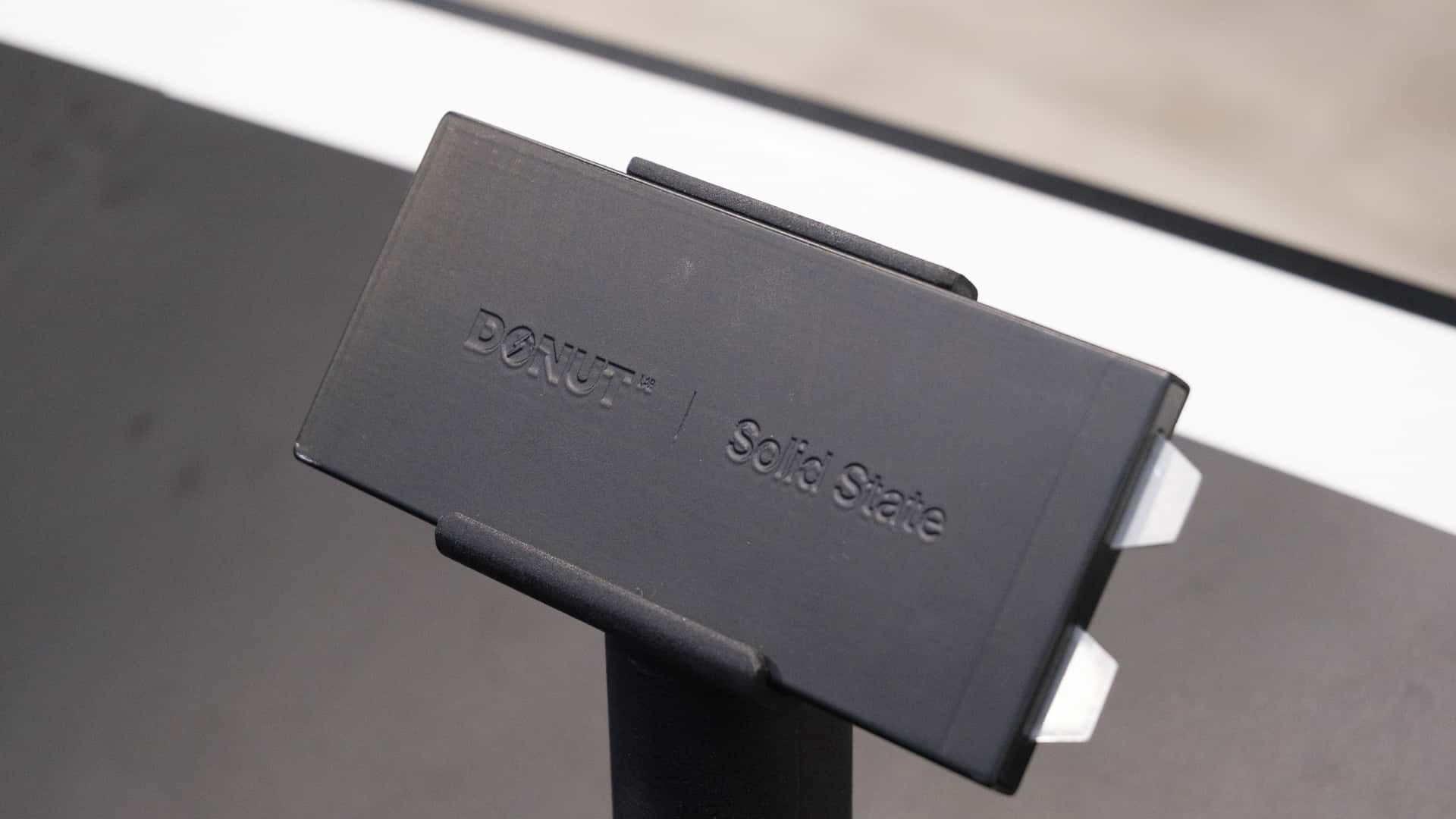
A recent in-depth investigation has cast significant doubt on Finnish startup Donut Lab’s assertion of having developed the world’s first production-ready all-solid-state battery. The company’s claims, which promised revolutionary performance for electric Verge Motorcycles, appear to be contradicted by detailed technical analysis and internal communications.
This development underscores the fierce competition and high stakes in the battery technology sector, particularly concerning the nascent field of solid-state battery technology. It also highlights the impressive strides made in advanced lithium-ion battery capabilities, which continue to evolve rapidly.

Key Takeaways
- Finnish startup Donut Lab’s claims regarding a production-ready solid-state battery have been debunked by an independent investigation.
- The purported solid-state cells exhibit characteristics consistent with advanced lithium-ion battery technology, including a distinctive expansion curve.
- Measured energy density of Donut Lab’s battery (298 Wh/kg) falls short of the claimed 400 Wh/kg and aligns with cells from a company called CT Coatings.
- Internal communications suggest a lack of deep battery chemistry understanding and due diligence within Donut Lab and its affiliate, Nordic Nano.
- The incident provides crucial context on the current state of solid-state battery technology development, which major industry players anticipate later in the decade.
The Quest for Solid-State Battery Technology
For years, researchers and engineers have viewed solid-state cells as the ‘holy grail’ of battery technology. Their theoretical benefits are transformative, promising to overcome the limitations of conventional lithium-ion batteries.
In theory, solid-state battery technology offers enhanced safety, eliminating the risk of thermal runaway due to the absence of flammable liquid electrolytes. They also hold the potential for significantly higher energy density, enabling longer driving ranges for electric vehicles, and exceptionally fast charging times comparable to refuelling a conventional car.
Furthermore, an extended lifespan and the potential for a more environmentally friendly material composition often accompany the promise of solid-state battery technology. These characteristics make it a focal point for global automotive and electronics innovation.

Donut Lab’s Bold Proclamations
Earlier this year, Donut Lab captured significant attention by claiming a monumental breakthrough. The startup announced its solid-state battery, intended for electric Verge Motorcycles, boasted extraordinary specifications.
Key among these claims were a five-minute charge time, an unprecedented lifespan of 100,000 cycles, and an energy density of 400 watt-hours per kilogram (Wh/kg). The company also stated the battery would be completely immune to thermal runaway and free from rare earth materials.
These figures dramatically surpass the performance of typical lithium-ion batteries, which generally offer half the energy density and a lifespan of only a couple of thousand cycles. Donut Lab’s claims, if true, would have positioned them far ahead of established industry leaders.
Industry Skepticism and Calls for Verification
The announcement from a relatively little-known startup, claiming to have achieved a feat that major battery companies anticipate only by the end of the decade, inevitably generated considerable skepticism across the industry.
Battery experts worldwide urged caution, highlighting the monumental challenges in developing, scaling, and mass-producing viable solid-state battery technology. Many called for more substantiating data and independent verification to validate Donut Lab’s aggressive performance figures and timeline.
The Ziroth Investigation Unravels the Narrative
This skepticism culminated in a comprehensive investigation led by Ryan Hughes of the Ziroth YouTube channel. Hughes’s inquiry, drawing on leaked internal emails, consultations with battery scientists, and direct interviews, began to systematically dismantle Donut Lab’s solid-state claims.
The investigation suggested that the battery technology presented by Donut Lab bore all the hallmarks of an advanced lithium-ion cell rather than a genuine solid-state solution. This critical finding fundamentally challenged the core of the startup’s assertions.
Technical Evidence Points to Lithium-Ion Characteristics
A central piece of evidence emerged from the analysis of the battery’s expansion curve, a critical metric for evaluating cell behavior. This curve graphically tracks changes in a battery’s thickness or internal pressure during charge and discharge cycles.
Lithium-ion batteries with a standard graphite anode typically display a small but distinct ‘kink’ in their steep expansion curve when reaching approximately 50-60% state of charge. This phenomenon is attributed to the reordering of ions during charging, which causes slight cell swelling.
Crucially, testing conducted at Finland’s VTT Research Institute on the Donut Lab cell revealed an identical ‘kink’ in its expansion curve. This characteristic behavior strongly indicates the presence of a graphite anode, a hallmark of conventional lithium-ion battery technology, rather than a solid-state configuration.
Discrepancies in Energy Density Calculations
Beyond the expansion curve, the numerical data also presented significant inconsistencies. The VTT test results indicated the Donut Lab cell had a capacity of 94 watt-hours (Wh).
When combined with the 315-gram mass that Donut Lab disclosed at CES, the energy density calculates to approximately 298 watt-hours per kilogram (Wh/kg). This figure is strikingly similar to the energy density of cells produced by CT Coatings, a company implicated in providing technology to Donut Lab, and falls considerably short of Donut Lab’s ambitious claim of 400 Wh/kg.
The Entangled Web: CT Coatings and Due Diligence Questions
The Ziroth investigation further illuminated a complex relationship between Donut Lab and another firm, CT Coatings. It is suggested that CT Coatings, which claimed expertise in building screen-printed solid-state cells, may have provided misleading technology.
Lauri Peltola, former Chief Commercial Officer and co-founder of Donut Lab affiliate Nordic Nano, provided crucial insights. He stated, “Neither of the companies had, when I was still working at Nordic Nano, a deep understanding on battery chemistry and manufacturing.”
Peltola added, “I was relying on the information that I was receiving from Donut Lab, as was everybody on the Nordic Nano side.” He also noted that prior to the CES reveal, Donut Lab assured Nordic Nano of having conducted “thorough technical due diligence” internally, implying the technology could be “bravely” introduced.
This chain of events raises serious questions about the level of technical scrutiny and due diligence performed by Donut Lab in verifying the underlying solid-state battery technology it was presenting to the public and investors.
Donut Lab Maintains Its Position
Following the publication of Ryan Hughes’s YouTube video and the subsequent media scrutiny, Donut Lab issued a public statement denying any wrongdoing. The company expressed its unwavering confidence in its technology.
Their official response stated: “We stand fully behind the technical data and commitments we have provided, taking them with the utmost seriousness. The trust of our partners, investors, and customers is of paramount importance to us. We are progressing on schedule with Donut Battery technology.”
Advancements in Lithium-Ion Battery Technology
The broader context of battery development is crucial to understanding the Donut Lab controversy. While the pursuit of solid-state battery technology continues, conventional lithium-ion battery technology has not stood still; it has witnessed significant and rapid advancements.
Impressive performance figures, such as charging an electric motorcycle from 10% to 80% in 12 minutes and surviving temperatures up to 100 degrees Celsius, while notable, are increasingly within the capabilities of cutting-edge lithium-ion batteries under stress testing.
For instance, the new Mercedes-AMG GT can achieve an 10-80% charge in just 11 minutes, largely due to innovations in silicon-containing anodes. Similarly, in China, BYD’s advanced Flash chargers enable its second-generation Blade batteries to charge from 10% to 97% in a mere nine minutes, demonstrating the formidable progress in this sector.
The Global Race for True Solid-State Breakthroughs
The development of genuine solid-state battery technology remains a priority for global industry titans. Major companies like Toyota and CATL, possessing decades of manufacturing experience and investing billions in research and development, are heavily engaged in this pursuit.
These established players generally project that mass production of true solid-state cells is still some years away, likely towards the end of the current decade. This collective industry outlook makes it a significant stretch to believe that a revolutionary breakthrough of this magnitude would emerge from a startup that has yet to manufacture a single battery cell on a commercial scale.
The immense complexity involved in materials science, manufacturing processes, and scalability challenges means that genuine solid-state battery technology requires extensive resources and a proven track record in electrochemical innovation.
Implications for Battery Development and Investor Confidence
The Donut Lab incident serves as a cautionary tale within the rapidly evolving battery industry. It highlights the critical importance of rigorous scientific validation, transparency in reporting technical data, and thorough due diligence for investors and partners alike.
In an environment ripe with both genuine innovation and ambitious claims, maintaining journalistic integrity and an expert persona is paramount. This event underscores that while the promise of solid-state battery technology is immense, its realization demands verifiable breakthroughs and a clear understanding of fundamental battery chemistry.
Conclusion
The investigation into Donut Lab’s solid-state battery claims ultimately points to an overstatement of technological readiness. While the pursuit of revolutionary battery solutions continues globally, the incident reinforces that achieving true solid-state battery technology is a complex, long-term endeavor backed by significant scientific and engineering efforts from established industry leaders.
It also draws attention to the impressive, ongoing improvements in conventional lithium-ion batteries, which continue to set new benchmarks for performance and efficiency, even as the ultimate ‘holy grail’ of solid-state remains a future prospect.
FAQ Section
What were Donut Lab’s primary claims about their solid-state battery?
Donut Lab claimed their solid-state battery could charge in five minutes, last 100,000 cycles, offer 400 Wh/kg energy density, and be immune to thermal runaway. These features were touted as revolutionary for electric Verge Motorcycles.
Who conducted the investigation into Donut Lab’s claims?
The investigation was primarily conducted by Ryan Hughes, known for his Ziroth YouTube channel. He utilized leaked internal emails, consulted battery scientists, and interviewed key personnel involved in the development.
What evidence suggested Donut Lab’s battery was not solid-state?
The most compelling evidence was the battery’s expansion curve, which showed a distinct ‘kink’ at 50-60% state of charge, characteristic of standard graphite-anode lithium-ion batteries. Tests at Finland’s VTT Research Institute confirmed this observation.
How did the measured energy density compare to Donut Lab’s claims?
The VTT test results showed a capacity of 94 Wh. When combined with the reported 315-gram mass, this calculates to an energy density of approximately 298 Wh/kg, significantly less than Donut Lab’s claimed 400 Wh/kg.
What role did CT Coatings play in this controversy?
CT Coatings was identified as a firm that allegedly provided misleading technology, claiming to produce screen-printed solid-state cells. The measured energy density of Donut Lab’s cells was nearly identical to CT Coatings’ own cells, suggesting a potential misrepresentation.
What is the current industry outlook for mass-produced solid-state battery technology?
Major battery manufacturers and research institutions, including Toyota and CATL, widely anticipate that mass production of true solid-state battery technology will not occur until the end of the current decade, reflecting the significant challenges still being addressed.
How have advanced lithium-ion batteries improved recently?
Recent advancements in lithium-ion technology, incorporating innovations like silicon-containing anodes, have led to significantly faster charging times and improved energy density. Examples include the Mercedes-AMG GT and BYD’s Blade batteries, demonstrating rapid progress in this established field.