
The automotive landscape is undergoing a significant transformation, with high-performance vehicles increasingly embracing electrification. Carmakers are integrating substantial battery packs into their most powerful models, aiming to reduce emissions and enhance straight-line speed. However, this shift introduces a new challenge: the added weight can compromise the agile handling traditionally expected from these performance icons.
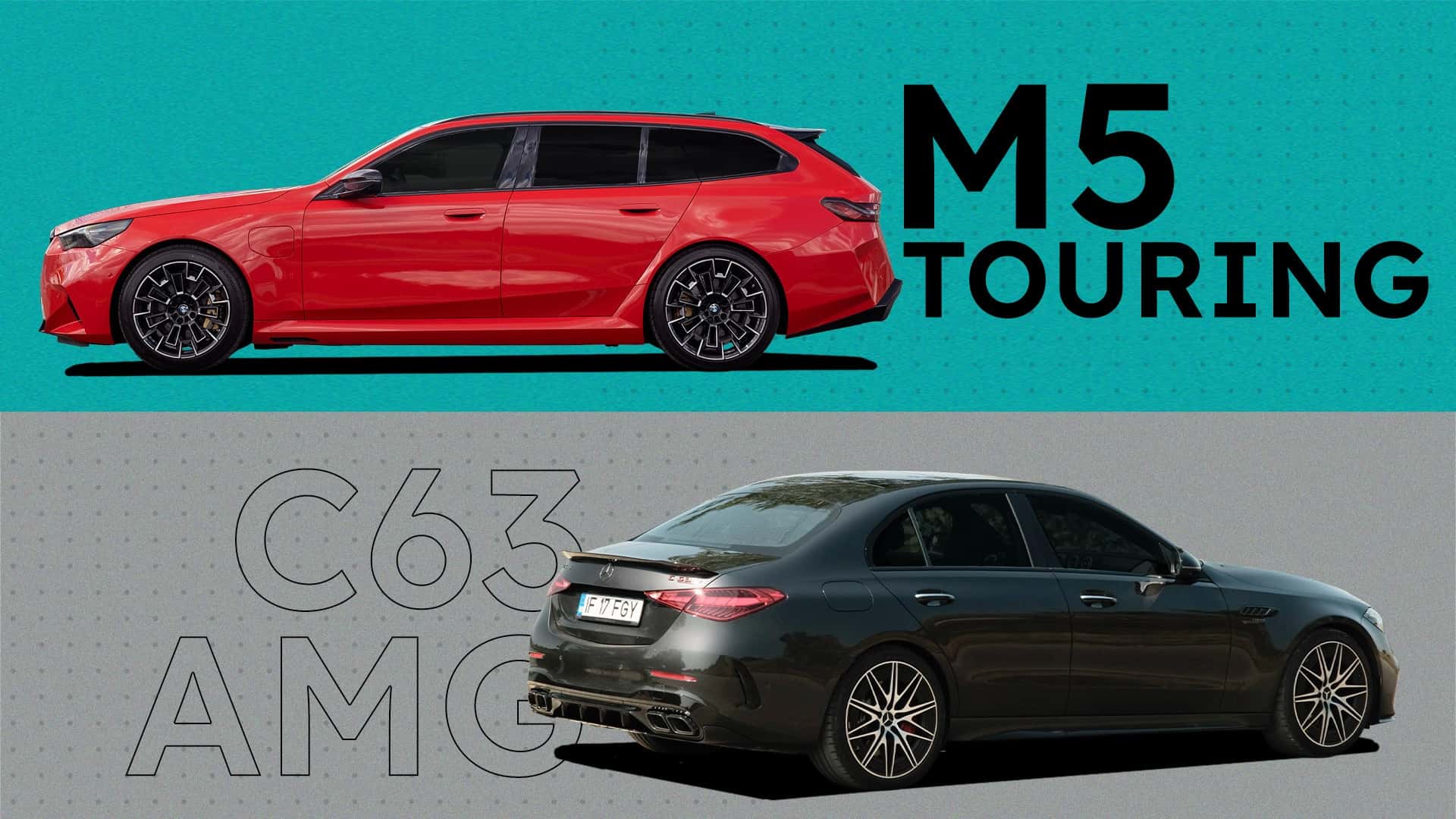
This evolving paradigm becomes starkly apparent when examining the latest generation of electrified super wagons and sports sedans. The comparison between the new G99 BMW M5 Touring and the Mercedes-AMG C63s E-Performance offers a compelling case study. Both represent distinct philosophical approaches to the performance PHEV (Plug-in Hybrid Electric Vehicle) concept, each drawing a unique set of reactions from enthusiasts and critics alike.
Key Takeaways
- Modern performance hybrids face a balance between raw power, electric range, and driving dynamics, often challenged by significant battery weight.
- The 2025 BMW M5 Touring delivers immense power (717 hp claimed, near 800 hp actual) and a considerable 35 miles of electric range but struggles with its 5,456-pound curb weight, leading to inconsistent ride quality and compromised cornering agility.
- The Mercedes-AMG C63s E-Performance, though a class below, offers a more engaging driving experience with its 670 hp powertrain and a much lighter, performance-focused 6.1 kWh battery, prioritizing agility over extended electric range.
- Mercedes-AMG’s strategy with the C63s E-Performance, featuring a smaller battery, exemplifies a more effective approach for a performance PHEV where driver engagement and dynamic handling are paramount.
- True performance PHEV design should differentiate from efficiency-focused hybrids, emphasizing power boost and chassis integrity over maximizing electric-only driving distance.
The Evolving Landscape of Performance Hybrids
The quest for both blistering speed and reduced environmental impact has led automotive manufacturers down the path of electrification for their flagship performance models. This often means integrating large battery systems and electric motors alongside powerful internal combustion engines. While this combination undeniably boosts acceleration figures, it frequently comes at the cost of increased vehicle mass, impacting overall driving enjoyment.
Many traditional performance car enthusiasts voice concerns over this trend. The addition of heavy hybrid components can fundamentally alter the character of beloved models, potentially eroding the precise handling and dynamic feel that defined their predecessors. The current generation of performance PHEV vehicles navigates this complex intersection of power, weight, and driving dynamics.
BMW M5 Touring: A Powerful but Portly Proposition
The 2025 BMW M5 Touring, designated G99, enters the market with a formidable presence and undeniable straight-line speed. This latest iteration of the iconic performance wagon brings significant power to the table, yet its sheer mass presents a nuanced driving experience that diverges from traditional M car characteristics.
Unpacking the M5’s Potent Powertrain
The heart of the M5 Touring is its twin-turbocharged 4.4-liter V-8 engine, complemented by a robust electric motor. BMW claims a combined output of 717 horsepower, though a recent dyno test indicated almost 700 hp delivered directly to the wheels. This suggests a real-world total output potentially closer to 800 horsepower, a truly staggering figure.
The V-8 engine, coupled with the electric motor, generates an impressive 737 pound-feet (1,000 Nm) of torque. This immense power ensures that the M5 Touring delivers alarming pace, whether launching from a standstill or executing a rolling start. The sensation of being pinned to the seat is a testament to its raw performance capabilities.
Beyond its explosive combined output, the M5’s electric motor, integrated within the eight-speed automatic gearbox, is surprisingly capable on its own. It produces 197 hp and 206 lb-ft (280 Nm) of torque, sufficient to move the substantial 5,456-pound (2,475 kg) Touring model with noticeable briskness in EV mode. The system also pipes in a subtle, engaging acceleration sound through the speakers, enhancing the electric driving experience.
Crucially, the electric motor sends power to all four wheels, providing reassuring all-wheel drive traction even in pure EV mode. This feature ensures confidence in varying grip conditions, from winter weather to wet roads. The M5 Touring offers a practical pure electric driving range of approximately 35 miles, making it suitable for many urban commutes and shorter journeys without engaging the V-8 engine.
The Weight Conundrum and Driving Dynamics
Despite its formidable powertrain, the M5 Touring’s significant curb weight of 5,456 pounds (2,475 kg) profoundly influences its driving dynamics. This mass, notably heavier than the pure electric i5 Touring M60, necessitates specific suspension tuning to manage the forces involved. The result, however, is a surprisingly inconsistent ride quality.
The suspension struggles to find a consistent character, vacillating between plush comfort and a jarring firmness. This unpredictability means drivers are never quite sure what to expect from the ride. When pushed through twisty roads, the car’s considerable weight becomes a dominant factor.
Mid-corner bumps, in particular, can alarmingly unsettle the vehicle, leading to noticeable force transfers from side to side. The inherent inertia of such a heavy machine also tends to pull the car into understeer during spirited driving, demanding more effort to maintain the desired line. As described, the M5 feels akin to an “athlete trying to run with ankle weights on,” suggesting its true agility is hampered by its substantial hybrid components.
Efficiency Ratings: Real World vs. Lab Tests
The official efficiency ratings for the BMW M5 Touring, like many performance PHEV models, present a complex picture. In Europe, it boasts a WLTP efficiency rating of between 1.6 and 1.7 liters per 100 kilometers, equating to almost 150 miles per gallon. However, achieving these figures relies heavily on consistently keeping the battery fully charged, a practice not all PHEV drivers maintain.
The U.S. EPA combined rating of 13 mpg (18 l/100 km) with a depleted battery offers a more realistic representation of its fuel consumption in typical driving scenarios when the electric assistance is minimized. This disparity highlights the challenge of communicating practical efficiency for high-performance plug-in hybrids, where the primary use case might not always prioritize electric-only mileage.
Mercedes-AMG C63s E-Performance: Agility Over Extended Electric Range
In stark contrast to the BMW M5 Touring, the Mercedes-AMG C63s E-Performance presents a different philosophy for the performance PHEV. While still a plug-in hybrid, its design prioritizes agility and immediate performance enhancement, even if it means a significantly shorter electric-only range.
Engineering a Lighter, More Responsive System
Although it resides in a size class below the M5, the C63s E-Performance offers a compelling case for driver engagement. Powering this Mercedes-AMG is a hand-assembled 2.0-liter four-cylinder M139 engine, which proudly displays its builder’s signature under the hood. This unit, derived from AMG’s compact performance models, independently produces well over 400 horsepower.
Combined with its electric motor, the C63s E-Performance achieves a total output of 670 hp and an astonishing 752 lb-ft (1,020 Nm) of torque. This torque figure surpasses that of the BMW M5, and critically, the C63 is approximately 880 pounds (400 kg) lighter than the M5 Touring. This superior power-to-weight ratio translates directly into a visceral driving experience.
The vehicle’s acceleration is described as “shockingly quick off the line,” feeling even faster than its impressive figures suggest. The immediate surge of power, courtesy of an electric supercharger working to minimize turbo lag, ensures a highly responsive powertrain. This innovative technology allows for rapid boost building, contributing to the C63’s exhilarating straight-line performance.
A More Engaging Driving Experience
Where the C63s E-Performance truly distinguishes itself is in its dynamic handling. Despite its hybrid nature, it feels “much more enjoyable through the corners” than the M5. The car eschews the tail-happy tendencies of previous C63 generations, instead behaving like a focused “track car” engineered for optimal corner exit with minimal drama.
Even with its smaller displacement, the engine’s sound is described as characterful, especially with the enhanced engine sound disabled. The audible cues of the turbo building and releasing pressure further contribute to the engaging driving experience. This attention to auditory feedback enhances the driver’s connection to the machine, making it feel “more special” than its V-8 competitor.
Strategic Battery Design and Fuel Consumption
Mercedes-AMG’s strategic decision to equip the C63s E-Performance with a smaller, bespoke battery system is central to its dynamic success. Unlike the M5, which utilizes a larger 22.1-kilowatt-hour battery for extended electric range, the C63’s battery has a modest capacity of only 6.1 kWh. This lighter setup is integrated into the rear axle, primarily designed to boost performance rather than provide extensive EV-only driving, which is limited to around 5 miles.
The smaller battery serves a dual purpose: it keeps the vehicle’s weight in check, thereby preserving handling purity, and it assists in meeting stringent European Union emissions standards through lab testing. This engineering choice reflects a clear understanding of the target audience for a performance PHEV, where a large electric range isn’t the primary motivator.
Regarding fuel consumption, the C63s E-Performance boasts a claimed European average of 6.9 liters per 100 kilometers, or approximately 34 mpg. While aggressive driving will naturally reduce these figures, a real-world test indicated around 15 mpg when driven spiritedly, which is still commendable given its acceleration capabilities. The EPA rates the C63 at 20 mpg with a depleted battery, a figure deemed achievable without specific efforts toward hypermiling.
Redefining Performance PHEV Philosophy
The comparison between the BMW M5 Touring and the Mercedes-AMG C63s E-Performance underscores a critical debate within the automotive industry: how to effectively integrate electrification into high-performance vehicles. The core argument highlights that for a true driver’s car, simply adding more power and battery capacity is not always the optimal solution if it compromises fundamental driving dynamics.
For buyers of these elite performance PHEV models, ultimate fuel efficiency is rarely the primary selling point. These consumers typically have the means to fuel their vehicles, and the driving experience, agility, and responsiveness take precedence over achieving unrealistic mileage figures. Moreover, high-performance cars constitute a minuscule fraction of overall vehicle sales, meaning their impact on global emissions is relatively small compared to mass-market electrification.
Mercedes-AMG’s approach with the C63, prioritizing a lighter, performance-boosting electric system, emerges as a more successful blueprint for a performance PHEV. It retains a compelling level of driver engagement and excitement, even with a smaller engine and half the cylinders of its BMW counterpart. This philosophy aligns with other acclaimed performance hybrids.
Notable examples of performance-focused PHEVs include the second-generation Acura NSX, the Corvette E-Ray, the Ferrari 296 GTB, and the new Lamborghini Temerario. These vehicles, much like the C63, employ batteries under 8 kWh (as seen in Ferrari’s SF90 and 296 GTB models) to enhance performance without overburdening the chassis. While offering a few miles of electric driving is a bonus, the electrification’s main purpose remains the amplification of performance capabilities.
A key consideration with smaller batteries is the potential for the engine to act as a generator when the pack runs low, potentially sapping power. However, real-world testing of the C63 revealed that even after over half an hour of aggressive driving on twisty roads, the battery still retained approximately 33% charge. This suggests that for all but the most extreme track driving, performance loss due to a depleted battery is unlikely to be a significant issue.
Conclusion: Prioritizing Driver Engagement in the Hybrid Era
The transition to electrification within the high-performance automotive segment presents both opportunities and challenges. While the allure of immense power and reduced emissions is strong, the critical factor for retaining the essence of a driver’s car lies in managing the inevitable increase in weight. The comparison between the BMW M5 Touring and the Mercedes-AMG C63s E-Performance vividly illustrates this.
Ultimately, the Mercedes-AMG C63s E-Performance, by adopting a strategic, performance-first approach to its performance PHEV architecture, delivers a more cohesive and engaging driving experience. Its focus on agile handling and dynamic responsiveness, enabled by a lighter battery system, highlights that for enthusiasts, less battery capacity can indeed lead to more driving pleasure. This nuanced understanding is crucial as manufacturers continue to navigate the future of electrified performance.
Frequently Asked Questions (FAQ)
What is the primary difference in hybrid philosophy between the BMW M5 Touring and the Mercedes-AMG C63s E-Performance?
The BMW M5 Touring employs a larger battery for a significant electric-only range (35 miles) alongside its V-8, leading to considerable weight. The Mercedes-AMG C63s E-Performance uses a smaller, lighter battery primarily to boost performance and meet regulatory needs, offering minimal EV range (5 miles) but superior agility.
How do the weights of these two performance PHEV vehicles compare?
The 2025 BMW M5 Touring weighs a substantial 5,456 pounds (2,475 kg). In contrast, the Mercedes-AMG C63s E-Performance is significantly lighter, approximately 880 pounds (400 kg) less than the M5, contributing to its more agile driving characteristics.
Which vehicle offers a more engaging driving experience according to the review?
The Mercedes-AMG C63s E-Performance is considered to offer a more engaging and enjoyable driving experience. Despite having fewer cylinders, its lighter weight and performance-focused hybrid system make it more agile and responsive through corners, resembling a dedicated track car.
What are the power outputs of the BMW M5 Touring and Mercedes-AMG C63s E-Performance?
The BMW M5 Touring claims 717 horsepower (with real-world output potentially near 800 hp) and 737 lb-ft of torque. The Mercedes-AMG C63s E-Performance delivers 670 horsepower and 752 lb-ft of torque, with its lighter weight making it feel even faster.
Why does the article suggest a smaller battery is better for a performance PHEV?
For a performance PHEV, a smaller battery minimizes added weight, which is crucial for preserving dynamic handling and agility. While it reduces electric-only range, it prevents the vehicle from feeling overly heavy or cumbersome, ultimately enhancing the driver’s connection and enjoyment.
What is the real-world fuel economy difference between the two models?
The BMW M5 Touring’s EPA combined rating with a depleted battery is 13 mpg. The Mercedes-AMG C63s E-Performance, with a depleted battery, has an EPA rating of 20 mpg, which is achievable in normal driving and superior to the M5 under similar conditions.