
Key Takeaways
- The integration of large batteries in high-performance vehicles, while boosting straight-line speed, can compromise driving dynamics due to increased weight.
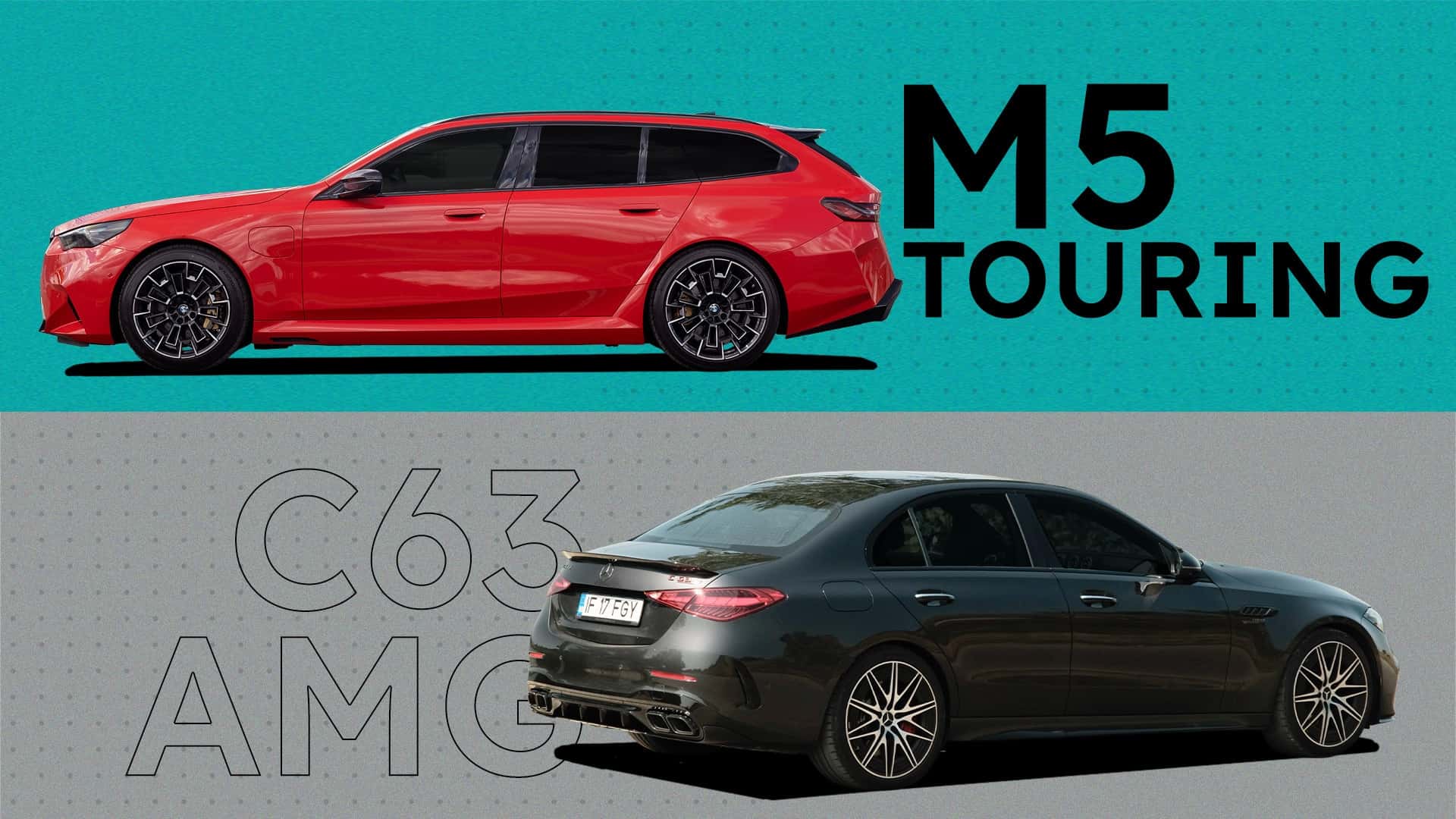
- The BMW M5 Touring, despite its potent V8 hybrid powertrain, struggles with inconsistent ride quality and handling issues stemming from its significant 5,456-pound mass.
- Conversely, the Mercedes-AMG C63s E-Performance, with its smaller 2.0-liter four-cylinder engine and a strategically designed compact 6.1 kWh battery, offers a more agile and engaging driving experience.
- Mercedes-AMG’s approach prioritises performance enhancement over extensive electric range, leading to a lighter, more focused performance PHEV.
- The comparison highlights a critical distinction: the optimal battery size and electrification strategy for a true driver’s car may differ significantly from those designed primarily for fuel efficiency.
The Evolving Landscape of Hybrid Performance Cars
The automotive industry is witnessing a significant shift, even within its most revered high-performance segments. Carmakers are increasingly integrating substantial batteries into their flagship models, traditionally known for their powerful internal combustion engines. This trend aims to reduce emissions while paradoxically creating a new breed of vehicles that are exceptionally quick in a straight line but often struggle with the driving dynamics expected of their predecessors.
This paradox becomes particularly evident when comparing two prominent contenders: the new G99 BMW M5 Touring and the Mercedes-AMG C63s E-Performance. Both represent distinct philosophies in hybrid engineering, garnering considerable debate among enthusiasts and critics alike at their respective launches.

BMW M5 Touring: A Powerful Yet Compromised Hybrid
Engine and Hybrid System Specifications
The 2025 BMW M5 Touring presents an undeniably potent powertrain. It combines a 4.4-liter twin-turbocharged V-8 engine with an electric motor, delivering a claimed total output of 717 horsepower and a staggering 737 pound-feet (1,000 Nm) of torque. Dyno tests suggest its actual output might be closer to 800 horsepower, underscoring its alarming pace from both standing and rolling starts.
The electric motor, integrated within the eight-speed automatic gearbox, contributes 197 horsepower and 206 lb-ft (280 Nm) of torque. This enables the M5 to be quite capable even when operating solely on electric power. Despite its substantial 5,456-pound (2,475 kg) curb weight, the M5 Touring feels surprisingly brisk in EV mode, offering a genuinely engaging electric-only experience.
Electric-Only Driving and Dynamic Challenges
The M5 provides an impressive approximately 35 miles of pure electric driving. In EV mode, it features a subtle, piped-in acceleration sound and simulates gear shifts, enhancing the driver’s connection. Power is sent to all four wheels, ensuring reliable traction even in challenging conditions, making it a versatile urban electric vehicle.

However, the significant mass associated with its large battery and robust hybrid system introduces considerable dynamic compromises. The M5’s suspension tuning, designed to manage this weight, results in an inconsistent ride quality, oscillating between luxurious comfort and an uncomfortably stiff setup. Mid-corner bumps can unsettlingly disturb the vehicle, and the substantial inertia creates a persistent sensation of understeer when pushed through twisty roads.
Real-World Efficiency Insights
While its WLTP efficiency rating stands at an impressive 1.6 to 1.7 liters/100 km (nearly 150 mpg), this figure is largely dependent on consistently charging the large 22.1-kilowatt-hour battery. In real-world scenarios, particularly when the battery is depleted, the M5’s EPA combined rating of 13 mpg (18 l/100 km) offers a more realistic reflection of its fuel consumption. The design choice to conceal the clever hot-V twin-turbo setup beneath an ‘underwhelming’ plastic engine cover also drew critical observation.
Mercedes-AMG C63s E-Performance: Agility Redefined
Engine and Bespoke Hybrid System
In stark contrast, the Mercedes-AMG C63s E-Performance adopts a fundamentally different approach. It features a compact 2.0-liter four-cylinder M139 engine, derived from AMG’s hottest compact models, producing over 400 horsepower independently. When combined with its electric motor, the C63s achieves an impressive 670 horsepower and 752 lb-ft (1,020 Nm) of torque.
Crucially, this powertrain is housed in a vehicle approximately 880 pounds (400 kg) lighter than the BMW M5. This weight advantage, combined with its greater torque output, translates into a far more visceral and immediate driving sensation, particularly during aggressive acceleration. The engine, hand-assembled by AMG, proudly displays a signed plaque, a detail that contrasts with the M5’s less visible engine design.
Explosive Acceleration and Responsiveness
The C63s’s “Race Start” functionality delivers an extraordinary shove, feeling even faster than its on-paper figures suggest. The car’s all-wheel-drive system expertly manages this power, ensuring rapid and stable acceleration. An electric supercharger works in tandem to build boost quickly, virtually eliminating turbo lag and contributing to the powertrain’s exceptional responsiveness. The combined torque from the electric motor and gasoline engine creates a potent surge that is genuinely remarkable.
Despite common concerns about a four-cylinder AMG, the C63s’s exhaust note is characterful. With enhanced sound disabled, the natural exhaust tone, combined with the audible turbo spooling and release, contributes to a more engaging auditory experience. This performance PHEV offers a surprising auditory richness for its engine configuration.
Superior Handling and Driver Engagement
Through corners, the C63s significantly outperforms the M5 in terms of driver enjoyment and agility. Unlike its V8-powered predecessors, which were known for their tail-happy tendencies, the new C63s feels more akin to a track-focused machine. It prioritizes optimal corner exit with minimal drama, offering precise handling that inspires confidence.
The C63s benefits from being based on the smaller C-Class platform, inherently lighter than the 5 Series Touring platform used for the M5. This dimensional advantage, coupled with Mercedes-AMG’s bespoke hybrid system, is critical. Unlike the M5 and E53, which share similar battery and motor configurations with their less potent PHEV siblings, the C63s features a unique, smaller setup.
Strategic Battery Design for Performance
Mercedes-AMG’s masterstroke with the C63s was its deliberate choice of a smaller battery. While the M5 utilizes a substantial 22.1-kilowatt-hour battery, contributing significantly to its heft, the C63s opts for a mere 6.1 kWh unit. This compact battery serves primarily to boost performance and meet regulatory emissions standards, rather than providing extensive electric-only range, which is limited to about 5 miles.
This strategic decision prevents the battery from overburdening the chassis, preserving the vehicle’s inherent agility and handling purity. The electric motor, integrated into the rear axle rather than the gearbox, further underscores this performance-centric design philosophy for this particular performance PHEV.
Efficiency Realities of the C63s
The C63s does not aim for the same headline-grabbing WLTP efficiency numbers as the M5. Its claimed average is 6.9 l/100 km (34 mpg), which is achievable with a gentle driving style, even with a depleted battery. When driven enthusiastically, similar to how the M5 was tested, it returned around 15 mpg. The EPA rates the C63 at 20 mpg with a depleted battery, a figure that is realistically attainable without specific attempts at hypermiling.
The Philosophical Divide: Battery Size and Driving Enjoyment
Less is More for Performance Hybrids
The core takeaway from this comparison is that for high-performance vehicles, an excessive battery capacity can be detrimental to the overall driving experience. While electrification can undoubtedly enhance efficiency, making a performance PHEV too heavy negates some of its core attributes, occasionally even making it less efficient than a pure combustion-engined counterpart.
For discerning drivers seeking a truly enjoyable experience, the priority often lies in agility, responsiveness, and handling purity rather than maximizing electric range or achieving unrealistic efficiency metrics. Owners of such vehicles are typically less concerned with fuel costs and more focused on the visceral thrill of driving.
Distinguishing Electrification Goals
There needs to be a clear distinction in engineering philosophy between electrified cars designed primarily for efficiency and those where electrification serves to enhance performance. While mass-market electrification can yield significant environmental dividends, the niche of high-performance cars represents a tiny fraction of overall emissions, making radical efficiency less critical than preserving dynamic integrity.
Examples of successful performance-focused plug-in hybrids include the second-generation Acura NSX, the Corvette E-Ray, the Ferrari 296 GTB, and the new Lamborghini Temerario. These vehicles demonstrate that electrification, when implemented with smaller batteries (typically under 8 kWh), can augment performance without compromising chassis dynamics or pure handling characteristics.
Battery Depletion and Performance Assurance
A common concern with performance PHEV models is the potential for performance degradation if the battery charge runs low. In the C63s, if the battery depletes, the engine acts as a generator to replenish the pack, which theoretically could sap some power. However, practical testing demonstrated that even after hard driving on a twisty road for over half an hour, the battery still retained around 33% charge, with no discernible loss of performance. This suggests that for all but extreme track use, battery depletion is unlikely to significantly impact the vehicle’s dynamic capabilities.
Conclusion: Redefining Performance in the Hybrid Era
The debate between the BMW M5 Touring and the Mercedes-AMG C63s E-Performance underscores a pivotal moment in automotive engineering. While BMW opts for a robust, high-range hybrid system in its M5 Touring, resulting in a heavier vehicle with compromised agility, Mercedes-AMG’s C63s E-Performance showcases a more nuanced approach. By prioritizing a smaller, performance-boosting battery and a lighter overall package, the C63s delivers a more engaging, agile, and ultimately more rewarding driving experience.
Mercedes-AMG’s strategy, akin to that seen in high-end sports cars like Ferrari’s plug-in hybrids, illustrates that in the realm of performance PHEV models, less battery weight often translates to more driver enjoyment. The C63s proves that even with fewer cylinders, a thoughtfully engineered hybrid system can make a car feel more ‘special’ and dynamically superior, setting a benchmark for future electrified performance vehicles.
Frequently Asked Questions (FAQs)
Q1: What is the primary difference in hybrid philosophy between the BMW M5 Touring and Mercedes-AMG C63s E-Performance?
The BMW M5 Touring integrates a large battery for significant electric range (35 miles) alongside its powerful V8, leading to considerable weight. The Mercedes-AMG C63s E-Performance, conversely, uses a smaller battery primarily to boost performance and meet regulatory standards, resulting in a lighter vehicle with limited electric range (5 miles).
Q2: How does the weight difference impact the driving experience of these performance PHEVs?
The BMW M5 Touring’s 5,456-pound weight leads to inconsistent ride quality and compromised agility, feeling less dynamic in corners. The Mercedes-AMG C63s, being 880 pounds lighter, offers superior handling, responsiveness, and a more engaging driving experience, feeling like a track-focused car despite its hybrid nature.
Q3: Which car offers better fuel efficiency in real-world driving?
While the BMW M5 Touring has a high WLTP rating with a fully charged battery, its real-world EPA combined rating is 13 mpg. The Mercedes-AMG C63s E-Performance, despite its smaller battery, offers a more consistent 20 mpg (EPA rating with depleted battery) in normal driving, and around 15 mpg when driven aggressively.
Q4: Does the smaller engine in the C63s E-Performance affect its performance compared to the M5 Touring’s V8?
Despite having a 2.0-liter four-cylinder engine (vs. M5’s 4.4-liter V8), the C63s E-Performance’s combined 670 hp and 752 lb-ft of torque, coupled with its lighter weight and electric supercharger, makes it feel shockingly quick. It delivers explosive acceleration and often feels faster than the M5, despite slightly lower peak horsepower figures.
Q5: What are the benefits of a smaller battery in a performance hybrid?
A smaller battery, as seen in the C63s (6.1 kWh) and high-end supercars like Ferrari, significantly reduces vehicle weight. This preserves the chassis’s agility, enhances handling purity, and allows the electric motor to serve primarily as a performance booster rather than solely for extended electric range, leading to a more focused driver’s car.