
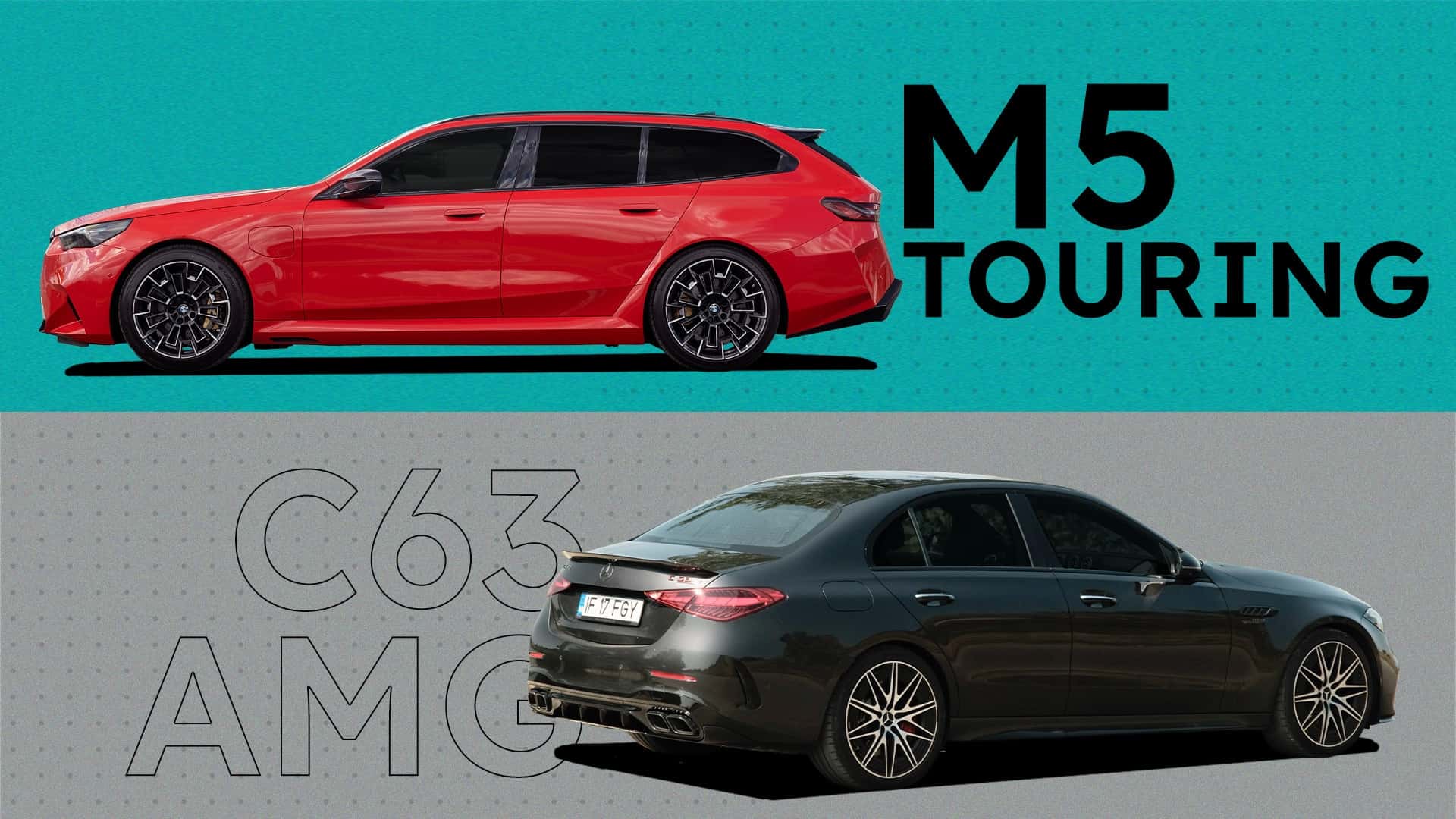
Key Takeaways (TL;DR):
- Modern performance plug-in hybrids (PHEVs) like the BMW M5 Touring and Mercedes-AMG C63s E-Performance represent a new era of electrified power, blending raw speed with electric capability.
- The G99 BMW M5 Touring, with its large V-8 and substantial 22.1 kWh battery, delivers immense straight-line power but struggles with driving dynamics due to its considerable 5,456-pound (2,475 kg) weight, leading to an inconsistent ride and compromised agility.
- In contrast, the Mercedes-AMG C63s E-Performance, despite its smaller four-cylinder engine and compact 6.1 kWh battery, offers a more engaging and agile driving experience, feeling significantly lighter and more responsive through corners.
- Mercedes-AMG’s strategy prioritizes performance boost over extended electric range, using a smaller battery to minimise weight impact, unlike BMW’s approach which aims for a longer electric-only range.
- The comparison highlights a critical automotive engineering challenge: for ultimate driver engagement in performance cars, a lighter, performance-optimised hybrid system often surpasses a heavy, range-focused one, even if both deliver impressive power figures.
The Evolving Landscape of Performance Hybrids
The automotive industry is in the midst of a transformative period, with electrification increasingly integrated into even the most venerated performance flagships. Car manufacturers are now equipping their most potent models with large batteries, aiming to reduce emissions and provide electric-only driving capabilities. This paradigm shift has given rise to a new generation of high-performance vehicles, often combining monumental straight-line speed with a surprising electric range. However, this fusion presents a unique set of challenges, particularly concerning vehicle weight and its impact on dynamic handling.

While these electrified machines are undeniably quick in a straight line, offering a glimpse into their purely electric future, their substantial battery packs often compromise their agility and cornering prowess. The added mass, a necessary evil for extended electric range, can fundamentally alter the driving experience, making these cars feel disconnected from their non-electrified predecessors when pushed on a twisty road.
BMW M5 Touring: A Glimpse into Electrified Muscle
Raw Power Meets Electric Range
The new G99 BMW M5 Touring embodies the current trend of performance electrification. Powered by a robust 4.4-liter twin-turbocharged V-8 engine complemented by a substantial electric battery, it boasts a claimed output of 717 horsepower and a colossal 737 pound-feet (1,000 Nm) of torque. Initial testing, including one dyno test, indicated that this M5 was delivering nearly 700 hp to the wheels, suggesting its actual engine output could be closer to 800 hp.
This immense power translates into an alarming pace, capable of pinning occupants to their seats, whether from a standing start or during a rolling acceleration. The M5’s powertrain is unequivocally brilliant in its ability to generate prodigious speed, characteristic of BMW’s M division heritage.

Beyond its combustion might, the M5 Touring also offers a surprisingly capable electric-only driving experience. Its electric motor, housed within the eight-speed automatic gearbox, generates 197 hp and 206 lb-ft (280 Nm) of torque. This is sufficient to propel the hefty 5,456-pound (2,475 kg) Touring model briskly in EV mode, providing approximately 35 miles of pure electric driving. The experience is further enhanced by a subtle, enjoyable acceleration sound piped through the speakers and noticeable gear shifts, even with the V-8 dormant. The electric motor sends power to all four wheels, ensuring reliable traction in various conditions.
The Weight of Innovation: Driving Dynamics Compromised
Despite its formidable power and impressive electric range, the BMW M5 Touring’s driving dynamics reveal the inherent compromises of its design. The considerable weight, making it even heavier than the purely electric i5 Touring M60, necessitates specific suspension tuning to manage the mass. This results in a peculiar and inconsistent ride quality, often oscillating between plush comfort and a jarring firmness, leaving drivers uncertain of its behaviour.
When navigating winding roads, mid-corner bumps can unsettlingly disturb the car, causing noticeable force transfers from side to side. The sheer inertia of the M5’s mass often creates an uncomfortable sensation, pulling the vehicle towards understeer during spirited driving. This characteristic makes the M5 feel akin to an athlete attempting to perform with ankle weights, hindering its natural agility and the unbridled fun expected from a BMW M car.
Efficiency Claims vs. Real-World Driving
The M5’s large battery contributes to its impressive WLTP efficiency rating of between 1.6 and 1.7 liters/100 km, or almost 150 mpg. However, this figure is largely contingent on consistently topping up the battery. In real-world scenarios, particularly when the battery is depleted, the M5’s EPA combined rating of 13 mpg (18 l/100 km) provides a more realistic measure of its fuel consumption under normal driving conditions. For a performance car, where refuelling costs are typically a secondary concern for buyers, the primary benefit of such a large battery often lies more in regulatory compliance than in tangible daily savings or enhanced driving purity.
Mercedes-AMG C63s E-Performance: A Different Philosophy
Surgical Precision from a Four-Cylinder Heart
In stark contrast to the M5, the Mercedes-AMG C63s E-Performance adopts a significantly different approach to its performance plug-in hybrid architecture. Despite being a class size smaller, the C63 PHEV, while still heavy, demonstrates far greater agility. It features a compact 2.0-liter four-cylinder M139 engine, a unit hand-assembled by AMG engineers and capable of producing over 400 horsepower on its own.
Combined with its electric motor, the C63 delivers an impressive 670 hp and 752 lb-ft (1,020 Nm) of torque, notably surpassing the BMW in torque output despite having half the cylinders. This powertrain delivers a visceral experience, especially during a Race Start, where the force acting on the driver’s body is described as unparalleled in a combustion car. It feels unequivocally faster than the M5, even with comparable on-paper acceleration figures, showcasing exceptional off-the-line performance thanks to its potent torque and efficient all-wheel-drive system.
Agility Over Extended Electric Range
A key differentiator for the C63 is its strategically designed, lighter hybrid system. Unlike the M5’s 22.1 kWh battery, the C63 is equipped with a significantly smaller 6.1 kWh battery. This bespoke setup minimises the weight penalty, allowing the vehicle to feel approximately 880 pounds (400 kg) lighter than the M5, a difference profoundly felt in its dynamic responses.
The electric motor in the C63 is integrated into the rear axle, not the gearbox, and its primary purpose is to boost performance rather than provide extensive electric-only range. While it offers around 5 miles of electric driving, its core function is to enhance the vehicle’s acceleration and responsiveness. This design philosophy translates into a far more enjoyable experience through corners, with the C63 behaving like a focused track car, prioritising optimal corner exit with minimal drama.
The Sound and Feel of Performance
The C63’s powertrain is remarkably responsive, benefiting from an electric supercharger that quickly builds boost and minimises turbo lag. The combined surge from both the electric motor and the petrol engine is truly exceptional. Furthermore, the engine’s auditory experience, often a point of contention for four-cylinder performance vehicles, is more engaging than some critics suggest. Even with the piped-in enhanced sound disabled, the exhaust note retains character, and the distinct sounds of the turbo building and releasing pressure contribute positively to the overall driving enjoyment.
Regarding fuel efficiency, the C63’s smaller battery design results in a different profile. It has a claimed average of 6.9 l/100 km or 34 mpg in Europe. While achieving this requires a gentle driving style, real-world aggressive driving yielded around 15 mpg. The EPA rates the C63 at 20 mpg with a depleted battery, a figure achievable without conscious effort towards efficiency. This balance of potent performance and respectable efficiency, even under hard driving, underscores Mercedes-AMG’s focused engineering.
The Crucial Difference: Battery Strategy and Driving Purity
The core distinction between the BMW M5 Touring and the Mercedes-AMG C63s E-Performance lies in their approach to integrating electrification. BMW’s strategy for the M5, with its larger battery, aims to provide a more substantial electric range, contributing to improved official emissions figures and offering a genuinely usable EV mode for daily commutes. However, this comes at the cost of considerable weight, which directly impacts the vehicle’s handling and overall dynamic purity, making it feel less like a traditional M car.
Mercedes-AMG, on the other hand, designed the C63 with a smaller, purpose-built battery and motor system. Their primary goal was to use electrification as a performance enhancer, boosting power and torque without significantly penalising the car’s agility through excessive weight. This prioritisation of driving engagement and dynamic response over extended electric range results in a vehicle that, despite its unconventional four-cylinder setup, feels more connected and exhilarating to drive. The C63’s system is closer to performance-oriented plug-in hybrids from marques like Ferrari, where the electric component is fundamentally integrated to amplify speed and chassis response, rather than primarily serving efficiency or range.
Redefining the “Performance PHEV” Standard
The debate surrounding these electrified performance vehicles underscores a critical point: for a truly exceptional driving experience in high-performance cars, more battery capacity is not always the best solution. While electric power undeniably enhances straight-line acceleration, an overburdened chassis due to excessive weight can detract from the nuanced dynamics that enthusiasts cherish.
The C63’s design, with its smaller battery and focus on immediate performance enhancement, exemplifies a more suitable integration of electrification for performance vehicles. This approach aligns with other celebrated performance plug-in hybrids such as the second-generation Acura NSX, the Corvette E-Ray, the Ferrari 296 GTB, and the new Lamborghini Temerario. These vehicles use electrification to augment power and responsiveness, typically employing battery packs under 8 kWh, thereby avoiding the significant weight penalties that compromise handling. While these systems do offer a few miles of electric driving, their main purpose is unequivocally performance-driven, ensuring the chassis remains unburdened and the driving experience pure.
A common concern with smaller battery PHEVs is potential performance degradation when the battery runs low. However, in the C63, this concern appears largely mitigated for real-world spirited driving. Extended periods of hard driving still saw a significant battery charge remaining, with no perceived loss of performance. This suggests that for most enthusiasts, the system is robust enough to maintain its electric boost during typical aggressive road use, with potential performance loss primarily relevant only under sustained, extreme track conditions.
Conclusion: Prioritising Driver Engagement
Ultimately, the comparison between the BMW M5 Touring and the Mercedes-AMG C63s E-Performance reveals a pivotal insight into the future of high-performance automotive engineering. While both cars are technological marvels, the M5’s emphasis on a larger battery for extended electric range, despite its immense power, compromises its dynamic agility and driver engagement due to its considerable weight.
Mercedes-AMG’s strategic decision to equip the C63 with a smaller, performance-focused battery proves to be the more effective approach for a driver-centric performance PHEV. The C63, with its agile chassis and responsive powertrain, delivers a more thrilling and connected driving experience, feeling genuinely special even with half the cylinders of its BMW counterpart. This outcome highlights that the most impactful electrification for performance cars is that which enhances, rather than detracts from, the core tenets of driver involvement and dynamic purity.
Frequently Asked Questions (FAQs)
1. What is the primary difference in hybrid philosophy between the BMW M5 Touring and Mercedes-AMG C63s E-Performance?
The BMW M5 Touring features a larger 22.1 kWh battery aimed at providing a substantial electric-only range (around 35 miles), impacting its overall weight significantly. In contrast, the Mercedes-AMG C63s E-Performance uses a smaller 6.1 kWh battery primarily to boost performance and torque, with a minimal electric range (around 5 miles), prioritising agility over extended EV capability.
2. How does the weight of these performance PHEVs affect their driving dynamics?
The BMW M5 Touring’s substantial 5,456-pound (2,475 kg) weight, largely due to its battery, leads to an inconsistent ride and reduced agility, often feeling unsettled by mid-corner bumps and prone to understeer. The lighter C63, approximately 880 pounds (400 kg) less, offers superior agility, responsive handling, and a more engaging experience through corners, feeling like a track-focused machine.
3. What are the key performance figures for the BMW M5 Touring and Mercedes-AMG C63s E-Performance?
The BMW M5 Touring delivers 717 hp and 737 lb-ft (1,000 Nm) from its V-8 engine and electric motor. The Mercedes-AMG C63s E-Performance, with its four-cylinder engine and electric motor, produces 670 hp and 752 lb-ft (1,020 Nm). Despite the C63 having fewer cylinders and less horsepower, its lighter weight and higher torque make it feel faster off the line.
4. Why is the Mercedes-AMG C63s E-Performance considered a better driver’s car despite its smaller engine?
The C63 is preferred for its superior driving dynamics, achieved through a lighter hybrid system and a focus on performance enhancement. Its smaller battery minimises weight penalty, leading to greater agility, better cornering stability, and a more responsive powertrain with an electric supercharger. This results in a more connected and exciting driving experience compared to the heavier M5.
5. What is the real-world fuel efficiency of these vehicles given their hybrid nature?
While the BMW M5 boasts a high WLTP efficiency (almost 150 mpg) with a charged battery, its EPA combined rating with a depleted battery is 13 mpg (18 l/100 km). The C63 has a claimed European average of 34 mpg, and its EPA rating with a depleted battery is 20 mpg. Real-world aggressive driving showed the M5 at 13 mpg and the C63 at 15 mpg, highlighting that efficiency for performance PHEVs is often secondary to power.
6. Are there other examples of successful performance plug-in hybrids?
Yes, several other performance plug-in hybrids successfully blend electrification with driving purity. Notable examples include the second-generation Acura NSX, the Corvette E-Ray, the Ferrari 296 GTB, and the new Lamborghini Temerario. These vehicles typically feature smaller battery packs (under 8 kWh) to enhance performance without adding excessive weight, ensuring agile handling and a focused driving experience.