
Key Takeaways
- BMW is investing significantly in hydrogen fuel cell technology, with the iX5 Hydrogen SUV slated for release in 2028, despite past struggles for hydrogen cars.
- The automaker views hydrogen not just as a vehicle fuel, but as a critical solution for large-scale, long-duration energy storage from renewable sources.
- Current challenges for hydrogen cars include a sparse global refueling infrastructure, high costs, and the fact that 95% of hydrogen in the U.S. is produced from fossil fuels.
- The BMW iX5 Hydrogen will offer an estimated 400 miles (EPA) range and rapid refueling in under five minutes, featuring a fuel-cell system co-developed with Toyota.
- While less efficient in round-trip energy conversion than batteries, hydrogen excels in long-term energy storage with minimal self-discharge, complementing battery technology.
- Other manufacturers like Toyota, Honda, and Hyundai also continue to develop and deploy hydrogen fuel cell vehicles and industrial applications.
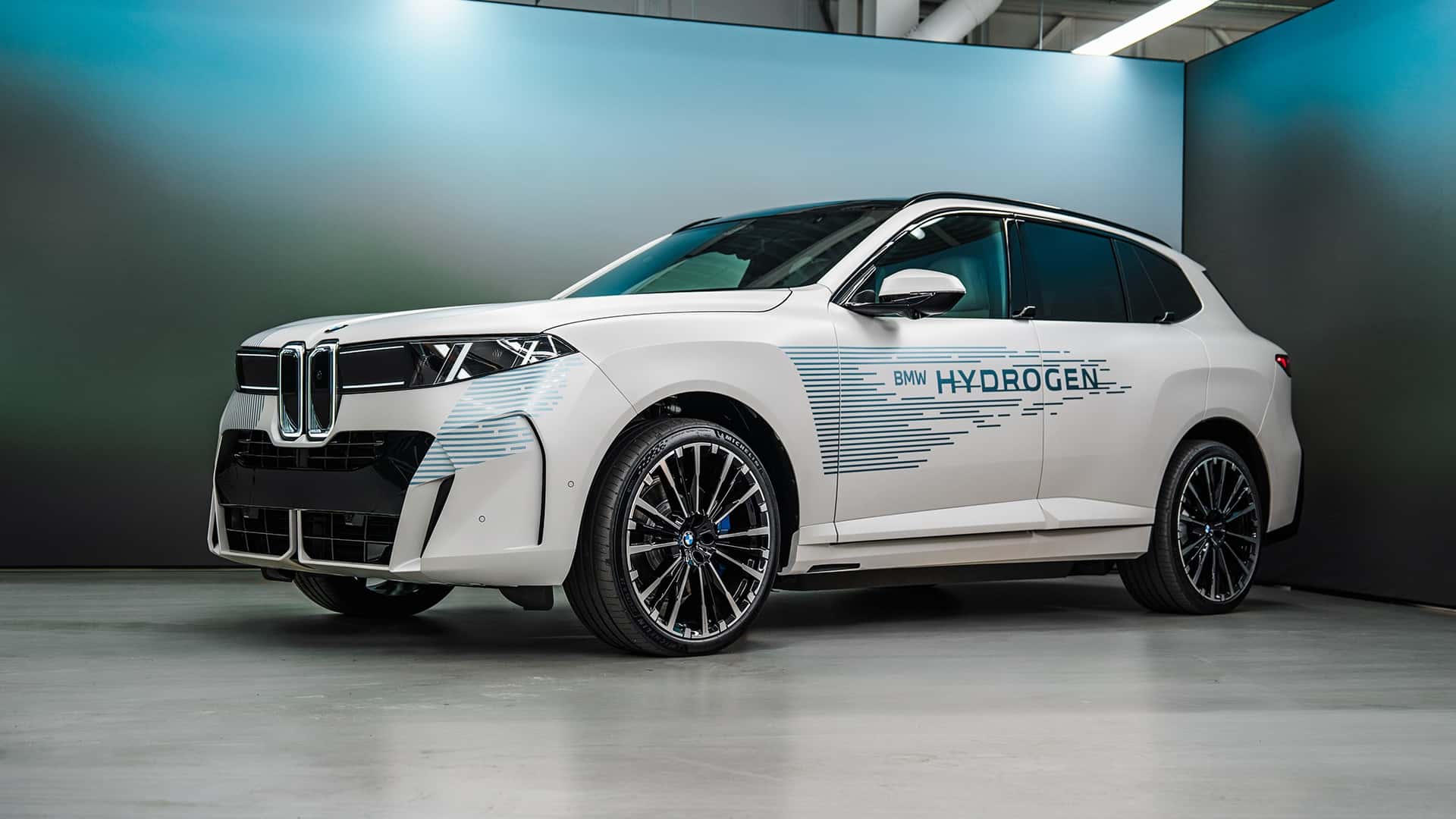
In a bold move that underscores its commitment to diverse future mobility solutions, BMW recently unveiled the fifth-generation X5, with a distinct hydrogen-powered variant among its powertrain options. Marked by its unique white finish and blue stripes, the iX5 Hydrogen SUV stands out, signaling BMW’s steadfast belief in a technology that has long faced an uphill battle for mainstream adoption.
Scheduled for a 2028 market arrival, the hydrogen-powered iX5 will join a lineup that initially includes hybrid gas, diesel, plug-in hybrid, and fully electric versions of the popular SUV. This strategic timeline, however, comes without immediate clarity on its specific market availability.

The Uphill Battle for Hydrogen Vehicles
BMW’s embrace of hydrogen power comes amidst a challenging landscape for the technology. Unlike battery electric vehicles (EVs), which benefit from an rapidly expanding public fast-charging network and increasingly mature supply chains, hydrogen as a fuel source for cars largely remains in an experimental phase.
A critical impediment is the severe lack of adequate refueling infrastructure. Data from the U.S. Department of Energy reveals that all 47 publicly available hydrogen refueling stations in the United States are concentrated exclusively in California. This geographical limitation significantly curtails the viability of hydrogen cars for most American consumers.
Globally, the situation is not much different. As of last year, a staggering 80% of the world’s hydrogen refueling stations were located in just five countries: China, Japan, South Korea, France, and Germany. This sparse network pales in comparison to the extensive availability of traditional gas stations or the burgeoning number of EV chargers, presenting a substantial barrier to adoption.

Consequently, hydrogen-powered EVs such as the Toyota Mirai, Honda CR-V e:FCEV, and Hyundai Nexo have struggled to achieve meaningful sales volumes. The logistical challenges of refueling remain a primary deterrent for potential buyers, highlighting the fundamental infrastructure gap.
BMW’s Vision: Hydrogen as an Energy Storage Solution
Despite these considerable hurdles, BMW’s persistence with hydrogen technology is rooted in a broader vision for sustainable energy. The German automaker posits that as renewable energy generation from sources like wind and solar continues its rapid ascent, there will be an escalating demand for efficient ways to store this intermittent power.
While grid-scale batteries are already shouldering a significant portion of this energy storage burden, BMW argues that hydrogen presents a viable and complementary pathway. Philip Koehn, vehicle line director at BMW Group, elaborated on this strategy at the X5 launch in Spartanburg, South Carolina.
“The hydrogen economy, if and when it develops, will most likely come alongside renewable energies,” Koehn stated, emphasizing hydrogen’s capacity to store vast quantities of energy. This perspective positions hydrogen less as a direct competitor to batteries for short-term vehicle power, and more as a crucial component of a comprehensive renewable energy ecosystem.
The Mechanism: From Surplus Energy to Motive Power
The logic underpinning BMW’s hydrogen strategy is compelling for long-term energy management. Surplus energy generated from wind and solar farms can be converted into hydrogen through a process called electrolysis, utilizing electrolyzers. This ‘green hydrogen’ is then stored in tanks, effectively banking energy for future use.
When needed, this stored hydrogen can be converted back into electricity, deploying power wherever it’s required. This versatility extends beyond just passenger cars, encompassing applications in freight transport, industrial operations like forklifts, and even utility-scale energy storage and backup power, an area where several automakers are already leveraging excess EV-battery capacity for shipping container-sized energy storage batteries.
Introducing the BMW iX5 Hydrogen
The technical specifications of the iX5 Hydrogen showcase BMW’s engineering prowess and collaboration. The vehicle is equipped with seven cylinders capable of storing a total of seven kilograms (approximately 15.4 pounds) of hydrogen. Its advanced fuel-cell system then facilitates an electrochemical reaction, combining this stored hydrogen with oxygen from the ambient air to generate electricity, which in turn powers the SUV’s motors.
This sophisticated fuel-cell powertrain was co-developed with Toyota, a pioneer in hydrogen technology known for its Mirai model. BMW projects that the iX5 SUV will offer an impressive WLTP range of up to 750 kilometers, translating to an estimated 400 miles on the EPA cycle.
One of the most appealing aspects of hydrogen fuel cell vehicles, and particularly the iX5, is the refueling speed. BMW claims the hydrogen tank can be replenished in under five minutes, a stark contrast to the charging times typically associated with battery electric vehicles, and comparable to conventional gasoline cars. Furthermore, the iX5 Hydrogen is poised to be the world’s first all-wheel-drive passenger vehicle powered by hydrogen, distinguishing it from existing front-wheel-drive models like the Hyundai Nexo and Honda CR-V e:FCEV, or the rear-wheel-drive Toyota Mirai.
The Economic and Environmental Equation
On paper, the operational advantages of the iX5, such as its extended range and rapid refueling, are highly attractive. However, the commercial viability of hydrogen cars faces ongoing economic and environmental challenges. Pricing details for the iX5 remain undisclosed, but hydrogen fuel-cell vehicles traditionally carry a substantially higher cost compared to their internal combustion engine counterparts, even as EVs gradually approach price parity.
Beyond cost, the environmental footprint of hydrogen production remains a significant concern. The U.S. Department of Energy reports that 95% of hydrogen in the U.S. is currently generated using fossil fuels, a process known as ‘grey hydrogen.’ This production method severely undermines the eco-friendly credentials often associated with hydrogen technology.
The widespread adoption of ‘green hydrogen,’ which is produced using renewable energy sources like solar and wind through electrolysis, is crucial for hydrogen to truly fulfill its potential as a clean energy solution. BMW’s strategy hinges on the belief that the growth of renewable energy will catalyze the expansion of green hydrogen production and, subsequently, the necessary refueling infrastructure.
Hydrogen’s Complementary Role in Energy Storage
Research suggests that hydrogen can effectively complement battery storage systems rather than directly competing with them. While battery energy storage systems are typically optimized for rapid charge and discharge cycles to stabilize grid fluctuations, hydrogen offers distinct advantages in the realm of long-duration energy storage.
Unlike lithium-ion cells, which can experience energy loss if held at full charge indefinitely, hydrogen can be stored for extended periods—potentially for months—due to its very low self-discharge rate, according to one study. This characteristic makes it ideal for seasonal energy storage or for buffering large surpluses from renewable generation.
However, this durability comes with a trade-off in efficiency. The same research indicates that hydrogen’s “round-trip efficiency”—the amount of original electricity recovered after conversion to hydrogen and back again—ranges from just 35% to 55%. In contrast, battery storage systems boast significantly higher round-trip efficiencies, typically between 80% and 90%, and benefit from an already established and rapidly maturing supply chain.
This supply chain is continually evolving, with advancements moving from pricier nickel-manganese-cobalt cells towards more cost-effective and durable lithium-iron-phosphate batteries, and even emerging sodium-ion cells. BMW’s strategic gamble is that as hydrogen solidifies its role as a complementary long-duration storage solution, the essential refueling infrastructure will naturally develop to support both industrial and automotive applications.
Beyond Passenger Cars: A Wider Industry Commitment
BMW is not an isolated player in its continued pursuit of hydrogen technology. The automaker has, in fact, utilized hundreds of hydrogen-powered forklifts and trolley trains at its Spartanburg plant for over a decade, demonstrating practical, industrial applications of the fuel cell system.
Similarly, Hyundai Motor Group deploys its Xcient fuel-cell Class 8 semi-trucks for short-distance hauling at its factory in Georgia. In the passenger vehicle segment, despite its modest sales figures of just 210 units in the U.S. last year, the Toyota Mirai has been available for years.
Honda also introduced its CR-V e:FCEV—a plug-in hybrid with a fuel-cell EV component—in California in 2024. Furthermore, Hyundai is preparing to roll out a next-generation Nexo overseas, even as its availability in the U.S. remains unconfirmed for the time being. These ongoing efforts across the industry underscore a collective, albeit cautious, belief in hydrogen’s long-term potential.
The BMW iX5 Hydrogen is engineered to deliver a driving experience akin to its battery-powered siblings, incorporating features like the ‘Heart of Joy’ computer for smooth handling and the same Gen6 high-voltage battery architecture.
Ultimately, whether hydrogen will emerge as a vital component of the future energy landscape, driven by growing demand for large-scale energy storage, or remain a niche, expensive experiment, is a question that only time and continued technological advancements will answer.
FAQ Section
Q1: Why is BMW still investing in hydrogen cars despite limited adoption?
BMW views hydrogen as a crucial part of the future energy ecosystem, particularly for storing excess renewable energy from sources like wind and solar. They believe that as hydrogen storage infrastructure expands for industrial uses, it will naturally support hydrogen-powered vehicles.
Q2: What are the main challenges for hydrogen fuel cell vehicles today?
Key challenges include a severely underdeveloped global refueling infrastructure, high vehicle costs compared to traditional and battery electric cars, and the environmental concern that most hydrogen is currently produced from fossil fuels, not renewable sources.
Q3: What range and refueling time can be expected from the BMW iX5 Hydrogen?
The BMW iX5 Hydrogen is projected to offer an estimated 400 miles (EPA cycle) of range and can be refueled in under five minutes, similar to the time it takes to fill a gasoline car, making it competitive with traditional fueling convenience.
Q4: How does hydrogen storage compare to battery energy storage?
Hydrogen excels in long-duration energy storage with a very low self-discharge rate, allowing storage for months. However, its round-trip efficiency (35-55%) is lower than that of battery storage systems (80-90%), which are better for quick charge/discharge cycles.
Q5: Is hydrogen environmentally friendly?
The environmental impact of hydrogen depends on its production method. While ‘green hydrogen’ produced from renewable energy sources is eco-friendly, 95% of hydrogen in the U.S. currently comes from fossil fuels (‘grey hydrogen’), which has a significant carbon footprint.
Q6: Are other automakers also pursuing hydrogen technology?
Yes, besides BMW, companies like Toyota (Mirai), Honda (CR-V e:FCEV), and Hyundai (Nexo, Xcient semi-trucks) continue to invest in and develop hydrogen fuel cell technology for both passenger vehicles and industrial applications, despite market challenges.