
Key Takeaways
The Nissan Leaf, an early pioneer in electric vehicles, inadvertently created widespread fear around EV battery degradation due to its passively air-cooled battery, leading to significant capacity loss, especially in hot climates. While early Leaf models indeed experienced substantial range reduction and high replacement costs, modern electric vehicles have largely overcome these issues through sophisticated active thermal management systems. Current data from studies by NREL and Geotab demonstrates that advanced liquid cooling and heat pump technologies keep battery degradation rates low, ensuring long-term dependability and usability for most contemporary EVs. Consumers should understand that the challenges faced by the original Leaf are not indicative of the robust battery performance in today’s electric cars.
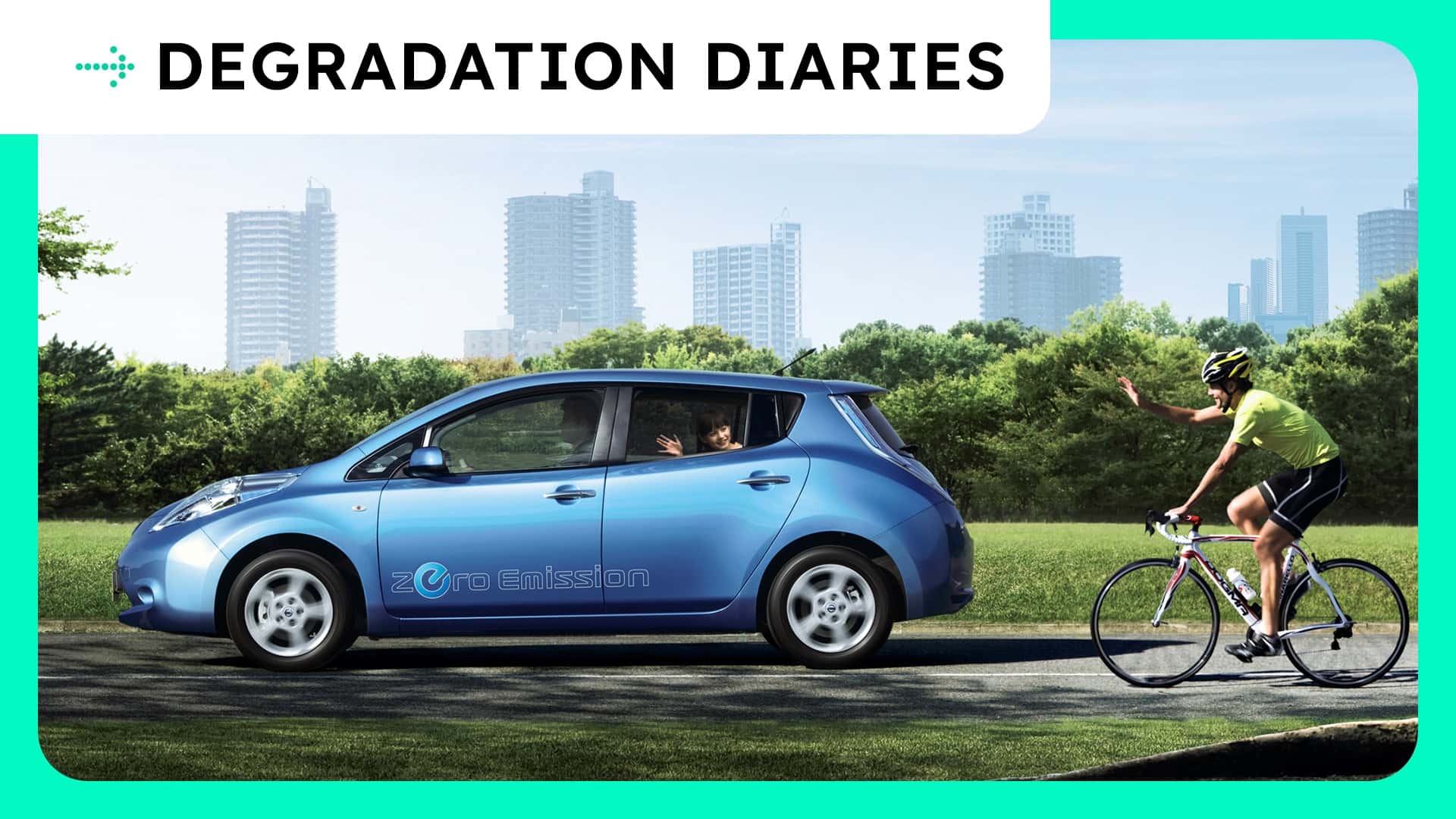
The Nissan Leaf’s Pivotal Role in Shaping EV Perceptions
The Nissan Leaf stands as a monumental figure in the nascent days of modern electric vehicles. As one of the first purpose-built EVs to achieve widespread commercial success, it was a symbol of innovation and a glimpse into the future of automotive transport. Its accessible design and forward-thinking concept made it genuinely important for the industry’s evolution.

However, the Leaf also harbored an engineering compromise that would cast a long shadow over the entire electric vehicle market: its battery thermal management system. This design choice inadvertently ingrained a reputation for rapid battery degradation that many modern EVs are still striving to overcome.
Understanding the Root of Early EV Battery Degradation
At the heart of the original Nissan Leaf’s challenges was its passively air-cooled battery pack. Unlike many contemporary vehicles that adopted more advanced cooling solutions, the Leaf’s system offered minimal control over the internal temperature of its battery cells. This reliance on ambient air for cooling proved to be a critical vulnerability, particularly in diverse climatic conditions.
The primary drawback of this passive approach became starkly apparent in hot climates, where battery temperatures could soar. Elevated temperatures accelerate unwanted chemical reactions within lithium-ion cells, leading to a quicker loss of battery capacity. This meant that Nissan Leaf vehicles, especially those operating in warmer regions, experienced significantly faster degradation rates compared to electric vehicles equipped with actively liquid-cooled battery packs.

For early Leaf owners, the consequences were tangible. A vehicle initially offering an approximate range of 80 miles could, after just a few years, see its usable range plummet to as low as 30 miles. This drastic reduction transformed the car from a functional daily driver into a limited-use local errand runner, fundamentally altering the ownership experience and sparking considerable concern among the EV community.
The Cost of Concern: Why Degradation Worries Consumers
Battery degradation remains a leading concern for potential electric vehicle buyers, distinct from issues like charging delays or range anxiety. The notion of a degraded battery often conjures images of mechanical failure, akin to a conventional engine breakdown, largely due to the perceived exorbitant cost of replacement.
A 2026 consumer survey conducted by AAA highlighted this apprehension, with 56% of respondents citing the high cost of battery repair or replacement as the primary reason they were unlikely to purchase an EV. This figure surpassed other common concerns, including higher purchase prices, suitability for long-distance travel, and charging infrastructure limitations. The initial experiences with vehicles like the Nissan Leaf played a significant role in cementing these fears.
However, it is crucial to contextualize these concerns against the backdrop of modern EV technology. While capacity loss is an unavoidable aspect of lithium-ion battery chemistry, actual battery failure in contemporary vehicles is exceedingly rare. Many older, high-mileage electric vehicles, some over a decade old, continue to operate efficiently on their original battery packs, demonstrating impressive long-term dependability.
The Nissan Leaf’s Degradation Profile: A Detailed Analysis
For over 15 years, across its first two model generations, the Nissan Leaf consistently utilized air-cooled batteries. Despite numerous other advancements, this fundamental design choice remained, contributing to widespread reports of accelerated battery degradation. As one of the most recognized early EVs globally, the experiences of Leaf owners resonated far beyond dedicated online forums, shaping broader public perceptions about electric vehicle battery longevity.
A comprehensive study conducted in New Zealand, which analyzed 1,382 battery-health readings from 283 Nissan Leaf vehicles, provided concrete data on these degradation patterns. The findings were particularly striking for the 30-kWh Leaf models, which exhibited an average annual battery health decline of 9.9% at just two years old. This figure stands in stark contrast to the degradation rates observed in modern EVs that employ active battery cooling systems.
Even the earlier 24-kWh Leaf variants, while performing better, still showed an average annual degradation of 3.1%. Nissan later addressed some of these issues by issuing a software update for certain 30-kWh models, acknowledging that the battery controller could, in some instances, inaccurately report capacity. However, the initial negative owner experiences had already significantly impacted the vehicle’s reputation and, by extension, the perception of EV battery degradation.
Further exacerbating these concerns were early independent tests. An Arizona test in 2012, widely cited by Green Car Reports, revealed that one Leaf could only achieve 59 miles on a full charge, retaining a mere 60-65% of its original battery capacity after less than two years of ownership. Such reports fueled a narrative of rapid decline, intensifying the general anxiety surrounding EV battery life.
The cost of replacing a degraded battery pack in early first-generation Leafs also presented a significant financial burden. In January 2014, Nissan priced a replacement pack at $5,499, excluding taxes and installation. This price was contingent on the dealer retaining the old pack, which Nissan valued at $1,000. These substantial costs, combined with the rapid degradation, led to the emergence of third-party companies offering upgraded battery packs with higher capacity and more power-dense cells for Leaf owners. While the Leaf was undeniably an electric vehicle pioneer, its battery challenges left a lasting impression on the burgeoning EV market, overshadowing the many positive aspects of early electric vehicle adoption.
The Modern Solution: Advanced Thermal Management Systems
The lessons learned from early EV battery challenges, particularly those of the Nissan Leaf, have profoundly influenced the design and engineering of modern electric vehicles. According to the National Renewable Energy Laboratory (NREL), which has extensively researched EV battery thermal management, high or low average battery temperatures are critical factors that accelerate lithium-related capacity loss. High temperatures, in particular, promote detrimental chemical reactions within the battery cells, leading to the growth of a protective layer that gradually consumes usable lithium as the battery ages.
This understanding has driven the widespread adoption of active battery thermal management systems across the electric vehicle industry. These sophisticated systems are meticulously designed to maintain the battery pack within its optimal temperature window, minimize temperature variations between individual cells, and mitigate the accelerated wear associated with temperature extremes. Crucially, every EV currently sold in the U.S. and the vast majority worldwide now incorporate these active cooling solutions.
A study published by Geotab in January further illustrates this technological advancement. It found that the 2015 Tesla Model S, which features a liquid cooling system, exhibited an average degradation rate of only 2.3%. In stark contrast, the 2015 Nissan Leaf, still reliant on passive air cooling, showed a significantly higher degradation rate of 4.2%. This data unequivocally demonstrates the superior longevity afforded by active thermal management.
Real-world examples further reinforce these findings. A 2014 Tesla Model S, reportedly over 11 years old with more than 100,000 miles, still retained a remarkable 85% of its original battery capacity. Such a feat would have been virtually unattainable in a first or second-generation Nissan Leaf, underscoring the advancements in battery thermal management.
Today, glycol-based liquid cooling systems are ubiquitous in electric vehicles, from models by Tesla and Ford to Chevrolet and Volkswagen. Automakers have universally recognized that maintaining the battery within its optimal temperature range is paramount for ensuring long-term dependability and minimizing EV battery degradation. Beyond conventional liquid cooling, innovative approaches have also emerged, such as the original BMW i3, which cleverly integrated its air-conditioning system to provide direct temperature control for its battery pack, showcasing diverse engineering solutions to this critical challenge.
Evolving Battery Cooling Technologies
The field of thermal management systems for electric vehicle batteries has advanced considerably since the early days of models like the Tesla Model S. Contemporary EVs frequently pair their glycol-based battery cooling systems with heat pumps, optimizing overall energy efficiency. While heat pumps are commonly lauded for their ability to extend cold-weather range by more efficiently heating the cabin than traditional resistive heaters, their role in modern EVs extends far beyond this.
In advanced thermal management architectures, heat pumps are integral to a broader system that intelligently moves heat around the vehicle. This allows the car to scavenge warmth from various sources, including the electric motors, power electronics, the battery itself, or even the ambient outside air, and direct it precisely where it is needed. For instance, in a Tesla Model Y, the heat pump operates in conjunction with the Octovalve, a sophisticated coolant traffic director. This system routes coolant between the battery, cabin, drivetrain, chiller, and radiator, ensuring optimal thermal conditions whether the battery needs to be preconditioned for fast charging, cooled during intense use, or the cabin requires heating with minimal energy expenditure.
Looking ahead, EV battery thermal management continues to evolve. Shell recently showcased a prototype EV featuring an innovative cooling method where battery cells are fully immersed in coolant. This approach aims to achieve even more effective and efficient heat extraction compared to current systems, where coolant circulates only around parts of the cells. Increasingly, automakers are designing systems that route coolant directly through the top and along the sides of battery packs, meticulously preventing the formation of hot spots that could accelerate EV battery degradation.
These continuous advancements signify a clear departure from the rudimentary air-cooled battery management approach seen in early models like the Nissan Leaf. Modern techniques are now enabling EV batteries to endure for hundreds of thousands of miles with minimal capacity loss. This technological leap ensures that today’s electric vehicle owners can confidently anticipate long-term reliability and usability from their battery packs, largely thanks to the industry’s commitment to sophisticated active battery cooling systems.
Dispelling Myths: Why Today’s EV Owners Have Less to Worry About
The pervasive fear of rapid EV battery degradation, largely shaped by the early experiences with models like the Nissan Leaf, often overshadows the significant technological leaps made in the automotive industry. It is imperative for prospective and current electric vehicle owners to understand that the challenges faced by pioneers like the first- and second-generation Leafs are not representative of the robust performance and longevity of modern EV batteries.
Today’s electric vehicles are engineered with sophisticated active thermal management systems that diligently regulate battery temperature, protecting the cells from the extreme heat and cold that accelerate degradation. These systems, combined with improved battery chemistry and manufacturing processes, ensure that capacity loss occurs at a much slower and more predictable rate, allowing EVs to maintain substantial range and performance over many years and hundreds of thousands of miles.
While some degree of battery degradation is inherent to lithium-ion technology, it is typically gradual and often falls within the generous warranty periods offered by manufacturers. The concept of an EV battery failing catastrophically, similar to an engine seizing, is exceptionally rare in modern vehicles. Instead, batteries slowly lose a fraction of their maximum capacity, a process that for the vast majority of owners does not impact daily usability or long-term satisfaction.
The transition from passively air-cooled batteries to actively liquid-cooled and heat pump-integrated systems marks a fundamental shift in EV design. This evolution has demonstrably enhanced the dependability and lifespan of electric vehicle batteries, effectively mitigating the significant EV battery degradation concerns that once plagued the market. As the technology continues to advance, the reliability of EV batteries will only further improve, providing owners with peace of mind for the long haul.
Frequently Asked Questions About EV Battery Degradation
What is EV battery degradation?
EV battery degradation refers to the natural and gradual loss of a battery’s total energy storage capacity over time and use. This means the battery can hold less charge, leading to a reduced driving range. It’s an inherent characteristic of lithium-ion batteries, influenced by factors like temperature, charging habits, and age.
Why did early Nissan Leafs experience significant battery degradation?
Early Nissan Leaf models primarily suffered from accelerated degradation due to their passively air-cooled battery packs. This design lacked effective thermal management, allowing battery temperatures to rise significantly, especially in hot climates or during frequent fast charging, which sped up the internal chemical processes leading to capacity loss.
How do modern EVs prevent rapid battery degradation?
Modern electric vehicles utilize advanced active thermal management systems, typically liquid-cooled, to maintain the battery pack within its optimal temperature range. These systems actively heat or cool the battery as needed, preventing extreme temperatures that accelerate degradation. Many also incorporate heat pumps for even greater efficiency and control.
Should I be concerned about replacing an EV battery due to degradation?
For modern EVs, the concern about expensive battery replacement due to degradation is largely overstated. While an unavoidable process, degradation rates in contemporary vehicles are very low, often just a few percent over many years. Most EV batteries are warrantied for 8-10 years or 100,000-150,000 miles, ensuring long-term usability before significant capacity loss.
Does fast charging or extreme temperatures affect EV battery life?
Yes, frequent fast charging, especially without proper thermal management, and prolonged exposure to extreme hot or cold temperatures can contribute to increased EV battery degradation. Modern EVs are designed to mitigate these effects, but prudent charging habits and parking in shaded areas in hot climates can further help preserve battery health.
What is the typical lifespan of a modern EV battery?
A modern electric vehicle battery is generally expected to last for 10 to 20 years or 100,000 to 200,000 miles, if not more, before significant degradation occurs. The actual lifespan can vary depending on the vehicle model, climate, individual driving and charging habits, and the sophistication of its battery management system.