
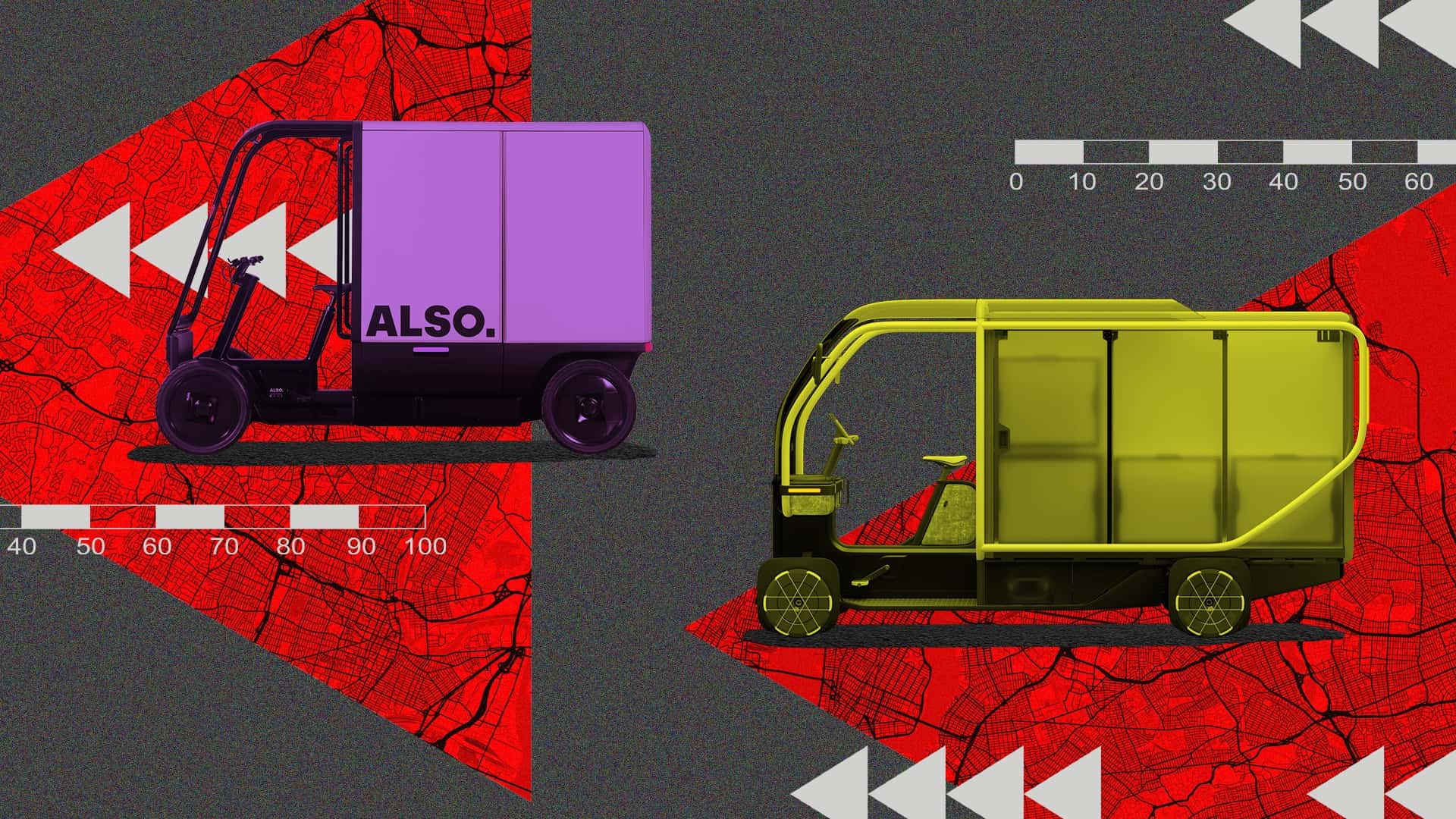
A new breed of electric mini-trucks, blending bicycle mechanics with cargo capacity, is rapidly reshaping the landscape of urban delivery and city living. These versatile vehicles, often referred to as e-bikes or mini-vans, are proving instrumental in optimizing the crucial ‘last mile’ of package delivery.
Honda’s Fastport eQuad Leading the Charge
The Honda Fastport eQuad exemplifies this emerging category. Designed with the rigors of urban e-commerce delivery in mind, it offers ease of use akin to a bicycle, with the stability of four wheels and wide running boards. “With electrification, delivery bikes have gone from an unusual option to kind of an expected part of the mobility landscape,” notes Cary Bearn, senior manager of multimodal design and programs for the National Association of City Transportation Officials (NACTO).

Set for mass production in summer 2026 at Honda’s Ohio facility, the eQuad was developed in just 18 months through close collaboration with logistics partners. “It was designed in collaboration with logistics and delivery partners, and went from paper to prototype in just 18 months,” stated Adam Elsayed, head of product at Honda’s special projects office.
Key Features and Urban Advantages
The eQuad is powered by Honda’s swappable Mobile Power Pack batteries. These 22-pound units provide up to 20 miles of range with five levels of pedal assist, capping the speed at 12-15 mph. The American market version boasts an enclosed, configurable cargo hold capable of carrying up to 650 pounds. Crucially, its dimensions allow it to utilize existing human-powered vehicle infrastructure.
“They can use bike lanes. So they can get where they’re going faster,” explains Doug Gordon, an alternative transportation advocate and co-author of “Life After Cars.” He adds, “And one of the biggest things is that they don’t require parking. They can squeeze between parked cars or even just be left on the sidewalk, so it’s easier and quicker for the operators to get where they’re going, run in, and drop off a package. So, even though they can’t go faster than a regular car, the limiting factor in cities is traffic. They’re kind of like Get Out of Traffic Free cards for delivery companies.”

These vehicles are particularly relevant given the high volume of deliveries in major cities like New York, where over 2.5 million packages are delivered daily. The ‘last mile’ of delivery alone accounts for approximately 50% of total shipping costs.
Innovation in Design and Powertrain
Honda has achieved cost efficiencies by sharing approximately half of the eQuad’s components with its existing scooter, ATV, and motorcycle lines. The pedal-by-wire powertrain, including regenerative braking, is supplied by precision e-bike manufacturer Movaria. The system can also recharge by pedaling backward when stationary.
User experience is prioritized with features like ergonomic seating, a fan, and a windshield wiper. The vehicle powers on and off, and its cargo doors open via a single fob or an app-based virtual key, streamlining the operational workflow for delivery personnel.
Other Companies Embracing the Micromobility Trend
Honda is not alone in recognizing the growing demand for efficient urban delivery solutions. Chris Yu, president and co-founder of Also, an electric micromobility company spun off from Rivian, highlights the trend toward densification and the need for smaller, more agile vehicles.
Also’s TM-Q, a four-wheeled e-assist cargo platform developed in partnership with Amazon, is designed for demanding commercial use. It leverages Rivian’s expertise in fleet management and battery technology and is slated to join the Amazon fleet in spring 2026.
Emily Barber, Amazon’s director of global fleet and products, noted that the company delivered 60 million packages to New Yorkers via micromobility solutions in 2024, with further growth anticipated. Amazon is committed to building a comprehensive e-mobility network, including vehicles, maintenance, and service infrastructure.
Economic and Environmental Benefits
Companies anticipate significant cost savings with these vehicles compared to traditional vans, owing to lower energy consumption and reduced maintenance. Moreover, the increased throughput—the number of packages delivered per unit of time—is a major advantage. “Throughput of a large-scale van is often limited by congestion or parking issues. By using a smaller vehicle and being able to leverage favorable infrastructure like a bike lane or shoulder, more jobs can be done in a unit of time,” Yu explained.
NACTO points to substantial environmental benefits, including reduced emissions. A white paper cited a New York City Department of Transportation finding that replacing 20 van miles with 20 cargo bike miles per day resulted in approximately 7 tons of CO2 savings per bike annually.
These smaller vehicles also enhance street safety, particularly for pedestrians and motorists. “The more you’re shifting trips from our largest vehicle to our smallest vehicles, the safer our streets are for everybody,” Bearn stated, addressing the rising rates of pedestrian and cyclist fatalities from vehicle collisions.
Collaboration and Infrastructure Development
The rise of these delivery vehicles is fostering unexpected collaborations, even with advocates for alternative transportation. Doug Gordon suggests that companies like Amazon and UPS could partner with advocates to push for improved infrastructure that benefits all road users.
This evolving urban planning is leading to wider bike lanes, with NACTO now designing lanes of seven to eight feet, compared to the three to four feet common 15 years ago. These wider lanes accommodate multiple cargo bikes or allow individual bikes to pass safely, while also providing space for other users like caregivers with children.
Thoughtful urban planning is essential for the integration of these vehicles. Strategies include on-street battery-swapping stations, micro-hubs for package storage and transfers, and dedicated parking areas for cargo bikes. Safety regulations for battery charging and maintenance are also crucial.
Operator education and safety training are necessary, as these vehicles typically do not require driver’s licenses. “We’re working with municipalities, and industry, to create certification programs for drivers,” Bearn said. He also noted that some cities are establishing commercial bike units to manage safety and operational standards.
Addressing Urban Space Allocation
As micromobility solutions mature, regulation becomes increasingly important. Fees for using curb space for commercial operations are being considered, and some cities have dedicated units to address safety and parking violations.
Ultimately, the integration of these new delivery vehicles raises fundamental questions about the allocation of urban space. “I do think we’re asking a fundamental question of who is entitled to space in the city, what is the city for, and who is it for?” Gordon mused. “Certainly, I want my deliveries as much as anybody else. But in a city where the competition for space is as fierce as it is in New York, it really comes down to that question of what are streets for, what are sidewalks for, what are bike lanes for? Not a hundred percent of every square inch of the city needs to be dedicated to commercial activity.”