
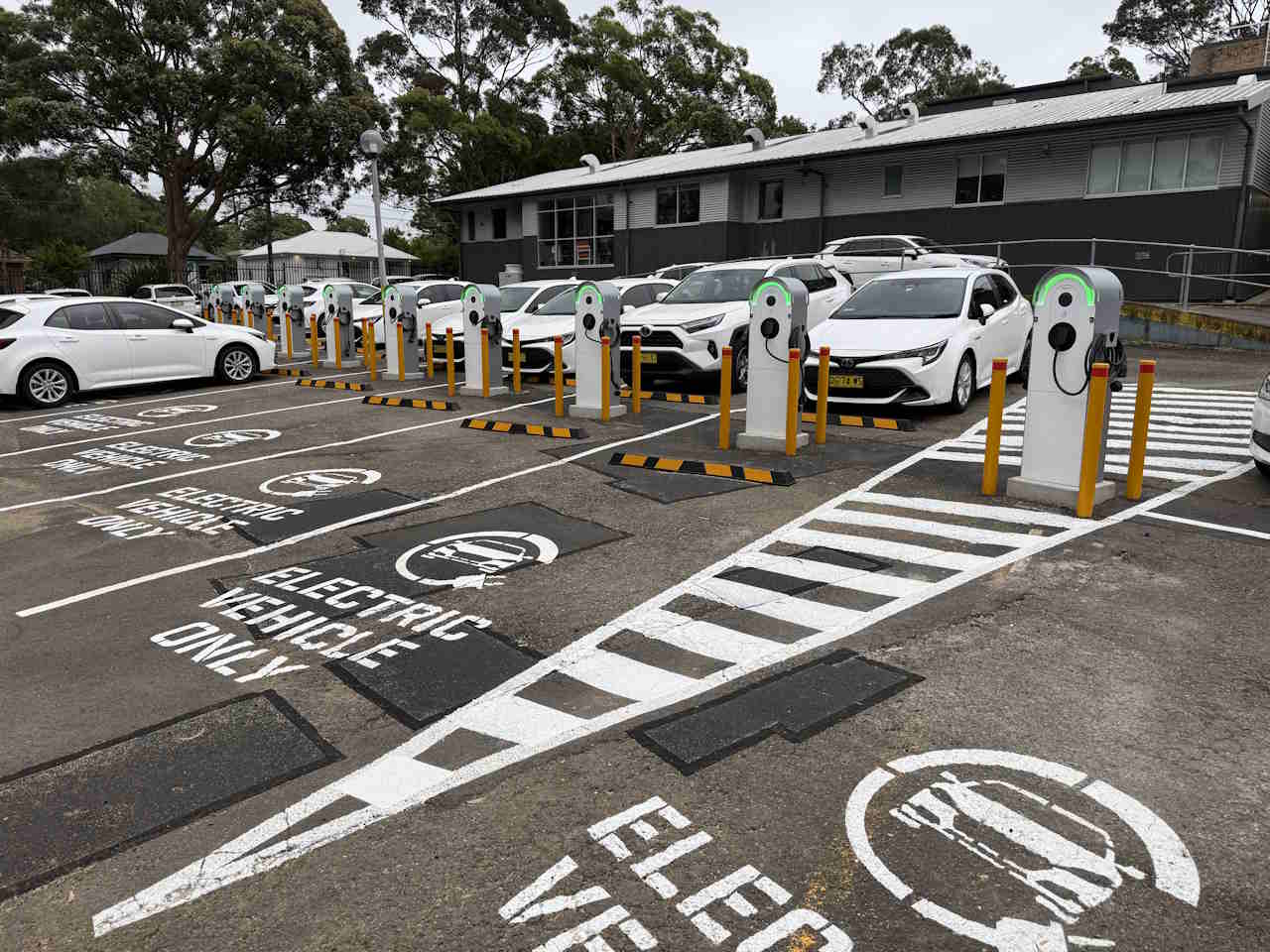
New South Wales (NSW) Health has significantly upgraded electric vehicle (EV) charging facilities at two major hospitals, installing a total of 38 new charging points as part of the state government’s ambitious plan to transition its fleet to fully electric by 2030. This initiative aims to reduce transport-related emissions from government operations and accommodate the growing number of EVs used by hospital staff and visitors.
Expanded EV Charging Infrastructure
The recent upgrades include the installation of 36 AC chargers and two high-speed DC fast chargers. This expansion is a key component of NSW Health’s strategy to curb emissions generated by its fleet vehicles, aligning with the state government’s broader environmental objectives.

The project was executed by Aeron Group, a Sydney-based electrical contracting firm, in collaboration with French energy technology leader Schneider Electric, which provided the advanced EV charging hardware. The successful implementation underscores a commitment to sustainable transport solutions within critical public service infrastructure.
Navigating Operational Challenges
Undertaking these installations within active, 24-hour hospital environments presented unique logistical challenges. To ensure continuous operation and minimize disruption to patient care and staff activities, the installation process was carefully managed through a staged delivery approach. This meticulous planning allowed for the seamless integration of new charging infrastructure without compromising hospital services.
Overcoming Infrastructure Limitations with Smart Technology
A significant hurdle encountered at both hospital sites was the presence of older digital systems. These existing infrastructures could have necessitated costly and disruptive electrical upgrades to support the increased power demands of the new EV chargers. However, by leveraging Schneider Electric’s innovative dynamic load management system (LMS), Aeron Group successfully avoided extensive and potentially prohibitive grid works.

The Schneider Electric EcoStruxure EV Charging Expert Load Management System plays a crucial role in this solution. It dynamically balances power distribution across multiple chargers in real-time. This intelligent management prevents electrical overloads, significantly reduces peak power demand, and ultimately circumvents the need for substantial infrastructure overhauls.
Expert Insights on Implementation
Ben Espinoza, managing director at Aeron Group, highlighted the critical focus on operational continuity. “These facilities operate around the clock, so our priority was delivering reliable EV charging infrastructure without disrupting staff or patient services,” Espinoza stated. He further elaborated on the technological advantage: “Working with Schneider Electric’s technology, we were able to overcome ageing digital infrastructure and implement Dynamic Load Management to ensure safe, stable and scalable charging.”
Driving Towards Net Zero Government Operations
These EV charging infrastructure enhancements are directly in line with the NSW government’s Net Zero Government Operations policy. This policy mandates that all new NSW government passenger vehicles must be fully electric by June 30, 2030. Furthermore, the policy sets an interim target of achieving 50% electric vehicle adoption by mid-2024, underscoring the urgency and commitment to this transition.
Tim Pratt, vice president for power products at Schneider Electric, emphasized the dual benefits of this transition. “NSW Health’s transition to electric vehicles is both a policy requirement and a health imperative,” Pratt remarked. He added, “Reducing transport emissions across hospital fleets directly contributes to cleaner air and healthier communities.” This perspective connects the technological upgrades directly to tangible public health outcomes, reinforcing the importance of the initiative.