
Key Takeaways
- BYD has introduced an advanced EV charging station that integrates solar panels, battery storage, and robotic arm technology for rapid, autonomous electric vehicle charging.
- The innovative system is designed to operate independently of the electricity grid, offering a solution for fast charging in remote or underserved areas.
- A key feature is the robotic arm, which automates the plugging-in process, complementing automated parking systems for a hands-free user experience.
- The BYD Flash Charging technology can deliver up to 1,500 kW, enabling compatible vehicles to charge from 10% to 70% in as little as five minutes.
- BYD plans to deploy 6,000 such Flash Charging stations globally by the end of 2027, with initial rollouts already seen in Europe.
Revolutionizing Electric Vehicle Charging with Renewable Energy
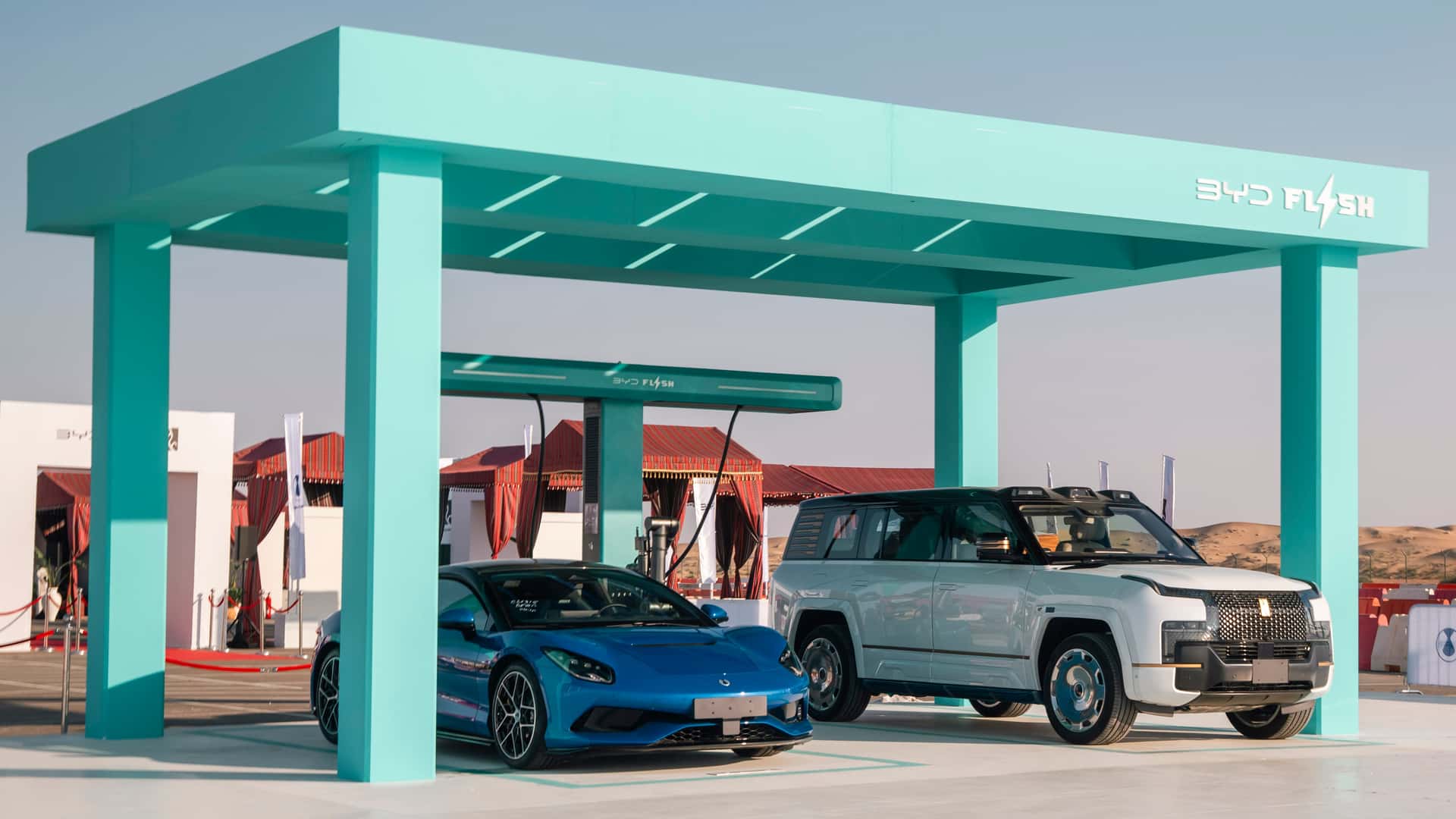
In a significant stride towards sustainable and accessible electric vehicle (EV) infrastructure, Chinese automotive giant BYD has unveiled a cutting-edge charging solution that combines solar power generation, robust battery storage, advanced Flash Charging technology, and a sophisticated robotic arm. This futuristic charging station is engineered to deliver fast charging capabilities even in locations devoid of conventional grid connections, presenting a transformative approach to EV adoption worldwide.
The innovation addresses a crucial challenge in the widespread adoption of electric vehicles: ensuring reliable and rapid charging infrastructure in diverse geographical settings. By leveraging renewable energy and on-site storage, BYD aims to democratize access to high-speed EV charging, particularly for areas where grid integration is either impractical or excessively costly.

The Synergy of Solar, Batteries, and BYD Flash Charging
At the heart of BYD’s new installation, prominently demonstrated in the challenging environment of the Abu Dhabi desert, lies a powerful combination of technologies. Solar panels harness the sun’s energy, which is then stored in integrated battery packs. This stored energy powers the Flash Charging system, which subsequently charges electric vehicles.
This proposition is elegantly simple yet profoundly impactful. The generated electricity from solar arrays is fed into batteries, creating a self-sufficient energy ecosystem. This stored power then becomes readily available for high-speed charging, circumventing the need for a constant, high-capacity grid connection.
Boosting Charging Capabilities with On-Site Energy Storage
The concept of battery-backed charging is gaining traction across the EV industry, and BYD Flash Charging exemplifies its benefits. Such systems allow charging stations to deliver significantly more power than their grid connection might otherwise permit. This is particularly advantageous during peak demand periods, as it reduces strain on the local electricity grid while maintaining rapid charging speeds for users.

Leading companies like Tesla, with its Supercharger sites utilizing Megapack batteries, and specialists such as Electric Era and Beam Global, are also investing heavily in similar battery-backed solutions. Even standard BYD Flash chargers, not necessarily in off-grid desert locations, incorporate on-site energy storage to enhance power delivery and optimize grid interaction.
Technical Prowess of BYD Flash Charging Stations
Each of BYD’s T-shaped Flash chargers is a marvel of engineering, equipped with two 185-kilowatt-hour (kWh) storage batteries, totaling 370 kWh of on-site energy capacity. These batteries are designed to draw power from the grid within a range of 100 to 560 kilowatts (kW), effectively buffering and stabilizing the power supply before delivering it to the vehicles at much higher rates.
The charging units are capable of impressive power output. They can supply up to 1,500 kW through a single cable, or up to 1,000 kW when both charging cables are in simultaneous use. This capacity ensures that compatible electric vehicles can receive a substantial charge in mere minutes, drastically shortening downtime for drivers.
Unveiling Off-Grid Potential: The Abu Dhabi Installation
While the integration of solar panels into this advanced system is a critical differentiator, BYD has yet to release comprehensive technical specifications regarding the battery capacity and solar output specifically for its new desert installation. This crucial information would clarify the exact number of vehicles the station can charge—and at what speed—relying solely on solar power. Despite this, the demonstration in the Abu Dhabi desert underscores the tangible potential for energy independence in EV charging infrastructure.
The underlying principle is clear: by combining photovoltaic generation with substantial energy storage, BYD Flash Charging offers a blueprint for reliable EV charging in remote areas, disaster-prone regions, or any location where extending grid infrastructure is uneconomical or technically challenging.
Blazing-Fast Charging Times and Vehicle Compatibility
The BYD Flash Charging hardware is engineered for extraordinary speed. With the company’s latest 1,500-kW Flash chargers, compatible vehicles equipped with BYD’s second-generation Blade battery can achieve a charge from 10% to 70% in an astonishing five minutes. Pushing further, these vehicles can reach 97% battery capacity in just nine minutes, setting new benchmarks for charging efficiency.
This rapid charging capability was notably showcased with the Denza Z9 GT, an electric wagon. During a demonstration, the vehicle charged from 10% to 80% in six minutes and 32 seconds, subsequently reaching 97% in nine minutes and 22 seconds. Such performance highlights the practical advantages of BYD Flash Charging for drivers needing quick turnarounds.
The Robotic Arm: Enhancing Autonomy and User Experience
Adding another layer of innovation, the BYD Flash Charging station features a sophisticated robotic arm. This automated mechanism is designed to plug the charging cable into the EV, eliminating the need for manual intervention. When combined with automated parking systems, this technology facilitates a completely hands-free charging experience, enhancing convenience and accessibility for drivers.
The integration of a robotic arm not only streamlines the charging process but also represents a step towards fully autonomous vehicle ecosystems. It can improve safety, especially in adverse weather conditions, and cater to drivers with mobility challenges, making EV charging more inclusive.
BYD’s Ambitious Global Expansion Plans
BYD’s advanced charging infrastructure is now poised for a global rollout. The company has articulated ambitious plans to establish 6,000 Flash Charging stations worldwide by the end of 2027. This aggressive expansion strategy indicates BYD’s commitment to becoming a dominant player not only in EV manufacturing but also in the essential support infrastructure.
While the company has not specified how many of these planned stations will incorporate solar power, off-grid operation, or the robotic arm feature, the initiative marks a significant investment in global EV readiness. Europe is already experiencing the deployment of BYD Flash Charging with operational sites in Italy, Germany, France, and the United Kingdom. Furthermore, Canada is slated to be the next region to benefit from this advanced charging technology, signaling a broad international push.
Future Outlook for EV Infrastructure and Energy Independence
BYD’s development of solar and battery-backed BYD Flash Charging stations with robotic automation represents a pivotal moment in the evolution of EV infrastructure. By decoupling fast charging from direct grid reliance and automating the process, BYD is paving the way for a more resilient, accessible, and convenient electric mobility future.
The continued rollout of these stations, especially in developing regions or areas with weak grid infrastructure, could significantly accelerate EV adoption. As the electric vehicle market matures, innovations that address range anxiety and charging accessibility, like the BYD Flash Charging system, will be instrumental in driving the transition to sustainable transportation globally.
FAQ Section
What is unique about BYD’s new EV charger?
BYD’s new charger uniquely combines solar panels for renewable energy generation, substantial battery storage for off-grid operation, advanced Flash Charging capabilities for rapid power delivery, and a robotic arm for automated vehicle connection. This integration allows for fast, independent, and hands-free EV charging.
How does the BYD Flash Charging station achieve off-grid operation?
The station achieves off-grid operation by utilizing solar panels to generate electricity, which is then stored in integrated battery packs. This stored energy powers the Flash Charging system, enabling it to charge EVs without a direct, constant high-power connection to the main electricity grid, making it ideal for remote areas.
What are the maximum charging speeds of BYD Flash Charging?
BYD Flash Charging stations can deliver up to 1,500 kW through a single cable or up to 1,000 kW when two cables are used simultaneously. This high power output allows compatible electric vehicles to achieve a significant charge, such as 10% to 70%, in just five minutes.
Which vehicles are compatible with BYD’s fastest charging technology?
The fastest charging speeds of BYD Flash Charging are compatible with vehicles running BYD’s second-generation Blade battery. The Denza Z9 GT, an electric wagon, has been showcased demonstrating its ability to charge from 10% to 80% in under seven minutes using this technology.
What role does the robotic arm play in the charging process?
The robotic arm automates the physical connection of the charging cable to the electric vehicle. This eliminates the need for manual plugging, enhancing user convenience and safety. It also integrates seamlessly with automated parking systems to offer a fully hands-free charging experience.
Where are BYD Flash Charging stations being deployed globally?
BYD plans to establish 6,000 Flash Charging stations worldwide by the end of 2027. Initial deployments have already commenced in European countries including Italy, Germany, France, and the United Kingdom. Canada is also slated for upcoming expansion, indicating a broad international rollout strategy.
How does battery-backed charging benefit the electricity grid?
Battery-backed charging benefits the grid by allowing stations to deliver more power than their immediate grid connection can supply, especially during peak demand periods. This reduces strain on the local electricity infrastructure, stabilizes power delivery, and optimizes energy consumption from the grid over time.