
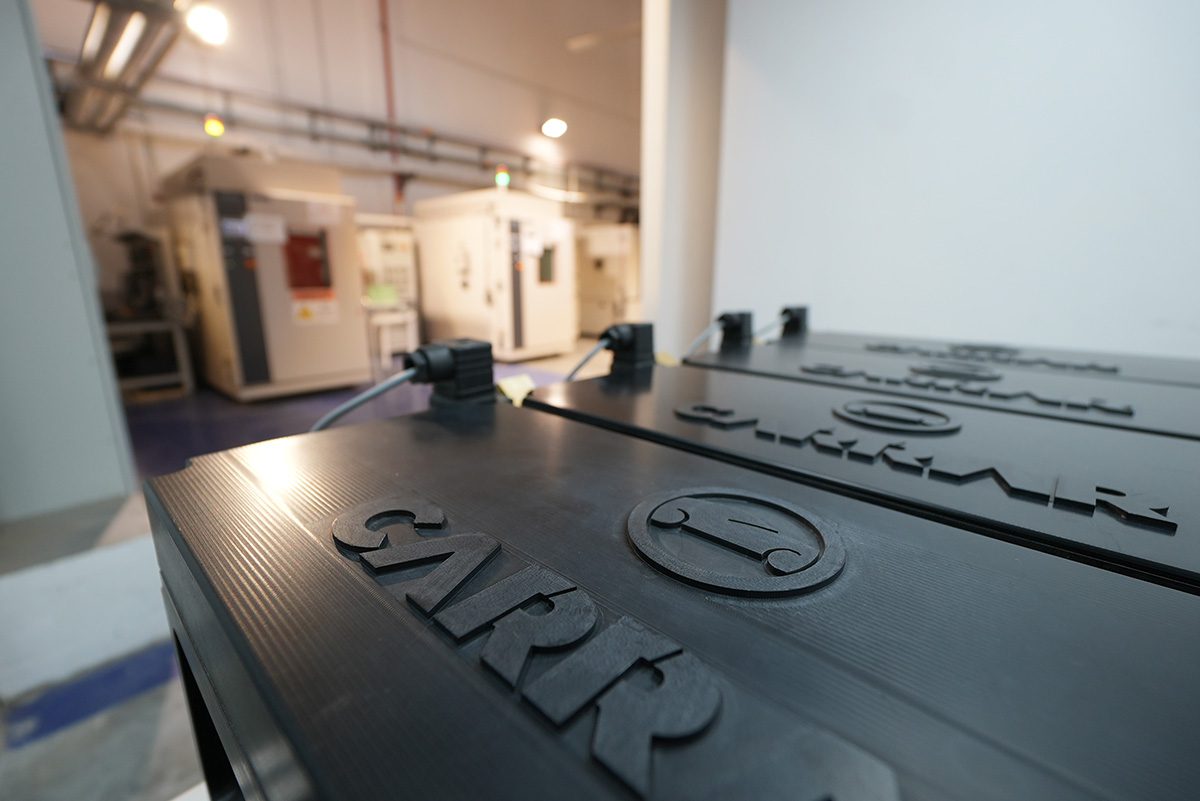
Carrar, a company specializing in advanced battery thermal management, has announced a significant breakthrough in battery safety with its Two-Phase Immersion Architecture. According to laboratory tests conducted by the company, this innovative system has successfully prevented thermal runaway propagation between high-energy Nickel Manganese Cobalt (NMC) pouch cells, even under extreme failure conditions.
Revolutionary Safety Testing Achieves Unprecedented Results
In a critical test scenario, a 72 Ah pouch cell was deliberately pushed into thermal failure. This triggered a rapid temperature increase exceeding 15°C per second, causing the compromised cell to reach temperatures above 800°C. Crucially, an adjacent cell in the same module remained at a stable temperature of approximately 50°C, demonstrating the system’s robust protective capabilities.

Carrar states that this outcome signifies a complete prevention of cascade failure. This is a major safety challenge for both Battery Energy Storage Systems (BESS) and electric vehicle (EV) battery packs, where uncontrolled thermal events can have severe consequences.
How Carrar’s Immersion Cooling Architecture Works
The company’s proprietary approach involves submerging battery modules within a specialized dielectric fluid. This fluid is engineered to boil at precise temperatures. Under normal operating conditions, the phase-change cooling mechanism ensures uniform cell temperatures and actively prevents the formation of hotspots, thereby optimizing battery performance and longevity.
During failure conditions, the dielectric fluid’s latent heat absorption capabilities come into play. This mechanism is designed to absorb sudden thermal spikes rapidly, effectively stopping the spread of heat and preventing a chain reaction of failures.

Exceeding Stringent Safety Standards
Carrar is highlighting how its immersion-cooled battery architecture not only meets but significantly exceeds current and upcoming safety regulations. The system is reported to surpass the stringent requirements of China’s GB 38031-2025 standard, which mandates zero fire and zero explosion for a duration of two hours following a thermal runaway event.
Furthermore, the architecture aligns with the direction of UL9540A:2025, a key standard for stationary energy storage systems. A notable aspect of Carrar’s solution is its passive operation. The system achieves these safety levels without the need for complex sensors, active suppression systems, or any other form of external intervention.
Commercial Readiness and Automotive Partnerships
Bar Ben Horin, VP of Product at Carrar, emphasized the dramatic difference observed during testing. “We’re seeing the triggered cell hit catastrophic temperatures while adjacent cells remain near ambient,” he stated, underscoring the effectiveness of the cooling system.
Looking ahead, CEO Eitam Friedman announced that Carrar expects its BESS systems to be commercially available by the end of 2026. The company is already actively engaged with automotive partners on multi-year development programs, indicating strong industry interest and confidence in their technology for future EV applications.
The development addresses a critical need for enhanced battery safety as the adoption of electric vehicles and large-scale energy storage solutions continues to accelerate globally. Carrar’s innovation in immersion cooling offers a promising path towards more reliable and secure battery technologies.