
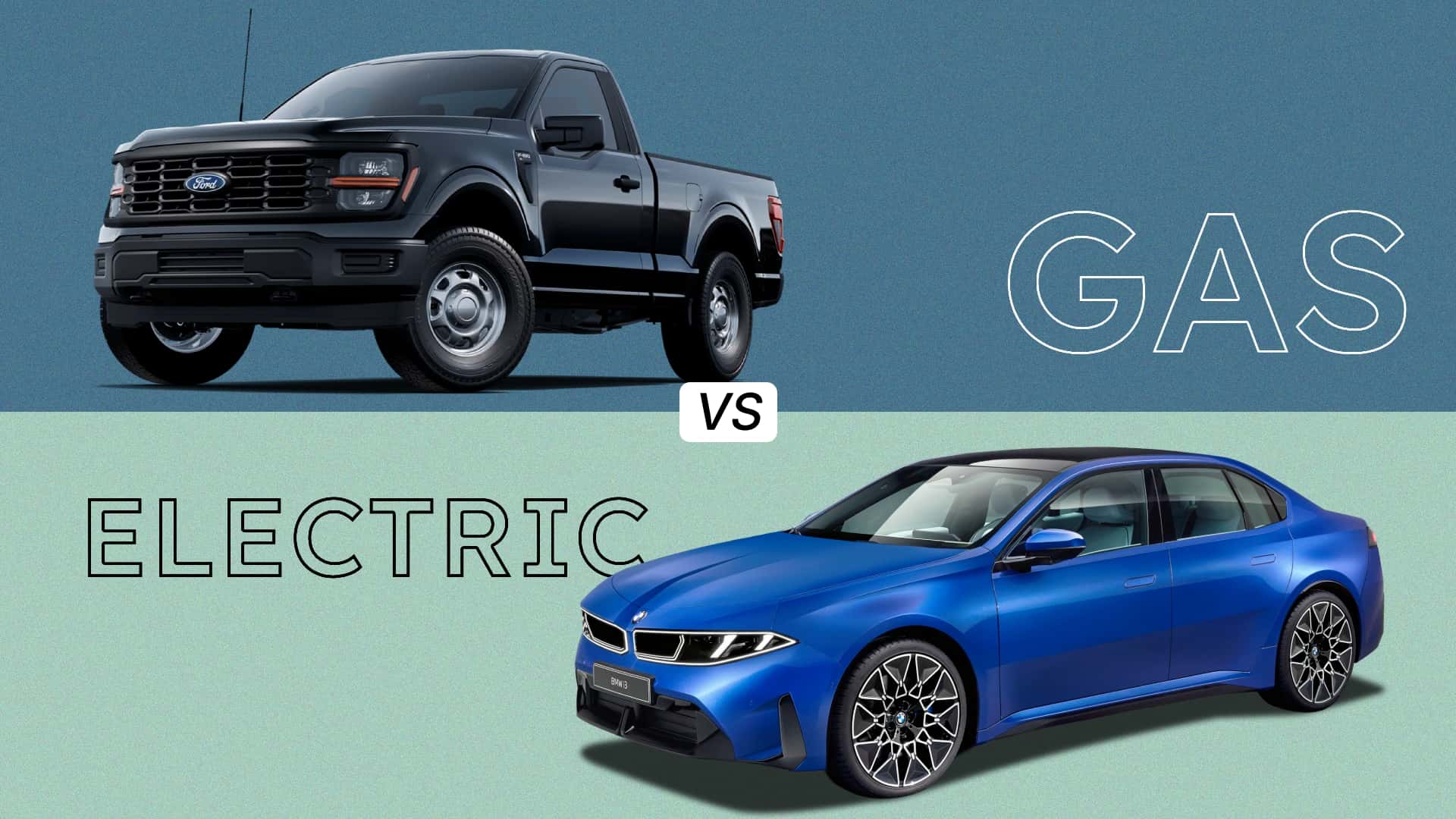
In the dynamic landscape of the automotive industry, a notable divergence in developmental pace has become increasingly apparent. While advancements in gasoline-powered vehicles have largely plateaued, marked by incremental changes and often accompanied by reliability trade-offs, the electric vehicle (EV) sector is witnessing a period of unprecedented innovation and rapid progress. This shift is not merely anecdotal but is underscored by tangible improvements across every critical metric, from range and charging infrastructure to pricing and overall vehicle choice.
Key Takeaways:
- Stagnant Gasoline Technology: Despite decades of refinement, internal combustion engine (ICE) technology shows diminishing returns, with recent attempts at efficiency often leading to increased complexity and reliability issues.
- Rapid EV Progress: In contrast, the EV sector has seen transformative advancements in just two years, far exceeding a decade of development in gas cars.
- Improved Efficiency and Reliability: Hybrid and pure EV powertrains consistently offer superior efficiency, and modern EV battery technology demonstrates robust longevity.
- Enhanced Charging and Range: Charging speeds have drastically improved, and battery ranges exceeding 300 miles are becoming standard across a growing number of models.
- Growing Accessibility: EV pricing is becoming more competitive, and the variety of compelling electric vehicle options from major automakers is expanding rapidly.
- Future-Proof Innovation: Ongoing battery breakthroughs and software-defined architectures promise continued growth and cost reduction for EVs, signaling a clear trajectory for sustainable mobility.
A Shift in Automotive Focus: Embracing Future Mobility
For journalists and industry observers dedicated to tracking automotive evolution, the past two and a half years have presented a stark contrast in developmental trajectories. A significant career pivot, for instance, saw a seasoned automotive journalist transition from reviewing high-performance supercars and robust trucks to focusing intently on the practical intricacies of charging infrastructure and battery chemistry for InsideEVs. This decision, initially met with surprise from peers accustomed to the perceived glamour of internal combustion engines (ICE), was rooted in a profound conviction: the future of automotive innovation lay unequivocally with electric propulsion.

This perspective emerged from a growing weariness with the stagnation observed in traditional gasoline car development, coupled with a keen desire to engage with a future unburdened by concerns of emissions and regulatory pressures. The exhilarating pace of EV progress offered a compelling alternative, promising a renewed sense of excitement for the automotive landscape ahead.
The Plateau of Gasoline Engine Development
Decades of iteration have brought gasoline engine technology to a point where significant, groundbreaking advancements have become increasingly rare. Since 2017, the automotive market has illustrated this plateau through various models that, despite refreshes, retain largely similar core powertrains to their predecessors.
Consider the Volvo S90, which in 2017 introduced a 2.0-liter inline-four engine, available with either a turbocharger or a combination of turbocharger and supercharger. Today, while the S90 is no longer offered in the American market, its SUV counterpart, the XC90, continues to utilize much the same engine and transmission combination. Any marginal improvement in fuel efficiency—a mere 1 mpg—is primarily attributable to the integration of a mild 48-volt hybrid system, rather than any fundamental breakthrough in gasoline engine design.

Similarly, America’s long-time best-selling vehicle, the Ford F-150, has maintained its core engine offerings—2.7-liter and 3.5-liter turbocharged V-6s, alongside a 5.0-liter V-8—for over a decade. While the 10-speed automatic transmission has become more widespread across the lineup, its rollout was reportedly accompanied by a protracted ‘teething period’ characterized by widespread reliability issues. The most significant improvement to the F-150 since 2017 has been the introduction of a hybrid option, reinforcing the notion that even the most robust gas products benefit significantly from electric assistance.
Reliability Compromises for Marginal Efficiency
The pursuit of even minor efficiency gains in gasoline engines has frequently necessitated increased complexity, often at the expense of established reliability. Chevrolet trucks, for instance, have experienced transmission problems across both their 8-speed and 10-speed models. Furthermore, the inclusion of cylinder-deactivation technology, introduced in 2007 for the venerable 5.3-liter V-8—a design that persisted for over two decades until 2027 models—has proven catastrophic. While intended to allow V-8s to operate on four cylinders under light loads for improved highway mileage, this technology significantly tarnished the once ‘ironclad reliability reputation’ of the 5.3-liter engine.
This pattern of complexity leading to reliability trade-offs was also exemplified by Toyota, a marque renowned for its bulletproof dependability. The previous-generation Tundra, famous for achieving 1,000,000 miles on original engines, was criticized for its 13 mpg city fuel economy. In response, Toyota introduced an ‘all-new V-6’ engine featuring advanced turbocharging and direct injection. The outcome, however, was an ‘unmitigated disaster,’ leading to ‘over 100,000 recalled trucks and countless engine failures.’
These instances underscore a critical challenge: when even a leader in automotive reliability struggles to introduce a clean-sheet engine design without years of ‘catastrophic failures,’ it suggests that modern gasoline engines are being pushed beyond their practical limits. Consumers demand lower fuel costs without sacrificing power, capability, or incurring greater repair bills. This confluence of demands points towards electrification as the most viable path for dramatic improvements in automotive powertrain technology, particularly given the stalled progress in pure gas designs.
The Unstoppable March of EV and Hybrid Innovation
While gasoline vehicles have struggled for meaningful evolution, the electric and hybrid sectors have demonstrated breathtaking strides. The changing leadership in vehicle sales highlights this shift: the Ford F-150, once America’s perennial best-seller in 2017, was unseated by the Toyota RAV4 last year. This market triumph is largely attributed to the RAV4’s ‘fantastic hybrid-only redesign,’ proving that hybrid powertrains not only significantly boost efficiency but also tend to improve longevity.
This trend extends across the industry. Hybrid options for Toyota trucks and Lexus SUVs have seen substantial enhancements, while Ford’s expansion of its hybrid powertrain to the all-wheel-drive Maverick has solidified its lead over purely gas competitors like the Hyundai Santa Cruz. The most innovative new products, from ‘longer-range Volvo PHEVs’ to ‘awesome Ferrari hybrids,’ are increasingly defined by their electric assistance, demonstrating a clear path for powertrain evolution.
Accelerated EV Progress in Core Metrics
The pace of pure EV progress has been even more dramatic. Just two years ago, the quickest-charging EVs available in America typically required 18 to 19 minutes to charge from 10-80 percent. Today, a new Mercedes model can achieve this in just 11 minutes, a testament to rapid advancements in battery and charging technology.
Range anxiety, a historical barrier for EV adoption, is also rapidly becoming a relic of the past. The Lucid Air Grand Touring still leads with an impressive 516 miles of range, but its starting price has dropped by ‘over $10,000.’ Furthermore, a growing number of new models from major manufacturers such as Chevrolet, Cadillac, BMW, Volvo, and Lucid itself now exceed 400 miles of EPA range. More importantly, the ‘sweet spot’ of over 300 miles of range has seen an explosion of options, from ‘only 21 EV variants’ at the end of 2023 to an anticipated ‘around 60 models’ by the close of this year, as reported by industry analysis.
Beyond individual vehicle performance, the charging infrastructure supporting EVs has seen monumental expansion. America’s fast-charging network is described as ‘gigantic, and still expanding rapidly.’ A ‘total game-changer’ was observed with Tesla’s decision in 2023 to open its extensive Supercharger network to other EVs, effectively alleviating range concerns for many drivers.
Enhancing Reliability, Software, and Choice
Concerns about EV battery degradation have been largely allayed by accumulating data, which indicates that ‘modern EV batteries degrade slowly and rarely fail.’ This contributes to improving overall reliability, a factor further bolstered by automakers pivoting away from ‘screen-only control schemes’ towards more user-friendly interfaces.
Software reliability, initially a challenge for some early EV platforms, has also seen rapid improvement. General Motors’ Ultium cars, such as the Chevrolet Blazer EV and Cadillac Lyriq, which were once described as ‘buggy messes,’ have demonstrated significant advancements, with a Blazer EV owner reporting ‘no meaningful software bug in at least 21 months.’ The integration of over-the-air updates, such as access to Google’s Gemini AI assistant, further highlights the evolving digital sophistication of modern EVs.
Perhaps the most profound transformation in the EV landscape is the explosion of choice. Two years ago, options were limited and often uncompelling. Today, ‘you can get a polished electric option from almost any automaker.’ Partnerships like Toyota’s with Subaru are leading to anticipated models such as an electric Outback. GM offers a diverse range, including an ‘exceptional $35,000 long-range SUV.’ Rivian has introduced mass-market options, while European luxury brands like BMW, Mercedes, and Volvo are launching ‘software-defined, 800-volt EVs with giant ranges’ that are increasingly competitive against their gasoline counterparts.
The arrival of compelling affordable options is also accelerating EV progress. Slate is set to launch a ‘$25,000 EV pickup,’ with a ‘sub-$30,000 Ford alternative right around the corner.’ Existing models are also seeing significant upgrades: the ‘2027 Chevy Bolt charges from 10-80% in about half the time as its predecessor and costs the same amount,’ while the base Nissan Leaf now offers ‘double the range of its 2024 counterpart’ at a similar price point, coupled with a ‘Tesla-style charging port, way better charging specs, and a cooler design.’
The Future is Electric: Uncharted Territory for EV Innovation
The trajectory for electric vehicles is poised for continued exponential growth. The gearing up of the North American battery supply chain is driving down prices at a rapid pace, fueled by constant iteration from automakers. Future battery breakthroughs, including ‘high-silicon anodes, lithium-manganese rich chemistry, and solid-state technology,’ hold the promise of further reducing costs while simultaneously enhancing range and longevity.
Furthermore, the proliferation of ‘software-defined vehicle architectures’ is simplifying EV design and manufacturing. This approach makes them ‘cheaper to build, easier to service, and simple to update,’ creating a fundamentally different and more agile development cycle compared to traditional vehicles. This dynamic environment contrasts sharply with the gasoline engine sector, where ‘no equivalent gasoline breakthroughs are on the horizon.’
After more than 150 years of development, the ‘easy money’ in gasoline engine innovation has been realized. Doubling miles per gallon without electrification is increasingly unfeasible, and significant cost reductions without major sacrifices appear unlikely. The technology, as it stands, is undeniably ‘nearing the end of the line.’
For discerning consumers and industry observers, the message is clear: while traditional automotive technology has reached its zenith, EV progress is merely at its nascent stage, promising a future of innovation and efficiency that continues to unfold.
Frequently Asked Questions (FAQ)
Q1: How does EV development compare to gasoline car development over the last decade?
EV development has shown significantly more rapid and transformative progress in the last two years than gasoline car development has in a decade. While gas cars have seen marginal, often complex, efficiency improvements, EVs have advanced dramatically in range, charging speed, affordability, and overall technological sophistication.
Q2: What are some specific examples of stagnation in gasoline car technology?
Examples include Volvo’s continued use of similar 2.0-liter engines since 2017 with minimal efficiency gains, Ford F-150 maintaining core engine options for a decade with transmission reliability issues, and Toyota’s recent Tundra V6 engine redesign leading to over 100,000 recalls due to failures linked to increased complexity for efficiency.
Q3: What key areas have seen the most significant EV progress?
Significant EV progress has been observed in charging speeds (reducing 10-80% charge times from ~19 to 11 minutes), range capabilities (more models exceeding 300 and 400 miles), expanded charging infrastructure, improved battery reliability, and substantial growth in compelling and affordable EV options across all vehicle segments.
Q4: How has EV charging infrastructure improved in recent years?
America’s fast-charging network has expanded rapidly. A major breakthrough was Tesla opening its Supercharger network to other EVs starting in 2023, which significantly increased available charging points and alleviated range anxiety for non-Tesla EV owners.
Q5: Are EVs becoming more affordable and offering more choices?
Yes, EV prices are becoming more competitive, with models like the Chevy Equinox EV starting at $35,000 and upcoming options at $25,000. Automakers are offering a much wider array of compelling electric models across various categories, providing consumers with unprecedented choice compared to just a few years ago.
Q6: What future advancements are expected in EV technology?
Future advancements include breakthroughs in battery chemistry (e.g., high-silicon anodes, lithium-manganese rich chemistry, solid-state technology) to further reduce costs, improve range, and enhance longevity. The adoption of software-defined vehicle architectures will also lead to simpler, cheaper-to-build, and easier-to-update EVs.
Q7: Has software reliability improved in electric vehicles?
Yes, software reliability in EVs has seen rapid improvement. Platforms that initially faced bugs, like GM’s Ultium cars (Blazer EV, Lyriq), have demonstrated significant stability over time, with advanced features like Google’s Gemini AI assistant now delivered via over-the-air updates, enhancing the user experience and vehicle functionality.
Q8: Why is it suggested that gasoline engine technology is ‘nearing the end of the line’?
After over 150 years of development, gasoline engine technology has largely exhausted its potential for revolutionary improvements. Efforts to gain minor efficiency often introduce costly complexity and reliability issues. Without incorporating electric assistance, dramatic leaps in fuel economy or significant cost reductions are not foreseen, indicating its mature stage of development.