
Key Takeaways:
- In just two and a half years, electric vehicle (EV) technology has demonstrated more significant progress than internal combustion engine (ICE) development has achieved in a decade.
- Gasoline-powered vehicles are experiencing stagnation in core engine and transmission designs, with efficiency gains often coming at the cost of increased complexity and reduced reliability.
- Hybrid technology is emerging as a crucial bridge, significantly boosting the efficiency and longevity of traditionally gas-guzzling vehicles.
- Pure EVs are rapidly improving across critical metrics, including charging speed, battery range, affordability, and the robustness of charging infrastructure.
- Automakers are dramatically expanding EV choices, with compelling and affordable electric models becoming increasingly available, backed by software advancements and future battery breakthroughs.
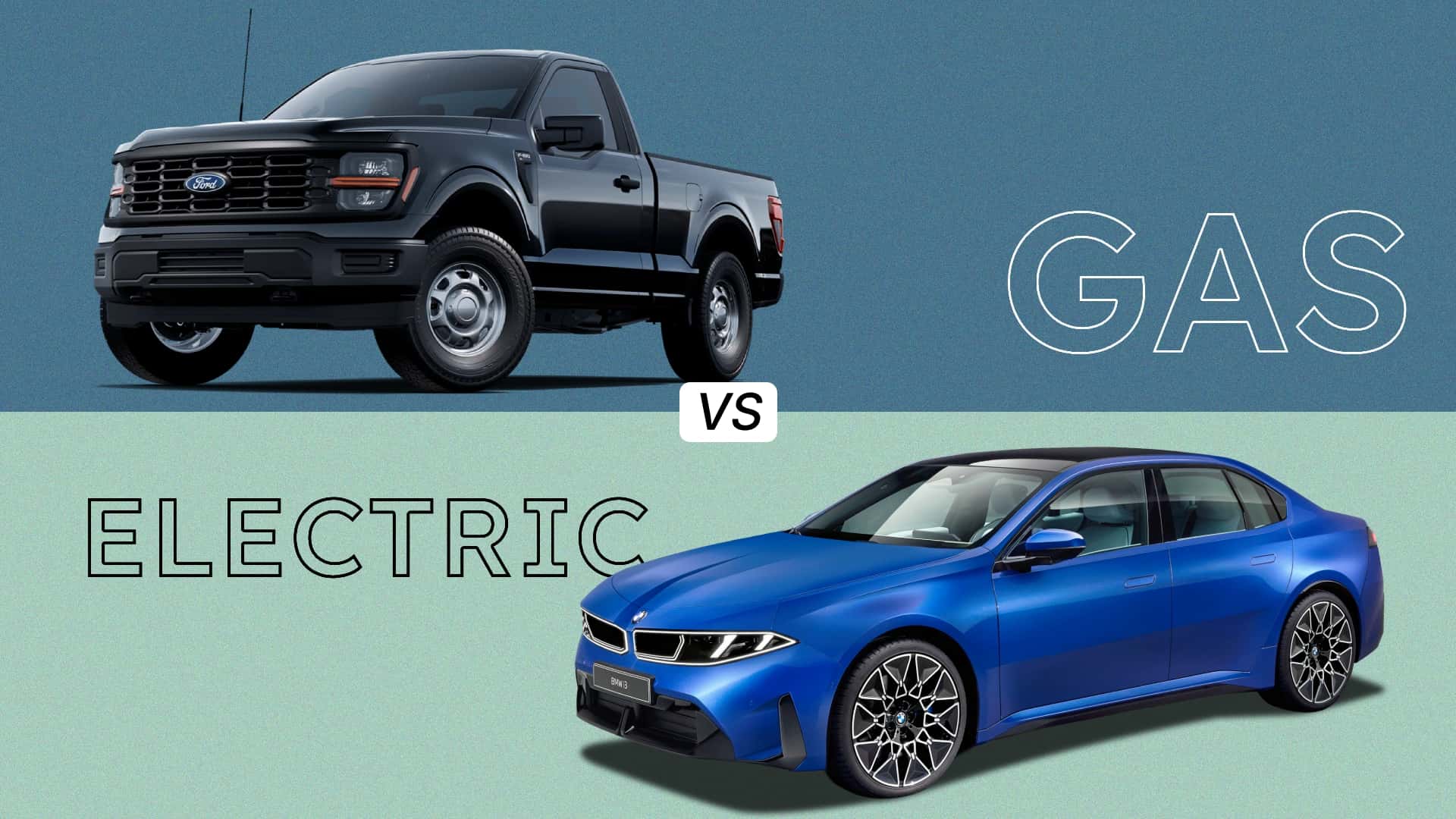
The automotive industry is witnessing a profound shift, with electric vehicle (EV) technology demonstrating an unprecedented pace of advancement that dwarfs the incremental improvements seen in gasoline-powered vehicles over the past decade. This rapid evolution, observed keenly over the last two and a half years, underscores a critical juncture in automotive engineering, as the future trajectory for internal combustion engines (ICE) appears increasingly limited.

For many automotive journalists, the transition from covering high-performance gasoline supercars to the practicalities of charging infrastructure and battery chemistry was initially met with skepticism from peers. The perception often held that even the most formidable EV lacked the visceral excitement and lightweight agility of a traditional sports car. However, a deeper look reveals a compelling narrative of innovation and progress that makes the electric future not just inevitable but genuinely thrilling.
The motivation behind embracing the electric vehicle sector stemmed from a desire to engage with a forward-looking industry, moving beyond a past often celebrated with nostalgia while the future was clouded by concerns over emissions and stringent regulations. The discernible stagnation in the development of traditional gasoline cars made the pivot to electric propulsion a clear path forward for embracing progress.
Stagnation of Gasoline Engine Development
A professional career reviewing vehicles since 2017 offers a clear perspective on the contrasting trajectories. Consider the Volvo S90, a flagship sedan launched as part of a new generation under Chinese ownership. Its powertrain, a 2.0-liter inline-four engine, utilized either a turbocharger or a combination of a turbocharger and a supercharger. Fast forward to today, and while the S90 has exited the US market, its SUV counterpart, the XC90, largely retains the same engine and transmission combination. Improvements have been confined mostly to cabin technology and tuning, with only a marginal 1 mpg gain attributed to a mild 48-volt hybrid system rather than fundamental gasoline engine design enhancements.

Similarly, America’s long-standing best-selling vehicle, the Ford F-150 pickup, serves as another example. In 2017, it offered 2.7-liter and 3.5-liter turbocharged V-6 engines alongside a 5.0-liter V-8. A decade later, the standard F-150 continues with these same engine options, supplemented by a hybrid variant. While the 10-speed automatic transmission became more widespread, its initial rollout was marred by reliability issues, highlighting the challenges of integrating complex mechanical advancements.
Reliability Trade-offs in Pursuit of Efficiency
The pursuit of marginal efficiency gains in gasoline engines has frequently introduced significant mechanical complexity, often at the expense of reliability. Chevrolet trucks, for instance, encountered transmission problems with both 8- and 10-speed models. Even the venerable 5.3-liter V-8 engine, a design largely unchanged for over two decades, faced issues with the introduction of cylinder-deactivation technology in 2007. This technology, designed to allow the V-8 to operate on four cylinders under light load for minor highway fuel economy improvements, ultimately compromised the engine’s long-standing reputation for robust reliability.
Toyota, renowned for its bulletproof reliability, also faced these challenges with the redesigned Tundra pickup. The previous generation’s V-8 engine was legendary for its longevity, with some examples surpassing a million miles. However, consumer demand for improved fuel economy prompted Toyota to introduce an all-new V-6 engine featuring advanced turbocharging and direct injection. This modern design, despite its sophisticated engineering, led to significant setbacks, including recalls of over 100,000 trucks and numerous reported engine failures.
These instances collectively underscore a critical limitation: pushing gasoline engines for incremental efficiency often demands adding layers of complexity that can undermine fundamental reliability. Consumers desire lower fuel costs without sacrificing power, capability, or incurring higher repair bills. This dilemma points toward electrification as the most viable pathway for dramatic improvements in automotive powertrain technology.
The Ascent of EV and Hybrid Technology
The shift in consumer preferences is evident in market trends. The Toyota RAV4, with its successful hybrid-only redesign, supplanted the Ford F-150 as America’s best-selling vehicle last year. This success highlights a crucial distinction: while many technologies have complicated gasoline engines for minor efficiency boosts, adopting hybrid powertrains consistently improves both longevity and fuel efficiency. This is largely attributable to the inherent efficiency of electric propulsion and the durability of modern batteries and electric motors.
The RAV4’s transition from a standard four-cylinder engine to a hybrid-only offering has positioned it significantly ahead of its purely gas-powered competitors. Similar advancements are seen in hybrid options for Toyota trucks and Lexus SUVs, while Ford’s expansion of its hybrid powertrain to the all-wheel-drive Maverick has strengthened its market lead against rivals like the Hyundai Santa Cruz. Even in the high-performance segment, innovative new products, from longer-range Volvo plug-in hybrids (PHEVs) to advanced Ferrari hybrids, increasingly leverage electric assistance to enhance performance and efficiency.
Dramatic Progress in Pure Electric Vehicles
The pace of improvement in the pure EV sector is even more remarkable. Just two years ago, the fastest-charging EVs available in America typically required 18 to 19 minutes to charge from 10% to 80%. Today, Mercedes-Benz has launched a vehicle capable of completing the same charge in just 11 minutes, illustrating a nearly 40% reduction in charging time.
Affordability and range have also seen substantial gains. The Chevrolet Blazer EV, which started at $58,590, is now available from approximately $45,000. Furthermore, the Chevrolet Equinox EV, offering over 300 miles of range, is priced from just $35,000. While the Lucid Air Grand Touring still holds the record for the longest-range EV at 516 miles, its starting price has decreased by over $10,000. Concurrently, a growing number of models from brands like Chevy, Cadillac, BMW, Volvo, and Lucid itself now offer over 400 miles of EPA-estimated range, diversifying high-range options significantly.
The sweet spot for most consumers, however, lies in vehicles offering over 300 miles of range. At the close of 2023, only 21 EV variants met this criterion. By the end of the current year, this number is projected to balloon to around 60 models, significantly expanding consumer choice and alleviating range anxiety.
Expanding Charging Infrastructure and Enhanced Reliability
The concern over charging infrastructure has also diminished considerably. The American fast-charging network has expanded rapidly, with numerous new fast-charging ports becoming operational within the past two years. A significant game-changer was Tesla’s decision to open its extensive Supercharger network to other EVs starting in 2023, providing unparalleled accessibility and convenience for non-Tesla electric vehicle owners.
Furthermore, accumulating data consistently demonstrates that modern EV batteries degrade slowly and rarely fail, enhancing confidence in electric vehicle reliability. Automakers are also refining user interfaces, moving away from overly screen-centric control schemes towards more intuitive designs.
Software reliability, a common initial hurdle for new EV platforms, has also improved dramatically. Early Ultium-platform vehicles from General Motors, such as the Chevrolet Blazer EV and Cadillac Lyriq, experienced software bugs. However, sustained real-world usage has shown significant stability improvements, with ongoing over-the-air updates now delivering new features, such as Google’s Gemini AI assistant, further enhancing the user experience.
The Future of Electric Vehicle Choices
Beyond technical specifications, the most profound improvement in the EV landscape is the sheer breadth of choice now available to consumers. In early 2024, the market offered limited compelling EV options. Today, nearly every major automaker provides a polished electric model across various segments.
Toyota is expanding its EV lineup through collaborations like its partnership with Subaru, potentially leading to long-anticipated models such as an electric Outback. GM offers a diverse range of EVs, including an exceptional $35,000 long-range SUV. Rivian has successfully introduced mass-market options, while premium brands like BMW, Mercedes, and Volvo are launching advanced, software-defined 800-volt EVs that boast extensive ranges and increasingly competitive pricing compared to their gasoline counterparts.
Affordable EV options are also making a significant entry into the market. A $25,000 EV pickup from Slate is anticipated, with a sub-$30,000 Ford alternative on the horizon. Existing affordable models have also seen substantial upgrades. The upcoming 2027 Chevrolet Bolt is expected to charge from 10% to 80% in half the time of its predecessor while maintaining a similar price point. The base version of the Nissan Leaf now offers double the range of its 2024 counterpart, alongside enhanced charging specifications and a refreshed design.
Outlook: Continued Innovation vs. Limited Horizons
The trajectory for electric vehicle technology promises even greater advancements. As the North American battery supply chain matures, costs are projected to fall further, and manufacturers are continuously iterating on designs. Breakthroughs in battery chemistry, such as high-silicon anodes, lithium-manganese rich formulations, and solid-state technology, hold the potential to significantly reduce costs while improving range and longevity. Simultaneously, the proliferation of software-defined vehicle architectures is simplifying EV manufacturing, reducing servicing costs, and enabling seamless over-the-air updates.
In stark contrast, the internal combustion engine faces diminishing returns. After over 150 years of relentless iteration, the ‘easy money’ in efficiency gains has largely been exhausted. Significant improvements in miles per gallon (MPG) now almost invariably require the integration of electric assistance, and driving down manufacturing costs much further without major compromises seems improbable. The technology, in essence, is approaching its practical limits.
The rapid acceleration of electric vehicle technology improvement in recent years marks a pivotal moment, signaling a future where innovation is primarily driven by electrification. While gasoline engines continue to face inherent limitations, the journey for EVs is just beginning.
FAQ Section
Q1: Why are electric vehicles improving faster than gasoline cars?
A1: Electric vehicle technology is relatively nascent compared to internal combustion engines, which have been refined for over a century. This means EVs have more room for exponential growth in battery density, charging speeds, motor efficiency, and software integration, leading to rapid advancements in a short period.
Q2: What specific areas of EV technology have seen the most improvement?
A2: Key areas include charging speed, with some vehicles charging from 10-80% in nearly half the time compared to two years ago. Battery range has expanded, and affordability has increased dramatically, with more long-range options becoming available at lower price points. Charging infrastructure and software reliability have also significantly improved.
Q3: Have gasoline cars made any notable advancements recently?
A3: While some improvements exist, they are often incremental. Efficiency gains in gasoline engines frequently come from adding complexity like turbochargers, direct injection, or cylinder deactivation, which can sometimes lead to reliability issues. True significant advancements typically involve hybridizing the powertrain.
Q4: How has hybrid technology impacted the automotive market?
A4: Hybrid technology has been a game-changer, offering a bridge between traditional gasoline cars and pure EVs. It significantly boosts fuel efficiency and often improves vehicle longevity by combining the strengths of electric motors and gasoline engines, as seen in the Toyota RAV4 and various truck/SUV offerings.
Q5: What are the future prospects for EV technology?
A5: The future looks promising with ongoing research into next-generation battery technologies like high-silicon anodes, lithium-manganese rich chemistry, and solid-state batteries, which promise lower costs, greater range, and enhanced longevity. Software-defined vehicle architectures are also simplifying manufacturing and enabling advanced features via over-the-air updates.