
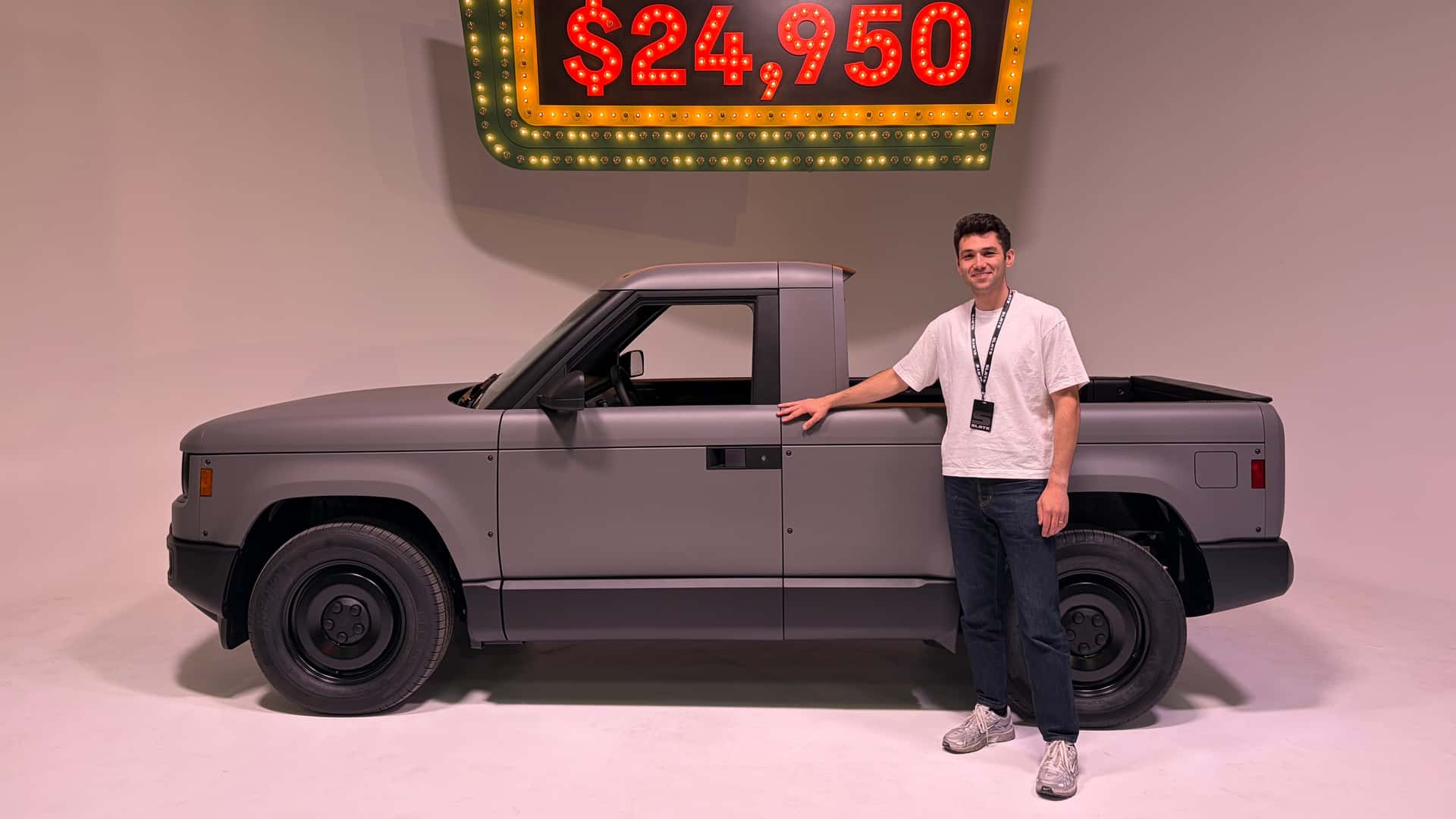
The automotive landscape is on the cusp of a significant shift with the imminent arrival of the Slate Truck. Priced at a highly competitive $24,950 and boasting a 205-mile range, this new entrant is moving from concept to reality, with preorders now open to the public. Production is slated to commence in Indiana during the fourth quarter of the year, signaling its near-term availability in American driveways.
While industry analysts have delved into the startup’s potential for success and its strategic adoption of LFP battery cells, a fundamental question persists among prospective buyers: Does the Slate Truck, with its manual windows and unadorned interior, feel excessively stripped down, even for its accessible price point?

Key Takeaways
- The Slate Truck, priced at $24,950, offers a 205-mile range and is set for Q4 production in Indiana.
- Its design emphasizes utility and simplicity, featuring a compact size akin to older small pickups.
- The interior is notably sparse, utilizing hard gray plastic and manual windows, aiming for authenticity over luxury.
- Despite its basic nature, it provides surprising interior roominess and practical features like climate control knobs.
- The truck exhibits a ‘punchy’ performance with 181 horsepower and a comfortable ride quality.
- Initial market reception is strong, with over 10,000 preorders logged shortly after opening.
First Impressions: A Glimpse into the Slate Truck’s Reality
To address prevailing consumer queries regarding the Slate Truck’s minimalist design, an exclusive opportunity arose to conduct an in-person evaluation. This included a detailed inspection of several Slate models in Los Angeles, culminating in a brief but insightful ride experience.
Having previously observed the Slate during its initial unveiling over a year ago, the current iterations showcased a marked improvement in refinement. These vehicles appeared more polished, allowing for a more thorough examination of their construction and features, offering a clearer picture of what consumers can expect.
Compact Stature and Utilitarian Design
One of the Slate Truck’s most striking characteristics is its remarkably compact size, particularly when viewed against the backdrop of contemporary pickup trucks. In an automotive market increasingly dominated by larger vehicles, the Slate offers a refreshing departure.

Measuring approximately two feet shorter than a Ford Maverick, a popular compact pickup, the Slate’s dimensions evoke a sense of nostalgia. Its form factor harks back to the practical charm of older, more modestly sized utility vehicles, such as the classic Toyota Tacoma or Ford Ranger models.
Beyond its dimensions, the Slate’s design language is distinctly boxy and utilitarian. It deliberately eschews elaborate styling flourishes, opting instead for an honest, functional aesthetic. This commitment to simplicity is further emphasized by its use of unremarkable steel wheels, contributing to an overall look that is both purposeful and unassuming.
Despite its lack of ostentation, the Slate Truck possesses a notable visual presence. Its straightforward shape and no-nonsense lines give it a handsome quality, almost resembling a life-sized toy. This unique design approach ensures it stands out without resorting to aggressive or overly complex styling cues.
The Interior: Stripped-Down Authenticity
The interior of the Slate Truck has undoubtedly been a focal point of public curiosity, particularly given its stated price point. Accessing the cabin reveals a design philosophy centered on fundamental utility.
The large, rectangular door handles, designed for ease of use, contribute to a positive initial tactile experience. Furthermore, the reassuring ‘thud’ as the door closes suggests a level of build quality that might be unexpected from the most affordable truck available in the American market.
Once inside, the base Slate Truck’s cabin, prior to any optional customizations, presents a strikingly spartan environment. The primary material visible throughout is hard gray plastic, featuring a subtle texture. While there is a slight visual contrast achieved by using a lighter material on the door panels and dashboard, the interior largely lacks complex visual interest or decorative elements.
In comparison, an entry-level Ford Maverick, available for just under $30,000, offers a more varied and styled interior. The Slate’s steering wheel provides only a minimal amount of give, and the presence of genuinely soft-touch materials is notably absent throughout the cabin, reinforcing its utilitarian ethos.
Essential Functionality and Customization Potential
Despite its minimalist approach, the Slate Truck strategically incorporates essential functionalities, albeit in its own distinctive manner. A true center console, for instance, is offered as an upgrade, priced at $250.
However, a molded plastic section between the seats provides basic amenities, including integrated cupholders and open storage compartments, catering to immediate needs. A simple glovebox is standard, though a locking mechanism for it is an extra-cost option, aligning with the truck’s à la carte accessory model.
Critical climate controls are managed via large, user-friendly knobs, a design choice necessitated by the absence of a central touchscreen interface. The vehicle’s technological integration is confined to a small screen positioned behind the steering wheel, which displays essential information such as speed and serves as the monitor for the backup camera.
The base Slate Truck is undeniably austere in its configuration, a direct consequence of its positioning as an accessible electric pickup. However, this perceived simplicity also offers a refreshing departure from increasingly complex vehicle interiors, minimizing distractions for the driver.
Crucially, the Slate feels authentic in its design. The automaker has not attempted to mimic a premium aesthetic with cheaper, ersatz materials, instead embracing its fundamental, no-frills identity. This approach resonates with consumers seeking practicality and honest value.
A significant aspect of the Slate Truck’s appeal lies in its extensive customization options. Through a comprehensive list of available accessories, owners can tailor the vehicle to their specific needs and preferences, effectively upgrading the base model’s functionality and comfort as desired.
Unexpected Roominess and Ride Dynamics
Despite its compact exterior, the Slate Truck surprises with a notably roomy interior. For individuals over six feet tall, the front seats offer ample headroom and legroom, ensuring a comfortable driving position without knees making contact with the dashboard.
Practical storage solutions include a decent amount of space located behind the seats, ideal for stashing items such as a backpack. Accessibility to the rear seating area is also facilitated, particularly with the optional $5,000 SUV kit, which incorporates a cleverly designed front seat that slides exceptionally far forward.
The rear seats themselves are reported to be unexpectedly comfortable, challenging preconceptions often associated with the back row of smaller utility vehicles.
On the road, the Slate Truck delivers a driving experience characterized by surprising responsiveness. A brief ten-minute ride, accompanied by a Slate engineer, highlighted the truck’s immediate power delivery. As with most electric vehicles, the Slate benefits from instant, low-end torque, which translates into a notably punchy and quick acceleration feel.
This immediate responsiveness is particularly impressive given the vehicle’s modest 181 horsepower, supplied by a rear-mounted motor. Its acceleration capabilities are likely to exceed the expectations of many drivers, proving quicker than its specifications might initially suggest.
The ride quality of the Slate Truck also proved to be solid. While not described as overtly plush, it also avoided any sense of undue harshness. The suspension effectively managed most road imperfections, contributing to a generally comfortable journey. This comfort was further enhanced by the seats, which were noted for their softness and supportive design.
Market Reception and Future Outlook
The ultimate success of the Slate Truck hinges on its reception by American consumers, particularly in how they embrace its unique combination of affordability, electric propulsion, and unpretentious design. The initial indicators, however, are remarkably positive.
Within mere hours of preorders becoming available, the company recorded an impressive uptake, logging over 10,000 reservations. This early surge in demand suggests a significant appetite in the market for a vehicle that prioritizes utility and value in an electric format. The ability of Slate to sustain this momentum will be a key factor to watch as production approaches.
Frequently Asked Questions (FAQ)
What is the starting price of the Slate Truck?
The Slate Truck has an announced final price of $24,950, positioning it as one of the most affordable electric pickup options entering the market. This competitive pricing is a core element of its appeal to a broad consumer base seeking value.
What is the estimated driving range of the Slate Truck?
The Slate Truck offers an estimated driving range of 205 miles on a single charge. This range is designed to cater to daily commuting needs and light utility tasks, providing practical electric mobility for its target demographic.
When is production of the Slate Truck scheduled to begin?
Production for the Slate Truck is scheduled to commence in Indiana during the fourth quarter of the current year. This timeline indicates that the vehicle will be available for delivery to pre-order customers in the near future.
What are the key features of the Slate Truck’s interior?
The interior of the Slate Truck is characterized by its minimalist design, featuring hard gray plastic and manual windows. It prioritizes functionality with essential climate control knobs and a small screen for speed and a backup camera, offering an authentic, distraction-free environment.
How powerful is the Slate Truck’s motor?
The Slate Truck is equipped with a rear-mounted electric motor that produces 181 horsepower. This configuration contributes to a surprisingly punchy and quick acceleration, leveraging the instant torque inherent in electric powertrains for responsive performance.
Is the Slate Truck’s interior spacious?
Despite its compact exterior, the Slate Truck offers surprising interior roominess. It provides ample headroom and legroom for taller occupants in the front, along with usable space behind the seats. The optional SUV kit further enhances rear passenger access and comfort.
How many preorders has the Slate Truck received?
Within the initial hours of preorders opening, the Slate Truck garnered over 10,000 reservations. This strong initial demand indicates significant market interest in its unique proposition as an affordable, utilitarian electric pickup truck.