
Key Takeaways:
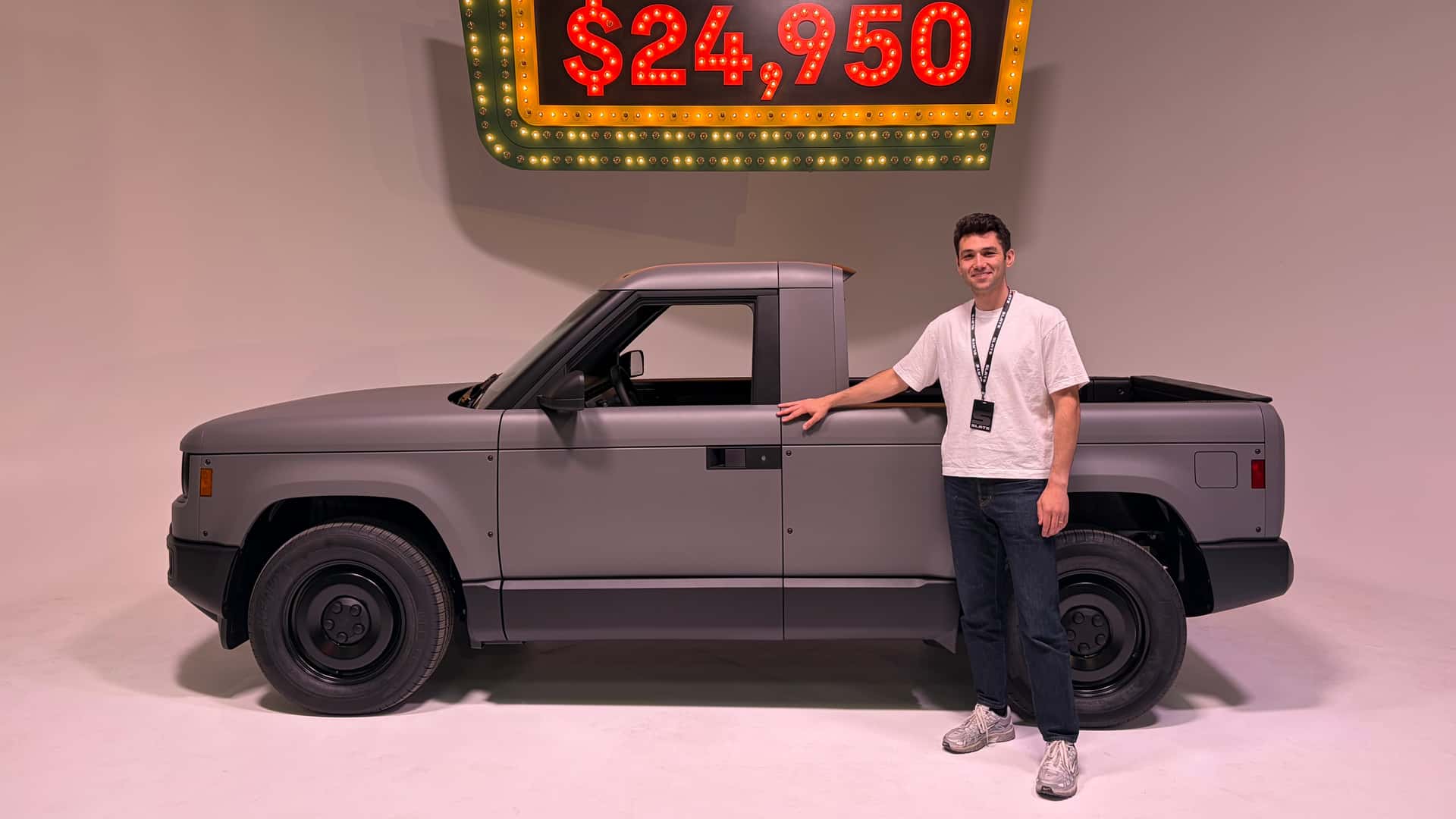
- The Slate Truck enters the market at an accessible price point of $24,950, boasting a 205-mile range.
- Production is slated to commence in Indiana during the fourth quarter, utilizing LFP battery technology.
- Its compact, utilitarian design and basic interior challenge conventional automotive luxury, appealing to a specific market segment.
- Despite manual windows and a sparse cabin, the Slate Truck offers surprising roominess and a punchy 181-horsepower performance.
- Initial market reception has been strong, with over 10,000 preorders logged shortly after opening.
The electric vehicle (EV) landscape is witnessing a notable entry with the Slate Truck, now poised to hit American driveways with its definitive pricing, robust specifications, and an open preorder window. Priced competitively at $24,950 and offering an estimated range of 205 miles, this compact electric pickup truck is scheduled to begin production in Indiana during the final quarter of the year. This development marks a significant moment for the nascent automaker, as it introduces an unconventional approach to the increasingly crowded EV market.

Recent evaluations of the Slate Truck have focused intensely on its core attributes, particularly its interior design, the inclusion of manual windows, and its overall ride quality. A central question surrounding the Slate Truck, given its minimalist features, is whether its deliberately stripped-out nature might be perceived as too basic, even considering its attractive price point. Industry observers are keen to understand if this outside-the-box startup can carve a successful niche with its distinct market strategy, which also includes a new focus on LFP (Lithium Iron Phosphate) battery cells for enhanced longevity and cost-efficiency.
Market Positioning and Production Outlook
With its official price and specifications now firm, the Slate Truck is transitioning from concept to reality. The starting price of $24,950 positions it as one of the most affordable electric pickup truck options available, aiming to democratize EV ownership. The projected 205-mile range is designed to cater to daily utility and local hauling needs, aligning with the vehicle’s utilitarian ethos.
The decision to initiate production in Indiana by the fourth quarter underscores the company’s commitment to timely market delivery. Furthermore, the strategic adoption of LFP battery technology highlights a pragmatic approach to manufacturing. LFP cells are known for their cost-effectiveness, enhanced safety profile, and longer cycle life compared to other lithium-ion chemistries, factors that are critical for an entry-level electric vehicle seeking broad appeal and operational efficiency.

Design Philosophy: Embracing Compact Utility
Upon initial inspection, the Slate Truck immediately distinguishes itself through its remarkably compact dimensions for a modern pickup. Measuring approximately two feet shorter than a Ford Maverick, the Slate Truck evokes the nostalgic charm and practical footprint of older compact models such as the Tacoma or Ranger. This smaller scale contributes significantly to its maneuverability and ease of parking, attributes often valued in urban and suburban environments.
The design language of the Slate Truck is deliberately boxy and utilitarian, eschewing elaborate styling flourishes for a functional aesthetic. It rides on unadorned steel wheels, reinforcing its no-nonsense character. Despite this straightforward approach, the Slate Truck possesses a distinct visual presence and a handsome, unpretentious appeal. Its simple, almost toy-like, shape scaled up to life-size contributes to a unique and recognizable identity within the automotive landscape.
Interior Evaluation: A Study in Simplicity
The interior of the Slate Truck has garnered considerable attention, particularly due to its unapologetically basic configuration. Access to the cabin is facilitated by large, rectangular door handles that provide a satisfying tactile experience, and the doors close with a reassuringly solid thud—an unexpected quality for a vehicle in this price segment.
Upon entering, the Slate Truck’s cabin, in its base configuration and prior to any optional customizations, reveals a strikingly unadorned environment. The predominant material is hard gray plastic, featuring a subtle texture. A marginal contrast is introduced through the use of lighter material on the door panels and dashboard, yet the overall visual scheme remains largely monochromatic and devoid of intricate design elements. In comparison, an entry-level Ford Maverick, priced slightly higher, presents a more varied interior aesthetic. The steering wheel offers a minimal amount of give, and soft-touch materials are conspicuously absent throughout the cabin. This minimalist approach represents a stark departure from the plush interiors often associated with contemporary vehicles.
Essential Functionality and Customization Potential
Despite its austere presentation, the Slate Truck thoughtfully integrates essential functionalities. A true center console is available as an accessory for $250, though a molded plastic component between the seats already provides cupholders and open storage. A simple glovebox is standard, with an optional lock available at an additional cost. The climate controls are managed by large, intuitive physical knobs, a design choice necessitated by the absence of a central touchscreen infotainment system.
The extent of the onboard technology is a small screen positioned behind the steering wheel, which displays speed information and serves as the monitor for the backup camera. This focused approach on fundamental features underpins the Slate Truck’s commitment to a straightforward driving experience. One of the Slate Truck’s significant value propositions lies in its extensive list of available accessories, allowing for considerable customization. This strategy enables owners to tailor the base, unadorned electric pickup to their specific needs and preferences, effectively transforming a minimalist platform into a personalized utility vehicle.
Cabin Space and Ergonomics
Despite its exterior compactness, the Slate Truck’s interior offers surprising roominess. Evaluations indicate ample headroom and legroom in the front seating area, comfortably accommodating taller individuals without impingement against the dashboard. Additionally, a decent amount of storage space is available behind the seats, ideal for stashing items like backpacks or small bags.
Accessibility to the rear is greatly enhanced with the addition of the $5,000 SUV kit. This option incorporates a cleverly designed front seat that slides exceptionally far forward, simplifying entry and exit for rear passengers. The back seat itself is also noted for its unexpected comfort, further contributing to the truck’s practical usability as a passenger vehicle when equipped with the SUV configuration.
On-Road Performance: Surprising Agility
During an approximately 10-minute evaluation ride, the Slate Truck demonstrated a surprisingly responsive and brisk acceleration. As with many electric vehicles, the Slate Truck benefits from the instant, low-end torque inherent to electric powertrains. However, its zip was particularly noteworthy given its accessible price point and a modest 181 horsepower output from its rear-mounted electric motor. This performance suggests that the Slate Truck is likely quicker and more agile than its specifications might initially imply.
The ride quality of the Slate Truck is characterized as robust, offering a balanced experience that effectively manages road imperfections. While not overtly plush, the suspension system avoids being overly harsh, absorbing most road anomalies with competence and providing a generally comfortable journey. The seats themselves contributed to the overall comfort, noted for their softness and support, making for a pleasant experience during the brief assessment.
Market Reception and Future Outlook for the Slate Truck
The launch of the Slate Truck has been met with significant initial enthusiasm. Within the first few hours of preorders commencing, the company reported logging over 10,000 reservations. This rapid initial uptake underscores a palpable consumer interest in an affordable, utilitarian electric pickup truck, signaling a potential disruption in both the traditional pickup and burgeoning EV markets.
However, the long-term success of the Slate Truck hinges on its ability to sustain this momentum and convert preorders into delivered units, ultimately proving its concept to a broader American consumer base. The question of how consumers will ultimately embrace its deliberately basic features versus its undeniable value proposition remains a key determinant for its future trajectory in the highly competitive automotive industry.
FAQ Section
What is the starting price and range of the Slate Truck?
The Slate Truck is priced starting at $24,950 and offers an estimated electric range of 205 miles on a single charge. This positions it as one of the most accessible electric pickup options in the market, appealing to budget-conscious buyers seeking an entry into electric vehicle ownership.
When is the Slate Truck scheduled for production?
Production for the Slate Truck is slated to begin in Indiana during the fourth quarter of the current year. This timeline indicates that the first units are expected to reach customers shortly after manufacturing commences, marking a significant milestone for the startup.
What type of battery technology does the Slate Truck use?
The Slate Truck employs LFP (Lithium Iron Phosphate) battery cells. This choice is strategic, as LFP batteries are known for their enhanced cost-effectiveness, superior safety characteristics, and longer lifespan compared to other conventional lithium-ion battery chemistries, contributing to the truck’s overall value proposition.
How does the Slate Truck’s size compare to other pickups?
The Slate Truck is notably compact, measuring approximately two feet shorter than a Ford Maverick. This diminutive size gives it the charm and practical dimensions reminiscent of older, smaller pickups like the Tacoma or Ranger, making it highly maneuverable and suitable for various urban and utilitarian applications.
What are the key features of the Slate Truck’s interior?
The interior of the Slate Truck is characterized by its minimalist design, predominantly featuring hard gray plastic. It includes manual windows, large climate control knobs, a simple glovebox (lock optional), and a small screen behind the steering wheel for speed and backup camera display. Its stripped-out nature is a deliberate design choice.
What is the horsepower of the Slate Truck and its ride quality?
The Slate Truck is powered by a rear-mounted electric motor delivering 181 horsepower. Evaluations indicate a surprisingly punchy acceleration due to instant electric torque. The ride quality is described as solid and generally comfortable, effectively managing most road imperfections despite not being overtly plush.
Can the Slate Truck’s interior be customized?
Yes, one of the Slate Truck’s significant appeals is its potential for customization through a long list of accessories. While the base truck is austere, buyers can add features like a center console, a lockable glovebox, and an SUV kit, allowing for personalization to meet specific needs and preferences.
What has been the initial market reaction to the Slate Truck?
The initial market reaction to the Slate Truck has been very positive, with the company reporting over 10,000 preorders within the first few hours of opening. This strong early interest highlights a significant demand for an affordable and utilitarian electric pickup in the current automotive market.