
Key Takeaways (TL;DR)
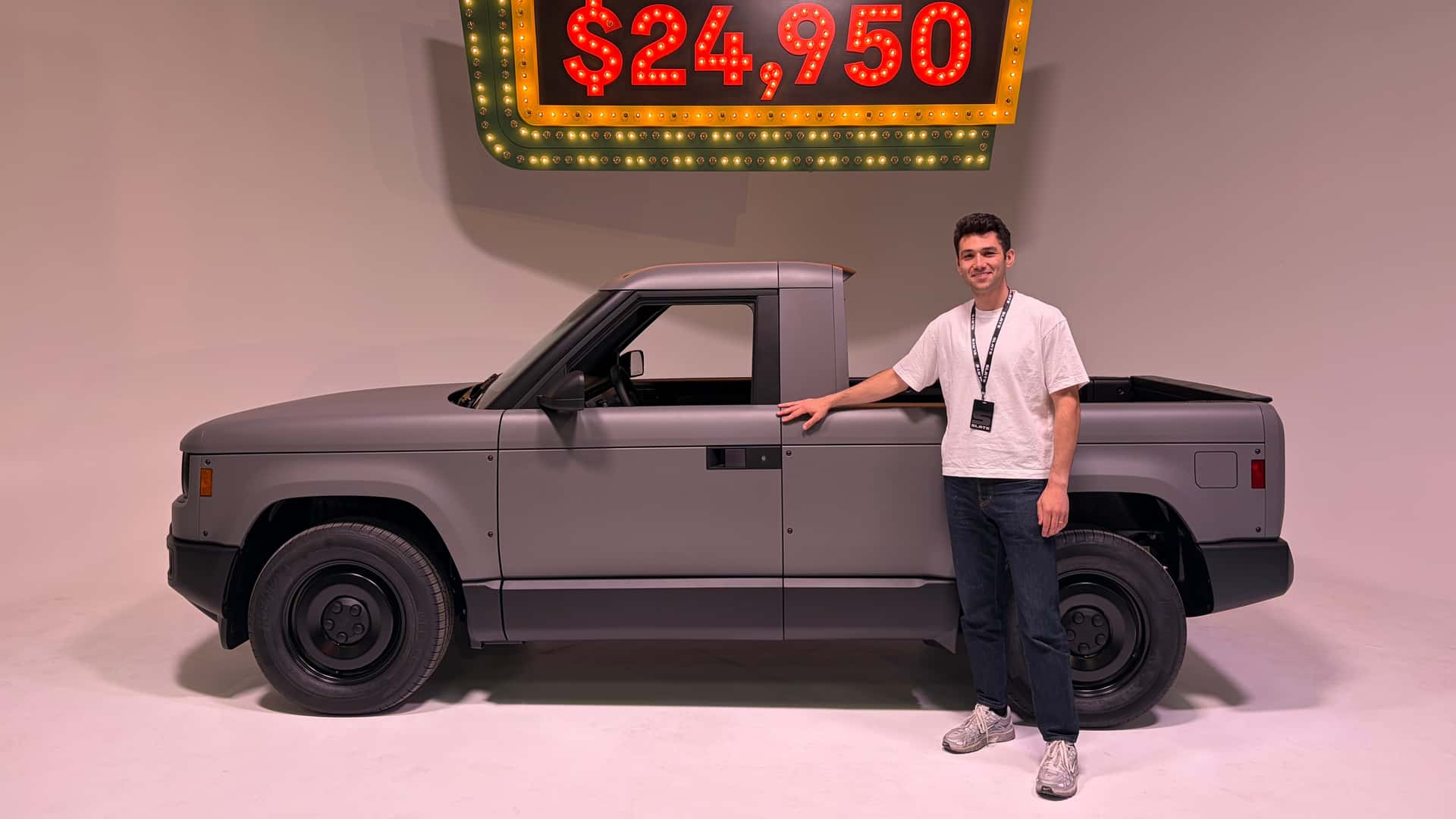
- The Slate Truck, priced at $24,950, features a minimalist design with manual windows and a basic interior, raising questions about its market appeal.
- Despite its utilitarian approach, the compact electric truck boasts a surprisingly punchy performance from its 181-horsepower rear-mounted motor and a comfortable ride quality.
- Its small footprint, roughly two feet shorter than a Ford Maverick, lends it a retro charm reminiscent of older compact pickups.
- The interior, while largely hard plastic, is noted for its authentic, distraction-free environment and offers decent headroom and legroom for its size.
- Customization options are a significant draw, allowing buyers to add features like a true center console or an SUV kit to the base model.
- Initial market reception has been strong, with over 10,000 preorders logged within hours of launch, signaling potential for this budget-friendly EV.
The automotive landscape is on the cusp of a significant shift with the impending arrival of the Slate Truck, an electric pickup that aims to disrupt the market with its aggressive $24,950 price point. With its specifications, including a 205-mile range, now finalized and preorders actively underway, this innovative vehicle is preparing for production in Indiana, slated to commence in the fourth quarter of the year. This development has ignited widespread discussion regarding the viability of an ‘outside-the-box’ startup in a fiercely competitive industry, particularly given its recently detailed battery strategy centered around LFP (Lithium Iron Phosphate) cells.

The primary query on many consumers’ minds, however, revolves around the truck’s core user experience: Does the Slate Truck’s ruthlessly sparse interior and inclusion of features like manual windows render it simply too basic, even at its compelling price? To address this, a recent evaluation offered an invaluable firsthand perspective, providing insights into the vehicle’s interior feel, build quality, and crucial ride dynamics during a brief but comprehensive test experience.
First Impressions: Size and Design Philosophy
One of the most striking characteristics of the Slate Truck is its compact stature, which immediately distinguishes it from most contemporary pickup trucks. Measuring approximately two feet shorter than a Ford Maverick, the Slate evokes the nostalgic appeal of classic compact pickups such as older Toyota Tacomas or Ford Rangers. This smaller footprint contributes significantly to its design aesthetic, which is characterized by a boxy, utilitarian silhouette riding on straightforward steel wheels.
Despite a noticeable absence of modern styling flourishes, the Slate Truck possesses a distinct presence. Its minimalist form factor contributes to a handsome, almost toy-like appearance, scaled up to life-size. This design philosophy underscores the automaker’s commitment to functionality over ostentation, a key aspect of its appeal as a budget-friendly electric vehicle solution for various applications, including last-mile delivery and personal utility.

Inside the Cabin: A Study in Minimalism
The interior of the Slate Truck is perhaps its most discussed feature. Accessing the cabin reveals large, rectangular door handles that offer a solid, user-friendly grip, followed by a surprisingly robust ‘thud’ as the door securely closes. This initial tactile experience suggests a level of build quality that might be unexpected for the most affordable truck in the American market.
Once inside, the base Slate Truck’s cabin is remarkably stark. The interior is predominantly constructed from hard gray plastic, subtly textured to provide a slight visual contrast between the lighter materials used for the door panels and dashboard and the rest of the cabin. This design choice results in an environment devoid of visual complexities, a stark departure from even entry-level competitors like a base Ford Maverick, which offers more interior embellishments.
Practicality Over Premium: Features and Feel
The absence of soft-touch materials is evident throughout the Slate Truck’s interior, from the dashboard to the steering wheel, which exhibits only a minimal degree of flex. Despite this austerity, the manufacturer has integrated essential functionalities in a pragmatic manner. A basic molded plastic section between the seats serves as a rudimentary center console, offering cupholders and open storage, though a more substantial, true center console is available as a $250 accessory.
Standard features include a simple glovebox, with a locking mechanism offered as an extra-cost option. Climate controls are managed via large, intuitive physical knobs, a direct consequence of the truck’s design decision to forgo a central infotainment touchscreen. Technological integration is limited to a small screen positioned behind the steering wheel, which displays crucial information such as speed and a feed from the backup camera.
The Customization Advantage and Interior Space
While the base Slate Truck is undeniably austere, it delivers a refreshing authenticity, avoiding any attempts to simulate a premium feel with low-cost materials. Its biggest draw, however, lies in its extensive range of customization options and accessories, allowing buyers to tailor the vehicle to specific needs and preferences, effectively transforming a bare-bones platform into a more personalized or capable tool.
Despite its compact exterior, the interior space of the Slate Truck is surprisingly accommodating. Individuals over six feet tall report ample headroom and legroom in the front seats, without knees pressing uncomfortably against the dashboard. Practical storage behind the seats is sufficient for items like backpacks. Furthermore, the optional $5,000 SUV kit enhances versatility by facilitating easy access to the rear seats through a cleverly designed front seat mechanism that slides forward exceptionally far, revealing an unexpectedly comfortable rear seating area.
On the Road: Performance and Ride Quality
A brief 10-minute test ride, accompanied by a Slate engineer, offered crucial insights into the truck’s dynamic capabilities. The Slate Truck immediately impressed with its responsive and energetic acceleration. As with many electric vehicles, it benefits from instant, low-end torque, but its zip proved particularly noteworthy given its accessible price point and a modest 181 horsepower derived from a rear-mounted motor. Its performance is arguably more sprightly than one might anticipate.
The ride quality was also a pleasant surprise. While not characterized by exceptional plushness, it equally avoided being overly harsh. The Slate adeptly managed most road imperfections, delivering a generally comfortable experience for occupants. Contributing to this comfort were the seats themselves, which were noted for their softness and supportiveness, further enhancing the overall driving and riding experience.
Market Outlook and Initial Success
The ultimate success of the Slate Truck in the diverse American automotive market remains an evolving narrative. However, early indicators are remarkably positive. Within the initial hours of its preorder availability, the company recorded an impressive influx of over 10,000 reservations, underscoring a significant public interest in an affordable, utilitarian electric pickup. This strong opening suggests a potential demand for vehicles that prioritize functionality and cost-effectiveness over luxurious amenities and advanced technology.
As the Slate Auto brand moves towards its production phase, its ability to maintain this momentum and convert preorders into delivered vehicles will be crucial. The market will closely observe whether consumers truly embrace its minimalist philosophy and the value proposition it offers, positioning the Slate Truck as a unique contender in the burgeoning electric vehicle segment.
Frequently Asked Questions About the Slate Truck
What is the starting price of the Slate Truck?
The Slate Truck has an announced final price of $24,950. This aggressive pricing positions it as one of the most affordable electric pickup trucks entering the market, aiming to attract a wide range of buyers looking for a budget-friendly utility vehicle.
What is the estimated range of the Slate Truck?
The Slate Truck is equipped with a battery system providing an estimated range of 205 miles on a single charge. This range makes it suitable for daily commuting, local work, and various utility tasks, aligning with its target market of practical users.
When is production of the Slate Truck expected to begin?
Production of the Slate Truck is scheduled to commence in Indiana during the fourth quarter of the current year. This timeline suggests that initial deliveries to customers who have preordered the vehicle could begin soon after, marking its official entry into the automotive market.
What are the key features of the Slate Truck’s interior?
The interior of the Slate Truck is characterized by its minimalist design, featuring hard gray plastic materials and manual windows. It includes essential amenities like large climate control knobs, a small screen behind the steering wheel for speed and a backup camera, and basic storage options, with customization available for added features.
How powerful is the Slate Truck and what is its ride quality like?
The Slate Truck is powered by a rear-mounted motor producing 181 horsepower, offering surprisingly punchy and quick acceleration for its size and price point. Its ride quality is described as solid and comfortable, effectively absorbing road imperfections without being overly harsh, making for a pleasant driving experience.
Who is the target audience for the Slate Truck?
The Slate Truck appears to target buyers seeking an affordable, utilitarian electric vehicle. This includes small businesses needing a compact work truck, individuals looking for a budget-friendly EV for daily tasks, and those who appreciate a no-frills, authentic vehicle design over luxury features and advanced technology.