
Key Takeaways
- Ford has invested over $1 billion to redevelop Detroit’s iconic Michigan Central Station.
- The site is transforming from an abandoned landmark into a vibrant hub for mobility technology and innovation.
- A partnership with Newlab focuses on fostering “critical technologies” startups, including those in drones, robotics, and autonomous vehicles.
- Newlab Detroit offers extensive prototyping labs, advanced manufacturing equipment, and expert guidance.
- This ecosystem aims to accelerate innovation cycles, allowing startups to develop and refine physical products rapidly.
- Strategic benefits for Ford include attracting top engineering talent to Detroit and gaining early access to emerging technologies.
- The project symbolizes Detroit’s resurgence as a major center for future-forward innovation and urban revitalization.
For three decades, Detroit’s grand Michigan Central train station stood derelict, a stark monument to the city’s past industrial prowess and subsequent economic challenges. Once a bustling gateway, its abandoned state became a poignant symbol of urban decay, reflecting the struggles of a city often defined by its automotive history.
Today, the narrative has dramatically shifted. The Michigan Central complex, alongside its surrounding campus, now pulsates with the energy of engineers, forward-thinking entrepreneurs, and creative problem-solvers. This renewed vitality stems from a monumental investment by Ford, aiming to repurpose a historical landmark into a nexus for advanced mobility and technological innovation.

Ford’s Vision for Michigan Central
From Ruin to Revitalization: A $1 Billion Commitment
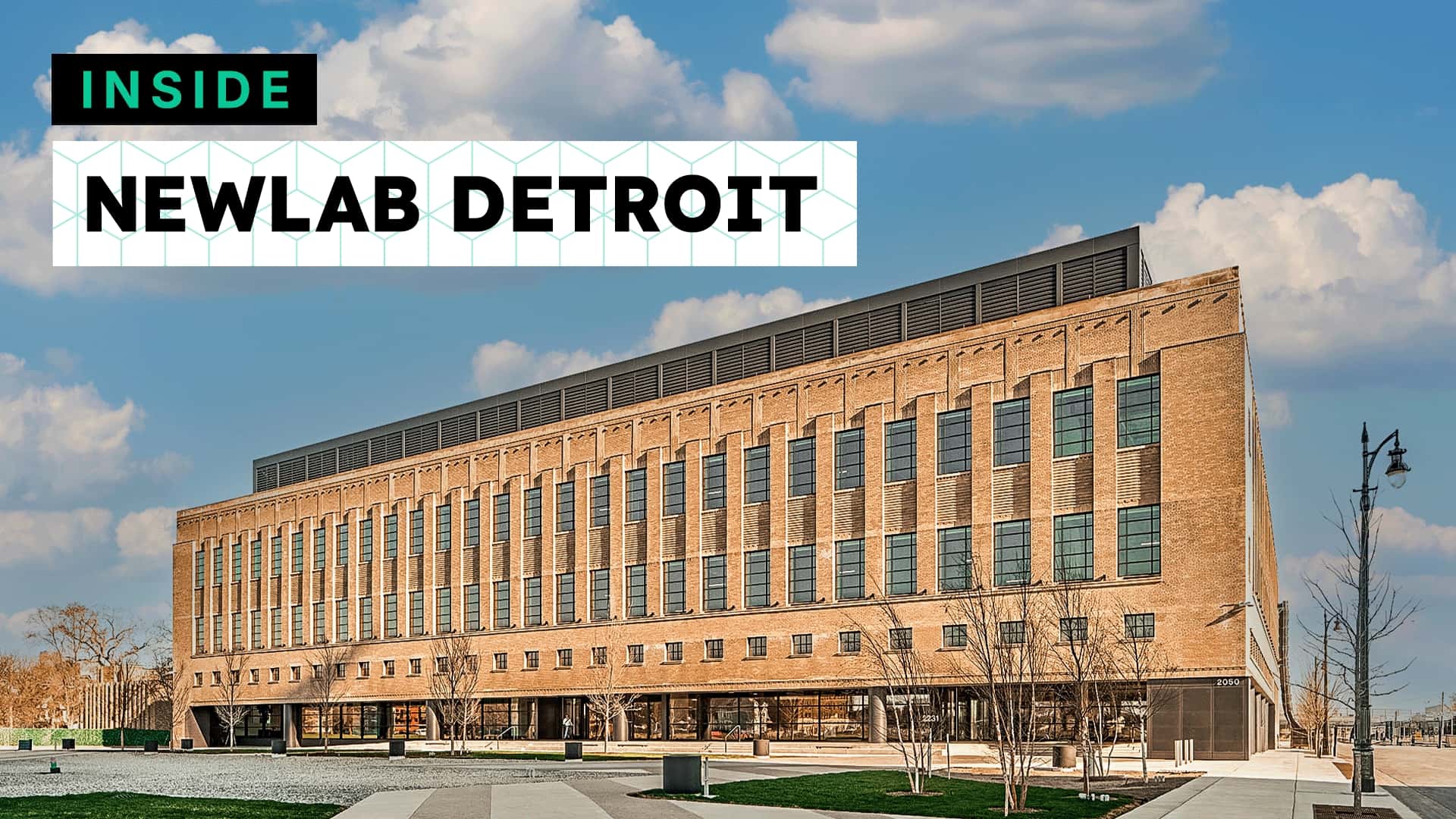
The ambitious journey to breathe new life into Michigan Central began in 2018, when Ford Motor Company announced an investment exceeding $1 billion. This substantial commitment was not merely for cosmetic repairs but for a comprehensive revitalization that sought to reimagine the landmark’s purpose. Beyond the meticulous restoration of the main train hall, Ford strategically partnered with Newlab, a renowned incubator specializing in “critical technologies,” to occupy the adjacent, long-disused book depository.
This massive undertaking represents more than just a real estate project; it is a strategic maneuver by Ford to anchor its future in the very city that helped define its past. By transforming an emblem of Detroit’s industrial era into a cutting-edge research and development hub, Ford is actively participating in a broader urban revitalization movement, aiming to attract top-tier talent and foster groundbreaking innovations in the heart of America’s automotive capital.
The Symbolism of Renewal
The choice of Michigan Central as the centerpiece of this transformation is deeply symbolic. For many, its abandonment represented Detroit’s economic decline, a visual reminder of a bygone era. Ford’s investment reverses this narrative, transforming a symbol of decay into a beacon of progress and future-oriented development. This move underscores a commitment not only to technological advancement but also to the resurgence of Detroit itself as a global center for innovation.

The campus now serves as home to Ford’s dedicated Connected Car and Advanced Electric Vehicle teams, integrating them directly into an ecosystem brimming with over 100 startups. This co-location fosters an environment of collaboration and cross-pollination of ideas, critical for accelerating development in rapidly evolving fields such as electric vehicle technology and autonomous systems.
Newlab Detroit: Catalysing Next-Generation Mobility
Defining “Critical Technologies” and Mobility’s Broad Scope
At the core of the Michigan Central initiative lies Newlab Detroit, an incubator designed to nurture companies working on “critical technologies.” According to Newlab, a critical technology encompasses anything deemed essential to a country’s national security and economic prosperity. Within the Detroit context, Newlab’s specific focus is on mobility – a broad and rapidly expanding field that includes a diverse array of innovations.
This encompasses the development and testing of advanced solutions such as unmanned aerial vehicles (drones), sophisticated robotics designed for various applications, and cutting-edge autonomous vehicles. By concentrating on these areas, Newlab Detroit aims to cultivate the foundational technologies that will redefine transportation, logistics, and urban living in the coming decades, positioning the region as a leader in future mobility solutions.
Bridging the Gap: Physical Prototyping in Action
The nature of mobility startups often differentiates them significantly from purely software-centric companies. While sophisticated computer-aided design (CAD) tools allow for detailed 3D modeling and aerodynamic simulations of vehicles or robotic systems, the virtual realm has its limitations. The real-world challenges, material properties, and unforeseen interactions inherent in physical products necessitate tangible construction and rigorous testing.
Developing a new drone, robot, or autonomous vehicle component is not akin to simply writing code and deploying it digitally. The transition from digital blueprint to functional hardware reveals critical issues that virtual simulations cannot fully replicate. This fundamental distinction highlights the indispensable role of physical prototyping, hands-on fabrication, and iterative testing in the development cycle of advanced mobility solutions.
An Ecosystem for Accelerated Innovation
State-of-the-Art Facilities and Collaborative Environment
To address the unique demands of hardware-focused innovation, Newlab Detroit has established an impressive infrastructure within its 30,000 square feet of communal lab and manufacturing space. This facility is outfitted with an extensive array of advanced equipment, ranging from precision CNC mills and versatile laser cutters to industrial-scale 3D printers capable of fabricating complex components.
Beyond the machinery, Newlab offers professional guidance and expertise, ensuring startups can effectively utilize these sophisticated tools. A notable feature is an electrified roadbed situated outside the facility, dedicated to testing and demonstrating wireless charging technologies for electric vehicles. This comprehensive setup fosters a collaborative environment where resources and knowledge are shared.
The core philosophy behind centralizing such expensive and specialized infrastructure is to dramatically accelerate the cycles of development, testing, and iteration. By providing immediate access to cutting-edge tools and expert support, Newlab enables companies to transition from conceptualization to functional prototypes and refinement within days or weeks, a process that would typically span many months in conventional settings. This efficiency is crucial for maintaining competitive edge in the fast-paced world of mobility technology.
Real-World Impact: The Civilized Cycles Example
The efficacy of Newlab’s integrated ecosystem is demonstrably evident through the progress of companies like Civilized Cycles. This innovative startup is currently developing an electric “Semi-Trike,” an advanced micromobility solution designed to combine the substantial cargo capacity typically found in a van with the minimal carbon footprint of an e-bike. The objective is to offer a sustainable and efficient alternative for urban logistics and personal transport.
During a recent visit to the Michigan Central facility earlier this year, it was observed how Civilized Cycles leverages the Newlab environment. Being part of this dynamic ecosystem allows the company to rapidly design, build, and test multiple iterations of its tube-chassis trike and accompanying trailer. This capability for in-house, swift prototyping is critical, enabling them to refine their product continuously without the logistical and financial burdens of outsourcing or relocating development stages.
Strategic Imperatives: What Ford Gains
Attracting Top Engineering Talent to Detroit
Ford’s substantial investment in the Michigan Central project and its partnership with Newlab serve multiple strategic objectives. A primary benefit is the potential to attract a new wave of engineering talent to Detroit. In an increasingly competitive landscape for skilled professionals, particularly in advanced technological fields, initiatives like Newlab can act as a powerful magnet.
By cultivating a vibrant innovation ecosystem, Ford aims to draw engineers, designers, and entrepreneurs who might traditionally gravitate towards established tech hubs such like Silicon Valley or Austin. This influx of talent is crucial for Ford’s long-term goals, strengthening its internal teams and invigorating the broader Detroit tech scene, ensuring a continuous pipeline of fresh perspectives and expertise.
Gaining Early Insight into Future Mobility Trends
Beyond talent acquisition, Ford gains invaluable early access to emerging innovations in critical sectors such as autonomy, electric micromobility, and advanced connectivity. By having its own teams co-located with numerous startups working on cutting-edge solutions, Ford is positioned to observe, learn from, and potentially integrate groundbreaking technologies well before they become mainstream. This strategic insight can significantly inform Ford’s product development cycles, R&D investments, and overall strategic direction.
The close proximity and collaborative environment facilitate a two-way exchange of knowledge and resources. Ford can offer mentorship and industry expertise to fledgling startups, while simultaneously benefiting from the agile development methodologies and disruptive ideas emanating from the incubator. This symbiotic relationship ensures Ford remains at the forefront of the rapidly evolving automotive and mobility landscape.
Reimagining Detroit’s Industrial Legacy
A Beacon of American Innovation
In an era marked by shifting global dynamics, including fluctuating electric vehicle policy landscapes and rapid technological advancements from international competitors, particularly in countries like China, concerns about the U.S.’s position in the global innovation race are understandable. However, initiatives like the Ford Michigan Central project offer a compelling counter-narrative, serving as a powerful reminder of America’s enduring capacity for innovation and its ability to build great things.
The transformation of a long-abandoned industrial relic into a bustling hub for advanced technology stands as a potent symbol of resilience and forward-thinking vision. It demonstrates that the spirit of invention and industrial leadership, historically synonymous with Detroit, is not just alive but is being actively reimagined for the 21st century.
What better embodiment of this national potential than a collection of nimble startups, operating within a structure meticulously restored by the very company that pioneered the democratization of the automobile? This endeavor unfolds in an industrial city that many once considered to be past its prime. The Michigan Central project powerfully illustrates how legacy industries and cities can adapt, innovate, and lead in defining the future of technology and mobility.
Frequently Asked Questions (FAQ)
What is the primary goal of Ford’s Michigan Central project?
The primary goal is to transform the historic Michigan Central Station and its surrounding campus into a global hub for mobility innovation. Ford aims to foster a dynamic ecosystem for advanced research and development in areas like electric vehicles, autonomous technology, and connected cars, attracting top talent and new businesses to Detroit.
How much has Ford invested in the Michigan Central revitalization?
Ford has made a significant financial commitment, investing over $1 billion in the comprehensive revitalization of the Michigan Central complex. This investment covers the restoration of the iconic train station and the development of new facilities, including the partnership with Newlab.
What is Newlab Detroit, and what is its focus?
Newlab Detroit is an incubator located within the Michigan Central campus, focused on fostering startups that develop “critical technologies.” Its specific emphasis is on advanced mobility solutions, including drones, robotics, and autonomous vehicles, providing them with the infrastructure and support needed for rapid development.
What resources does Newlab Detroit offer to startups?
Newlab Detroit provides startups with over 30,000 square feet of communal lab and manufacturing space. This includes access to state-of-the-art equipment such as CNC mills, laser cutters, industrial 3D printers, and even an electrified roadbed for EV charging tests. Professional guidance on using this equipment is also available.
How does this project benefit Ford Motor Company?
Ford benefits strategically by attracting top engineering talent to Detroit, helping to solidify the city’s role as an innovation center. Furthermore, the partnership grants Ford early access to groundbreaking innovations in electric micromobility, autonomy, and other future-forward technologies, informing its own research and development efforts.
What is the broader impact of Michigan Central on Detroit?
The Michigan Central project symbolizes a significant urban revitalization and economic development for Detroit. It transforms a long-abandoned landmark into a beacon of future innovation, re-establishing the city’s reputation as a leader in industrial and technological advancement, thereby attracting investment and fostering a new era of growth.