
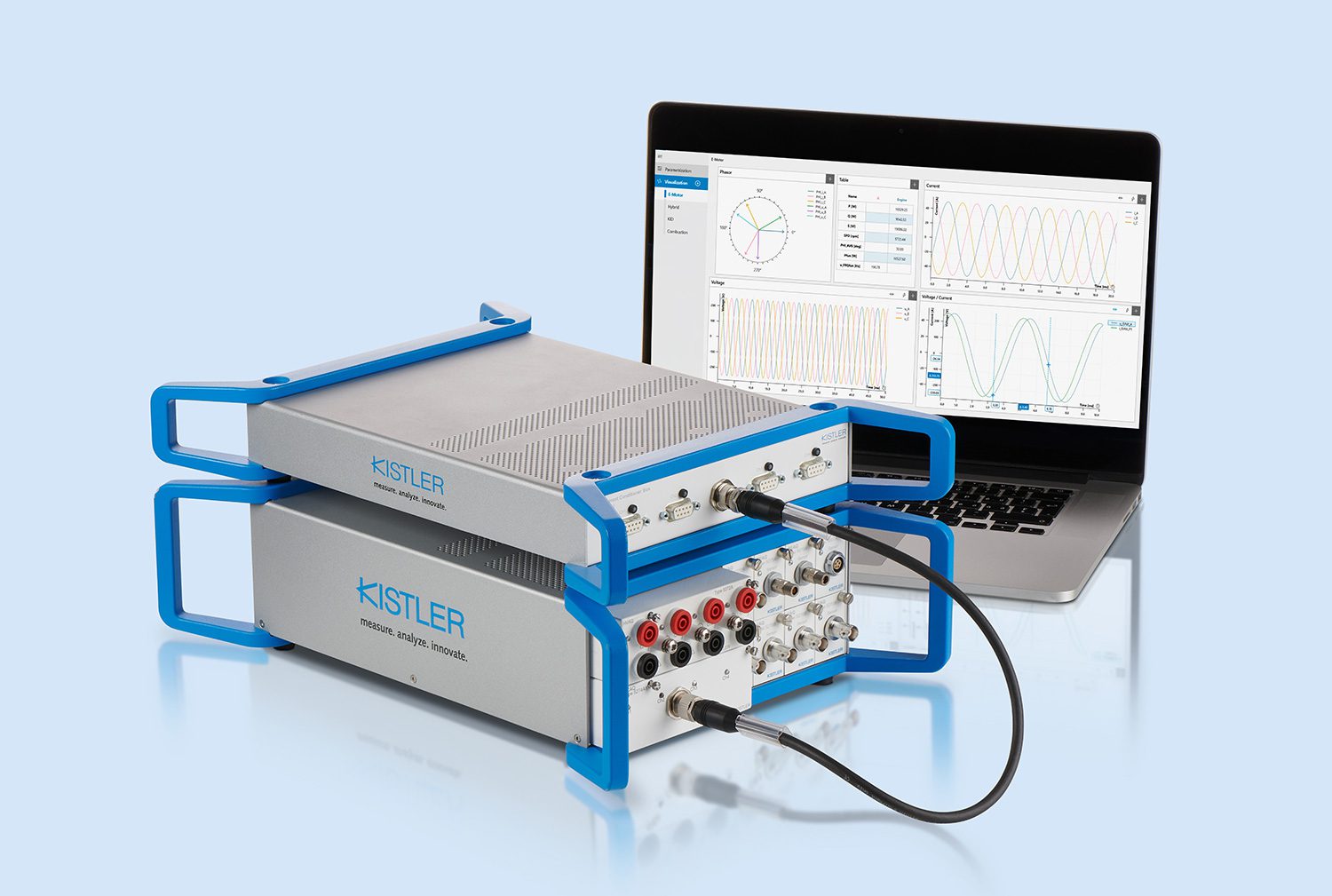
In a significant advancement for electric vehicle (EV) engineering, Kistler has officially unveiled its new KiBox2 E-Powertrain Analysis platform. This comprehensive, all-in-one measurement and analysis solution is specifically engineered for electric, hybrid, and fuel-cell drive systems, addressing critical needs across the entire development spectrum, from initial dyno testing to rigorous in-vehicle validation.
The introduction of the KiBox2 marks a pivotal moment for manufacturers and researchers grappling with the complex demands of modern EV powertrains. As the global automotive industry continues its rapid transition towards electrification, the necessity for highly precise, scalable, and robust testing instruments has become paramount. Kistler’s latest offering aims to meet these challenges head-on, providing unparalleled capabilities for EV powertrain analysis.

Advanced Real-Time Data Acquisition for EV Powertrains
At the technological core of the KiBox2 system lies a powerful 16-channel measuring unit. This unit is designed to perform real-time measurement, calculation, and visualization at an impressive rate of 2.5 mega-samples per second (MS/s) per channel. Such high sampling rates are crucial for accurately capturing the rapidly changing electrical and mechanical dynamics inherent in modern EV powertrains, where transient events and high-frequency switching are common.
The system’s architecture allows for substantial scalability, expanding to accommodate up to 64 measuring channels. This modularity ensures that the KiBox2 can adapt to a wide array of testing scenarios, from fundamental component evaluation to comprehensive system-level EV powertrain analysis. Unlike generic data acquisition (DAQ) systems, the KiBox2 is specifically tailored to capture and immediately process signals across the entire powertrain, utilising dedicated software designed for e-drive applications rather than treating data as undifferentiated inputs.
This dedicated approach to signal processing is vital for extracting meaningful insights from complex EV data streams. Engineers require more than just raw data; they need immediate, calculated results that can inform design decisions, validate performance, and pinpoint inefficiencies within the powertrain. The KiBox2’s integrated software architecture facilitates this by offering real-time analysis, significantly accelerating development cycles for advanced EV powertrain analysis.

Specialised Modules for High-Voltage and High-Current Measurements
Understanding the unique electrical characteristics of electric vehicles, the KiBox2 platform incorporates a specialized 4-channel high-voltage module. This module features robust electrical isolation and offers a wide measurement range, extending up to ±1000 Vrms / ±1500 Vpeak. The safety of personnel and equipment during EV powertrain analysis is a top priority, and this module is rated for 1000 V CAT II / 600 V CAT III, ensuring secure operation in demanding environments.
Complementing its high-voltage capabilities, the system also includes a separate 4-channel high-current module. This module is engineered to support substantial current measurements, reaching up to 2000 A. It achieves this precision through a dedicated Current Conditioner Box and operates in conjunction with external zero-flux current transducers. These features are indispensable for accurately assessing power consumption, efficiency, and thermal management in high-power EV systems.
The integration of these highly specialised modules allows the KiBox2 to perform a wide spectrum of critical analyses. It can handle both DC and AC measurement, facilitate high- and low-voltage analysis, support energy-management-system testing, and enable synchronized electric-plus-mechanical power analysis. The ability to integrate speed and torque inputs simultaneously with electrical measurements is particularly crucial for holistic EV powertrain analysis, providing a complete picture of energy conversion and transmission.
Designed for Real-World, On-Vehicle Testing Scenarios
Beyond its advanced analytical capabilities, the KiBox2 is engineered for the rigors of real-world testing environments. Its robust design ensures durability and reliability for on-track and in-vehicle testing, where conditions can be challenging. The system exhibits high vibration tolerance, safeguarding data integrity even during dynamic vehicle manoeuvres. Furthermore, its compatibility with vehicle power supplies streamlines integration into test vehicles, reducing setup complexity.
Data output from the KiBox2 adheres to the ASAM-compatible MDF format, ensuring seamless integration with existing engineering workflows and analysis tools widely used across the automotive industry. This standardisation facilitates efficient data exchange and collaboration among development teams. A key feature for dynamic testing is its real-time cycle detection, which is configurable down to one-quarter of an electrical cycle. This precision allows engineers to analyse specific operational phases with unprecedented detail, crucial for fine-tuning control strategies and optimising performance during sophisticated EV powertrain analysis.
The combination of rugged construction and advanced data management protocols positions the KiBox2 as an indispensable tool for engineers requiring accurate and reliable measurements outside of laboratory settings. Whether assessing performance on a test track or validating efficiency during everyday driving cycles, the system maintains its integrity and delivers consistent, high-fidelity data.
Setting a New Benchmark in E-Drive Testing
Kistler emphasizes the transformative impact of the KiBox2 on the future of electric drive testing. The platform’s ability to combine high-speed data acquisition with comprehensive analysis tools in a modular and robust package represents a significant leap forward. It addresses the growing need for more detailed and immediate feedback in the fast-paced development cycles of electric vehicles, where every millisecond and milliampere can influence efficiency and performance.
In a statement regarding the new system, Kistler highlighted its core strengths: “With real-time power analysis, ultra-fast calculation windows even for highly dynamic and precise testing procedures, and a modular design that scales to virtually any application, the KiBox2 E-Powertrain Analysis sets a new standard for e-drive testing.” This assertion underscores the company’s commitment to providing cutting-edge solutions that empower engineers to innovate faster and with greater confidence.
The Future of EV Powertrain Analysis
The introduction of the Kistler KiBox2 E-Powertrain Analysis system comes at a crucial time for the automotive sector. As manufacturers worldwide accelerate their efforts to develop more efficient, powerful, and reliable electric vehicles, the demand for sophisticated testing and validation tools intensifies. The KiBox2’s capabilities directly contribute to overcoming these development hurdles, enabling more thorough and precise EV powertrain analysis.
By providing a unified platform that integrates high-speed data acquisition, specialized electrical measurement modules, and robust real-world testing features, Kistler empowers engineers to gain deeper insights into the complex interactions within EV, hybrid, and fuel-cell powertrains. This comprehensive approach is expected to significantly shorten development times, improve product quality, and ultimately contribute to the broader adoption of sustainable mobility solutions through enhanced EV powertrain analysis. The KiBox2 is poised to become a foundational tool for engineers striving to push the boundaries of electric propulsion technology.