
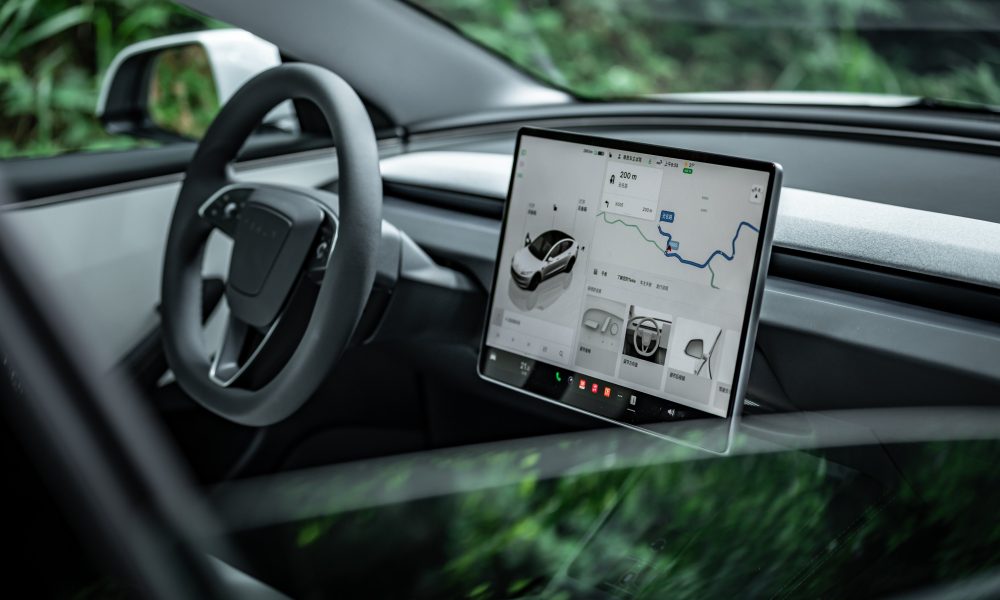
Tesla CEO Elon Musk has officially confirmed the impending release of Full Self-Driving (FSD) v14.3, marking a significant milestone in the company’s autonomous driving technology development. This highly anticipated software update, initially slated for an earlier release, is expected to introduce crucial enhancements in how Tesla vehicles perceive and navigate complex driving scenarios.
The announcement comes amidst ongoing advancements in Tesla’s FSD suite, with owners of Hardware 4 vehicles currently operating on v14.2 and its subsequent iterations, including the most recent v14.2.2.5. The progression towards v14.3 represents a critical step in refining the system’s capabilities, aiming to address persistent user feedback and bolster overall performance.
Integrating Reasoning and Reinforcement Learning
A core objective of Full Self-Driving v14.3 is to embed a greater degree of reasoning and logic into the decisions made by the autonomous system. This fundamental shift is poised to elevate the FSD experience across various functions, most notably in navigation, which has frequently been cited as an area for improvement by many Tesla owners.
Elon Musk, in a statement made last November, underscored the significance of this particular release, describing v14.3 as the point “where the last big piece of the puzzle lands.” This assertion highlights the update’s role in integrating foundational elements necessary for more robust and human-like autonomous decision-making.
Expanding on the technological underpinnings, Musk further elaborated on Tesla’s ambitious long-term strategy for scaling its AI capabilities. He stated, “We’re gonna add a lot of reasoning and RL (reinforcement learning). To get to serious scale, Tesla will probably need to build a giant chip fab. To have a few hundred gigawatts of AI chips per year, I don’t see that capability coming online fast enough, so we will probably have to build a fab.” This vision points to the extensive computational power and infrastructure Tesla believes will be essential for achieving widespread, fully autonomous operations.

User Experience with Current Tesla FSD Iterations
The journey to v14.3 has been characterized by continuous refinement of the Tesla Full Self-Driving software. While v14.2 itself brought considerable improvements over its predecessors, subsequent minor updates have often presented a mixed bag of results for users.
The latest iteration, v14.2.2.5, for instance, has generated diverse feedback within the Tesla community. While many users acknowledge a general improvement in the system’s overall behavior and its ability to handle a wider array of driving situations, some have observed what they describe as regressions in specific areas.
Notably, concerns have been raised regarding a perceived decrease in the system’s confidence and assertiveness during certain maneuvers, leading to moments of hesitation that can impact the fluidity of the driving experience. This nuanced feedback underscores the challenges inherent in developing and deploying advanced autonomous systems, where incremental changes can lead to varied user perceptions.
The iterative nature of these updates means that while some aspects of the software demonstrably improve with each release, other elements may require further optimization. The anticipatory sentiment surrounding v14.3, therefore, reflects a collective hope that this new version will consolidate previous gains and rectify outstanding issues.
Addressing Navigation Challenges
Among the most consistent points of feedback from daily Tesla Full Self-Driving users has been the need to refine and enhance the navigation system. Errors or suboptimal routing decisions have been a universal complaint, highlighting a critical area where increased reasoning and logic could yield substantial benefits.
The integration of advanced decision-making capabilities in v14.3 is specifically designed to tackle these navigational inconsistencies. By enabling the system to better understand context and anticipate various road conditions, Tesla aims to provide more intuitive, accurate, and reliable routing, reducing driver intervention and enhancing trust in the autonomous features.
Improved navigation is not merely about reaching a destination but also about doing so efficiently, safely, and comfortably. A more intelligent navigation system can better handle complex intersections, construction zones, and dynamic traffic patterns, which are vital components of a truly seamless Full Self-Driving experience.
The Strategic Vision: Robotaxis and Advanced Features
There are high expectations that Full Self-Driving v14.3 could emerge as a pivotal update, potentially transforming the landscape of autonomous transportation. Many industry observers and enthusiasts believe this version could be the foundational software powering Tesla’s ambitious Robotaxi fleet.
The prospect of driverless and unsupervised Robotaxis operating in cities like Austin, Texas, hinges on a highly reliable and sophisticated Full Self-Driving system. A ‘game changer’ update like v14.3, with its emphasis on enhanced reasoning, would be essential to instill the necessary confidence in regulatory bodies and the public for such a deployment.
Beyond the core driving capabilities, v14.3 is also speculated to introduce significant new features that expand the utility of the Tesla Full Self-Driving suite. One such anticipated addition is “Banish,” also referred to as “Reverse Summon.” This innovative function would allow a Tesla vehicle to autonomously locate and secure a parking spot after dropping off its occupants at a designated destination, further automating the ownership experience.
Such features, if implemented, would not only enhance convenience for vehicle owners but also demonstrate Tesla’s continued push towards a comprehensive and fully integrated autonomous ecosystem, from point A to point B and beyond.
Upcoming Release Timeline and Internal Validation
Despite earlier projections for a January or February rollout, the release of Tesla Full Self-Driving v14.3 has now been clarified. Elon Musk confirmed on March 19, 2026, via the social media platform X, that the new software version is currently undergoing rigorous internal testing within Tesla.
Musk indicated that the wide public release is expected “in a few weeks,” suggesting that Tesla owners can anticipate the arrival of v14.3 by late April. This internal validation phase is critical for identifying and resolving any latent issues before the software is deployed to a broader user base, ensuring a more stable and refined experience.
The careful and methodical approach to testing, despite the eager anticipation from the community, underscores Tesla’s commitment to delivering a polished and reliable autonomous driving solution. As the current v14.2.2.5 has reached its operational maturity for many users, the impending arrival of v14.3 is keenly awaited as the next significant leap forward.
Broader Implications for Autonomous Mobility
The successful deployment and reception of Tesla Full Self-Driving v14.3 could have profound implications for the future trajectory of autonomous mobility. As the technology evolves, each major update brings the industry closer to the goal of widespread self-driving capabilities.
Enhancements in reasoning and reinforcement learning, coupled with improved navigation, are not just incremental improvements; they are foundational elements that can unlock new possibilities for personal transportation and commercial services. The ability of a vehicle to make more intelligent, context-aware decisions is paramount for navigating the unpredictable nature of real-world roads.
For Tesla, v14.3 represents another vital step in validating its camera-centric approach to autonomy and its neural network architecture. The outcome of this release will be closely watched by competitors, regulators, and consumers alike, as it will provide further insights into the practical capabilities and future potential of Tesla’s ambitious self-driving vision.