
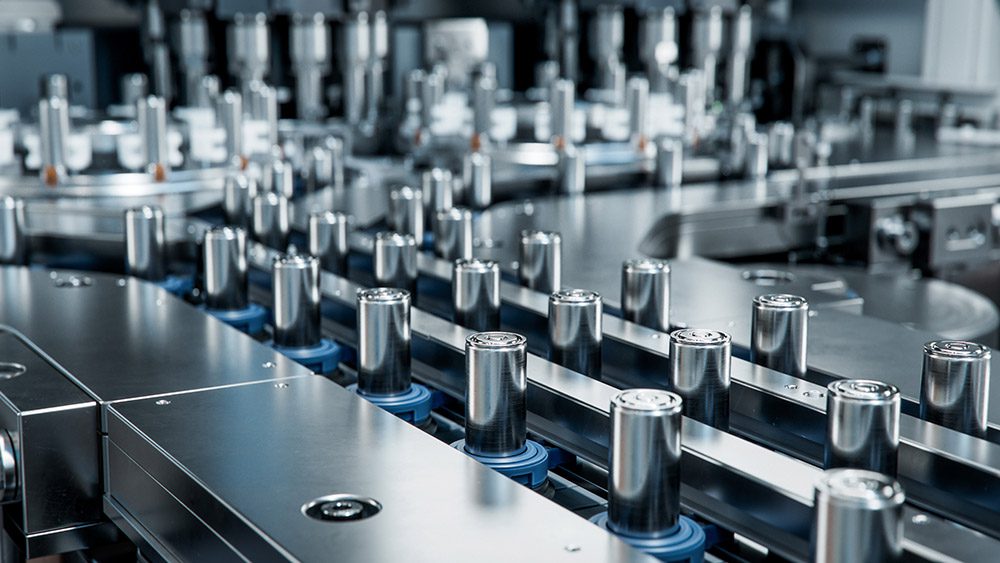
The UK Battery Industrialisation Centre (UKBIC) in Coventry has officially opened a new Flexible Pilot Line (FPL), marking a significant step towards enabling British battery technology startups and small and medium-sized enterprises (SMEs) to scale their innovations. This cutting-edge facility aims to bridge the critical gap between laboratory discoveries and the demands of commercial production, offering a lower-cost, lower-risk pathway for companies developing next-generation battery technologies.
Bridging the Gap from Lab to Gigafactory
The new Flexible Pilot Line is strategically designed to allow companies to test and validate new battery chemistries and materials at a meaningful, pre-commercial scale. This crucial step is vital for demonstrating the viability and manufacturability of nascent technologies before committing to the significant investment required for full-scale commercialisation. UKBIC states that this facility is the only one of its kind in Europe, positioning the UK as a leader in battery technology scale-up.

This initiative directly addresses a key challenge faced by many innovative battery firms: the difficulty and expense of proving scalability without access to industrial-level equipment. By providing this intermediate step, UKBIC aims to de-risk the scale-up process, making it more accessible for smaller players with groundbreaking ideas.
Pioneering Companies Set to Utilize the Facility
Two prominent companies, Echion and Ilika, are slated to be the first to leverage the capabilities of the new Flexible Pilot Line. Both are at the forefront of developing advanced battery solutions that could shape the future of energy storage.
Ilika will be utilising the FPL in a collaborative effort involving Jaguar Land Rover and Oxford University. This partnership underscores the potential of the facility to foster significant industry-academic-automotive collaboration, driving innovation forward across multiple sectors.

Broad Applications Beyond Electric Vehicles
While the development of batteries for electric vehicles (EVs) is a primary focus, the UK government has highlighted that the Flexible Pilot Line’s capabilities will also support advancements in battery technology for critical defence and maritime applications. This broadens the strategic importance of the facility, contributing to national security and technological sovereignty.
The government views this investment as a cornerstone in strengthening the UK’s position within the global battery supply chain, fostering domestic manufacturing capabilities and supporting a transition towards cleaner energy solutions across various industries.
Government Investment and Strategic Importance
The establishment of the Flexible Pilot Line was made possible through a substantial investment of £38 million in government funding, channelled via the Faraday Battery Challenge. This significant financial backing reflects the UK’s commitment to becoming a global leader in battery technology and manufacturing.
Sean Gilgunn, Managing Director of UKBIC, emphasised the strategic value of the new facility. “The FPL further strengthens our offering to industry, giving start-ups and SMEs a great opportunity to bring their innovative chemistries and materials to us to prove at scale before moving onto our ISL for full commercialisation,” Gilgunn stated. His remarks highlight how the FPL complements UKBIC’s existing Industrial Scale Line (ISL), creating a seamless progression for battery technology development.
The Faraday Battery Challenge is a key government initiative aimed at accelerating the development and commercialisation of advanced battery technologies. The creation of the Flexible Pilot Line is a tangible outcome of this challenge, demonstrating a clear strategy to support the entire battery innovation ecosystem in the UK.
Future Outlook for UK Battery Innovation
The launch of the Flexible Pilot Line is expected to invigorate the UK’s battery startup scene, providing essential resources and expertise that were previously scarce. By enabling companies to de-risk their scale-up process, the facility has the potential to accelerate the adoption of new battery technologies, contributing to the growth of the UK’s green economy and its net-zero ambitions.
The ongoing support from the Department for Business and Trade, coupled with facilities like UKBIC, signals a robust commitment to building a resilient and competitive battery manufacturing sector within the United Kingdom. This infrastructure is crucial for meeting the escalating demand for advanced batteries driven by the global transition to electrification.