
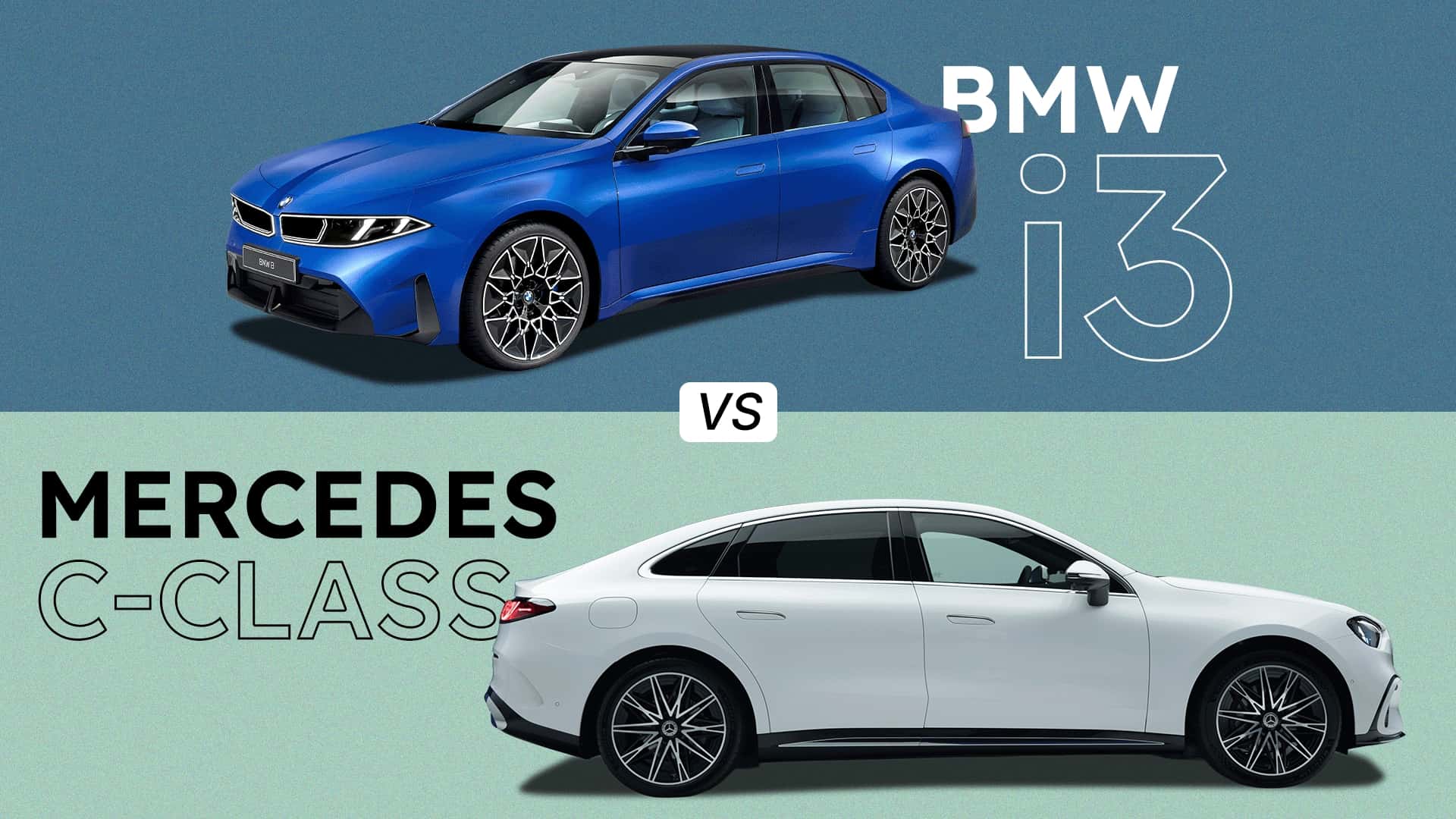
Key Takeaways
- The 2027 Mercedes C-Class EV and 2027 BMW i3 are direct rivals in the rapidly expanding electric compact executive sedan segment, each presenting distinct philosophies.
- Both models leverage advanced 800-volt architectures, enabling rapid charging and enhanced efficiency.
- The Mercedes C-Class EV, while touted as the sportiest C-Class ever, maintains a strong focus on traditional luxury and comfort.
- The BMW i3, in contrast, embraces electrification as an opportunity to innovate and break from established design and technological norms, showcasing a more futuristic approach.
- On paper, the BMW i3 currently leads in range (559 miles WLTP) and peak charging speed (400 kW), while the launch-spec Mercedes C400 4Matic offers superior power and torque (482 hp, 590 lb-ft).
- Mercedes opts for overt technological displays like a massive 39.1-inch screen, whereas BMW prefers ‘shy tech’ with features like its 43-inch panoramic display that integrates seamlessly into the driving experience.
The electric vehicle landscape is witnessing an intense resurgence of classic rivalries, epitomized by the recent unveiling of the 2027 Mercedes C-Class EV, a direct competitor to BMW’s innovative 2027 i3. These two formidable entrants are poised to redefine the electric compact executive sedan segment, offering long-range capabilities and sophisticated charging solutions that were once considered futuristic. While both premium electric vehicles share an advanced 800-volt platform—a critical enabler for faster charging and improved efficiency—their fundamental philosophies diverge significantly, presenting consumers with distinct choices in the luxury EV market.
Mercedes-Benz, with its newly revealed C-Class EV, declares it to be “the sportiest C-Class ever.” Yet, its design and feature set predominantly lean towards the brand’s enduring commitment to plush luxury and refined comfort. This approach seeks to translate the established Mercedes-Benz experience into the electric era without sacrificing its core identity. BMW, conversely, appears to leverage electrification as a catalyst for radical innovation, venturing beyond conventional design and technology to present a bolder, more avant-garde vision for its electric compact executive sedan.

A preliminary comparison of the specifications reveals that the BMW i3 holds a notable advantage in terms of charging efficiency and overall range. However, the initial launch variant of the Mercedes C-Class EV boasts a higher power and torque output, promising exhilarating performance. While comprehensive specifications for both models are still emerging, sufficient details have been disclosed by both manufacturers to facilitate an initial, insightful comparison, allowing prospective buyers to weigh the unique propositions of each.
Strategic Design and Dimensional Differences
Despite competing in the same compact executive segment, the 2027 Mercedes C-Class EV and 2027 BMW i3 exhibit noticeable differences in their physical dimensions and spatial considerations. The Mercedes C-Class EV measures 192.2 inches (4.88 meters) in length and features a substantial 116.6-inch (2.96 meters) wheelbase. In contrast, the BMW i3 is more compact, with a length of 187.4 inches (4.76 meters) and a 114.1-inch (2.89 meters) wheelbase.
This translates to the C-Class being approximately 4.8 inches (12 centimeters) longer, with a 2.5-inch (6.5 cm) longer wheelbase. Additionally, the Mercedes is 1.1 inches (2.7 cm) wider and 0.9 inches (24 mm) taller. Intriguingly, the C-Class EV’s dimensions position it closer in size to Mercedes’ combustion-powered E-Class sedan, suggesting an elevated sense of presence and interior volume, at least from the exterior perspective. The i3, meanwhile, aligns more closely with the traditional footprint of a BMW 3 Series.

However, external size does not always directly correlate with interior spaciousness. Observations suggest that the C-Class EV, despite its larger footprint, offers less generous rear occupant space than anticipated. A six-foot individual might find foot and knee room more constrained than expected. Conversely, the BMW i3, despite being marginally smaller on the exterior, appears to provide a more accommodating rear passenger experience, indicating efficient interior packaging that prioritises passenger comfort within its innovative design framework.
In terms of practicality, the C-Class EV features a respectable 16.6 cubic-foot (470-liter) trunk, further augmented by a convenient 3.6 cubic-foot (101-liter) frunk, or front trunk. This dual-storage solution enhances the vehicle’s utility for daily commutes and longer journeys. BMW has yet to release official cargo volume figures for the i3, making a direct comparison of storage capabilities currently unfeasible.
Powertrain Performance and Future Variants
The initial launch specifications highlight a clear distinction in performance aspirations for these electric compact executive sedans. The Mercedes C400 4Matic, the debut variant of the C-Class EV, is equipped with a sophisticated dual-motor all-wheel-drive powertrain. This configuration generates a combined output of 482 horsepower and a formidable 590 pound-feet (800 Nm) of torque, enabling a swift acceleration from a standstill to 62 mph (100 km/h) in just 3.9 seconds.
A key technological highlight of the Mercedes powertrain is its rear motor, which is mated to a two-speed transmission. Mercedes engineers state that this innovative transmission system contributes to both enhanced acceleration and improved overall efficiency. Further optimizing energy use, the front motor can mechanically decouple from the wheels when not needed, conserving battery power and extending range.
The 2027 BMW i3 xDrive 50, its launch-spec counterpart, shares its powertrain architecture with the recently reviewed iX3 model. This setup delivers 469 horsepower and 476 pound-feet (645 Nm) of torque. Comparing these figures directly, the i3 trails the equivalent Mercedes by 13 horsepower and a more significant 114 pound-feet (155 Nm) of torque. While BMW has not yet released official acceleration times for the i3, extrapolating from the heavier iX3, which achieves 0-62 mph in 4.9 seconds with the same powertrain, a reasonable estimate for the i3 would be approximately 4.5 seconds.
Both Mercedes and BMW have confirmed plans to expand their electric portfolios with additional model variants. This includes the introduction of practical wagon body styles, which will cater to buyers seeking greater versatility. Furthermore, more efficient single-motor configurations are anticipated, likely offering extended range and a more accessible price point. At the performance pinnacle, future iterations are expected to feature high-performance AMG and M badging. Reports suggest the electric M3 equivalent will boast a revolutionary quad-motor setup with advanced torque vectoring capabilities, promising power outputs far exceeding current combustion models. The AMG variant of the electric C-Class is reportedly being developed with a potent three-motor configuration.
Battery Technology and Charging Supremacy
When it comes to the crucial aspects of battery capacity and charging capabilities, the 2027 BMW i3 establishes a clear lead over the C-Class Electric. The i3 is equipped with a larger 108.7 kWh battery pack, surpassing the C-Class’s 94.3 kWh unit. This greater energy capacity translates directly into a superior WLTP (Worldwide Harmonised Light Vehicles Test Procedure) range estimate of 559 miles (900 km) for the i3, compared to its rival’s 473 miles (762 km) rating. It is important to note that WLTP figures are typically more optimistic than EPA (Environmental Protection Agency) range estimates, which have yet to be released for either model.
Beyond raw range, the i3 also demonstrates a significant advantage in charging speed, boasting a peak charging power rating of 400 kW. This impressive rate allows the i3 to replenish 249 miles (400 km) of range in a mere 10 minutes and facilitates a 10% to 80% battery charge in approximately 21 minutes. The Mercedes C-Class EV, while still offering robust charging capabilities, has a slightly lower peak rating of 330 kW. This enables it to add 202 miles (325 km) of range in 10 minutes and complete a 10% to 80% charge in 22 minutes. However, real-world experience with other Mercedes-Benz EVs, such as the GLC EV, suggests that the C-Class EV might exceed its stated maximum charging rating, potentially reaching over 350 kW under optimal conditions.
Further insights into BMW’s electric strategy come from leaked specifications for a single-motor, smaller-battery iX3 variant. This model features an 82.6 kWh battery, delivering a WLTP range of 395 miles (620 km) and a 315 horsepower single rear motor, accelerating to 62 mph in 5.9 seconds. It is highly probable that BMW will introduce a similar single-motor variant for the i3, potentially even offering a big-battery, single-motor configuration that could achieve truly exceptional range figures, appealing to efficiency-focused buyers.
Both premium electric vehicles are equipped with bidirectional charging capabilities, offering enhanced utility. Both support Vehicle-to-Load (V2L) functionality, allowing the car to power external devices. BMW has additionally confirmed that the i3 will extend its bidirectional capabilities to include Vehicle-to-Home (V2H) and Vehicle-to-Grid (V2G) charging, signifying a deeper integration into future smart energy ecosystems and offering owners greater control over their energy consumption and contribution to the grid.
Infotainment and Advanced Technology Integration
The approach to integrating and showcasing advanced technology represents a fundamental divergence between these two electric compact executive sedans. While both vehicles are undeniably at the forefront of automotive innovation, their presentation styles are distinctly different. The BMW i3 adopts a philosophy of ‘shy tech,’ where much of its sophisticated technology is discreetly integrated and only becomes prominent when actively engaged or required by the driver. In stark contrast, the Mercedes C-Class EV opts for a more overt display of its technological prowess, often featuring its advanced functionalities prominently within the cabin.
This contrast is most evident in their respective dashboard displays. The C-Class EV offers an optional, truly massive 39.1-inch pillar-to-pillar dashboard display. This singular, expansive screen, larger than anything previously seen in a production car, serves as a bold statement of the vehicle’s futuristic credentials, immediately drawing attention to its advanced interface. The standard setup, for those preferring a more conventional layout, comprises three separate screens.
The BMW i3, however, maintains a more subdued yet equally innovative approach. Its 17.9-inch parallelogram-shaped center screen, while visually striking due to its unique geometry designed to evoke older BMW driver-focused cockpits, functions as a highly capable, albeit conventionally presented, infotainment display. Complementing this, the i3 features a remarkable 43-inch panoramic display that stretches across the entire lower edge of the windshield. This innovative display functions as an advanced head-up display, presenting critical driving information directly in the driver’s line of sight, along with six customizable widget slots. From firsthand experience with BMW’s iX3, this integrated setup offers an intuitive and engaging user interface, providing BMW with a perceived advantage in ergonomic and unobtrusive technological delivery.
Beyond displays, the C-Class EV offers an optional Comfort and Agility Package that significantly broadens its dynamic capabilities. This package includes adaptive air suspension, which allows for dynamic adjustment of ride comfort and handling characteristics, and 4.5 degrees of rear-wheel steering. The rear-wheel steering enhances maneuverability at low speeds and improves stability at higher speeds. These advanced features provide the C-Class EV with a wider spectrum of driving personalities, from supremely comfortable cruising to agile handling, capabilities that the i3 does not currently offer. Should these features perform as effectively as they do in other Mercedes EV models, they will undoubtedly elevate the Mercedes’ levels of comfort and adaptability beyond what the BMW can currently match.
BMW, on its part, has heavily promoted its ‘Heart of Joy’ supercomputer, an advanced central processing unit that orchestrates the i3’s driving dynamics. Experience with this system in the iX3 SUV demonstrates its ability to deliver a remarkably smooth, sharp, and precisely controlled driving experience. It excels in making dynamic maneuvers, such as provoking oversteer, both enjoyable and controllable. A standout feature is the ‘limo stop,’ which gracefully brings the vehicle to a halt without the usual forward head movement or jolting, significantly enhancing passenger comfort. While the Mercedes also achieves smooth stops, the BMW’s refined ‘limo stop’ functionality offers a nuanced improvement in passenger comfort.
Reviving a Rivalry in the Electric Age
The introduction of the 2027 Mercedes C-Class EV and 2027 BMW i3 signifies a compelling renewal of an age-old rivalry, now unfolding on the significantly altered playing field of electric mobility. Mercedes-Benz and BMW are once again vying for the attention of the same discerning luxury buyers, yet their visions for the ideal electric compact executive sedan have distinctly diverged. Mercedes appears steadfast in its commitment to translating its established brand values of luxury, refinement, and classic elegance into the electric vehicle era. This approach seeks to offer a familiar yet technologically advanced premium electric car experience.
BMW, in contrast, is more inclined to embrace electrification as a potent justification for breaking with tradition, even while retaining subtle nods to its rich automotive heritage. Its design and technological choices reflect a bolder, more forward-thinking stance on what an electric luxury vehicle can and should be. This isn’t merely a contest of technical specifications, although the BMW currently holds an edge in several key performance metrics like range and charging speed. Fundamentally, this rivalry is about two distinct visions for the future of luxury electric vehicles and what discerning consumers will prioritize in the coming years.
The i3, with its advanced battery technology, rapid charging, and integrated ‘shy tech,’ presents itself as the more overtly futuristic and technologically advanced electric car. The C-Class EV, conversely, aims to be a comprehensively well-rounded luxury sedan that seamlessly integrates electric propulsion into its established formula of comfort and prestige. Ultimately, determining a definitive ‘winner’ will require extensive back-to-back road tests and real-world evaluations. However, the continuation of this venerable automotive rivalry, now fiercely contested in the electric age, promises exciting innovations and more compelling choices for consumers in the premium electric vehicle market.
Frequently Asked Questions About the 2027 Mercedes C-Class EV and BMW i3
What are the primary differences in design philosophy between the two models?
The Mercedes C-Class EV aims to extend Mercedes’ traditional luxury and comfort into the electric era, featuring opulent interiors and classic lines. The BMW i3 uses electrification to break tradition, offering a more futuristic, tech-forward, and potentially minimalist aesthetic.
Which electric compact executive sedan offers better range and charging speed?
The BMW i3, with its 108.7 kWh battery, boasts a WLTP range of 559 miles and a peak charging rate of 400 kW. The Mercedes C-Class EV has a 94.3 kWh battery, offering 473 miles WLTP range and a 330 kW peak charging rate, though it may exceed this in ideal conditions.
How do the performance figures compare for the launch variants?
The launch-spec Mercedes C400 4Matic delivers 482 hp and 590 lb-ft of torque, achieving 0-62 mph in 3.9 seconds. The BMW i3 xDrive 50 offers 469 hp and 476 lb-ft, with an estimated 0-62 mph in around 4.5 seconds, making the Mercedes slightly more powerful and quicker off the line.
What unique technological features do these premium electric vehicles offer?
The Mercedes C-Class EV features an optional 39.1-inch pillar-to-pillar dashboard display and optional adaptive air suspension with rear-wheel steering. The BMW i3 includes a 43-inch panoramic head-up display, a 17.9-inch parallelogram-shaped center screen, and a ‘Heart of Joy’ supercomputer for enhanced driving dynamics.
Will there be other variants beyond the launch models?
Yes, both manufacturers plan to introduce additional variants, including wagon body styles, more efficient single-motor versions, and high-performance models. Mercedes is expected to offer AMG variants with a three-motor setup, while BMW plans M-badged versions with a quad-motor configuration and advanced torque vectoring.
What are the benefits of the 800-volt architecture used by both models?
The 800-volt platform enables significantly faster DC fast charging, reduces heat generation during charging and operation, and allows for the use of thinner, lighter wiring throughout the vehicle, contributing to overall efficiency and performance in these luxury EVs.