
Search Intent: Informational
Key Takeaways (TL;DR)

- Alpitronic has introduced its new HYC1000 megawatt EV chargers in the U.S., currently under testing in North Carolina.
- These chargers can deliver up to 1,000 kilowatts (kW) to a single port for semi-trucks and up to 600 kW for passenger electric vehicles.
- The significant power output far exceeds the current charging capabilities of most EVs available in the U.S. market.
- The advanced modular design and smart power distribution of the HYC1000 aim to optimize charging efficiency and speed.
- This development marks a pivotal step towards ultra-fast EV charging, potentially making the experience as seamless as traditional refueling.
Charlotte, North Carolina – A new era in electric vehicle (EV) infrastructure is dawning in the United States, with Italian charging hardware provider Alpitronic commencing testing of its groundbreaking HYC1000 megawatt EV chargers at its North American headquarters. This significant development promises to redefine the landscape of ultra-fast charging, pushing the boundaries of current technology and setting new benchmarks for speed and efficiency.
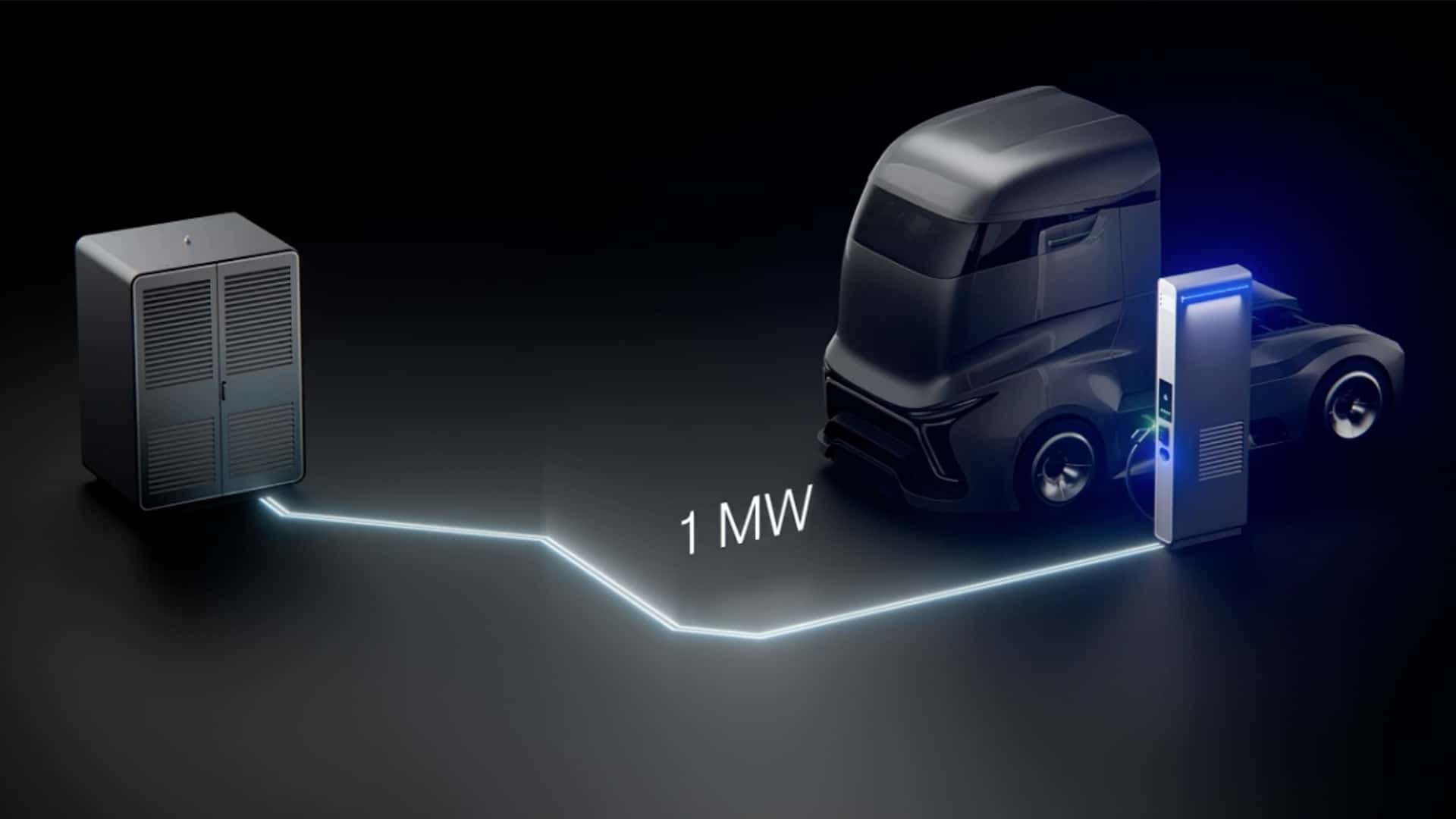
The HYC1000 units are engineered to deliver an unprecedented 1,000 kilowatts (kW) of power to a single port, primarily for heavy-duty semi-trucks. Passenger electric vehicles will also benefit, with the chargers capable of providing up to 600 kW, a figure that currently surpasses the maximum acceptance rates of even the fastest-charging EVs in the U.S.
Alpitronic’s Strategic Expansion in US EV Charging
Alpitronic has rapidly established itself as a pivotal player in the U.S. charging market. Over the past few years, the company has forged partnerships with major charging networks, including Ionna, Walmart, Mercedes-Benz High Power Charging, Electrify America, and BP Pulse.

These collaborations have already led to the widespread deployment of hundreds of Alpitronic’s HYC400 chargers across the nation. The introduction of the HYC1000 signifies a strategic escalation in Alpitronic’s commitment to advancing EV charging infrastructure.
The company’s swift growth underscores a broader industry push toward more robust and accessible charging solutions. Mike Doucleff, President of Alpitronic Americas, recently detailed the intricate workings and benefits of the HYC1000 chargers in a video, shedding light on their distinct advantages.
Understanding the HYC1000 Megawatt EV Charging Technology
The HYC1000 megawatt chargers are characterized by their sleek, tall rectangular design. Each dispenser unit is equipped to house two charging cables, offering significant flexibility for various vehicle types and charging standards.
These versatile units support multiple connector types, including the Tesla-style NACS (North American Charging Standard) cables, CCS (Combined Charging System) cables, and the Megawatt Charging Standard (MCS) cable specifically designed for heavy-duty trucks. Network providers can configure these combinations based on their specific operational requirements.
Beyond the charging ports, the dispensers feature practical design elements. Swinging arms at the top effectively manage cable weight, enhancing user convenience. A vehicle-facing touchscreen provides essential charging details, while an integrated card reader streamlines payment processes.
Unmatched Power Delivery and Modularity
Each HYC1000 tower is engineered for formidable power delivery. Both plugs can simultaneously supply up to 600 amps and 1,000 volts, equating to an impressive 600 kW of power per port. This capacity outstrips current leading fast chargers in the U.S., such as Tesla V4 Superchargers and the Gravity Charging Center in New York City, which currently peak at 500 kW.
While no current U.S. passenger EVs can fully utilize 600 kW, models like the Porsche Cayenne Electric, BMW iX3, and Lucid Gravity can accept approximately 400 kW. This indicates a future-proof design that anticipates upcoming advancements in battery technology.
The modularity of these chargers extends to their ability to support the MCS standard, configured to deliver 1,500 amps and 1,000 volts. This flexibility means a single charging location can serve both heavy-duty semi-trucks and passenger EVs concurrently, depending on site design and plug availability.
In a notable demonstration of high-performance capabilities, Alpitronic collaborated with Mercedes-AMG to develop a specialized version of the HYC1000. This variant delivered an astounding 1,041 kW to a passenger EV, the Concept AMG GT XX, during a test run in Italy last year, showcasing the immense potential of megawatt EV charging.
Intelligent Distributed Power Management
A core feature of the HYC1000 is its sophisticated distributed power delivery system. The main cabinet houses eight 125 kW silicon carbide power modules, which collectively can power eight individual charging towers. Each of these 125 kW modules is further subdivided into 62.5 kW units.
This granular subdivision enables incredibly precise power distribution, adapting to the specific demand at each charging stall. For instance, if a Chevy Equinox EV (peaking at 150 kW) and a Hyundai Ioniq 5 (capable of up to 350 kW) are charging side-by-side, the system can accurately deliver their respective maximum acceptance rates.
This intelligent power management minimizes wasted capacity, ensuring that power is efficiently allocated based on the vehicle’s needs. EVs typically require their full charging power at a low state of charge, with speeds tapering off as the battery fills. This dynamic load balancing capability becomes even more critical in such scenarios.
It is important to note that Alpitronic is not alone in implementing dynamic load balancing. Leading charging networks like Tesla, ChargePoint, and Electrify America have also adopted similar smart power management strategies to optimize their fast-charging infrastructures.
Bridging the Gap: Megawatt EV Charging and Vehicle Readiness
The advent of megawatt EV charging presents a clear challenge and opportunity for automakers. While the infrastructure is rapidly advancing, the majority of electric vehicles currently on the market are not yet equipped to fully leverage such high power outputs.
This technological leap by providers like Alpitronic serves as a strong incentive for manufacturers to innovate their battery and charging systems. The goal is to design EVs capable of accepting higher charging rates, thereby maximizing the benefits of these ultra-fast chargers.
A crucial bottleneck in mass EV adoption remains the time required for charging. High-power systems like the HYC1000 promise to mitigate this issue significantly, potentially making the EV charging experience as quick and convenient as refueling a conventional gasoline car.
Global Momentum: Megawatt EV Charging Beyond the US
The push for megawatt EV charging is a global phenomenon. In China, this technology is already becoming more accessible, even on mass-market models from manufacturers like BYD and Geely. This demonstrates the feasibility and demand for such rapid charging capabilities in various markets.
In the U.S., while Alpitronic is a key player, other companies are also making strides in megawatt-level charging. Tesla has begun deploying its Megachargers specifically for its Semi electric trucks, and Kempower is also planning similar solutions for heavy-duty electric vehicles.
The emerging trend suggests that this cutting-edge technology, initially targeting commercial and heavy-duty applications, is poised to eventually trickle down to passenger EVs in the U.S. This would represent a substantial victory for broader EV adoption, addressing one of the primary concerns of potential buyers: charging speed and convenience.
The Future of Ultra-Fast EV Charging
The arrival of Alpitronic’s HYC1000 megawatt EV chargers in the U.S. marks a pivotal moment for the electric vehicle industry. While current vehicle capabilities present a temporary mismatch, this innovation is a powerful catalyst for future advancements in battery technology and EV design.
As charging networks expand and vehicle technology evolves to embrace these higher power outputs, the vision of charging an EV from 10% to 80% in seven minutes or less could soon become a widespread reality. This shift is crucial for accelerating the transition to electric mobility and cementing its place in the everyday lives of consumers.
Frequently Asked Questions (FAQ)
What is megawatt EV charging?
Megawatt EV charging refers to electric vehicle charging systems that deliver power at extremely high rates, often exceeding 1,000 kilowatts (1 megawatt). This technology is designed to significantly reduce charging times, especially for large battery packs found in heavy-duty trucks and future high-performance passenger EVs, making the charging experience much faster and more efficient.
How fast can Alpitronic’s HYC1000 charger charge an EV?
Alpitronic’s HYC1000 chargers can deliver up to 1,000 kW for semi-trucks and up to 600 kW for passenger EVs per port. While actual charging speed depends on the vehicle’s acceptance rate, this capacity can theoretically charge some batteries from 10-80% in approximately seven minutes or less, representing a substantial leap in charging efficiency.
Are current EVs in the U.S. ready for megawatt charging?
Most current electric vehicles in the U.S. cannot accept the full megawatt EV charging power of the HYC1000. The fastest-charging passenger EVs, such as the Porsche Cayenne Electric, BMW iX3, and Lucid Gravity, typically top out around 400 kW. However, the technology is future-proof, anticipating advancements in vehicle battery architecture and encouraging automakers to innovate.
What charging standards does the HYC1000 support?
The Alpitronic HYC1000 is highly versatile, supporting the Tesla-style NACS (North American Charging Standard) cables, CCS (Combined Charging System) cables, and the Megawatt Charging Standard (MCS) cable. This multi-standard capability allows network providers to configure the chargers to serve a wide range of electric vehicles, from passenger cars to heavy-duty trucks.
How does the HYC1000 manage power distribution?
The HYC1000 utilizes a sophisticated distributed power delivery system. Its main cabinet contains eight 125 kW silicon carbide power modules, further subdivided into 62.5 kW units. This modularity enables precise and dynamic load balancing, allowing the charger to deliver exact power levels required by each vehicle, optimizing efficiency and minimizing energy waste across multiple stalls.
Will megawatt charging become common for passenger EVs?
While initially focused on heavy-duty applications, megawatt EV charging technology is expected to trickle down to passenger EVs in the U.S. as battery technology advances and automakers develop vehicles capable of accepting higher charge rates. The trend is already visible in markets like China, suggesting a future where ultra-fast charging becomes a standard feature for mass-market electric vehicles.