
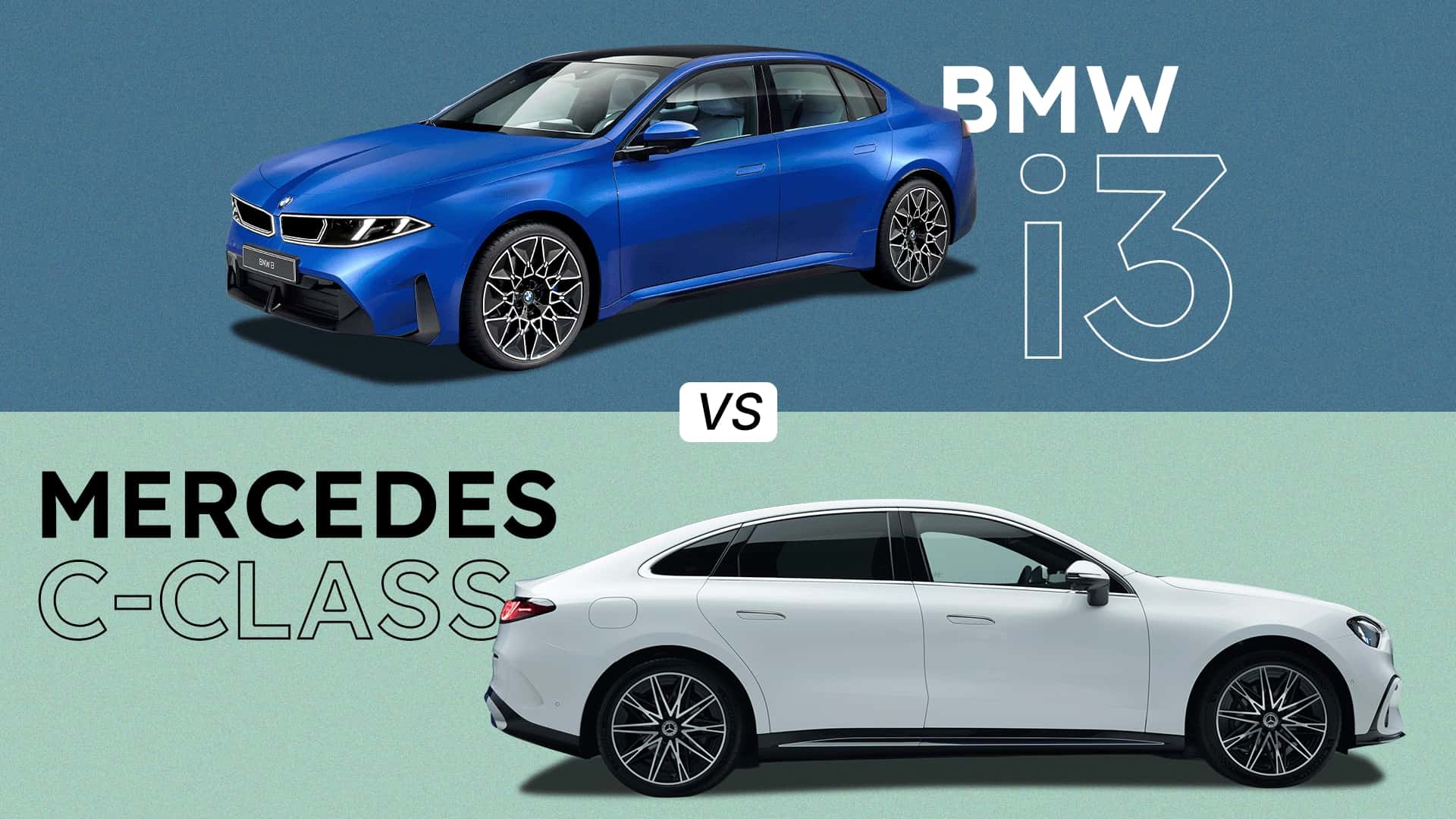
The automotive world is keenly observing a renewed rivalry in the compact executive sedan segment, this time electrified. Mercedes-Benz has officially unveiled its electric C-Class, positioning it as a direct competitor to BMW’s highly anticipated i3. Both luxury German manufacturers are presenting formidable electric vehicles (EVs) that promise extended range, rapid charging capabilities, and advanced features, yet they approach the electric compact executive sedan problem with distinct philosophies.
Both models boast state-of-the-art 800-volt platforms, a technology known for enabling faster charging and greater efficiency. This shared foundation underpins a suite of features that would have seemed futuristic in older generations of EVs from these very brands. While Mercedes-Benz touts the new 2027 Mercedes C-Class EV as “the sportiest C-Class ever,” its inherent design and feature set lean significantly more towards traditional luxury and comfort compared to its BMW counterpart.

Preliminary specifications suggest that the BMW i3 might hold an advantage in charging speed and overall range. However, the initial launch variant of the 2027 Mercedes C-Class EV showcases superior power and torque figures. A comprehensive comparison remains challenging as full specifications for both vehicles are yet to be released. Nonetheless, the available data offers a clear glimpse into how these two premium electric sedans stack up against each other.
Key Takeaways
- The 2027 Mercedes C-Class EV and BMW i3 are direct rivals in the electric compact executive sedan market.
- Both feature advanced 800-volt platforms for efficient charging and performance.
- The 2027 Mercedes C-Class EV emphasizes luxury and comfort, while the BMW i3 pushes the boundaries of EV technology and design.
- BMW i3 leads in projected range (559 miles WLTP) and peak charging (400 kW), while the launch-spec 2027 Mercedes C-Class EV offers more power (482 hp).
- Mercedes’ C-Class EV is physically larger than the i3, closer in size to a traditional E-Class.
- Technological approaches diverge, with Mercedes opting for overt displays and BMW for ‘shy tech’ integration.
- Bidirectional charging (V2L) is standard on both, with BMW i3 also confirming V2H and V2G capabilities.
Dimensions and Practicality: A Tale of Two Sizes
Despite competing in the same segment, the 2027 Mercedes C-Class EV and the BMW i3 exhibit notable differences in their physical dimensions. The 2027 Mercedes C-Class EV measures 192.2 inches (4.88 meters) in length, with a substantial wheelbase of 116.6 inches (2.96 meters).
In contrast, the BMW i3 is more compact, spanning 187.4 inches (4.76 meters) in length and featuring a 114.1-inch (2.89 meters) wheelbase. This makes the 2027 Mercedes C-Class EV approximately 4.8 inches (12 centimeters) longer, with a 2.5-inch (6.5 cm) longer wheelbase. It is also 1.1 inches (2.7 cm) wider and 0.9 inches (24 mm) taller than its BMW competitor.

Interestingly, the larger footprint of the 2027 Mercedes C-Class EV places it closer in size to Mercedes’ traditional gasoline-powered E-Class sedan, while the BMW i3 aligns more with the dimensions of a 3 Series vehicle. This size discrepancy, however, does not directly translate to superior rear occupant space in the 2027 Mercedes C-Class EV. Test occupants, measuring six feet tall, reported less leg and knee room than anticipated in the rear of the C-Class EV, with the i3 seemingly offering a marginally more spacious rear cabin despite its smaller exterior.
From a cargo perspective, the 2027 Mercedes C-Class EV offers a practical solution with its 16.6 cubic-foot (470-liter) trunk, further augmented by a 3.6 cubic-foot (101-liter) front trunk or ‘frunk’. BMW has yet to release official cargo volume figures for the i3, preventing a direct comparison of storage capabilities at this time.
Powertrain and Performance: A Power Play
Performance figures for the launch specifications reveal a spirited contest between the two electric rivals. The inaugural 2027 Mercedes C-Class EV model, the C400 4Matic, features a potent dual-motor powertrain. This setup delivers a combined output of 482 horsepower and a robust 590 pound-feet (800 Nm) of torque, enabling it to achieve 0 to 62 mph (100 km/h) in just 3.9 seconds.
A key innovation in the 2027 Mercedes C-Class EV’s powertrain is its rear motor, which primarily provides propulsion and is integrated with a two-speed transmission. Mercedes-Benz states that this design optimizes both acceleration and efficiency. Furthermore, the front motor can mechanically decouple from the wheels, a feature designed to conserve energy and enhance overall efficiency.
The BMW i3 xDrive 50, also a launch specification, shares its powertrain with the recently reviewed iX3 model. It produces 469 horsepower and 476 pound-feet (645 Nm) of torque. This places it 13 horsepower and a significant 114 pound-feet (155 Nm) behind the 2027 Mercedes C-Class EV in terms of power and torque, respectively. BMW has not yet published an official acceleration time for the i3. However, considering the heavier iX3 with the identical powertrain achieves 0-62 mph in 4.9 seconds, a reasonable estimate for the lighter i3 would be approximately 4.5 seconds.
Both Mercedes-Benz and BMW have confirmed plans to introduce additional model variants, including practical wagon versions, to cater to diverse market needs. These future offerings are expected to encompass more efficient single-motor configurations, alongside high-performance models. Mercedes’ AMG division and BMW’s M performance arm are anticipated to launch electrified versions of the C-Class EV and i3, respectively.
Reports suggest that the electric M3 equivalent could feature an advanced quad-motor setup, promising exceptional torque vectoring capabilities and a substantial increase in power over current combustion models. Similarly, the AMG iteration of the 2027 Mercedes C-Class EV is rumored to adopt an innovative three-motor configuration, further intensifying the performance rivalry in the electric luxury segment.
Battery and Charging: BMW’s Edge in Endurance
When it comes to electric range and charging prowess, the BMW i3 appears to establish a clear lead over the 2027 Mercedes C-Class EV. The i3 is equipped with a larger 108.7 kWh battery pack, surpassing the 94.3 kWh capacity of the C-Class EV. This larger battery translates into a World harmonized Light vehicle Test Procedure (WLTP) range of 559 miles (900 km) for the i3, significantly outperforming the 2027 Mercedes C-Class EV’s 473 miles (762 km) WLTP rating. It is important to note that WLTP figures typically present a more optimistic range estimate compared to the United States Environmental Protection Agency (EPA) figures, which are yet to be released for either model.
In terms of charging speed, the BMW i3 also demonstrates superior capabilities with a peak charging power rating of 400 kW. This allows the i3 to replenish 249 miles (400 km) of range in approximately 10 minutes and charge its battery from 10% to 80% in roughly 21 minutes. The 2027 Mercedes C-Class EV, while still offering impressive charging, has a lower peak rating of 330 kW.
The 2027 Mercedes C-Class EV is designed to add 202 miles (325 km) of range in 10 minutes and achieve a 10% to 80% charge in 22 minutes. Based on observed performance of other Mercedes-Benz EVs like the GLC EV, the C-Class EV may exceed its maximum charging rating under optimal conditions, potentially reaching over 350 kW.
Details regarding a single-motor, smaller-battery variant of the iX3 have already emerged, featuring an 82.6 kWh battery providing a WLTP range of 395 miles (620 km) and a 315 horsepower single rear motor, accelerating to 62 mph in 5.9 seconds. BMW is highly likely to mirror these specifications in a future i3 variant, possibly offering a single-motor version with the larger battery to achieve an exceptionally high range figure.
A notable shared feature across both models is support for vehicle-to-load (V2L) bidirectional charging, allowing the vehicle to power external devices. BMW has further confirmed that the i3 will also support vehicle-to-home (V2H) and vehicle-to-grid (V2G) charging, enhancing its utility as an energy asset beyond mere transportation.
Technological Approaches: Two Kinds of Tech
Both the 2027 Mercedes C-Class EV and the BMW i3 are showcases of advanced automotive technology, yet their presentation and integration differ significantly. BMW embraces a ‘shy tech’ philosophy, where much of its integrated technology remains subtly hidden until activated or required. In stark contrast, the 2027 Mercedes C-Class EV adopts a more ‘in-your-face’ approach, prominently displaying its innovative features.
A prime example of this divergence is the optional, expansive 39.1-inch pillar-to-pillar dashboard display in the 2027 Mercedes C-Class EV. This single, massive screen represents a bold declaration of the car’s futuristic intent, aiming to overwhelm with its sheer size. For those preferring a more conventional setup, the standard configuration for the 2027 Mercedes C-Class EV consists of three separate screens.
The BMW i3, on the other hand, maintains a more understated aesthetic. While its 17.9-inch parallelogram-shaped center screen is a distinctive design choice—intended to evoke the driver-oriented center consoles of classic BMWs—it functions as a sophisticated, yet relatively conventional, infotainment display. The i3 further distinguishes itself with a 43-inch panoramic display spanning the lower edge of the windshield, acting as an advanced hybrid between a traditional screen and a head-up display.
This panoramic display presents essential driving information directly in the driver’s line of sight and offers six customizable slots for a variety of widgets. Having experienced a similar setup in the iX3, many journalists give BMW the edge for its intuitive and less distracting information presentation.
The optional Comfort and Agility Package for the 2027 Mercedes C-Class EV introduces adaptive air suspension and 4.5 degrees of rear-wheel steering. These features are designed to endow the C-Class EV with a wider spectrum of driving characteristics, from plush comfort to dynamic agility. Should these features perform as effectively as they did in the GLC EV, the 2027 Mercedes C-Class EV could offer levels of comfort and adaptability unmatched by the i3, which does not include these advanced suspension or steering options.
BMW has heavily promoted its ‘Heart of Joy’ supercomputer, which meticulously controls the i3’s driving dynamics. Experience with this system in the iX3 SUV indicates a driving experience that is remarkably smooth, precise, and controlled, making spirited driving scenarios both enjoyable and manageable. This system also facilitates a ‘limo stop’ feature, designed to bring the vehicle to a gentle halt without the typical forward jolt. While the 2027 Mercedes C-Class EV also provides smooth braking, it may not achieve the same degree of seamlessness as the BMW’s advanced system.
Reignited Rivalry: Same Fight, New Rules
The introduction of the 2027 Mercedes C-Class EV and the BMW i3 marks the resurgence of an iconic automotive rivalry, albeit under entirely new parameters. Both Mercedes-Benz and BMW are once again vying for the same discerning buyers, but their visions for the ideal electric luxury sedan have markedly diverged. Mercedes-Benz appears focused on seamlessly translating its established brand values of opulent luxury and refined engineering into the electric age, aiming for familiarity with an electrified core.
Conversely, BMW is leveraging electrification as an opportunity to disrupt traditional design and engineering conventions, even while drawing inspiration from its rich heritage. This is more than a simple comparison of specifications, where the BMW i3 currently shows an advantage in key EV metrics such as range and charging speed. It represents a fundamental clash of philosophies, showcasing two very different predictions of what premium buyers will seek in the next generation of electric vehicles.
The BMW i3 projects an image of a more advanced, forward-thinking electric car, boldly breaking new ground in EV technology and user experience. The 2027 Mercedes C-Class EV, while technologically sophisticated, positions itself as a well-rounded luxury sedan that simply happens to be electric, prioritizing a classic luxury experience adapted for modern powertrains. Ultimately, a definitive assessment will require direct, back-to-back testing of these vehicles. Nevertheless, the revival of this enduring rivalry in the electric vehicle era promises exciting developments for the premium automotive market.
FAQ Section
What are the primary differences in design philosophy between the 2027 Mercedes C-Class EV and BMW i3?
The 2027 Mercedes C-Class EV aims to translate Mercedes’ traditional luxury ethos into an electric platform, emphasizing comfort and refinement with prominent tech displays. The BMW i3, built on the Neue Klasse architecture, uses electrification as a catalyst for breaking tradition, integrating ‘shy tech’ and a futuristic user interface while maintaining dynamic driving characteristics.
How do the range and charging capabilities compare between the two electric sedans?
The BMW i3 boasts a larger 108.7 kWh battery, offering a WLTP range of 559 miles (900 km) and a peak charging rate of 400 kW. The 2027 Mercedes C-Class EV features a 94.3 kWh battery, providing a WLTP range of 473 miles (762 km) and a peak charging rate of 330 kW. Both utilize 800-volt architectures for fast charging.
Which vehicle offers more power and acceleration?
The launch-spec 2027 Mercedes C-Class EV (C400 4Matic) has a dual-motor powertrain producing 482 hp and 590 lb-ft of torque, achieving 0-62 mph in 3.9 seconds. The BMW i3 xDrive 50, with 469 hp and 476 lb-ft, is estimated to reach 62 mph in approximately 4.5 seconds, making the Mercedes slightly more powerful in initial variants.
What are the key interior technology highlights of each model?
The 2027 Mercedes C-Class EV offers an optional 39.1-inch pillar-to-pillar dashboard display, showcasing its tech prominently. The BMW i3 features a 17.9-inch parallelogram-shaped center screen and a 43-inch panoramic display on the windshield, employing a ‘shy tech’ approach with information appearing when needed, for a less intrusive experience.
Will there be performance variants like AMG or M models for these EVs?
Yes, both manufacturers are expected to launch high-performance variants. The electric M3 equivalent is anticipated to feature a quad-motor setup with advanced torque vectoring, while the AMG version of the 2027 Mercedes C-Class EV is reportedly getting a three-motor configuration, signaling a new era of electric performance.
Do these vehicles support bidirectional charging?
Both the 2027 Mercedes C-Class EV and the BMW i3 support vehicle-to-load (V2L) bidirectional charging, enabling them to power external devices. BMW has additionally confirmed that the i3 will also support vehicle-to-home (V2H) and vehicle-to-grid (V2G) capabilities, offering enhanced energy management functionalities.