
Key Takeaways
- Rivian is actively considering the in-house manufacture of lidar sensors in the United States for future versions of its R2 electric SUV.
- CEO RJ Scaringe indicated that this strategic move might involve a partnership or joint venture with a Chinese solid-state lidar technology company.
- The R2 mid-size electric SUV is slated to feature these lidar sensors from late 2026 onwards, significantly enhancing its automated driving capabilities.
- Initial R2 production batches will rely on an advanced camera and radar system, without the lidar hardware.
- Rivian has confirmed that earlier R2 models without lidar will not be eligible for a hardware retrofit.
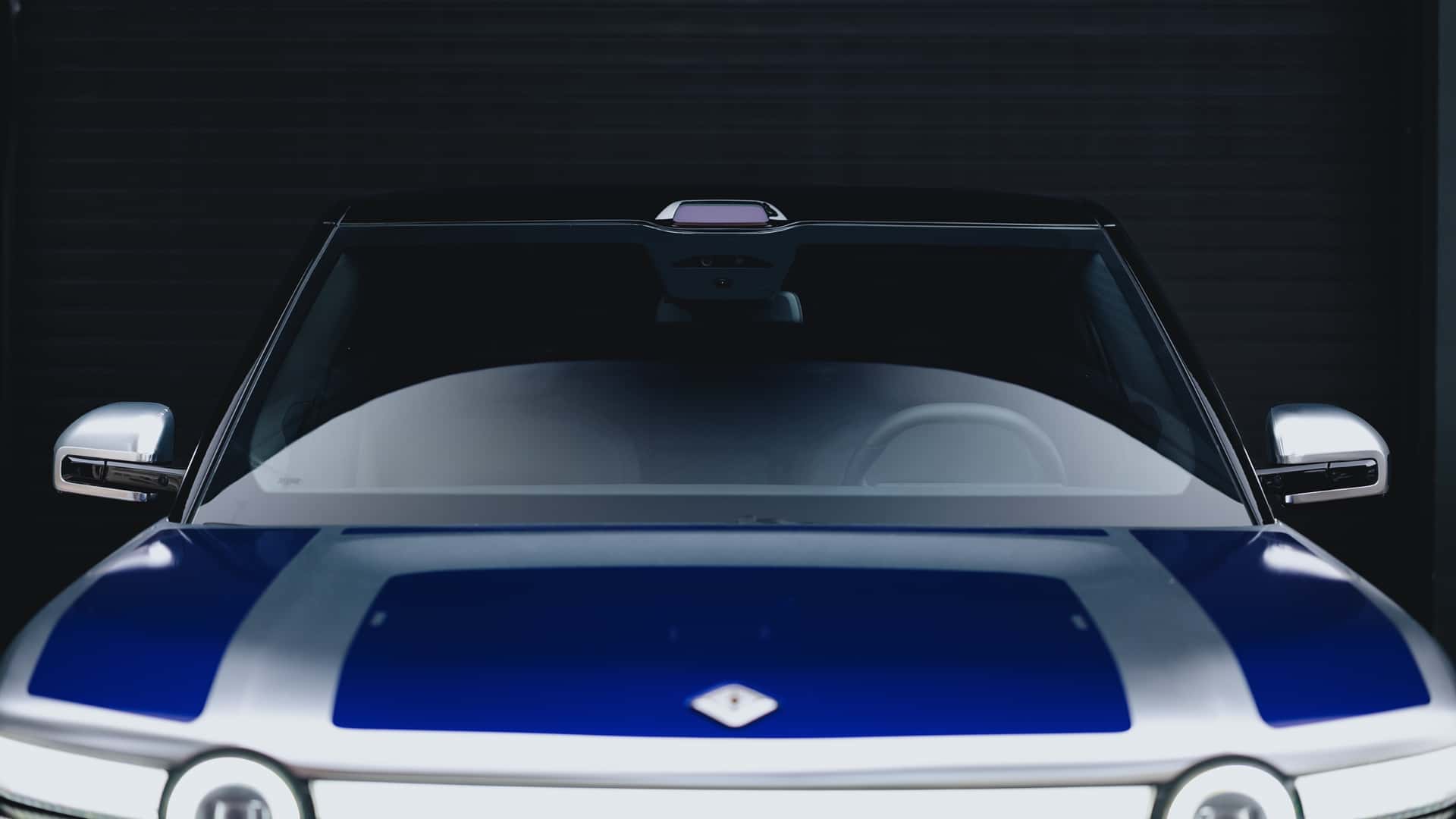
In a significant strategic development for the electric vehicle (EV) industry, American automaker Rivian is exploring the possibility of manufacturing its own lidar sensors domestically for its upcoming R2 mid-size electric SUV. This proactive move could position the R2 as a trailblazer, potentially becoming the first mass-market American EV to integrate a domestically produced lidar sensor.
Rivian CEO RJ Scaringe recently shared these insights in an interview with Reuters, highlighting the company’s commitment to advancing autonomous driving technologies. The ongoing discussions involve a potential collaboration with a Chinese solid-state lidar manufacturer, signaling a unique approach to technology acquisition and integration.
The Strategic Imperative for In-House Lidar
Lidar, an acronym for ‘Light Detection and Ranging,’ technology plays a crucial role in enabling advanced automated driving systems. Unlike cameras that perceive the world in 2D or radar that provides object distance and velocity, lidar uses pulsed laser light to measure distances, generating highly detailed three-dimensional maps of a vehicle’s surroundings.
This detailed environmental mapping is widely considered by many industry experts to be essential for achieving true autonomous driving capabilities, particularly for ‘eyes-off’ or Level 3 and above automation. By offering a robust and precise perception layer, lidar can augment and often validate the data provided by other sensors, significantly enhancing safety and reliability.
Rivian’s decision to consider in-house manufacturing underscores a broader industry trend towards vertical integration, where automakers seek greater control over critical components. Such a strategy can lead to cost efficiencies, improved supply chain management, and tailored performance optimization for specific vehicle architectures.
Exploring Partnerships with Chinese Technology Firms
CEO Scaringe elaborated on Rivian’s nuanced approach, indicating a preference for internal manufacturing utilizing existing Chinese technological advancements. Rather than opting for ready-made sensors, Rivian is contemplating a joint venture or a similar structural arrangement to ‘ingest’ the technology directly.
While specific Chinese companies were not named in the interview, Scaringe confirmed that Rivian is in ‘active discussions’ with various solid-state lidar manufacturers. This strategic engagement highlights China’s burgeoning leadership in certain advanced sensor technologies critical for modern vehicle autonomy.
Scaringe articulated the rationale behind this consideration, stating, “Think of it as finding a way to structurally ingest the technology. The advancements in terms of going from the early lidars that I think a lot of us have seen—we see them here—to these much more advanced solid-state lidars, those advancements didn’t happen in the United States. Those advancements happened in China.” This statement clearly acknowledges the significant progress made by Chinese firms in lidar development.
The Rivian R2: A Phased Rollout of Advanced Autonomy
The R2, Rivian’s much-anticipated mid-size electric SUV, is central to the company’s growth strategy, aiming for a broader market appeal with a more accessible price point than its R1 counterparts. The integration of lidar technology is a key differentiator for its future autonomous capabilities, promising an elevated driving experience.
Rivian has officially stated that it anticipates commencing sales of lidar-equipped R2 EVs in late 2026. This timeline provides a clear roadmap for when consumers can expect to experience the enhanced autonomous features, aligning with the company’s long-term vision.
Initial R2 Models and Current Sensor Suite
It is important for prospective buyers to note that the initial batches of R2s rolling off the production line will not feature lidar technology. This strategic decision was made to accelerate the production launch of the mid-size SUV, ensuring it reaches the market as quickly as possible to meet demand.
These early R2 models will instead leverage an ‘elevated version of the Gen2 architecture,’ which currently underpins the latest iterations of the R1S SUV and R1T pickup truck. This robust architecture is complemented by the brand’s improved 65-megapixel HDR camera system and an enhanced dual-mode corner radar.
This comprehensive sensor suite is engineered to provide sufficient capability for ‘hands-free driving,’ representing a significant step towards autonomous functionality in the immediate future. However, Rivian’s ultimate vision for ‘eyes-off driving’ necessitates a more advanced perception system, which lidar is intended to provide.
The Nexus of Lidar and Rivian’s Custom Processing Power
The pursuit of ‘eyes-off driving’ represents Rivian’s ambitious goal for the R2, moving beyond supervisory hands-free systems to truly autonomous operation. This advanced level of autonomy will be facilitated not only by the integration of lidar sensors but also by Rivian’s proprietary computing hardware, designed for high-performance processing.
At the heart of this sophisticated system lies the company’s first custom chip, the Rivian Autonomy Processor 1, or RAP-1. This dedicated processing unit is engineered to handle the immense data streams generated by an advanced sensor array, including lidar, cameras, and radar, enabling real-time decision-making for complex driving scenarios with high accuracy.
The synergy between the high-fidelity 3D data from lidar and the robust computational power of RAP-1 is expected to unlock advanced features, allowing the Rivian R2 to navigate complex environments with greater precision, reliability, and safety, thus enhancing the overall autonomous driving experience.
No Retrofit for Early Adopters
A crucial detail for early enthusiasts and prospective buyers of the Rivian R2 concerns hardware compatibility and future upgrades. Rivian previously confirmed to InsideEVs that R2 models produced before the integration of lidar will not be eligible for a hardware upgrade.
This means customers acquiring the initial R2 batches will not be able to retrofit lidar sensors at a later stage to enable the full ‘eyes-off’ driving capabilities. This distinction underscores the importance of the production timeline for buyers prioritizing the most advanced autonomous features available.
The Broader Implications for EV Autonomy and Manufacturing
Rivian’s exploration of in-house lidar production for the R2 carries significant implications for the wider electric vehicle market and the trajectory of autonomous driving. By potentially localizing a key piece of autonomous hardware, Rivian could gain a substantial competitive edge in terms of cost control, innovation speed, and supply chain resilience, reducing reliance on external suppliers.
The willingness to partner with Chinese technology firms for this venture also reflects the globalized nature of advanced technology development. It demonstrates a pragmatic approach to leveraging expertise wherever it is most advanced globally, while simultaneously maintaining a commitment to domestic manufacturing for critical components within the United States.
This dual strategy could set a significant precedent for other Western automakers seeking to integrate cutting-edge sensor technologies while navigating complex international supply chains and intellectual property considerations. As the race for fully autonomous vehicles intensifies, control over essential hardware like lidar will become increasingly vital for manufacturers aiming to deliver on the promise of future mobility.
FAQ Section
What is Rivian’s plan for lidar sensors in the R2?
Rivian is considering manufacturing its own lidar sensors in the United States for future versions of the R2 electric SUV. This strategic initiative aims to integrate advanced autonomous driving capabilities, with the possibility of a technological partnership with a Chinese solid-state lidar company to bring this innovation to fruition.
Why is Rivian considering a partnership with a Chinese company for lidar technology?
Rivian CEO RJ Scaringe noted that significant advancements in solid-state lidar technology have primarily occurred in China. By partnering, Rivian seeks to ‘structurally ingest’ this cutting-edge technology, leveraging global expertise to enhance its domestic manufacturing capabilities rather than simply purchasing pre-made sensors.
When will lidar-equipped Rivian R2 vehicles be available?
Rivian has indicated that the first R2 electric SUVs featuring integrated lidar sensors are projected to begin sales in late 2026. This timeline allows the company to establish its production processes and ensure the seamless integration of this advanced sensing hardware for enhanced autonomous functionality.
Will early Rivian R2 buyers be able to retrofit lidar sensors?
No, Rivian has confirmed that earlier R2 models produced without lidar technology will not be eligible for a hardware upgrade. This means customers purchasing the initial batches of the R2 will not have the option to add lidar sensors to their vehicles at a later date, underscoring the importance of the initial specification.
What autonomous driving features will initial R2 models have without lidar?
Initial R2 models, launching without lidar, will be equipped with an ‘elevated version of the Gen2 architecture,’ featuring an improved 65-megapixel HDR camera system and an enhanced dual-mode corner radar. This sophisticated setup is designed to support robust ‘hands-free driving’ capabilities, representing a significant step in vehicle autonomy.
What is the role of the Rivian Autonomy Processor 1 (RAP-1) in the R2?
The Rivian Autonomy Processor 1 (RAP-1) is the company’s first custom chip, specifically designed to process the vast amounts of data generated by the R2’s advanced sensor suite, including lidar, cameras, and radar. This powerful processor is crucial for enabling the more sophisticated ‘eyes-off driving’ capabilities that Rivian aims to achieve, ensuring real-time decision-making.