
Key Takeaways:
- Rivian is actively considering manufacturing its own lidar sensors in the United States for future versions of the R2 electric SUV.
- This strategic move could position the R2 as the first mass-market American EV to feature domestically produced lidar technology.
- CEO RJ Scaringe indicated potential partnerships or joint ventures with Chinese solid-state lidar manufacturers to “structurally ingest the technology.”
- While initial R2 batches starting in late 2026 will rely on advanced camera and radar systems for hands-free driving, later models are slated to integrate lidar for enhanced “eyes-off driving” capabilities.
- Current R2 vehicles without lidar will not be eligible for a hardware upgrade, underscoring the significance of this future production strategy.
Rivian’s Strategic Push for In-House Lidar Production
In a significant development for the electric vehicle (EV) industry, American automaker Rivian is exploring the possibility of manufacturing its own lidar sensors domestically. This initiative, articulated by CEO RJ Scaringe, signals a strategic shift towards greater vertical integration and technological independence, particularly for the upcoming Rivian R2 mid-size electric SUV.
Should these plans materialize, the Rivian R2 could become a pioneering vehicle in the mass-market American EV segment, being equipped with a lidar sensor produced within the United States. The move underscores Rivian’s commitment to advancing autonomous driving capabilities and controlling key components of its future vehicle architecture.
Exploring Chinese Technological Collaborations
Rivian’s CEO, RJ Scaringe, informed Reuters that the company is actively assessing options for producing these advanced sensors. A notable aspect of this strategy involves potentially collaborating with Chinese technology firms. This could take the form of a joint venture, allowing Rivian to leverage existing, cutting-edge expertise in solid-state lidar manufacturing.
While Scaringe did not disclose specific company names, he confirmed that Rivian is engaged in “active discussions” with various solid-state lidar manufacturers. This engagement highlights the company’s intent to integrate proven lidar solutions, irrespective of their origin, into its domestic production framework.
Scaringe emphasized the rationale behind looking towards China for technological advancements. He stated, “Think of it as finding a way to structurally ingest the technology. The advancements in terms of going from the early lidars that I think a lot of us have seen—we see them here—to these much more advanced solid-state lidars, those advancements didn’t happen in the United States. Those advancements happened in China.”
This candid assessment points to the significant progress made by Chinese companies in lidar technology. Rivian’s approach aims to incorporate these innovations directly into its U.S. manufacturing processes, fostering domestic production while benefiting from global technological leadership.
The Role of Lidar in Advanced Autonomous Driving Systems
Lidar, an acronym for “light detection and ranging,” is widely regarded by many experts as an indispensable technology for achieving true autonomous driving. Its core function involves emitting pulsed laser light and measuring the time it takes for the light to return, thereby generating highly detailed three-dimensional maps of the vehicle’s surroundings.
This precise environmental perception is critical for navigating complex driving scenarios, identifying obstacles, and enhancing overall vehicle safety. Unlike camera-based systems, lidar is less affected by lighting conditions and provides accurate depth information, complementing other sensor modalities for robust autonomous functionalities.
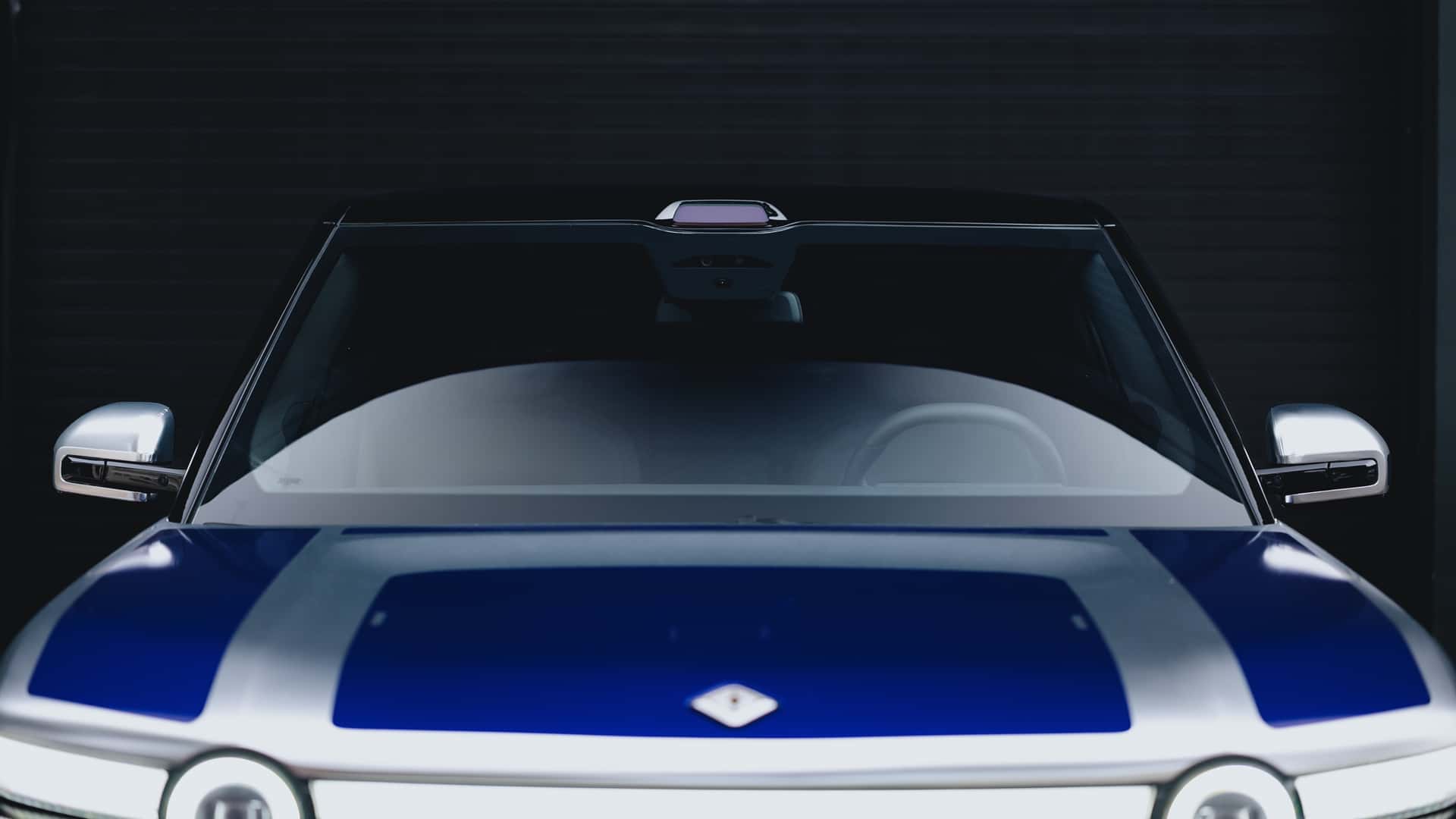
Rivian had previously announced that the R2 mid-size electric SUV would be fitted with a lidar sensor from the factory. Early demonstration vehicles of the R2 featured a static, roof-mounted lidar sensor, which was notably more compact than the larger, rotating units typically seen on experimental autonomous vehicles like Waymo’s robotaxis.
Phased Introduction of Lidar in the R2 Production Timeline
Despite earlier announcements, the initial batches of the Rivian R2 rolling off the production line will not immediately feature lidar technology. This decision was made to expedite the production launch of the mid-size SUV, ensuring its quicker entry into the market. Rivian has stated that it anticipates sales of lidar-equipped R2 EVs to commence in late 2026.
The first R2 vehicles will instead build upon an “elevated version of the Gen2 architecture” that currently underpins the latest R1S and R1T models. These initial R2s will come factory-equipped with Rivian’s improved 65-megapixel HDR camera system and an enhanced dual-mode corner radar. This sensor suite is designed to provide robust capabilities for hands-free driving.
However, Rivian’s long-term vision extends beyond hands-free operation to full “eyes-off driving.” This ambitious goal necessitates the integration of lidar sensors, which will work in tandem with the company’s custom-designed chip, the Rivian Autonomy Processor 1 (RAP-1).
The RAP-1 is engineered to process the vast amounts of data generated by advanced sensors, enabling sophisticated decision-making for increasingly autonomous functions. This combination of proprietary hardware and advanced sensor technology forms the cornerstone of Rivian’s future autonomous driving platform.
No Retrofit Option for Early Adopters
A crucial detail for prospective buyers is Rivian’s confirmation regarding hardware upgrades. The EV manufacturer has clarified that older R2 vehicles, those produced without the lidar sensor, will not be eligible for a retrofit to incorporate the technology later. This information, previously confirmed by Rivian to InsideEVs, underscores the importance of the production timeline for consumers interested in the full suite of advanced autonomous features.
This policy means that customers who purchase the initial R2 models will have a different autonomous driving hardware configuration compared to those buying the lidar-equipped versions slated for release in late 2026. Such a distinction is vital for setting clear expectations and understanding the evolving capabilities of the Rivian R2 platform.
Implications for the EV Market and Supply Chain Resilience
Rivian’s exploration of domestic lidar sensor manufacturing, potentially with Chinese technology, holds significant implications for the broader electric vehicle landscape. It reflects a growing trend among automakers to gain greater control over critical components that define their vehicles’ performance and capabilities, especially in the realm of advanced driver-assistance systems (ADAS) and autonomous driving.
By producing lidar sensors in the U.S., Rivian could mitigate risks associated with global supply chain disruptions, reduce reliance on single-source foreign suppliers, and potentially benefit from government incentives aimed at boosting domestic manufacturing. This strategic vertical integration could enhance the company’s competitiveness and operational efficiency.
The decision to leverage Chinese advancements in solid-state lidar also highlights the globalized nature of technological innovation. While fostering domestic production, Rivian acknowledges and seeks to integrate best-in-class technologies developed internationally, creating a hybrid model that balances local manufacturing with global expertise.
The development of an in-house lidar capability, combined with the Rivian Autonomy Processor 1 (RAP-1), positions Rivian to differentiate its autonomous driving offerings in an increasingly competitive market. This comprehensive approach to hardware and software development is essential for realizing complex features like eyes-off driving and ensuring the robust performance of its electric SUVs.
Looking Ahead: The Future of Rivian’s Autonomous Vision
Rivian’s deliberate and phased approach to integrating lidar into the R2 underscores its methodical strategy for autonomous driving development. By starting with a capable hands-free system and planning for future eyes-off capabilities, the company aims to deliver increasingly sophisticated and reliable autonomous features to its customers.
The commitment to domestic production of a critical component like the lidar sensor, even while incorporating global technology, illustrates Rivian’s vision for long-term sustainability and control over its technological roadmap. As the automotive industry moves towards higher levels of automation, Rivian’s strategic investments in hardware, software, and manufacturing capabilities will be pivotal to its success in the evolving EV market.
Frequently Asked Questions (FAQs)
What is Rivian’s plan for lidar sensors in the R2 SUV?
Rivian is considering manufacturing its own lidar sensors in the United States for future R2 versions. This strategy aims to integrate advanced technology, possibly through partnerships with Chinese solid-state lidar companies, to enhance autonomous driving capabilities and ensure domestic production of this critical component.
Why is Rivian looking to produce lidar sensors in the U.S.?
Producing lidar sensors domestically could establish the R2 as the first mass-market American EV with U.S.-made lidar. This move also aims to strengthen Rivian’s supply chain, reduce dependency on foreign suppliers, and potentially capitalize on government initiatives supporting local manufacturing and technological integration.
What is the role of Chinese technology in Rivian’s lidar strategy?
Rivian CEO RJ Scaringe indicated that the company is in “active discussions” with Chinese solid-state lidar manufacturers. The goal is to “structurally ingest the technology” developed in China, which Scaringe noted has seen significant advancements in modern lidar systems, for use in U.S. production.
When will lidar-equipped Rivian R2 models be available?
Rivian anticipates that the first R2 SUVs equipped with lidar sensors will begin rolling off the assembly line and become available for sale in late 2026. Initial R2 batches, however, will commence production earlier without the lidar hardware, relying on advanced camera and radar systems.
Will early Rivian R2 buyers be able to add lidar later?
No. Rivian has confirmed that earlier R2 models produced without the lidar sensor will not be eligible for a hardware upgrade to incorporate the technology at a later date. This means the autonomous driving capabilities will differ between initial and later production runs.
What is the significance of lidar for autonomous driving?
Lidar sensors are considered essential for achieving true autonomous driving because they create highly detailed, three-dimensional maps of a vehicle’s surroundings. This precision enhances environmental perception, improves obstacle detection, and is crucial for enabling advanced features like “eyes-off driving” even in challenging conditions.
What other autonomous driving hardware will the R2 feature?
The initial Rivian R2 models will come with an advanced sensor suite, including an improved 65-megapixel HDR camera system and an enhanced dual-mode corner radar. For future “eyes-off driving” capabilities, lidar will work in conjunction with Rivian’s custom chip, the Rivian Autonomy Processor 1 (RAP-1).