
NEW YORK — The bustling Avis rental car queue at a New York City outpost during Memorial Day weekend painted a familiar picture: a throng of travellers, laden with luggage, eager to escape the urban sprawl. As freshly detailed SUVs were marshalled into parking bays, ready for long holiday hauls, an unexpected financial advantage for electric vehicles began to emerge from the myriad of travel choices.
Key Takeaways:
- A 560-mile road trip in a Hyundai Ioniq 5 EV revealed significant cost savings compared to traditional gasoline vehicles, even when relying exclusively on public fast chargers.
- Despite average New York gas prices hovering at $4.58 per gallon, the total charging cost for the EV trip was approximately $80, far less than a comparable gas SUV.
- The Ioniq 5’s 800-volt architecture enabled rapid charging, with 10-80% top-ups completed in around 20 minutes, seamlessly integrating with meal breaks.
- The decision to opt for an EV also provided substantial savings on rental fees, with the Ioniq 5 being priced significantly lower than available hybrid or combustion alternatives.
- This experience challenges the conventional wisdom that EVs offer maximal cost benefits only through home charging, demonstrating their economic viability even with public charging infrastructure.
Navigating Holiday Travel: The Unexpected EV Solution
For two friends embarking on a weekend retreat to Upstate New York, bound for the tranquil shores of Lake George and the rugged trails of the Adirondacks, securing travel proved challenging. Amtrak tickets for the holiday weekend were long sold out, and Metro-North connections were impractical for their chosen destination. The most viable, albeit expensive, option was a rental car.

The rental market presented a stark reality: economy gasoline cars, such as the Chevrolet Spark and Toyota Corolla, were either fully booked or listed at prohibitive prices. Curiously, the most affordable options available were electric vehicles (EVs), with a choice between the Kia Niro EV and the Hyundai Ioniq 5 EV. Both were priced identically despite their generational differences.
The selection became clear. The Hyundai Ioniq 5 EV, renowned for its superior charging speeds and extended range, stood out as the pragmatic choice. This decision was further influenced by the prevailing average gas prices in New York, which at the time hovered above $4.50 per gallon, a direct consequence of ongoing global events. The prospect of bypassing gas stations entirely offered a welcome relief from fluctuating fuel costs.
The Hyundai Ioniq 5: A Road Trip Revelation
While an EV might not be the immediate preference for all road-trippers, the charging infrastructure in the Northeast corridor has steadily matured, making it a manageable proposition for experienced electric vehicle drivers. The anticipation was not primarily for substantial refueling savings, as reliance on public fast-charging stations typically incurs higher costs than home charging.

However, after traversing over 500 miles, the financial outcome was remarkably positive. The journey underscored a compelling economic argument for the Hyundai Ioniq 5 EV, even when factoring in the premium associated with public fast chargers.
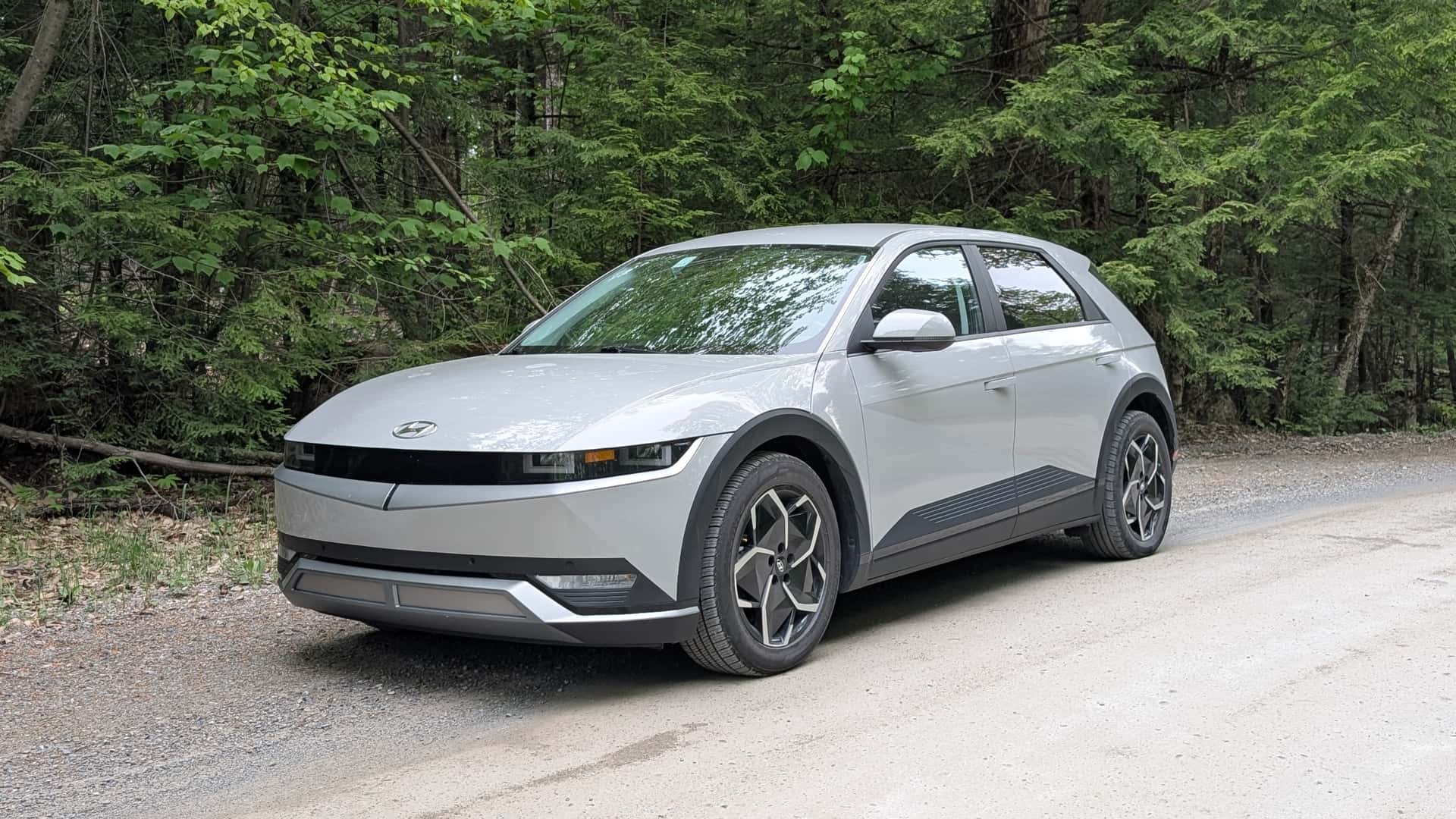
The Ioniq 5 itself lived up to its reputation. Celebrated as a favourite within the EV community, its recent enhancements, including a larger battery pack and the integration of the Tesla-style North American Charging Standard (NACS) port, had earned it an Editor’s Choice for InsideEVs Breakthrough Awards. The rental unit, an older model year, featured a CCS charging port and a 77 kilowatt-hour battery capacity, providing an EPA-rated range of 260 miles for its AWD trim.
Minor inconveniences of the older model, such as the absence of wireless Android Auto and the reliance on USB-A ports instead of USB-C, necessitated a quick stop for an adapter cable. Despite these minor points, the vehicle’s overall modernity and performance left a lasting impression on the travellers.
Seamless Charging: Efficiency on the Open Road
The driving experience in the Hyundai Ioniq 5 EV was consistently praised for its smoothness, comfortable ride, and exceptional charging capabilities. Central to its appeal is the 800-volt architecture, which allows the Ioniq 5 to achieve a 10-80% charge in a mere 20 minutes when connected to a 350-kilowatt fast charger. This efficiency meant that charging stops could be perfectly synchronised with meal breaks, ensuring the car often returned with more range than strictly necessary. Given it was a rental, setting an 80% charging limit was not a priority.
The economic efficiency of the journey began immediately. The Avis rental was handed over with a 61% state of charge, indicating approximately 190 miles of range. This provided a crucial buffer, allowing the travellers to depart the city before needing to charge, strategically avoiding the significantly higher charging rates typically found within New York City limits.
Strategic Charging Stops and Cost Analysis
The inaugural charging stop, located approximately 100 miles north of the city near the Catskills, was at a 350-kW Evolve NY station. Plugging in at 14% state of charge, the vehicle was topped up to 92%, incurring a cost of $31 at a rate of $0.47 per kWh. This charge provided ample range for reaching their Airbnb and accessing the trailhead the following morning.
A second precautionary charge was undertaken to ensure sufficient range for exploring the remote mountain trails, which lacked cell service and nearby charging infrastructure. This stop, from 30% to 80% battery, added another $20 at a comparable rate. The return journey necessitated a third primary charging stop to get back into the city.
Cumulatively, the 560-mile road trip required just three primary charging sessions, totalling approximately $67. An additional final charge near the city was required to restore the Hyundai Ioniq 5 EV to its initial state of charge, avoiding any penalties from the rental company. This brought the total charging expenditure for the entire trip to an estimated $80.
The Shifting Economics of EV Ownership
This charging outlay stands in stark contrast to the expenses associated with fueling a comparable gasoline-powered crossover over the same distance. The experience provides compelling evidence that escalating gas prices are fundamentally altering the cost dynamics of EV ownership. Traditionally, the paramount cost benefits of driving an EV were understood to stem from charging at home using cheaper residential electricity.
However, this road trip illustrates a significant shift: even with exclusive reliance on public fast-charging infrastructure, driving an EV can now be more economical than operating a gasoline-powered vehicle. With average gas prices in New York at $4.58 per gallon during the period, a vehicle would need to achieve approximately 32 miles per gallon (mpg) to rival the per-mile costs incurred by the Hyundai Ioniq 5 EV.
A typical 25 mpg SUV would have cost over $100 for the same 560-mile distance. While a fuel-efficient hybrid, rated at 40 mpg, might have slightly undercut the EV’s fuel cost at $64, the overall savings on rental costs by choosing the EV ultimately positioned the Ioniq 5 as the more economical choice against both comparable hybrids and combustion vehicles.
Detailed Vehicle Expense Comparison (3 days, 560 miles):
| Vehicle expenses, 3 days, 560 miles | Hyundai Ioniq 5 | Comparable hybrid crossover at 40 mpg ($4.58 per gallon) | Comparable gas SUV at 25 mpg ($4.58 per gallon) |
|---|---|---|---|
| Rental cost for 3 days | $480 | Ranging from $600 and up | Ranging from $600 and up |
| Tolls | $60 | $60 | $60 |
| Charging/Refueling | $80 | $64 | $103 |
| Total | $620 | More than $700 | More than $750 |
Beyond Cost: The Superior Driving Experience
The cost-efficiency was achieved without any special efforts to hypermile or meticulous route planning for savings. The vehicle was driven normally, with air conditioning in full use, and treated as any conventional road trip vehicle. The inherent benefits of the Hyundai Ioniq 5 EV extended beyond just financial savings.
The driving experience itself was described as superior by an order of magnitude. The instant torque from the electric motors delivered powerful acceleration, complemented by a buttery-smooth and nearly silent cruising experience, significantly enhancing the overall journey enjoyment.
The Compelling Case for Electric Mobility
The evidence is increasingly conclusive: embracing electric vehicles offers advantages that span not only a superior driving experience and advanced technology but also substantial broader cost benefits. The persistent elevation of gasoline prices only strengthens the economic argument for EVs.
Even under what might be considered one of the less favourable scenarios for EV economics—holiday travel necessitating public fast chargers in a high-cost region of the country—the Hyundai Ioniq 5 EV demonstrably emerged as the more financially prudent choice. This particular road trip serves as a powerful testament to the growing viability and economic wisdom of electric vehicle adoption for everyday and long-distance travel alike.
Frequently Asked Questions (FAQ)
Q1: Was this road trip primarily focused on saving money?
No, the initial goal was simply to secure a rental car for a Memorial Day weekend trip to Upstate New York. The Hyundai Ioniq 5 EV was chosen because it was the most affordable rental option available, and the unexpected financial savings on fuel and overall trip costs became apparent only after the journey was completed.
Q2: How significant were the savings compared to a gasoline car?
For a 560-mile trip, the total cost for the Hyundai Ioniq 5 EV, including rental, tolls, and charging, was $620. This was significantly less than comparable gas SUVs (over $750) and even hybrids (over $700), primarily due to lower rental costs for the EV and competitive charging expenses versus high gas prices.
Q3: What charging infrastructure was used during the trip?
The road trip relied exclusively on public fast-charging stations, specifically 350-kW Evolve NY stations. This demonstrates that even without the benefit of cheaper home charging, the Hyundai Ioniq 5 EV can offer compelling cost advantages over internal combustion engine vehicles, particularly during periods of high gas prices.
Q4: Did the older model year of the Ioniq 5 present any challenges?
The rental car was an older model Hyundai Ioniq 5 EV with a CCS charging port and lacked wireless Android Auto, using USB-A ports. While minor, these details necessitated purchasing a USB-A cable for phone mirroring. However, these points did not detract from the vehicle’s core performance, comfort, or efficient charging capabilities.
Q5: How does the Hyundai Ioniq 5’s charging speed impact road trips?
The Hyundai Ioniq 5’s 800-volt architecture allows for extremely fast charging, typically reaching 10-80% battery capacity in just 20 minutes at a 350-kilowatt fast charger. This efficiency meant that charging stops could be easily integrated with meal breaks, minimizing downtime and often providing more range than required for the next leg of the journey.