

Mercedes-Benz is introducing a new approach to urban automated driving with its MB.Drive Assist Pro system, aiming to provide a “partner” for navigating city streets. During a demonstration in a prototype CLA-Class sedan in San Francisco, the system operated seamlessly, prompting the question of its necessity given its hands-on requirement.
MB.Drive Assist Pro: A New Frontier in Urban Automation
Unlike many advanced driver-assistance systems (ADAS) confined to highways, MB.Drive Assist Pro is designed for the complexities of city driving, including traffic, intersections, and roundabouts. Mercedes-Benz positions this system as a Level 2 ADAS feature, emphasizing the driver’s continued responsibility to monitor the road and be prepared to intervene, while their hands remain on the steering wheel.
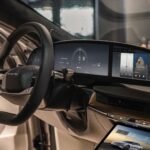
This strategy contrasts with some competitors who offer hands-free highway driving or are pushing towards Level 3 autonomy. While Mercedes-Benz already offers a limited form of “eyes-off” Level 3 driving, MB.Drive Assist Pro focuses on enhancing the urban driving experience through constant, yet assisted, supervision.
Technology Under the Hood: Cameras, Sensors, and AI
The MB.Drive Assist Pro system is powered by a sophisticated array of 10 cameras, five radar sensors, 12 ultrasonic sensors, and a high-performance Nvidia computer. Mercedes-Benz utilizes AI models trained on real-world driving data and simulations, running redundant algorithms to ensure reliability and safety. The system is designed to learn and improve over time through frequent over-the-air software updates.
This comprehensive hardware approach, including lidar in some applications, is presented by Mercedes-Benz and its partners as crucial for ensuring the safety of urban autonomy. The reliance on AI allows the system to adapt to various driving scenarios without needing to be pre-trained on every specific route, a departure from older autonomous vehicle technologies.
The “Hands-On” Philosophy: Safety and Comfort
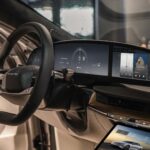
Mercedes-Benz justifies its hands-on requirement by citing safety benefits, suggesting that taking hands off the wheel can increase reaction times in critical urban situations. Lucas Bolster, manager of automated and assisted driving at Mercedes-Benz, explained the system’s design philosophy: “As soon as your hands are off the wheel, you automatically bring in a prolonged reaction time.”
For drivers, the system aims to reduce stress, particularly in unfamiliar urban environments. Bolster noted, “It’s a little bit more relaxing to supervise the system than it is to do it all yourself.” While the author found supervising the system potentially more taxing than traditional driving, the prototype demonstrated competence in navigating complex traffic, including multi-way stops and yielding to pedestrians and cyclists.
A notable feature is the “collaborative” steering, which allows the driver to easily take over control without fully disengaging the system, adapting to different driving styles and preferences.
Performance and Future Outlook
During the test drive, the MB.Drive Assist Pro-equipped CLA-Class navigated San Francisco’s varied traffic conditions, including interactions with other vehicles and Waymo robotaxis. While it encountered minor challenges, such as a double-parked car, it also showed an ability to predict other vehicles’ intentions and proceed when safe.
The MB.Drive Assist Pro system is set to debut on the CLA-Class and will be rolled out to other Mercedes-Benz models. Pricing details are yet to be released, but it will be available as an optional purchase or a subscription service. Mercedes-Benz believes the system will offer significant value, providing not just advanced capabilities but also enhanced comfort for drivers navigating busy urban environments.