
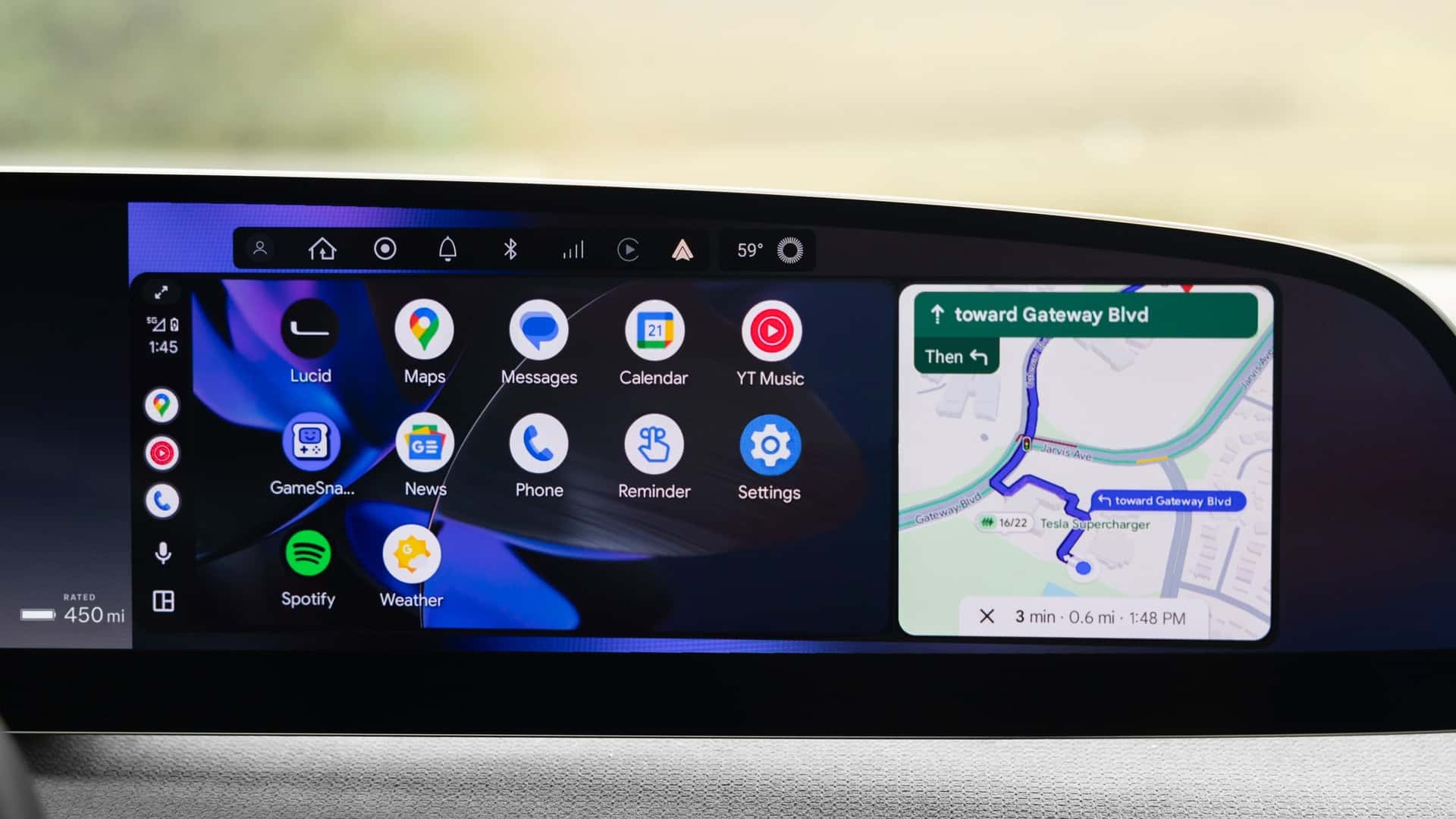
In a significant development for electric vehicle (EV) owners, Google has officially commenced the rollout of native EV route planning capabilities directly within Android Auto. This strategic enhancement aims to alleviate range anxiety and simplify long-distance travel for a vast segment of the EV market, providing a much-needed integrated solution for charging management on extended trips.
The new feature, which launched on Monday, is set to directly compete with specialised third-party applications like ‘A Better Route Planner’. It promises to provide tailored navigation for over 350 EV models from at least 15 distinct automotive brands. This move by Google is poised to transform how many EV drivers approach road trips, making the planning process far more intuitive and reliable.

Understanding Google Maps’ EV Route Planning Integration
The core functionality of this new system revolves around intelligent battery prediction and optimised charging stop recommendations. Before embarking on a journey, drivers will first need to input their vehicle’s make and model into their phone’s settings. This initial setup is critical as it allows the system to accurately model the specific energy consumption characteristics of their car.
Once the vehicle details are configured, drivers can then set their desired destination within the car’s Android Auto interface. The system will promptly calculate the estimated battery usage for the entire trip, taking into account various real-world driving conditions. A key advantage of this integration is its ability to forecast the timing and duration of necessary charging stops, thereby removing much of the guesswork previously associated with EV travel.
Advanced Prediction Algorithms at Play
Google has detailed the sophisticated technology underpinning these accurate predictions. The company stated on Monday: “To deliver accurate battery predictions for hundreds of vehicles, we combine AI with advanced energy models that analyze car details—like weight and battery size—alongside Maps’ real-time information about traffic, road elevation and weather.” This robust analytical framework ensures that the route planning system provides highly dependable estimates, adapting to dynamic environmental and traffic conditions.

Furthermore, the feature allows drivers to specify their preferred state of charge upon arrival at their destination. This customisation adds a layer of flexibility, enabling users to decide if they want to arrive with a minimal charge or a more substantial reserve. It is important to note that, currently, this system does not establish a direct communication link with the vehicle’s battery management system. Consequently, users are required to manually input their starting state of charge. However, Google assures that once the journey commences, the estimated state of charge will automatically update in real-time based on actual driving and charging activities.
Comparing with Existing EV Navigation Solutions
For many EV owners, especially those with vehicles that feature highly advanced, integrated route planning systems such as Tesla or Rivian models, this new Google Maps functionality might seem less groundbreaking. It is worth noting that vehicles from these brands typically do not support Android Auto, relying instead on their proprietary infotainment and navigation systems for optimal EV route planning.
However, the landscape for EV navigation is vast, and not all manufacturers offer equally sophisticated in-car solutions. Many drivers find their vehicle’s native route planner to be suboptimal or, in some cases, entirely absent, particularly in older or less premium EV models. For instance, manufacturers like Toyota, among others, may not provide integrated EV-specific route planning, leaving drivers to rely on external applications.
In this context, the integration of EV route planning into Android Auto through Google Maps emerges as a significant boon. It caters to a broad spectrum of EV drivers who are either dissatisfied with their car’s built-in system or lack one altogether. The comfort and familiarity of Google Maps, a universally recognised and user-friendly navigation platform, is a substantial draw. Many drivers express a clear preference for seamless, well-established systems like Google Maps over potentially cumbersome or less intuitive proprietary in-car navigation interfaces. The increasing presence of ‘Google Built-in’ systems in new vehicles, which make Google Maps the default navigation solution, further underscores this preference.
While third-party apps like ‘A Better Route Planner’ offer advanced functionalities, including the ability to connect to a vehicle’s On-Board Diagnostics (OBD) reader for real-time battery data, Google Maps’ integration into Android Auto brings a different kind of convenience. It provides a native, readily accessible solution within the car’s existing infotainment framework, potentially reducing the need for separate apps and devices for many users.
Broad Impact and Supported Automotive Brands
The introduction of this comprehensive EV route planning feature into Android Auto represents a significant step towards democratising advanced electric vehicle navigation. By making sophisticated trip planning tools accessible through a widely used platform, Google is contributing to a more seamless and less stressful experience for a large number of EV drivers. This development could prove particularly valuable for longer drives, where accurate battery predictions and reliable charging stop recommendations are paramount.
At launch, the EV route planning feature on Android Auto will be available for a wide array of vehicles supporting the platform. Google has confirmed that the list of compatible brands will expand over time, but the initial rollout includes:
- Audi
- BMW
- Chevrolet
- FIAT
- Genesis
- Hyundai
- Jaguar
- Kia
- Lexus
- Lucid
- Mercedes-Benz
- Nissan
- Porsche
- Subaru
- Toyota
- Volkswagen
This extensive list covers a significant portion of the global EV market, indicating Google’s ambition to become a central pillar in the electric mobility ecosystem. The availability across such diverse brands and models means that more drivers than ever before will benefit from Google Maps’ intelligent EV-specific navigation.
The Future of EV Navigation
While the initial rollout focuses on Android Auto, questions remain regarding the feature’s potential expansion. There has been no official announcement yet as to whether this advanced EV route planning functionality will also be integrated into the standalone Google Maps mobile application. Such an expansion would further broaden its accessibility, enabling drivers who do not utilise Android Auto, or those who own iPhones, to also leverage these beneficial planning tools.
Ultimately, Google Maps’ venture into dedicated EV route planning for Android Auto marks a pivotal moment for electric vehicle adoption and user experience. By simplifying the complexities of charging logistics on long journeys, it directly addresses one of the primary concerns for prospective and current EV owners: range anxiety. As the EV market continues its rapid expansion, integrated and reliable navigation solutions will be indispensable, and Google’s latest offering positions itself as a key player in this evolving landscape.