
In a significant development for the electric vehicle (EV) battery manufacturing sector, Coperion K-Tron has introduced its innovative RF400 Roller Feeder. This new feeding system is specifically engineered to bring enhanced consistency and efficiency to the dry-electrode processing stage in laboratory and pilot-scale battery production lines, addressing critical challenges within this burgeoning field.
The launch of the RF400 marks a strategic advancement in material handling for next-generation battery technologies. It is designed to ensure a uniform deposition of electrode dry blends, a crucial factor in the performance and longevity of EV batteries, while simultaneously mitigating production variability and reducing material waste.

Precision Engineering for Consistent Material Flow
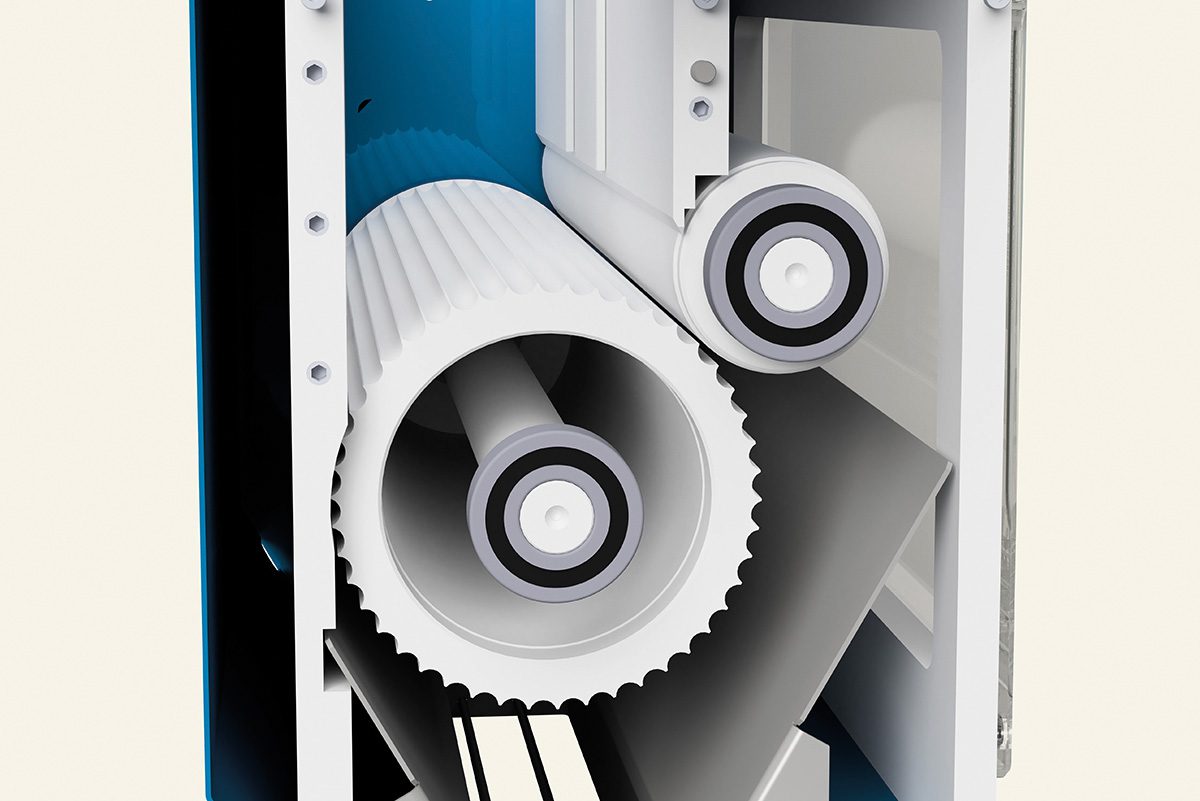
At the heart of the RF400’s design is a sophisticated mechanism featuring a grooved feed roller working in tandem with a smooth scraper roller. This unique combination is engineered to handle dry electrode materials with exceptional gentleness and consistency, which is paramount for achieving high-quality battery components.
The system meticulously manages the flow of material, effectively preventing common issues such as bridging at the outlet. This controlled feeding process ensures an even distribution of the dry blend across the calender roller positioned below, laying the groundwork for superior electrode quality.
A key attribute of the RF400 is its adaptability. The unit supports an adjustable coating width of up to 400 mm, making it a versatile solution for a wide range of lab and pilot-scale battery production setups. This flexibility allows manufacturers to experiment with various designs and optimize processes efficiently.

Integrated Controls for Real-Time Optimization
Beyond its mechanical design, the RF400 Roller Feeder seamlessly integrates with Coperion K-Tron’s established control infrastructure. It leverages the company’s KCM-III controls and Smart Force Transducer weighing technology, forming a cohesive system for advanced process management.
This integration facilitates real-time monitoring of material flow, offering operators immediate insights into deposition parameters. The precise feed-rate control allows for instantaneous adjustments to be made, ensuring optimal material distribution even as characteristics of the dry blend may subtly change during operation.
Such granular control is vital for maintaining the high standards required in battery manufacturing. It minimizes deviations and maximizes the consistency of the dry-electrode deposition process, directly contributing to more reliable and higher-performing battery cells.
The Strategic Importance of Dry-Electrode Manufacturing
The method of dry-electrode manufacturing has garnered considerable attention across the battery industry and among environmental advocates. It represents a paradigm shift from conventional wet coating techniques, promising a host of significant advantages that could reshape the future of EV battery production.
One of the primary benefits lies in its potential for substantially lower energy consumption. Traditional wet coating processes are energy-intensive, requiring significant heat for drying solvents. By eliminating or drastically reducing the need for solvents, dry processing can lead to a considerable decrease in operational energy demands, contributing to a more sustainable manufacturing footprint.
Furthermore, the reduction in solvent handling is a critical environmental and safety advantage. Solvents are often volatile organic compounds (VOCs) that pose environmental risks and necessitate complex recovery and disposal systems. Their reduced use simplifies production, lowers costs associated with solvent management, and enhances worker safety by minimizing exposure to hazardous chemicals.
Despite these compelling advantages, dry-electrode manufacturing presents its own unique set of engineering challenges. Unlike the homogeneous slurries used in wet processes, dry blends are powders. Their material handling and ensuring uniform deposition across a substrate are inherently trickier due to factors like electrostatic forces, particle agglomeration, and inconsistent flow properties.
Maintaining a consistent, even layer of active material with dry powders requires sophisticated feeding mechanisms that can overcome these inherent difficulties. Any inconsistency in the dry-electrode deposition process can lead to defects in the battery cell, compromising its performance, lifespan, and safety.
Setting a New Industry Benchmark
The RF400 Roller Feeder directly addresses these complex challenges inherent in dry-electrode production. By providing a precise and consistent feeding solution, it aims to unlock the full potential of this advanced manufacturing technique, moving it closer to broader commercial adoption.
Jay Daniel, Head of R&D Feeders and Feeding Systems at Coperion K-Tron, underscored the transformative potential of the new system. “The RF400 will set a new standard in the industry,” Daniel stated, highlighting the company’s confidence in its ability to redefine precision and efficiency in dry-electrode deposition.
This statement reflects the expectation that the RF400 will not only improve existing pilot line capabilities but also serve as a crucial enabler for the scaling up of dry-electrode technologies to industrial production levels. Its introduction signifies a vital step towards more sustainable, cost-effective, and high-performance EV battery manufacturing.
Advancing the Future of EV Batteries
The advancements facilitated by systems like the RF400 Roller Feeder are critical for the continued growth and innovation within the EV sector. As global demand for electric vehicles escalates, the imperative to produce batteries more efficiently, sustainably, and cost-effectively intensifies.
By offering a robust solution for a key bottleneck in dry-electrode manufacturing, Coperion K-Tron is contributing to the broader industry objective of developing next-generation battery technologies. These technologies promise not only better performance but also a reduced environmental footprint, aligning with global sustainability goals.
The focus on laboratory and pilot-scale applications ensures that these precise feeding capabilities can be rigorously tested and optimized before large-scale deployment. This methodical approach is essential for ensuring that future mass production of EV batteries is built on a foundation of proven reliability and efficiency in dry-electrode deposition.
Ultimately, the introduction of the RF400 Roller Feeder underscores the continuous innovation driving the battery industry. It reinforces the commitment to overcome manufacturing complexities, paving the way for more advanced, sustainable, and powerful energy storage solutions for electric mobility.