
Key Takeaways (TL;DR)
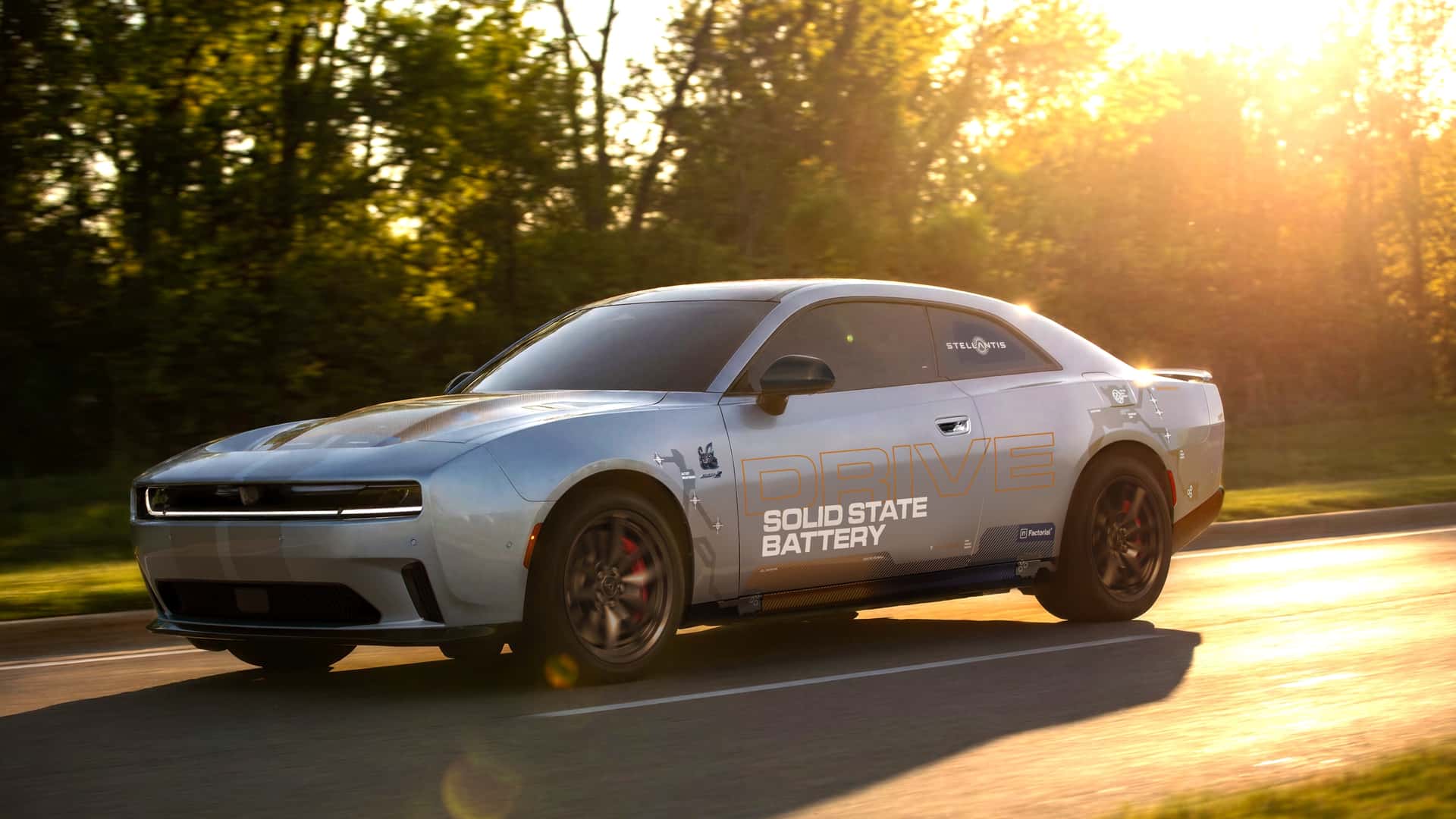
- Stellantis has initiated real-world testing of a Dodge Charger Daytona EV equipped with an experimental semi-solid-state battery.
- This pioneering program is a direct outcome of Stellantis’ collaboration with the battery technology startup, Factorial Energy.
- The automaker aims to validate the battery’s potential for significantly extending electric vehicle range, accelerating charging times, and reducing overall costs.
- The Factorial-developed FEST cell boasts an impressive energy density of 375 watt-hours per kilogram, surpassing conventional lithium-ion batteries.
- Successful deployment of this semi-solid-state battery technology could mark a pivotal advancement in the global electric vehicle market.
The Dawn of Advanced Battery Technology in Electric Vehicles
In a significant stride towards accelerating the future of electric mobility, Stellantis, the global automotive giant and parent company to iconic brands like Jeep, Ram, and Dodge, has announced the commencement of real-world testing for semi-solid-state batteries. This groundbreaking initiative sees a Dodge Charger Daytona EV prototype outfitted with this advanced power source, marking a critical phase in evaluating its viability for mass production.
The move underscores a growing commitment within the automotive industry to explore next-generation battery solutions that promise to overcome current limitations associated with conventional lithium-ion technology. The push is driven by the imperative to deliver electric vehicles (EVs) with extended range, faster charging capabilities, and enhanced overall performance, crucial factors for broader consumer adoption.
Stellantis’ Strategic Move into Semi-Solid-State
Stellantis’ foray into semi-solid-state battery technology is not merely an exploratory project but a strategic investment in the future of its diverse portfolio of electric vehicles. The company aims to fine-tune and validate the new battery pack’s safety, performance, and reliability under actual charging and driving conditions, ensuring it meets the rigorous demands of everyday use.
Ned Curic, Stellantis’ chief engineering and technology officer, highlighted the profound implications of this development. “This milestone shows we are bringing solid-state batteries closer to our customers with the potential for longer range, faster charging, and lower costs,” Curic stated, emphasizing the direct benefits anticipated for consumers.

Unpacking the Partnership with Factorial Energy
Central to this pioneering effort is a strategic collaboration with Factorial Energy, a Massachusetts-based startup specializing in advanced battery development. Factorial provides its innovative semi-solid-state battery pack for the Dodge Charger EV prototype, leveraging its expertise in creating high-performance, next-generation battery cells.
This partnership exemplifies the increasing trend of established automotive manufacturers teaming up with agile technology startups to accelerate research and development. It combines Stellantis’ extensive engineering and testing infrastructure with Factorial’s cutting-edge battery chemistry, creating a powerful synergy aimed at pushing the boundaries of EV capability.
Performance Benchmarks and Potential
The experimental semi-solid-state battery technology housed within the Dodge Charger Daytona EV promises substantial improvements over existing electric vehicle power sources. At the core of this test program is Factorial’s FEST cell, which features a semi-solid-state chemistry boasting an impressive energy density.
Enhanced Energy Density and Rapid Charging
The FEST cell achieves an energy density of 375 watt-hours per kilogram (Wh/kg). To put this into perspective, conventional lithium-ion batteries typically operate within a range of 200-300 Wh/kg. This significant increase in energy density translates directly into the potential for electric vehicles to travel considerably longer distances on a single charge.
Beyond extended range, the semi-solid-state battery technology also demonstrates remarkable charging efficiency. Stellantis reports that the new pack can charge from 15% to 90% in a mere 18 minutes. This is a notable improvement over the current Dodge Charger Daytona’s lithium-ion pack, which typically takes approximately 30 minutes to charge from 10% to 80%, directly addressing one of the major concerns for EV adoption: charging speed.
Operating Across Diverse Climates
Another crucial advantage of Factorial’s battery technology is its robust performance across a wide spectrum of temperatures. The semi-solid-state pack is engineered to operate effectively from a frigid -22 degrees Fahrenheit (-30 degrees Celsius) up to a scorching 113 degrees Fahrenheit (45 degrees Celsius).
This wide operating temperature range is vital for electric vehicles intended for global markets, where extreme weather conditions are common. It ensures consistent performance and reliability, mitigating the performance degradation often observed in conventional batteries in very cold or very hot environments.
The Road to Commercialization: Challenges and Integration
While the potential benefits of advanced battery chemistries are clear, the path from laboratory development to widespread commercial application is often fraught with challenges. Solid-state and semi-solid-state batteries have historically been difficult to develop and scale, despite their promising theoretical advantages.
From Lab to Real-World: Testing Protocols
The real-world road testing of the Dodge Charger EV prototype is a critical step in overcoming these development hurdles. Factorial CEO Siyu Huang emphasized the collaborative nature of this phase, stating, “Real-world road testing is exactly the kind of deep full-stack collaboration that solid-state has always required.” These tests are designed to rigorously evaluate every aspect of the battery’s behavior under varied conditions.
Such testing encompasses not only the core performance metrics like range and charging speed but also critical aspects such as thermal management, long-term degradation, and safety protocols. The data gathered from these trials will be instrumental in refining the battery design and manufacturing processes, ensuring robust and reliable products for consumers.
Innovative Integration for Optimal Performance
Stellantis has also implemented a novel approach to integrate the semi-solid-state battery into the existing vehicle architecture. The company confirmed that it has integrated the battery using a new, patented mechanical architecture. This engineering innovation is specifically designed to extract maximum performance from the advanced cells.
This proprietary integration method highlights the intricate challenges involved in adapting new battery technologies to established vehicle platforms. It ensures that the benefits of the semi-solid-state cells are fully realized within the vehicle’s overall design, contributing to optimal efficiency and safety.
Semi-Solid vs. Full Solid-State: A Bridge Technology
The term ‘semi-solid-state’ indicates a hybrid approach that leverages some advantages of solid-state technology while potentially mitigating some of its manufacturing complexities. Unlike fully solid-state batteries that use a completely solid electrolyte, Factorial’s semi-solid-state cells incorporate a gel-like electrolyte.
Factorial’s Evolutionary Approach
Factorial Energy has previously indicated that its semi-solid-state cells offer meaningful advantages over conventional lithium-ion batteries, serving as a vital stepping stone in battery evolution. Crucially, the insights and learnings gained from the development and real-world testing of these semi-solid cells are intended to directly inform and accelerate the development of Factorial’s ultimate goal: the all-solid-state Solstice battery.
This incremental development strategy allows for the validation of core technologies in a more manageable format before transitioning to the even more complex all-solid-state architecture. The successful testing of a Mercedes-Benz EQS prototype equipped with Factorial’s semi-solid-state cells last year, which covered an astonishing 749 miles on a single charge with 85 miles remaining during a cross-country European road trip, demonstrates the significant potential of this technology.
Global Race for Solid-State Dominance
The pursuit of advanced battery technologies extends beyond Stellantis and Factorial. The global automotive industry is engaged in an intense race to develop and commercialize solid-state batteries, signaling a broad consensus on their transformative potential for electric vehicles.
Major players like BMW have initiated testing of all-solid-state cells from Colorado startup Solid Power in prototype i7 vehicles, collaborating with Samsung SDI for further development. Toyota has also launched its own ambitious solid-state program, while several prominent Chinese automakers, including BYD, Nio, and MG Motor, are actively involved in solid-state battery research and development. This widespread industry investment underscores the anticipated paradigm shift that solid-state and semi-solid-state battery technology could bring to the automotive landscape.
Broader Industry Implications
The successful integration and eventual commercialization of semi-solid-state battery technology, spearheaded by developments like the Dodge Charger EV semi-solid-state battery prototype, have profound implications for the entire electric vehicle ecosystem.
The Future Landscape of Electric Vehicles
Improved energy density and faster charging capabilities directly address range anxiety and long charging times, two significant barriers to wider EV adoption. As these technologies mature, they will enable electric vehicles to offer performance characteristics that increasingly surpass those of internal combustion engine vehicles, making EVs a more compelling choice for a broader consumer base.
Furthermore, lower battery costs, as anticipated by Stellantis, will contribute to more affordable electric vehicles, democratizing access to sustainable transportation. The advancements in semi-solid-state battery technology underscore a relentless pursuit of innovation, promising a future where electric vehicles are not just an alternative, but the preferred mode of personal transportation globally.
Frequently Asked Questions (FAQ)
What is a semi-solid-state battery?
A semi-solid-state battery uses a gel-like electrolyte instead of the liquid electrolyte found in traditional lithium-ion batteries or the fully solid electrolyte of true solid-state batteries. This hybrid approach aims to offer improved energy density and safety while potentially being more straightforward to manufacture than full solid-state options, serving as an important bridge technology.
How does the Dodge Charger EV semi-solid-state battery differ from current EV batteries?
The Dodge Charger EV prototype is testing a semi-solid-state battery from Factorial Energy that boasts an energy density of 375 Wh/kg, significantly higher than the 200-300 Wh/kg of conventional lithium-ion batteries. This translates to longer range and the ability to charge from 15-90% in just 18 minutes, compared to about 30 minutes for current packs.
Who is Factorial Energy, and what is their role?
Factorial Energy is a Massachusetts-based startup specializing in advanced battery technology. They are collaborating with Stellantis, providing their innovative FEST semi-solid-state battery cells for real-world testing in the Dodge Charger Daytona EV prototype. Their expertise is crucial in developing and validating this next-generation battery chemistry.
What benefits do semi-solid-state batteries offer to electric vehicles?
Semi-solid-state batteries promise several key benefits for electric vehicles, including significantly longer driving range due to higher energy density, much faster charging times, improved safety characteristics, and the potential for lower manufacturing costs in the long term. They also tend to perform better across a wider range of operating temperatures.
Are other automakers also developing solid-state or semi-solid-state batteries?
Yes, there is a global race among major automakers to develop next-generation battery technologies. BMW is testing all-solid-state cells from Solid Power in its i7 prototypes, Toyota has its own solid-state program, and Chinese brands like BYD, Nio, and MG Motor are actively investing in similar advanced battery research and development.
What are the implications for EV charging infrastructure?
The development of faster-charging semi-solid-state batteries would greatly enhance the efficiency of existing EV charging infrastructure. Shorter charging times mean more vehicles can use charging stations within a given period, potentially reducing wait times and making public charging more convenient. This could alleviate pressure on infrastructure expansion while improving the user experience significantly.