
Key Takeaways
- Donut Lab, a Finnish startup, has released new details about the Verge TS Pro Gen2, an electric motorcycle it claims is the world’s first solid-state electric bike.
- The company asserts its batteries are production-ready, offering an energy density of 400 Wh/kg and a lifespan of 100,000 charge cycles, alongside being the fastest-charging motorcycle.
- Skepticism remains high among experts due to the lack of independent validation, patents, or disclosed chemistry for these cells.
- The Verge TS Pro Gen2 Standard Range features a 18-20 kWh battery pack, using 192 proprietary 94 Wh cells configured for a 400V system.
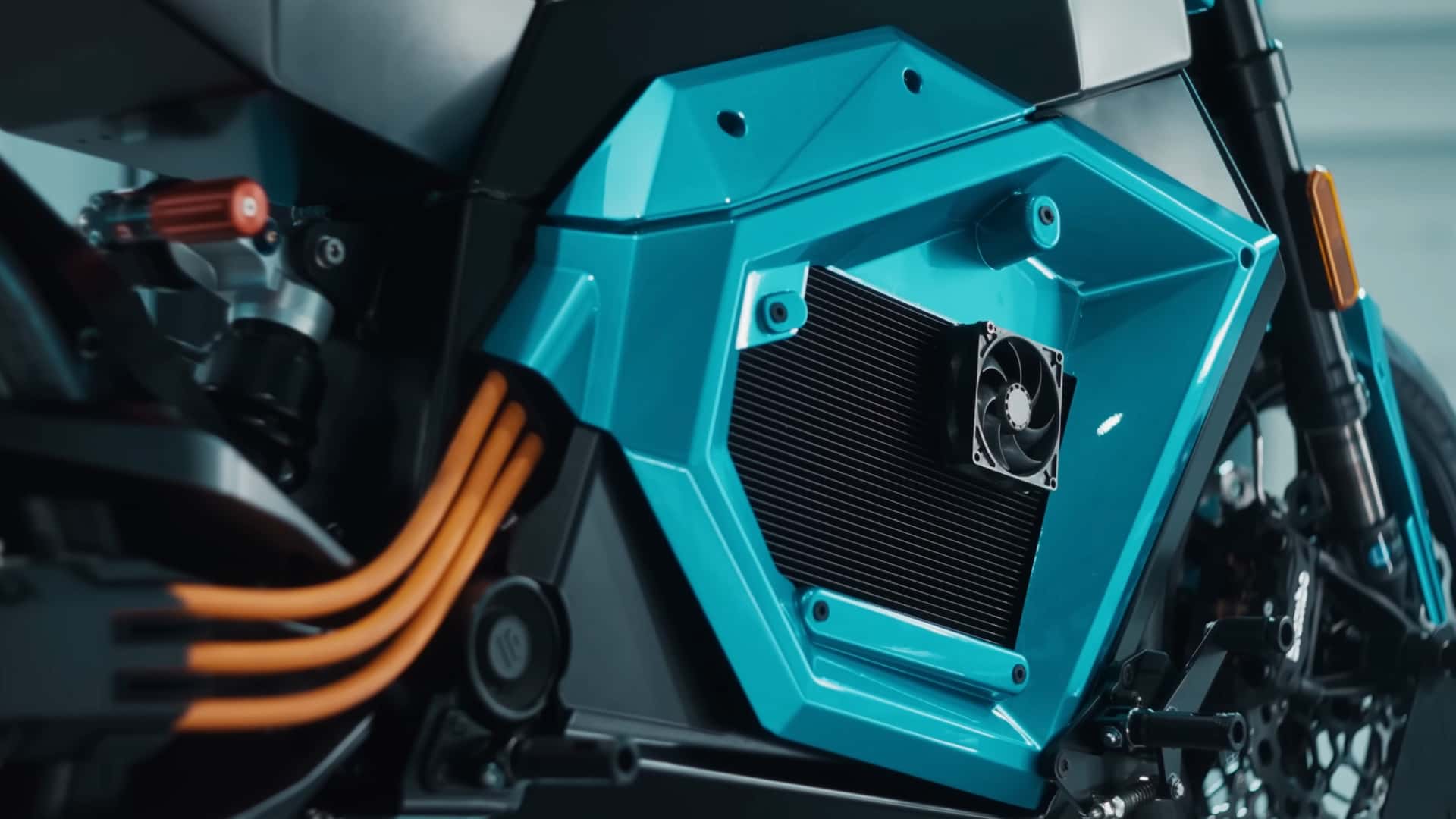
- Its compact design necessitates an air-cooled system, featuring heat transfer plates and small PC-like fans for thermal management.
- The motorcycle boasts impressive charging speeds, achieving 10% to 80% in 11 minutes with DC fast charging, peaking at approximately 100 kW.
- This translates to a C-rate exceeding 5C, significantly higher than most modern EV batteries, adding about 12 miles of range per minute of charging.
In a significant development for the electric vehicle industry, Donut Lab, a Finnish startup, has unveiled further technical details regarding its Verge TS Pro Gen2 motorcycle. The company asserts this model represents the world’s first solid-state electric bike, alongside claiming it to be the fastest-charging electric two-wheeler available today.
These new disclosures aim to provide deeper insights into the battery configuration of the Verge TS Pro Gen2, a motorcycle powered by Donut Lab’s proprietary solid-state battery technology. The company has previously made ambitious claims regarding the performance and longevity of its cells, setting a high bar for innovation in electric mobility.
The Solid-State Battery Promise: Innovation Meets Scrutiny
Donut Lab has positioned itself at the forefront of battery innovation, claiming to have achieved production-ready solid-state batteries for automotive applications. This assertion comes with bold specifications, including an energy density of 400 watt-hours per kilogram, a reported lifespan of 100,000 charge cycles, and the elimination of rare-earth materials from its chemistry.
However, these claims have been met with considerable skepticism from industry experts. The startup has yet to publicly provide comprehensive evidence such as patents, independent validation results, or a detailed breakdown of its battery chemistry. The absence of such substantiation has led to ongoing debate within the scientific and engineering communities regarding the feasibility and authenticity of Donut Lab’s figures.
Solid-state battery technology is widely regarded as a potential game-changer for electric vehicles (EVs), promising higher energy density, faster charging, and enhanced safety compared to conventional lithium-ion batteries. Developing a commercially viable and scalable solid-state battery has been a significant challenge for numerous global research institutions and manufacturers, making Donut Lab’s claims particularly noteworthy, yet requiring rigorous verification.

Inside the Verge TS Pro Gen2: Powering the Electric Motorcycle
The latest information from Donut Lab, presented by co-founder and CTO Ville Piippo in a new video, focuses on the structural aspects of the battery pack that drives the Verge TS Pro Gen2. The Standard Range version of this solid-state electric bike incorporates 192 of Donut Lab’s 94 Wh cells.
This configuration yields a nominal battery capacity of approximately 18 kilowatt-hours (kWh) and a maximum capacity of around 20 kWh. For riders seeking extended range, a Long Range version is also planned, offering roughly 30 kWh of nominal capacity while remarkably maintaining the same physical battery enclosure size as its smaller counterpart.
The 18 kWh model features a sophisticated battery module design, arranged in a 2P 96S configuration, meaning two cells in parallel and 96 cells in series within each module. This setup contributes to a maximum system voltage of approximately 400V, a robust standard for high-performance electric vehicles.
Ingenious Cooling Solutions for a Compact Design
A critical aspect of high-performance battery packs, especially in compact applications like electric motorcycles, is thermal management. Donut Lab has addressed this challenge in the Verge TS Pro Gen2 through an innovative air-cooled system.
The battery pack is composed of four modules, strategically layered on top of each other with a slight offset to optimize space and thermal pathways. Crucially, heat transfer plates are integrated between each layer of cells. These plates are designed to efficiently conduct heat generated during operation and charging away from the individual cells.
To further aid heat dissipation, the pack incorporates a heat sink on each side, coupled with small fans. These fans, visually resembling those found in personal computers for processor cooling, are instrumental in expelling heat into the ambient air. “So it’s a fully air-cooled design, and a very compact design,” stated Ville Piippo, emphasizing the engineering efficiency achieved within the limited confines of a motorcycle chassis.
This air-cooling approach highlights a pragmatic solution to a common engineering dilemma: liquid cooling, while often more efficient for large battery packs, adds significant weight and complexity. For a solid-state electric bike aiming for optimal performance and a sleek profile, an effective air-cooling system represents a considered design choice.
Redefining Electric Motorcycle Charging Speed
A core claim for the Verge TS Pro Gen2 is its unparalleled charging speed. The motorcycle demonstrates remarkable fast-charging capabilities, reaching a peak charging power of approximately 100 kW when connected to a DC fast charger. This enables a rapid recharge from 10% to 80% state of charge in just about 11 minutes.
Further enhancing its convenience for riders, a 10% to 90% top-up can be completed in slightly under 15 minutes. While this peak charging power is about half of the 200 kW figure previously suggested by Donut Lab, the company attributes this adjustment to the motorcycle’s compact design, which precludes the integration of a more complex liquid-cooling system necessary for higher power inputs.
Donut Lab maintains that in larger electric vehicles that can accommodate liquid-cooled battery packs, their 94 Wh cells are capable of significantly faster charging, potentially achieving a 0% to 80% charge in a mere five minutes. This distinction underscores the challenges of optimizing battery performance across diverse vehicle platforms.
Even with a maximum input of 103 kW, the Verge TS Pro Gen2 achieves a C-rate of a little over 5C. The C-rate denotes the rate at which a battery can charge or discharge relative to its maximum capacity. For the Standard Range model with a 20 kWh maximum capacity, a 1C rate would equate to charging at 20 kW. This 5C+ rate is notably higher than that of most modern EV batteries, which typically operate under 4C, positioning the Verge TS Pro Gen2 as a leader in charging efficiency.
This advanced charging performance translates directly into practical benefits for riders. Donut Lab estimates that the solid-state electric bike can gain approximately 12 miles of range for every minute of charging. Considering the new TS Pro boasts an estimated total range of 217 miles, such rapid charging significantly mitigates range anxiety, a common concern among electric vehicle users.
The Road Ahead: Production and Validation
Donut Lab announced that production of the upgraded electric bike commenced last month. However, the true test of its groundbreaking technology will come from independent verification. The industry eagerly awaits objective assessments and tests of the solid-state TS Pro Gen2 to confirm Donut Lab’s ambitious performance and chemistry claims.
The successful development and independent validation of a production-ready solid-state battery could mark a monumental shift in the landscape of electric vehicles, offering advancements in performance, range, and charging convenience that could accelerate global electric mobility adoption. Until such independent verification emerges, the claims surrounding the Verge TS Pro Gen2 will continue to generate significant interest and cautious optimism.
Expert Perspectives on Solid-State Battery Technology
The pursuit of solid-state batteries represents one of the most exciting and challenging frontiers in battery technology. Unlike traditional lithium-ion batteries that use liquid electrolytes, solid-state batteries employ solid electrode and electrolyte materials. This fundamental change is expected to offer several advantages, including higher energy density for longer ranges, faster charging times due to improved ion movement, and enhanced safety by eliminating flammable liquid components.
Despite these promising benefits, commercializing solid-state battery technology has proven exceptionally difficult. Key hurdles include ensuring sufficient ionic conductivity at room temperature, managing electrode-electrolyte interfaces to prevent degradation, and developing cost-effective manufacturing processes for large-scale production. Many research breakthroughs have been reported in labs, but scaling these to vehicle-level applications has remained a significant engineering and economic challenge for established manufacturers and innovative startups alike.
Donut Lab’s claims of an operational, production-ready solid-state electric bike are therefore met with a blend of excitement and forensic scrutiny. The reported energy density of 400 Wh/kg, for instance, would place it among the leading edge of current battery research, far surpassing the energy density of most commercial lithium-ion cells used in EVs today. This explains why the industry is keen for tangible proof, like detailed scientific papers, patents, and independent, third-party validation results that confirm the chemistry and performance metrics under real-world conditions.
Frequently Asked Questions (FAQ)
What makes the Verge TS Pro Gen2 unique in the electric bike market?
The Verge TS Pro Gen2 is claimed to be the world’s first solid-state electric bike, powered by Donut Lab’s proprietary solid-state batteries. It also boasts exceptionally fast charging capabilities, achieving 10% to 80% charge in just 11 minutes, which translates to adding around 12 miles of range per minute.
What are Donut Lab’s key claims about its solid-state batteries?
Donut Lab claims its solid-state batteries offer an energy density of 400 Wh/kg, utilize zero rare-earth materials, and have an impressive lifespan of 100,000 charge cycles. These specifications, if independently verified, would represent a significant leap in battery technology for electric vehicles.
How is the Verge TS Pro Gen2 battery cooled?
Due to its compact design, the Verge TS Pro Gen2 features a unique air-cooled battery pack. It incorporates heat transfer plates between cell layers, coupled with heat sinks and small, PC-like fans on each side of the pack to dissipate heat efficiently into the ambient air, ensuring optimal thermal management.
What is the battery capacity and voltage of the Verge TS Pro Gen2?
The Standard Range version of the Verge TS Pro Gen2 uses 192 Donut Lab 94 Wh cells, resulting in a nominal capacity of 18 kWh and a maximum capacity of approximately 20 kWh. The battery system is designed to operate at a maximum voltage of around 400V.
What does a C-rate of over 5C mean for charging performance?
A C-rate of over 5C means the battery can be charged at more than five times its maximum capacity in terms of power. For the Verge TS Pro Gen2’s 20 kWh battery, a 103 kW input equates to a C-rate exceeding 5C, allowing for rapid charging significantly faster than most modern EV batteries, which typically have C-rates under 4C.
Has Donut Lab’s solid-state battery technology been independently verified?
As of now, Donut Lab has not publicly provided patents, comprehensive independent validation results, or a detailed breakdown of its battery chemistry. Experts remain skeptical about the claims until such substantiation is provided, highlighting the critical need for third-party verification in groundbreaking battery technologies.