
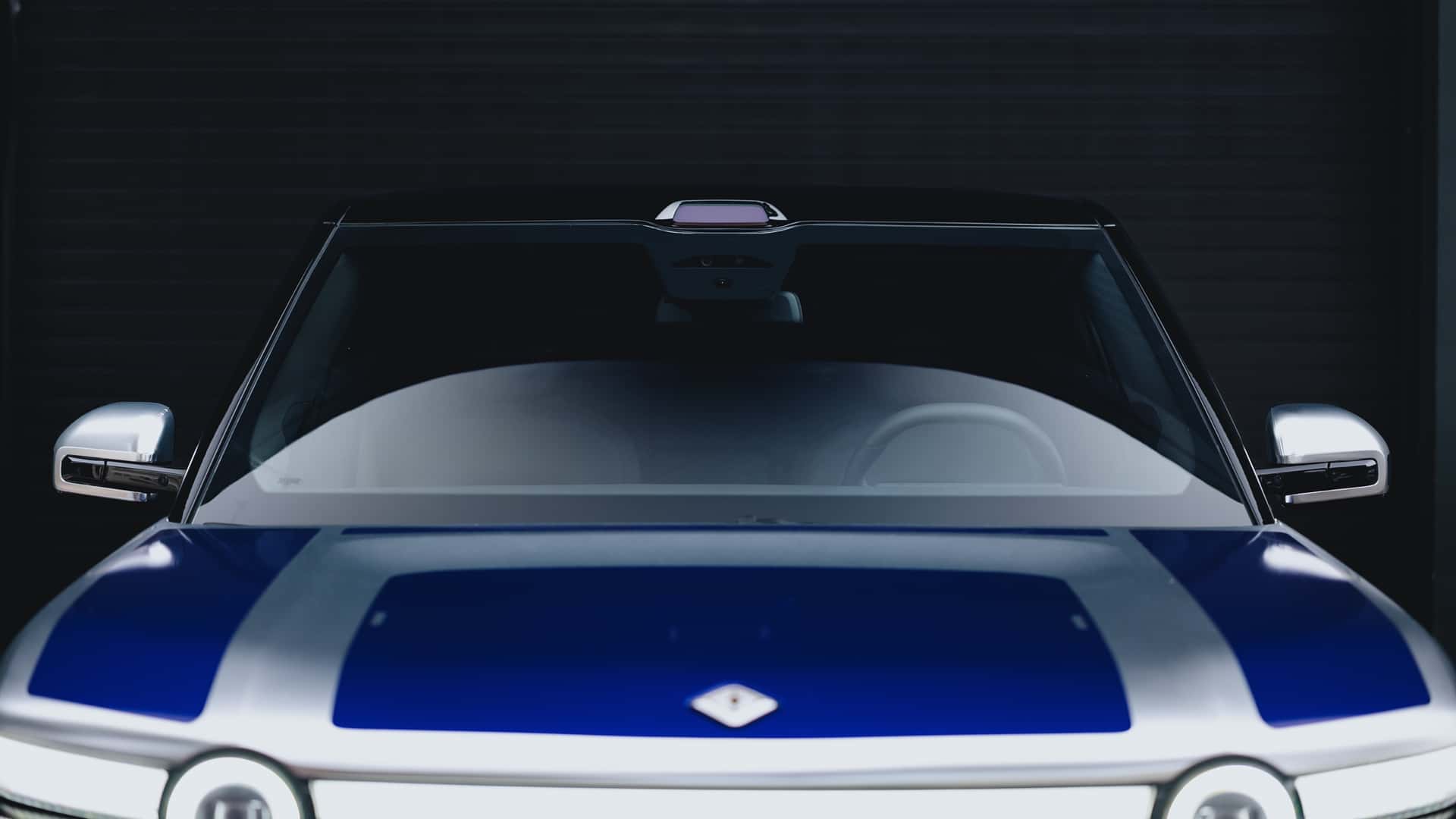
In a significant strategic move, electric vehicle manufacturer Rivian is actively exploring the possibility of producing its own lidar sensors within the United States for future versions of its upcoming Rivian R2 mid-size electric SUV. This initiative could position the R2 as the first mass-market American EV to feature a domestically manufactured lidar sensor, signaling Rivian’s commitment to vertical integration and advanced autonomous driving capabilities.
Rivian CEO RJ Scaringe recently indicated that the company is considering a unique approach: manufacturing these sophisticated sensors in-house, potentially leveraging Chinese technological expertise through a partnership or joint venture. This development was shared during an interview, underscoring the dynamic landscape of automotive technology and global supply chains.
Key Takeaways
- Rivian is contemplating in-house U.S. manufacturing of lidar sensors for the Rivian R2.
- CEO RJ Scaringe mentioned potential partnerships with Chinese solid-state lidar manufacturers.
- The goal is to equip future Rivian R2 models with lidar by late 2026, enhancing automated driving.
- Initial R2 batches will feature an advanced camera and radar system, without lidar.
- Early R2 models will not be eligible for a lidar hardware upgrade.
Strategic Shift: In-House Lidar Production for the Rivian R2
The California-based EV startup’s plan to potentially internalize lidar production in the U.S. represents a notable shift in strategy. Instead of procuring off-the-shelf sensors from international suppliers, particularly from China, Rivian aims to structurally integrate the technology into its domestic manufacturing processes. While specific names were not disclosed, Scaringe confirmed that Rivian is engaged in “active discussions” with leading solid-state lidar manufacturers.
This decision highlights a growing trend among advanced automotive companies to gain greater control over critical components that underpin their autonomous driving ambitions. By producing lidar domestically, Rivian could potentially mitigate supply chain risks, enhance customization, and ensure compliance with future regulatory frameworks for advanced driver-assistance systems (ADAS) in the U.S.
The Role of Lidar in Autonomous Driving
Lidar, an acronym for Light Detection and Ranging, is widely regarded by many experts as a crucial sensor for achieving truly autonomous driving capabilities. Unlike cameras, which rely on visible light, lidar systems use pulsed laser light to measure ranges, generating highly detailed three-dimensional maps of a vehicle’s surroundings. This volumetric data is invaluable for accurately perceiving obstacles, mapping environments, and making precise navigational decisions, especially in challenging conditions like low light or adverse weather.
Last year, Rivian made headlines with the announcement that its R2 mid-size electric SUV would be factory-fitted with lidar. Early demonstration models of the Rivian R2 showcased a compact, roof-mounted lidar sensor, a stark contrast to the larger, rotating units often seen on early autonomous test vehicles and robotaxis like those from Waymo. This design choice indicates Rivian’s focus on integrating lidar seamlessly into a consumer-grade vehicle, emphasizing aesthetics and practicality.
Leveraging Global Innovation: Chinese Technology and U.S. Manufacturing
Rivian’s CEO elaborated on the rationale behind potentially integrating Chinese lidar technology into a U.S. production framework. Scaringe stated, “Think of it as finding a way to structurally ingest the technology. The advancements in terms of going from the early lidars that I think a lot of us have seen—we see them here—to these much more advanced solid-state lidars, those advancements didn’t happen in the United States. Those advancements happened in China.”
This candid assessment underscores China’s significant progress in solid-state lidar technology. Solid-state lidar units are generally smaller, more robust, and more cost-effective to produce than their mechanical counterparts, making them ideal for mass-market automotive applications. Rivian’s strategy aims to capitalize on these global technological leaps while ensuring that the manufacturing footprint remains primarily American, potentially through a joint venture model.
The Initial Rollout of the Rivian R2: A Phased Approach
Despite the long-term vision for lidar integration, Rivian has confirmed a phased approach for the Rivian R2‘s market introduction. The initial batches of the mid-size SUV, scheduled to roll off the production line, will not be equipped with lidar technology. This decision was made to expedite the production timeline and bring the R2 to market as swiftly as possible.
These early R2 models will instead leverage an “elevated version of the Gen2 architecture” currently underpinning Rivian’s latest R1S and R1T vehicles. This architecture incorporates the brand’s enhanced 65-megapixel HDR camera system and an improved dual-mode corner radar. This robust sensor suite is expected to provide advanced hands-free driving capabilities right from the start of production.
Eyes-Off Driving and the Rivian Autonomy Processor 1 (RAP-1)
While the initial camera and radar setup will support hands-free driving, Rivian’s ambitious vision extends to “eyes-off driving,” where the driver can safely disengage from monitoring the road under specific conditions. This higher level of automation is where the lidar sensor becomes integral, working in conjunction with Rivian’s proprietary computing hardware.
At the core of this advanced system is the company’s first custom chip, the Rivian Autonomy Processor 1, or RAP-1. This powerful processor is designed to handle the immense data streams generated by multiple sensors, including lidar, cameras, and radar, to create a comprehensive and real-time understanding of the vehicle’s environment. The combination of RAP-1 and lidar is crucial for enabling the sophisticated decision-making required for eyes-off driving.
Timeline and Retrofit Policy for the Rivian R2
Rivian has stated its intention for the first lidar-equipped Rivian R2 SUVs to begin rolling off the assembly line in late 2026. This timeline provides the company with sufficient time to finalize its lidar strategy, secure partnerships, and integrate the technology into its production processes.
However, an important detail for prospective buyers of the R2 is Rivian’s confirmed policy regarding hardware upgrades. Older R2 models that are delivered without lidar will not be eligible for a retrofit to add the sensor later. This means consumers interested in the full eyes-off driving capabilities supported by lidar will need to wait for the later production batches. This decision, previously clarified by Rivian for InsideEVs, underscores the integrated nature of advanced sensor hardware within the vehicle’s architecture.
Implications for the EV Market and Supply Chains
Rivian’s consideration of in-house lidar production in the U.S., potentially with Chinese technological input, highlights several broader trends in the electric vehicle and autonomous driving industries. It reflects a strategic imperative for EV manufacturers to control core technologies, reduce reliance on external suppliers, and innovate rapidly.
The move also points to the increasing globalization of automotive technology development, where cutting-edge advancements may originate in different parts of the world, necessitating flexible and collaborative supply chain strategies. For the U.S. market, domestic production of such advanced components could foster economic growth and create high-skill manufacturing jobs, aligning with broader national industrial strategies.
Frequently Asked Questions (FAQ)
What is Rivian’s plan for lidar sensors in the R2?
Rivian is exploring manufacturing its own lidar sensors in the U.S. for future R2 models. This could involve a partnership or joint venture with a Chinese technology provider to leverage their advancements in solid-state lidar.
Why is lidar considered important for autonomous driving?
Lidar creates detailed 3D maps of a vehicle’s surroundings by emitting pulsed laser light. This provides highly accurate depth perception and object detection, which is crucial for advanced autonomous functions and navigating complex environments more safely than camera-only systems.
When will lidar-equipped Rivian R2 models be available?
Rivian anticipates that the first R2 electric SUVs fitted with lidar sensors will begin production and become available in late 2026. This timeline allows for the integration of the new manufacturing process and technology.
Will early Rivian R2 buyers be able to add lidar later?
No, Rivian has confirmed that initial R2 models delivered without lidar technology will not be eligible for a hardware retrofit to add the sensor later. Customers desiring lidar capabilities will need to purchase a later production model.
What technology will initial R2 models use for automated driving?
The first batches of the Rivian R2 will feature an “elevated version of the Gen2 architecture,” including an improved 65-megapixel HDR camera system and an enhanced dual-mode corner radar, alongside the custom Rivian Autonomy Processor 1 (RAP-1).
Why is Rivian considering Chinese technology for U.S. production?
Rivian CEO RJ Scaringe noted that significant advancements in solid-state lidar technology have occurred in China. By partnering or creating a joint venture, Rivian aims to structurally ingest this advanced technology for domestic manufacturing, combining global innovation with U.S. production.