
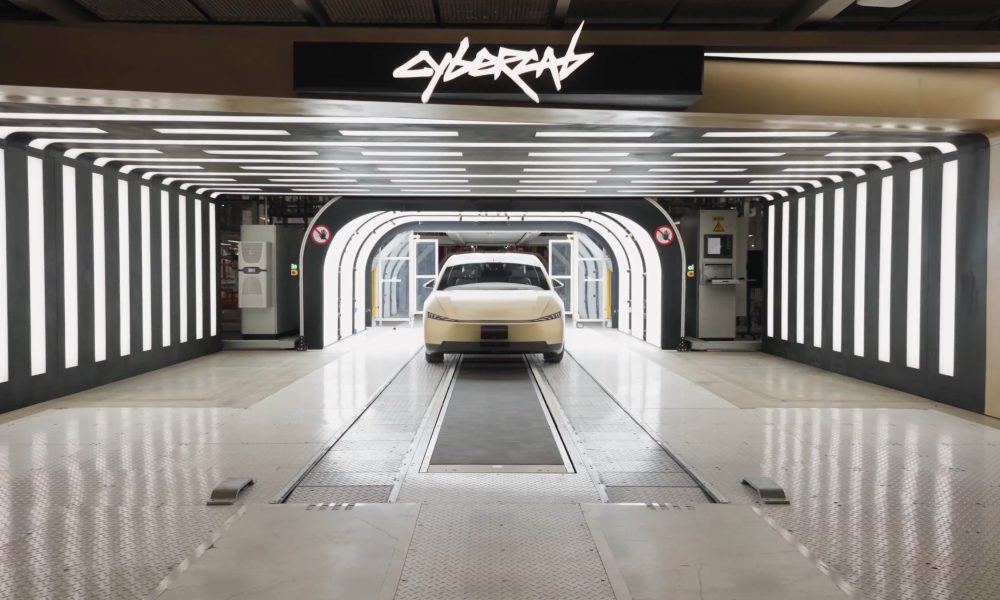
Tesla’s highly anticipated Cybercab, designed for fully autonomous ride-sharing, is nearing production readiness with a slated April start date. As manufacturing prototypes are spotted across the country for testing and regulatory review, new details about the vehicle’s design are emerging. A recent appearance in Washington, D.C., revealed a subtle yet significant feature aimed at improving accessibility for visually impaired passengers.
Inclusive Design for Ride-Sharing
The Cybercab represents a pivotal step in Tesla’s strategy to offer seamless, driverless transportation. The underlying Full Self-Driving technology is central to this vision, aiming to eliminate the need for manual driving. This initiative holds particular promise for individuals with disabilities, who often rely heavily on ride-sharing services, personal assistance, or medical transport.

Tesla appears to be prioritizing inclusivity in the Cybercab’s development. A key feature observed during its recent public showing underscores this commitment: the integration of Braille within the cabin. This thoughtful addition aims to empower blind and visually impaired passengers to navigate the vehicle independently.
Braille Enhances User Interaction
Specific Braille markings have been applied to two crucial control points within the Cybercab. Both the ‘Stop/Hazard Lights’ button and the interior Door Releases now feature Braille, enabling passengers to locate and operate these functions without visual assistance.
The ‘Stop/Hazard Lights’ button, which also serves as an emergency stop function, is critical for passenger safety. The inclusion of Braille here ensures that an individual can activate it quickly and surely, even in stressful situations. Similarly, Braille on the door releases provides a tactile guide for exiting the vehicle.

The hazard lights button will be used as an emergency stop. Smart pic.twitter.com/vkYBioqmKm
— Whole Mars Catalog (@wholemars) March 10, 2026
We have braille on the interior door releases as well
— Eric (@EricETesla) March 11, 2026
This integration of Braille directly addresses a significant barrier for many individuals with visual impairments. It aligns with the broader goal of Full Self-Driving technology to provide greater mobility and independence for those who cannot drive themselves.
Broader Implications for Autonomous Vehicles
The focus on accessibility features like Braille in the Cybercab highlights Tesla’s understanding of the diverse needs of future riders. As autonomous vehicle technology matures, ensuring that these innovations are usable by everyone is paramount.
By incorporating such features, Tesla is not only enhancing the user experience for a specific demographic but also setting a precedent for accessibility standards in the autonomous vehicle industry. This proactive approach can significantly broaden the potential user base for services like Cybercab, making them a truly universal transportation solution.
Production and Rollout
The Cybercab is on track to enter mass production in April. This marks the beginning of Tesla’s ambitious plans to deploy a large-scale autonomous ride-sharing network. The vehicle’s ability to offer independent and accessible transportation could revolutionize personal mobility, particularly for communities that have historically faced challenges with existing transport options.