
Key Takeaways:
- Tesla CEO Elon Musk has outlined plans for a robotaxi service combining company-operated vehicles with owner participation.
- The model allows Tesla owners to add their cars to the ride-hailing fleet, with control over usage parameters like user ratings.
- The service is described as a “combination of Airbnb and Uber,” indicating a dual operational strategy.
- Tesla is investing heavily in “vision-only architecture with end-to-end neural networks” for its self-driving technology.
- Despite past ambitious timelines, the latest announcements aim to provide investors with a clearer roadmap amidst ongoing uncertainty.
NEW DELHI: Tesla has offered a clearer, albeit still high-level, glimpse into its ambitious plans for a robotaxi fleet, confirming it intends to operate a proprietary self-driving taxi service while also allowing individual Tesla owners to integrate their vehicles into the network. This dual approach, likened by CEO Elon Musk to a “combination of Airbnb and Uber,” emerged during the company’s first-quarter earnings call on April 23, 2024, providing much-anticipated details to analysts, investors, and enthusiasts.
The announcement comes at a critical juncture for the electric vehicle manufacturer, which has faced intense scrutiny regarding its future strategy, particularly following reports of a strategic pivot towards robotaxis over a more affordable consumer vehicle. While many specifics regarding the timeline and operational nuances remain fluid, the revealed framework sheds light on Tesla’s vision for transforming urban mobility.
A Hybrid Approach to Autonomous Ride-Hailing
During the investor conference call, Elon Musk elaborated on the operational model for the forthcoming Tesla robotaxi fleet. He stated that Tesla plans to “operate its own fleet of self-driving taxis,” underscoring the company’s direct involvement in providing autonomous ride-hailing services. This aspect mirrors traditional ride-hailing giants like Uber, where a central entity manages the service infrastructure.
Crucially, Musk also revealed a unique participatory element, allowing existing Tesla owners to become active contributors to the fleet. “Tesla owners would be able to ‘add or subtract their cars from the fleet whenever they want’,” Musk explained. This flexibility extends further, as owners “can decide if they want to only let the car be used by friends and family, or only by five-star users or by anyone.” This functionality echoes the Airbnb model, where property owners control access and usage terms for their assets.
This hybrid model aims to leverage Tesla’s rapidly expanding customer base and potentially accelerate the deployment and scalability of the robotaxi service. By enabling private owners to participate, Tesla could significantly boost the availability of autonomous vehicles on the road without solely relying on its own production capacity for fleet vehicles.
Technological Pillars and Strategic Investments
Tesla’s first-quarter earnings report further elucidated the technological underpinnings of this ambitious venture. The company confirmed its ongoing commitment to developing the necessary hardware and software ecosystems to achieve full vehicle autonomy. “We have been investing in the hardware and software ecosystems necessary to achieve vehicle autonomy and a ride-hailing service,” the report stated.
A central tenet of Tesla’s autonomous driving strategy is its “vision-only architecture with end-to-end neural networks, trained on billions of miles of real-world data.” This approach relies solely on cameras and artificial intelligence to perceive the environment and navigate, diverging from competitors who often incorporate lidar or radar sensors. The company believes this vision-centric methodology offers a scalable and profitable path to a fully autonomous business.
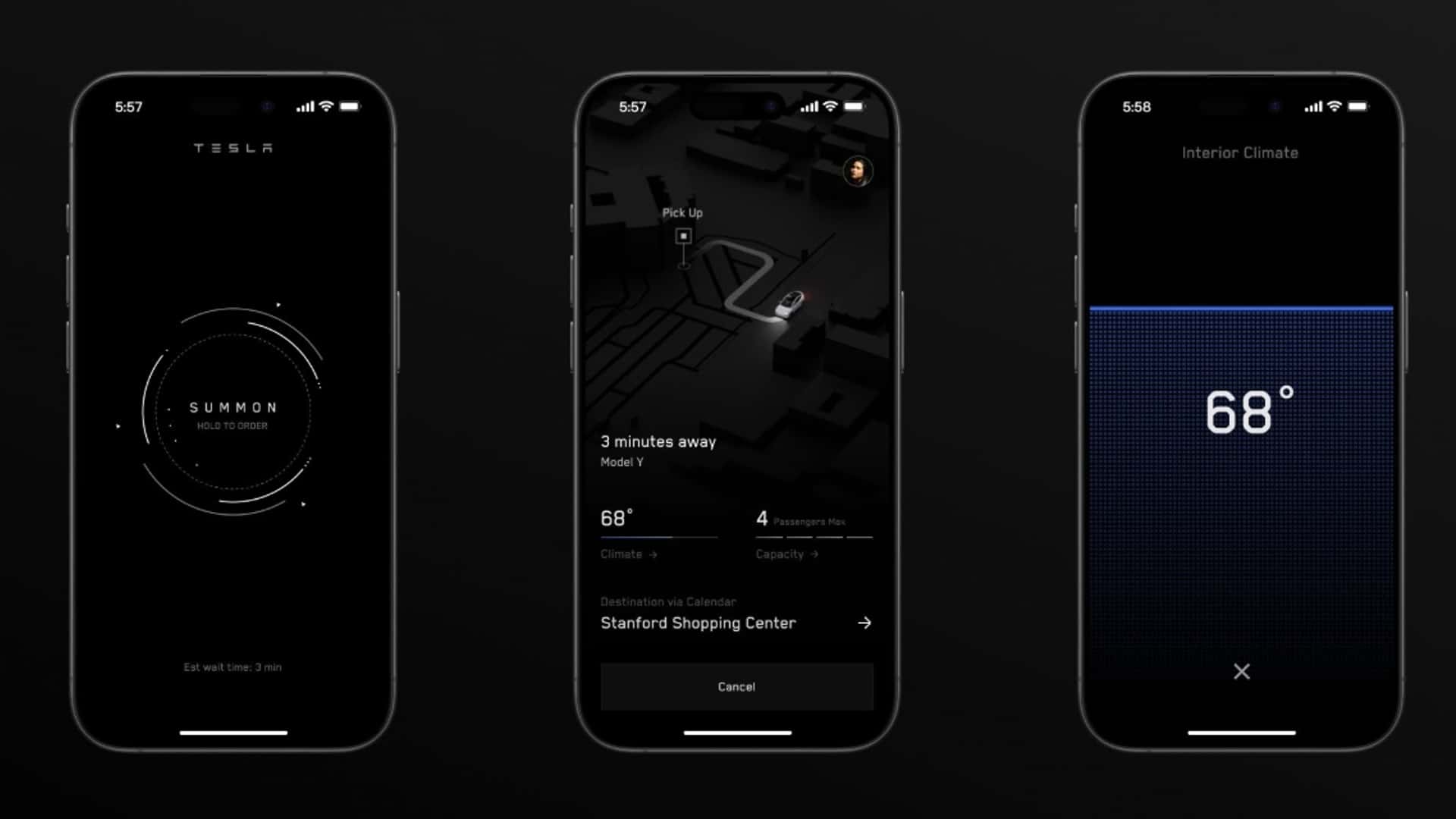
The integration of ride-hailing functionality directly into the Tesla app was also previewed. Renderings showcased a “Summon” button, presumably for ordering a robotaxi, alongside a screen displaying temperature controls. While specific details remain scant, this suggests a user-friendly interface designed to offer a seamless customer experience, potentially allowing passengers to pre-set climate settings before their autonomous ride begins.
Addressing Market Uncertainty and Previous Proclamations
The detailed announcements regarding the Tesla robotaxi fleet are viewed by many as a strategic move to assuage investor concerns and provide clarity on the company’s long-term growth trajectory. Reports earlier this year from Reuters suggested Tesla had scrapped plans for a cheaper consumer vehicle to prioritize robotaxis, triggering significant market speculation and investor anxiety.
During the earnings call, Tesla also indicated it is “accelerating the launch timing of ‘new vehicles, including more affordable models’,” clarifying that a dedicated robotaxi would arrive later. This statement suggests a broader product strategy that includes both more accessible traditional EVs and advanced autonomous mobility solutions, potentially easing fears that the company was abandoning the mass market.
However, Tesla’s journey toward full self-driving has been marked by a series of ambitious projections that have yet to materialize. Elon Musk famously declared in 2019 that Tesla would have one million robotaxis operational by 2020. This target was not met, and the company’s current Full Self-Driving (FSD) feature, despite its advanced capabilities, still requires active driver supervision and has been known to make errors.
Journalistic prudence dictates that Musk’s grand pronouncements should be considered with a degree of caution. While the vision for a widespread Tesla robotaxi fleet is compelling, the practical challenges of achieving Level 4 or Level 5 autonomy at scale remain significant. The regulatory landscape, technological reliability, and public acceptance are all critical factors that will determine the ultimate success and deployment timeline of this innovative ride-hailing service.
Despite these challenges, the recent disclosures offer the most concrete outline yet of Tesla’s strategy for autonomous ride-hailing. The commitment to both a company-operated fleet and an owner-participatory model suggests a multifaceted approach designed to tackle the complexities of the emerging mobility services market.
Frequently Asked Questions (FAQs)
What is Tesla’s robotaxi service?
Tesla’s robotaxi service is a planned autonomous ride-hailing network. It will involve both Tesla-owned self-driving vehicles and personal Tesla cars whose owners opt to make them available for autonomous rides, operating similarly to a combination of Uber and Airbnb.
How will Tesla owners participate in the robotaxi fleet?
Owners will have the flexibility to add or remove their vehicles from the fleet as they choose. They can also set specific parameters, such as allowing only friends and family, five-star rated users, or any user to hail their autonomous vehicle.
What technology will power Tesla’s robotaxis?
The robotaxis will be powered by Tesla’s “vision-only architecture,” utilizing end-to-end neural networks. This system relies entirely on cameras and advanced artificial intelligence trained on billions of miles of real-world driving data to achieve full vehicle autonomy.
When is the Tesla robotaxi service expected to launch?
While Tesla has not provided a firm launch date, the company has indicated that the ride-hailing functionality will be available “in the future.” The focus on accelerating the launch of new, including more affordable, vehicles suggests the dedicated robotaxi service might follow these introductions.
What is the significance of the “Airbnb and Uber” analogy?
The analogy highlights Tesla’s dual strategy: a company-managed fleet (like Uber) alongside a peer-to-peer sharing model (like Airbnb). This aims to scale the service quickly by integrating private vehicles, giving owners an opportunity to earn revenue from their self-driving cars.
Has Tesla made previous claims about robotaxis?
Yes, Elon Musk famously predicted that Tesla would have one million robotaxis on the road by 2020. This target was not achieved, leading to a degree of skepticism among some observers regarding the company’s timelines for autonomous deployment.
Will the robotaxis use Tesla’s Full Self-Driving (FSD) feature?
The robotaxis will leverage and evolve beyond the technology currently used in Tesla’s Full Self-Driving (FSD) feature. While FSD presently requires active driver supervision, the robotaxi service aims for full autonomy, eliminating the need for a human driver behind the wheel.
What are the main challenges for Tesla’s robotaxi plans?
Key challenges include achieving true Level 4 or Level 5 autonomy reliability, navigating complex regulatory frameworks in various regions, ensuring public trust and safety, and managing the logistics of a large-scale autonomous fleet operation. Past delays in FSD development also present a hurdle.