
Key Takeaways
- Walmart has significantly ramped up the expansion of its proprietary DC fast charging network, achieving a 50% increase in station count within just two months.
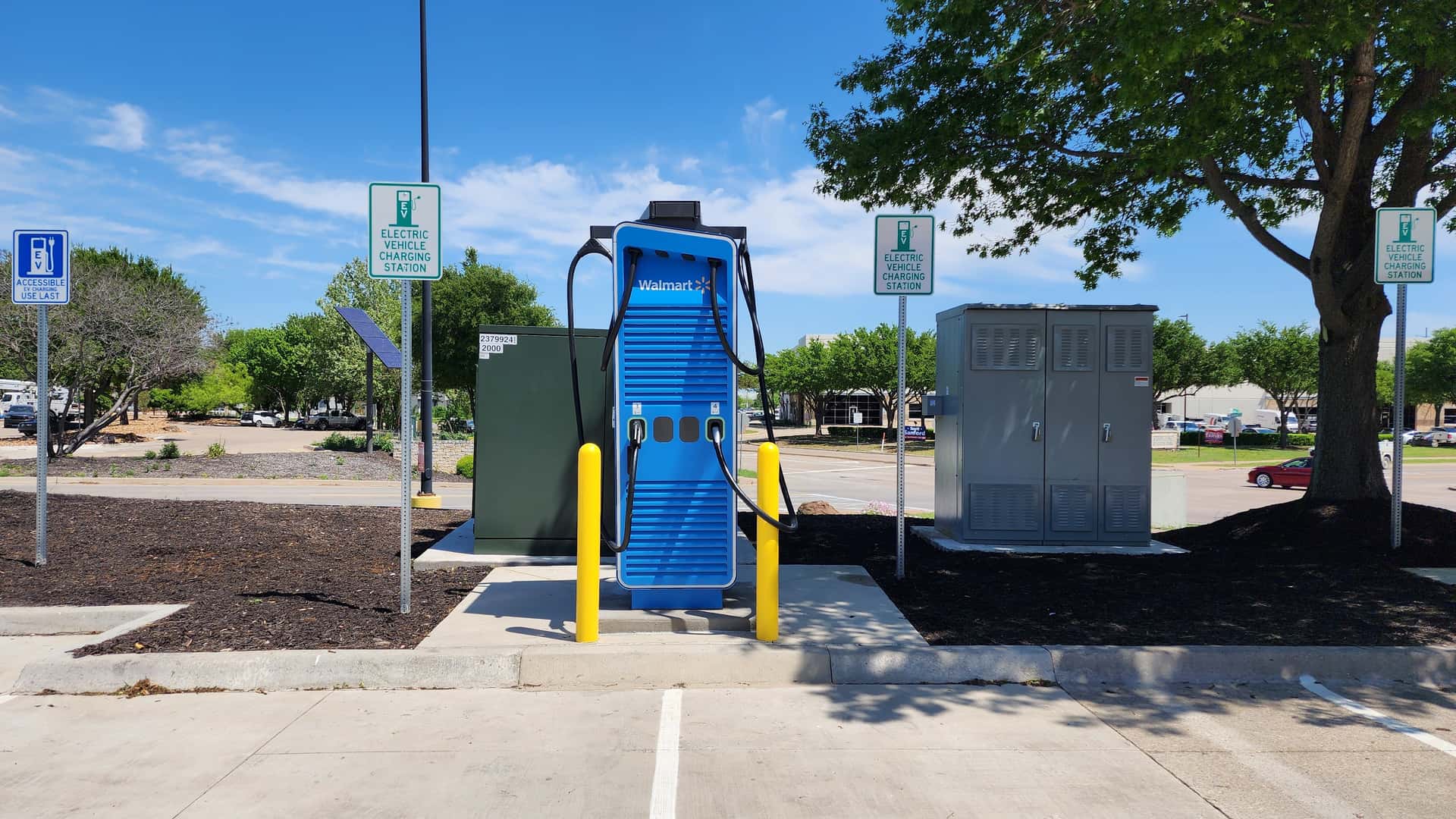
- The retail behemoth now operates 31 Walmart EV charging stations, encompassing 224 high-powered connectors, primarily utilizing 400-kilowatt Alpitronic or ABB chargers.
- Each of these 112 individual stalls is equipped with both NACS and CCS1 ports, accommodating a broad range of electric vehicles.
- The company initiated its direct involvement in the EV charging business in 2023, with ambitious plans to install fast chargers at thousands of its locations by 2030 and further expand in the subsequent decade.
- Texas leads the nation with 15 Walmart EV charging stations, followed by Arizona and Florida, indicating a strategic geographical rollout.
- Users access and pay for charging services exclusively via the Walmart smartphone app, with an average price point of $0.48/kilowatt-hour.
BENTONVILLE, ARKANSAS – Walmart, the world’s largest retailer, is rapidly accelerating the deployment of its electric vehicle (EV) fast charging network across the United States. In a strategic move to enhance its infrastructure for electric mobility, the company has increased the number of its proprietary DC fast charging stations by a remarkable 50% in just two months, underscoring its commitment to supporting the growing EV adoption rate.
This significant expansion positions Walmart as a crucial player in the evolving landscape of electric vehicle infrastructure, providing much-needed charging solutions at convenient retail locations. The initiative not only serves the immediate needs of EV drivers but also aligns with broader national efforts to build a robust and accessible charging ecosystem.

Rapid Expansion of Walmart EV Charging Network
Data from the Department of Energy’s Alternative Fuels Data Center, cited by EVChargingStations.com, reveals that Walmart currently operates 31 DC fast charging stations across the nation. These stations collectively offer 224 high-powered connectors, representing a substantial boost to the country’s fast charging capacity.
The rapid scaling of the Walmart EV charging network began to gain significant momentum in recent months. The company first ventured into the EV charging business in 2023, with the initial Walmart-branded chargers becoming operational in April of last year. Progress, while initially measured, has since seen a sharp uptick.
By November 2023, the network had reached 10 charging station locations. This number doubled to 20 stations by February of the current year and has now expanded to 31 active locations as of April, demonstrating an aggressive deployment strategy. This sustained growth trajectory signals Walmart’s serious long-term commitment to electric vehicle infrastructure.

Advanced Charging Technology Deployed
At the core of this expanding network are high-performance charging units. Walmart exclusively installs 400-kilowatt (kW) chargers, sourcing them from leading manufacturers such as Alpitronic or ABB. This high power output ensures rapid charging times, a critical factor for driver convenience, especially at retail destinations where customers might only have a limited window for a top-up.
Each individual stall within the Walmart EV charging network is designed for broad compatibility, featuring both a North American Charging Standard (NACS) cable and a Combined Charging System 1 (CCS1) port. This dual-connector approach ensures that a wide array of electric vehicles, regardless of their native charging standard, can utilize Walmart’s facilities.
With 224 high-powered connectors distributed across its stations, Walmart currently boasts 112 individual charging dispensers. This setup allows multiple vehicles to charge simultaneously, mitigating wait times and improving overall service efficiency. The company’s focus on high-power chargers with universal compatibility underscores a user-centric approach to EV infrastructure development.
Strategic Rationale and Future Projections
Walmart’s entry into the direct ownership and operation of fast charging stations marks a strategic pivot, complementing its existing partnerships with other EV charging providers like Electrify America, which also operate chargers at many Walmart locations. By developing its own proprietary Walmart EV charging network, the retail giant aims to leverage its extensive real estate footprint to provide accessible and reliable charging options.
The company has articulated ambitious future plans for its EV charging infrastructure. Walmart stated last year its intention to install fast chargers at “thousands of its locations by 2030,” with even more significant expansion slated for the subsequent decade. This long-term vision positions Walmart as a major contributor to the national electric mobility transition.
This strategic move is expected to drive greater customer footfall, as EV owners increasingly prioritize retail destinations that offer charging solutions. It also aligns with corporate sustainability goals, reinforcing Walmart’s commitment to reducing its environmental impact and promoting green initiatives across its operations.
Geographical Spread and Market Penetration
The current geographical distribution of the Walmart EV charging network provides insights into the company’s strategic deployment focus. Texas currently leads the nation with 15 Walmart EV charging stations, reflecting the state’s significant size, population, and growing EV market.
Following Texas, Arizona hosts six stations, while Florida has three. Oklahoma currently features two Walmart EV charging stations. Additionally, states such as Alabama, Arkansas, Georgia, New Jersey, and South Carolina each have one Walmart EV charging station, signaling an expanding presence across various regions of the US.
This pattern of rollout suggests a calculated approach, targeting areas with existing or emerging high demand for EV charging services, potentially influenced by state-level EV adoption rates, population density, and major transportation corridors. The broad distribution aims to enhance consumer convenience and reduce range anxiety for electric vehicle drivers on their journeys.
User Experience and Operational Details
Accessing and utilizing the Walmart EV charging network is designed to be straightforward for consumers. Drivers are required to use the store’s dedicated smartphone application to initiate and manage their charging sessions. This app-centric approach streamlines the payment process and provides users with real-time information about charging status.
A notable aspect of the operational model is the absence of traditional card readers at the charging stalls. This means that the smartphone app serves as the exclusive method for payments, requiring drivers to have the application installed and a payment method linked to their account before topping up their electric vehicles.
Pricing for charging services within the Walmart EV charging network varies by location, reflecting regional operational costs and market dynamics. However, the average price observed across the network is approximately $0.48 per kilowatt-hour. This transparent pricing model helps EV owners anticipate their charging expenses and manage their electric mobility budgets effectively.
The Broader Impact on EV Adoption and Infrastructure
Walmart’s substantial investment in its dedicated EV charging network holds significant implications for the broader landscape of electric vehicle adoption. By integrating fast charging infrastructure into its ubiquitous retail locations, Walmart inherently makes EV ownership more practical and appealing for a wider segment of the population.
The presence of reliable, high-speed charging options at frequented destinations reduces one of the primary barriers to EV adoption: range anxiety. Customers can conveniently charge their vehicles while shopping, transforming what was once a dedicated stop into a productive multi-tasking opportunity. This integration into daily routines is crucial for normalizing electric mobility.
Furthermore, the scale of Walmart’s ambition—planning for thousands of locations—will significantly contribute to the overall density and accessibility of fast charging infrastructure nationwide. This commitment from a major retail entity can also spur further investment from other businesses, accelerating the pace of infrastructure development across the country.
The rollout of 400-kilowatt chargers, alongside the inclusion of both NACS and CCS1 ports, also addresses the technological fragmentation within the EV market. By offering universal compatibility and high power, Walmart is setting a standard for efficient and user-friendly charging, ultimately fostering a more cohesive and accessible environment for all EV drivers.
Future Outlook and Industry Contributions
As the electric vehicle market continues its exponential growth, the role of accessible and efficient charging infrastructure becomes increasingly critical. Walmart’s aggressive expansion of its proprietary EV charging network represents a formidable contribution to this vital sector.
The company’s long-term targets, aiming for thousands of charging locations by 2030 and beyond, suggest a profound impact on the future of electric mobility in the US. This widespread availability of high-speed charging points at convenient retail hubs will not only support existing EV owners but also encourage prospective buyers to make the transition to electric vehicles with greater confidence.
Ultimately, Walmart’s initiative underscores a broader trend where major corporations are actively participating in building the necessary infrastructure to support a sustainable future. The continuous monitoring and reporting from sources like the Department of Energy’s Alternative Fuels Data Center will be key in tracking the progress and effectiveness of such large-scale private sector investments in the nation’s electric vehicle ecosystem.
Frequently Asked Questions (FAQ)
What is the current size of Walmart’s EV fast charging network?
Walmart’s proprietary DC fast charging network currently comprises 31 stations across the United States. These stations are equipped with a total of 224 high-powered connectors, which translates to 112 individual charging dispensers, significantly expanding its electric vehicle infrastructure.
How quickly is the Walmart EV charging network growing?
The Walmart EV charging network is expanding rapidly, having increased its number of DC fast charging stations by 50% in just two months. This accelerated growth demonstrates a strong commitment to deploying electric vehicle charging solutions nationwide.
What type of chargers does Walmart use in its network?
Walmart exclusively installs 400-kilowatt (kW) DC fast chargers from reputable manufacturers such as Alpitronic or ABB. Each charging stall is designed for universal compatibility, featuring both NACS (North American Charging Standard) and CCS1 ports.
Which states have the most Walmart EV charging stations?
As of the latest data, Texas leads with 15 Walmart EV charging stations. Arizona follows with six stations, and Florida has three. Other states like Oklahoma, Alabama, Arkansas, Georgia, New Jersey, and South Carolina also host stations.
How do drivers pay for charging at Walmart stations?
Drivers using the Walmart EV charging network must utilize the store’s dedicated smartphone application for all charging transactions. The stations do not feature card readers, making the app the sole method for initiating a charge and processing payment.
What is the average cost to charge an EV at Walmart?
While pricing can vary by location, the average cost for charging an electric vehicle at a Walmart EV charging station is approximately $0.48 per kilowatt-hour. This pricing structure aims to provide transparency for EV owners.
What are Walmart’s future plans for its EV charging network?
Walmart has announced ambitious plans to significantly expand its EV charging network, intending to install fast chargers at “thousands of its locations by 2030.” The company also projects even further expansion throughout the next decade, enhancing electric mobility convenience.