
Rivian Explores Domestic Lidar Production for R2, Potentially Leveraging Chinese Technology
In a significant strategic development for the electric vehicle industry, Rivian, the California-based EV manufacturer, is reportedly exploring the possibility of producing its own lidar sensors within the United States. This initiative targets the future versions of its highly anticipated R2 mid-size electric SUV, marking a potential milestone as the first mass-market American EV to feature domestically manufactured lidar technology.
Rivian CEO RJ Scaringe revealed these considerations in an exclusive interview with Reuters, signaling a proactive approach to advanced driver-assistance systems. The company’s strategy may involve a partnership with a Chinese firm, facilitating in-house manufacturing rather than procuring pre-built sensors from overseas suppliers.
Strategic In-House Manufacturing and Global Technology Partnerships
Scaringe articulated Rivian’s intent to structurally integrate this crucial technology. While refraining from disclosing specific names, he confirmed that Rivian is engaged in “active discussions” with several solid-state lidar manufacturers, predominantly those based in China.
This approach underscores a recognition of the rapid advancements in lidar technology occurring internationally. Scaringe noted, “Think of it as finding a way to structurally ingest the technology.” He further elaborated on the origins of cutting-edge innovations, stating, “The advancements in terms of going from the early lidars that I think a lot of us have seen—we see them here—to these much more advanced solid-state lidars, those advancements didn’t happen in the United States. Those advancements happened in China.”
By potentially leveraging Chinese expertise and manufacturing capabilities within the U.S., Rivian aims to enhance its supply chain resilience and control over critical components for its next-generation vehicles. This move also aligns with broader industry trends focusing on localization and technological independence.
The Indispensable Role of Lidar in Advanced Autonomy
Lidar, an acronym for “light detection and ranging,” is a sensor technology that uses pulsed laser light to measure distances, generating precise three-dimensional maps of a vehicle’s surroundings. Many experts within the autonomous driving sector consider lidar sensors essential for achieving truly autonomous driving capabilities.
This technology provides a robust layer of environmental perception that complements traditional camera and radar systems. Its ability to create highly detailed depth maps, irrespective of lighting conditions, is crucial for navigating complex environments and enhancing safety in advanced driver-assistance systems (ADAS).
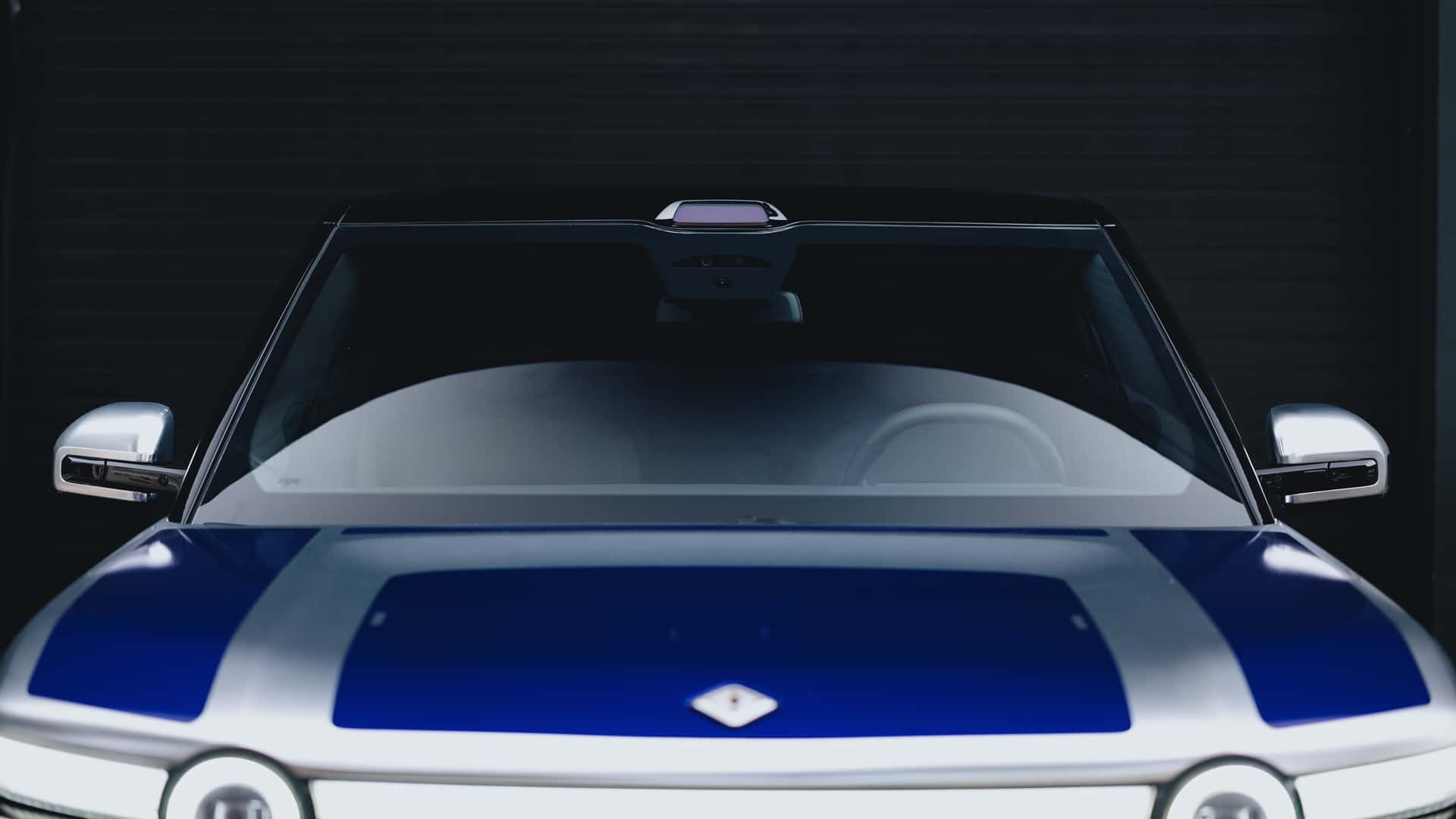
For the Rivian R2, the integration of a sophisticated lidar sensor is envisioned to significantly boost its automated driving capabilities. The demonstration vehicles for the R2, showcased previously, featured a compact, roof-mounted static lidar unit, distinctly smaller than the larger, rotating sensors often seen on experimental robotaxis.
Rivian R2’s Phased Rollout and Current Sensor Architecture
Despite the long-term vision for lidar integration, Rivian has confirmed that the initial batches of the R2 mid-size electric SUV will not be equipped with this advanced sensor technology. This decision was made to expedite the start of production for the R2, allowing the company to bring the vehicle to market sooner.
Consequently, the initial R2 models rolling off the production line will be based on an “elevated version of the Gen2 architecture.” This platform currently underpins Rivian’s latest R1S and R1T vehicles, offering a foundation of proven technology and performance.
These early R2 units will come factory-equipped with Rivian’s improved 65-megapixel HDR camera system and an enhanced dual-mode corner radar. This combination of high-resolution cameras and advanced radar is designed to provide robust environmental sensing, sufficient for sophisticated hands-free driving functionalities.
Charting the Course for Eyes-Off Driving with RAP-1
While the initial sensor suite enables hands-free operation, Rivian’s ultimate ambition for the R2 is to deliver “eyes-off driving” capabilities. This higher level of automation necessitates the comprehensive environmental understanding that lidar provides, working in conjunction with other sensor modalities.
Crucially, the lidar sensor will operate in concert with Rivian’s first custom-designed chip, the Rivian Autonomy Processor 1, or RAP-1. This proprietary silicon is engineered to process vast amounts of sensor data efficiently, enabling real-time decision-making essential for advanced autonomous functions.
Rivian has set a clear timeline for this significant technological leap. The automaker anticipates that the first lidar-equipped R2 SUVs will commence production and roll off the assembly line in late 2026. This schedule allows for the meticulous development, testing, and integration of the complex lidar and RAP-1 systems.
Important Considerations for Early Adopters: No Lidar Retrofit
For potential customers eager to be among the first to own the Rivian R2, a critical detail has been confirmed by the company. Rivian stated last year that older R2s delivered without lidar will not be eligible for a hardware upgrade to integrate the sensor later.
This means that buyers of the initial R2 batches, which will rely on camera and radar systems, will not be able to upgrade their vehicles to include lidar technology at a later date. This decision highlights the fundamental differences in hardware architecture required for full lidar integration, emphasizing the importance of timing for customers seeking the most advanced autonomous features.
The company’s strategy reflects a calculated balance between accelerating vehicle availability and progressively introducing cutting-edge autonomous driving hardware. This phased approach allows Rivian to meet market demand while continuing to innovate and integrate advanced sensor technology for future iterations of its electric SUV lineup.
FAQs on Rivian R2 Lidar Sensor Plans
What is Rivian’s plan for lidar sensors in the R2?
Rivian is considering manufacturing its own lidar sensors in the United States for future R2 models. This initiative aims to integrate advanced autonomous driving capabilities directly into its electric SUV, potentially making the R2 a leader in domestic lidar-equipped mass-market EVs. Discussions are ongoing with Chinese technology partners for this endeavor.
Why is Rivian looking to partner with a Chinese company for lidar technology?
Rivian CEO RJ Scaringe noted that significant advancements in solid-state lidar technology have primarily occurred in China. By partnering with a Chinese firm, Rivian aims to “structurally ingest the technology” for in-house U.S. manufacturing, leveraging global innovation to enhance its domestic production capabilities and supply chain.
When will lidar-equipped Rivian R2s be available?
Rivian has announced that the first R2 mid-size electric SUVs equipped with lidar sensors are expected to begin rolling off the assembly line in late 2026. This timeline allows for the comprehensive integration and testing of the advanced sensor system and Rivian’s custom Autonomy Processor 1 (RAP-1).
Will early Rivian R2 buyers be able to upgrade to lidar later?
No, Rivian has confirmed that early R2 models delivered without lidar technology will not be eligible for a hardware upgrade to add the sensor later. Customers seeking lidar-enabled autonomous driving features will need to purchase R2 versions produced from late 2026 onwards.
What sensor technology will initial Rivian R2 models use?
The initial batches of the Rivian R2 will feature an “elevated version of the Gen2 architecture” that includes an improved 65-megapixel HDR camera system and an enhanced dual-mode corner radar. This setup is designed to support advanced hands-free driving capabilities before lidar integration.
How does lidar contribute to autonomous driving?
Lidar sensors utilize pulsed lasers to create detailed three-dimensional maps of a vehicle’s surroundings, providing precise depth and object detection. This technology is widely considered essential by many experts for achieving true “eyes-off” autonomous driving, offering superior environmental perception in various conditions compared to camera or radar alone.