
Key Takeaways (TL;DR)
- Rivian is actively considering manufacturing its own lidar sensors in the United States for future iterations of its R2 mid-size electric SUV.
- CEO RJ Scaringe indicated potential partnerships with Chinese solid-state lidar technology providers to facilitate domestic production.
- This strategic move aims to integrate advanced lidar capabilities, critical for achieving ‘eyes-off’ autonomous driving in the R2, with the first lidar-equipped units expected by late 2026.
- Initial R2 batches will feature an enhanced camera and radar system for ‘hands-free’ driving, but will not be eligible for future lidar retrofits.
- The decision underscores a growing trend among EV manufacturers to enhance in-house technology control and leverage global innovation for advanced driver-assistance systems.
In a significant strategic move, American electric vehicle manufacturer Rivian is contemplating the in-house production of its own advanced lidar sensors in the United States. This initiative is specifically aimed at equipping future versions of its highly anticipated R2 mid-size electric SUV, marking a potential shift towards greater vertical integration in critical autonomous driving technologies.
Rivian CEO RJ Scaringe recently shared insights with Reuters, revealing the company’s deliberations on this ambitious plan. If actualized, the Rivian R2 lidar sensor could become a pioneering example of a mass-market American EV featuring domestically manufactured lidar, a technology deemed essential for next-generation automated driving capabilities.
Strategic Manufacturing and Global Partnerships
Central to Rivian’s consideration is the exploration of a unique manufacturing model. The California-based EV startup is reportedly examining the possibility of producing these lidar sensors in-house within the U.S., but critically, by leveraging sophisticated Chinese technology. This could potentially involve a joint venture or a similar collaborative framework, according to Scaringe.
The CEO did not disclose specific company names but confirmed that Rivian is engaged in “active discussions” with various solid-state lidar manufacturers. This approach suggests a focus on acquiring and integrating proven technological advancements rather than merely purchasing off-the-shelf components from international suppliers.
Scaringe articulated the rationale behind this strategy, stating, “Think of it as finding a way to structurally ingest the technology.” He emphasized the rapid pace of innovation abroad: “The advancements in terms of going from the early lidars that I think a lot of us have seen—we see them here—to these much more advanced solid-state lidars, those advancements didn’t happen in the United States. Those advancements happened in China.”
The Pivotal Role of Lidar in Autonomous Driving
Lidar, an acronym for Light Detection and Ranging, employs pulsed laser light to measure distances and create detailed three-dimensional maps of a vehicle’s surroundings. Many experts within the automotive and technology sectors widely regard lidar sensors as a crucial component for achieving truly autonomous driving capabilities, offering a level of precision and environmental understanding that complements camera and radar systems.
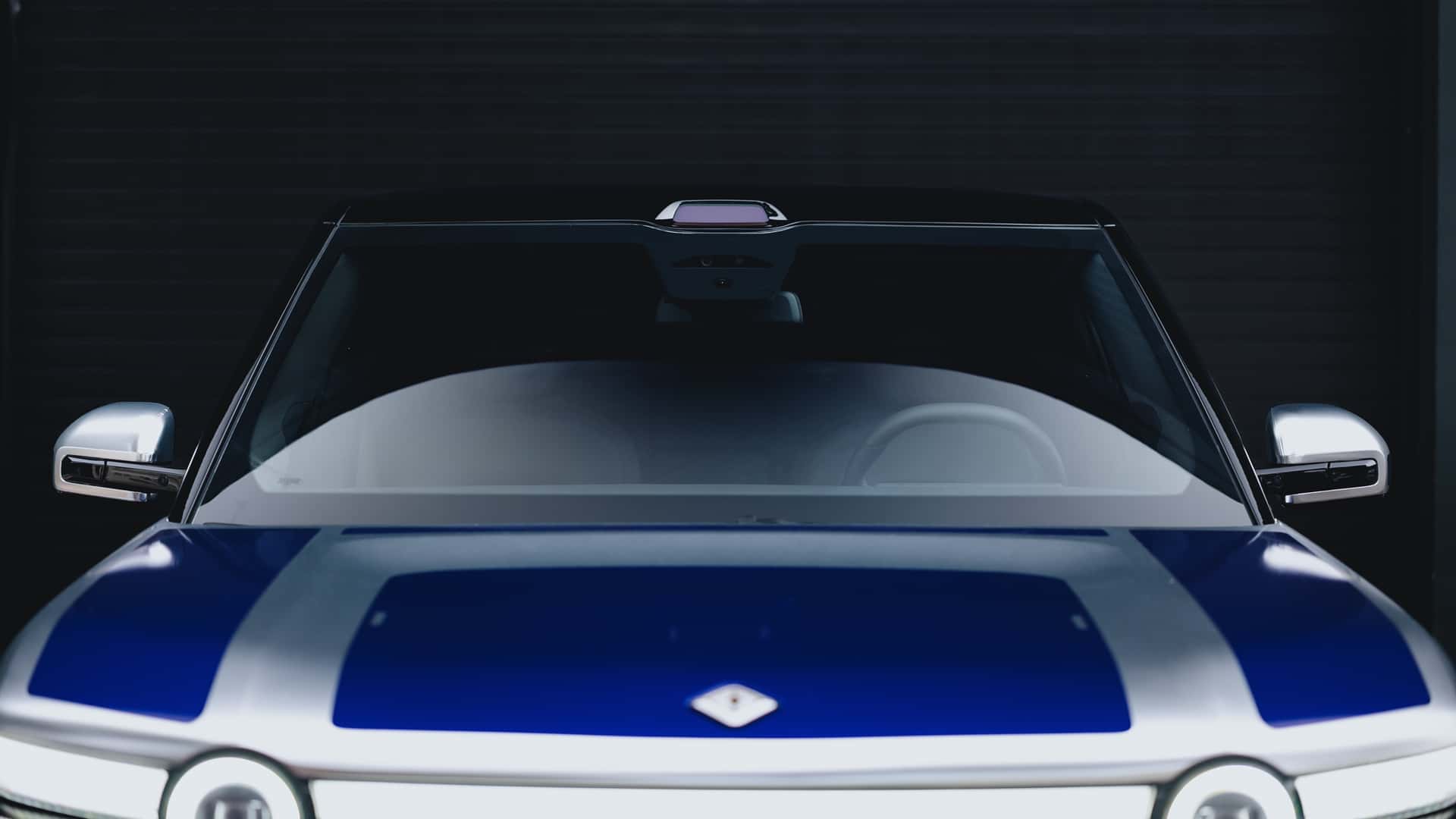
Last year, Rivian garnered considerable attention when it announced that its R2 mid-size electric SUV would be factory-fitted with a lidar sensor. Early demonstration vehicles showcased a compact, static roof-mounted lidar sensor, a design notably smaller and less conspicuous than the larger, rotating units commonly found on autonomous test vehicles like Waymo’s robotaxis.
Phased Rollout: Hands-Free to Eyes-Off Driving
The company has outlined a phased introduction for the Rivian R2 lidar sensor technology. While the initial R2 batches rolling off the production line will not immediately incorporate lidar, this decision was made to accelerate the production timeline for the mid-size SUV.
These early R2 models will instead be built upon an “elevated version of the Gen2 architecture,” which also underpins the latest R1S and R1T vehicles. They will come equipped with Rivian’s enhanced 65-megapixel HDR camera system and an improved dual-mode corner radar. This sensor suite is designed to enable advanced “hands-free driving” functionalities.
However, Rivian’s long-term vision for autonomy extends beyond hands-free operation. The company is actively pursuing “eyes-off driving” capabilities, a more advanced form of autonomy where the driver is not required to monitor the road continuously. This ambitious goal is where the Rivian R2 lidar sensor, working in concert with the company’s first custom chip, the Rivian Autonomy Processor 1 (RAP-1), becomes indispensable.
The EV maker has confirmed that the first R2 SUVs equipped with lidar are slated to begin rolling off the assembly line in late 2026. This timeline underscores the complexity and integration challenges associated with deploying such advanced hardware and software systems in a production vehicle.
No Hardware Upgrades for Early Adopters
A critical detail for prospective buyers of the R2 is Rivian’s firm stance on hardware upgrades. The company explicitly confirmed to InsideEVs last year that older R2 vehicles, those delivered without the lidar system, will not be eligible for a hardware retrofit to add the technology later. This means consumers keen on acquiring an R2 with full lidar-enabled autonomous driving features will need to wait for the later 2026 models.
This policy highlights the deep integration of lidar and the RAP-1 chip into the vehicle’s core architecture, making a simple post-purchase installation impractical or impossible. Buyers will need to carefully consider their desired level of autonomous driving capability when making a purchase decision for the R2.
Industry Implications and Future Outlook
Rivian’s exploration into manufacturing its own Rivian R2 lidar sensor, particularly with an eye towards Chinese technological expertise, reflects a broader trend in the automotive industry. As the race for autonomous driving intensifies, control over key hardware components is becoming increasingly important for performance, cost efficiency, and supply chain resilience.
The integration of advanced lidar technology, coupled with a custom-designed processing unit, positions Rivian to potentially offer a highly sophisticated and differentiated autonomous driving experience. This strategy could strengthen the company’s competitive standing against established players and emerging EV rivals, many of whom are also heavily investing in their own autonomous driving stacks.
The decision to pursue domestic production for such a critical sensor also aligns with a growing emphasis on localized manufacturing and technological independence in key industries. However, leveraging foreign technological advancements simultaneously demonstrates a pragmatic approach to innovation in a rapidly evolving global landscape.
Frequently Asked Questions (FAQ)
What is Rivian’s plan for lidar in the R2?
Rivian is considering manufacturing its own lidar sensors in the U.S. for future R2 models. CEO RJ Scaringe indicated potential collaboration with Chinese solid-state lidar technology providers to bring advanced ‘eyes-off’ autonomous driving capabilities to the electric SUV, aiming for greater control over this critical component.
Why is Rivian considering U.S. manufacturing for lidar?
The company aims to ‘structurally ingest’ advanced lidar technology, ensuring deeper integration and potentially better control over manufacturing processes. While recognizing that significant lidar advancements have occurred in China, Rivian seeks to localize production within the U.S., possibly through partnerships, for strategic and logistical advantages.
When will lidar-equipped Rivian R2 models be available?
Rivian projects that the first R2 SUVs fitted with the advanced lidar sensor and its custom Autonomy Processor 1 (RAP-1) will begin rolling off the assembly line in late 2026. Early R2 batches, arriving before this date, will not include lidar technology.
What are the differences between ‘hands-free’ and ‘eyes-off’ driving for the R2?
‘Hands-free driving’ (enabled by cameras and radar in early R2s) allows drivers to remove their hands from the steering wheel but still requires them to monitor the road. ‘Eyes-off driving’ (planned with lidar and RAP-1) represents a higher level of autonomy where the driver is not continuously required to supervise the driving task, allowing for greater relaxation or engagement in other activities.
Can early Rivian R2 owners upgrade to lidar?
No, Rivian has explicitly stated that older R2 models delivered without the lidar hardware will not be eligible for a retrofit or a hardware upgrade to incorporate the lidar system. Customers desiring lidar capabilities will need to purchase the models produced from late 2026 onwards.
What role does the Rivian Autonomy Processor 1 play?
The Rivian Autonomy Processor 1 (RAP-1) is the company’s first custom-designed chip, crucial for enabling ‘eyes-off driving’ capabilities in the R2. It will work in conjunction with the lidar sensor and other perception systems to process complex environmental data, facilitate decision-making, and execute advanced autonomous functions.