
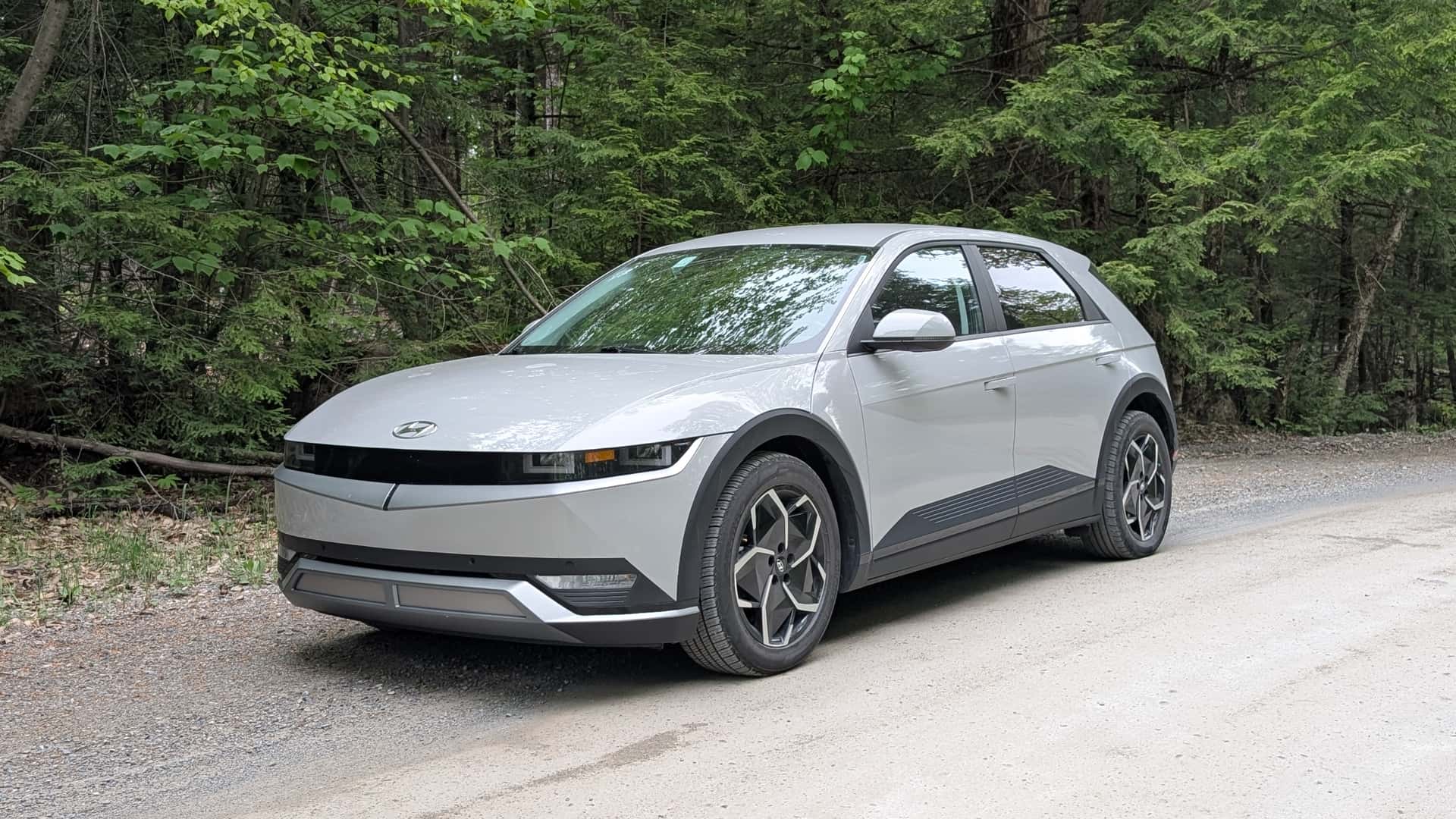
Key Takeaways (TL;DR)
- A 560-mile Hyundai Ioniq 5 EV road trip during a holiday weekend demonstrated significant cost savings compared to gasoline-powered vehicles, even when relying exclusively on public fast chargers.
- Despite average gas prices in New York exceeding $4.50 per gallon, the total charging cost for the EV journey was approximately $80, far less than what a comparable internal combustion engine (ICE) SUV would incur.
- The Hyundai Ioniq 5, an older model with CCS charging, completed the trip with just three primary charging stops, leveraging its 800-volt architecture for rapid 10-80% charges in about 20 minutes.
- The overall trip cost, including rental fees and tolls, positioned the electric vehicle as the most economical choice against both hybrid and traditional gasoline crossovers.
- The experience highlighted that even in scenarios traditionally perceived as less favorable for EVs (public fast charging, holiday travel), the financial and experiential benefits remain compelling.
As Memorial Day weekend approached, the bustling Avis rental car facility in New York City was a tableau of holiday anticipation. Travelers, laden with luggage, navigated queues for vehicles destined for long drives away from the urban sprawl. Amidst the array of SUVs and sedans being prepped for departure, a particular choice stood out, offering an unexpected reprieve from the prevailing economic realities of road travel.
With Amtrak tickets sold out and other public transport options impractical for a planned retreat to Upstate New York and the Adirondacks, a rental car became imperative. The conventional options, however, presented a stark challenge: economy gasoline cars like the Chevrolet Spark and Toyota Corolla were either unavailable or priced exorbitantly. This scenario led to an unusual, yet ultimately insightful, selection: an electric vehicle (EV).

Choosing Electric: The Hyundai Ioniq 5 Advantage
Faced with limited choices, only two EVs were available for rent: the Kia Niro EV and the Hyundai Ioniq 5. Despite differing generations, both were listed at identical rental rates. The decision, for experienced EV users, was straightforward. The Hyundai Ioniq 5 EV, renowned for its superior charging speeds and extended range, emerged as the clear preference for the demanding Hyundai Ioniq 5 EV road trip.
The prevailing average gas prices in New York, hovering above $4.50 per gallon due to ongoing global geopolitical events, added a layer of financial pressure for many motorists. Opting for an EV promised the welcome relief of avoiding conventional gas stations altogether. While initial expectations for significant refueling savings from public fast chargers were modest, the eventual outcome proved remarkably surprising.
Performance on the Road: The Hyundai Ioniq 5 EV’s Capabilities
The Hyundai Ioniq 5 EV is widely recognized in automotive circles, including being an Editor’s Choice for InsideEVs Breakthrough Awards for its updated model. The rental vehicle, an older model year, featured a CCS charging port, as opposed to the newer NACS (Tesla-style North American Charging Standard) port, and a 77-kilowatt-hour battery capacity. This configuration provided an EPA-estimated range of 260 miles for its all-wheel-drive trim.
Despite being an older model, which meant the absence of wireless Android Auto and reliance on USB-A ports (necessitating a quick purchase of a compatible cable), the vehicle felt inherently modern. Its ride quality was exceptionally smooth, offering a comfortable journey for the occupants. The true highlight, however, was its charging prowess.
The Ioniq 5’s 800-volt architecture allows for an impressive charging rate, enabling a 10-80% charge in a mere 20 minutes when connected to a 350-kilowatt fast charger. This capability streamlined the travel experience, aligning charging stops seamlessly with meal breaks. Each return to the vehicle often found it with more range than immediately required, eliminating any range anxiety.
Strategic Charging: Navigating Public Infrastructure
The journey commenced with the Hyundai Ioniq 5 EV at a 61% state of charge, indicating an approximate range of 190 miles. This provided ample buffer to exit the city before needing the first charge, strategically important given that charging rates become considerably more economical further from urban centers like New York City.
The initial charging stop was strategically located roughly 100 miles north of the city, near the Catskills, at a 350-kW Evolve NY station. Plugging in at 14% state of charge, the vehicle was charged to 92%, incurring a cost of $31 at a rate of $0.47 per kWh. This single charge provided sufficient range to reach the Airbnb accommodation and cover the drive to the trailhead the following morning.
A precautionary second stop was made en route to the remote mountain trailhead, where cell service and charging infrastructure were non-existent. This top-up from 30% to 80% cost an additional $20 at a similar charging rate. The return leg necessitated a third primary charging stop. In total, the Hyundai Ioniq 5 EV road trip across approximately 560 miles required only three charging sessions. The raw charging expenditure for these sessions amounted to approximately $67.
Before returning the vehicle to Avis, a final stop at a more expensive station near the city was required to restore the battery to its initial 61% state of charge, avoiding potential penalties. This brought the total charging outlay for the entire trip to around $80.
Financial Analysis: EV vs. ICE Costs
The cost breakdown presented a compelling argument for electric mobility. At last weekend’s average New York gas price of $4.58 per gallon, a gasoline-powered crossover would need to achieve approximately 32 miles per gallon (mpg) to match the per-mile cost of the Hyundai Ioniq 5 EV trip. For a typical SUV averaging 25 mpg, the fuel cost for 560 miles would have exceeded $100.
Even a highly fuel-efficient hybrid, rated at 40 mpg, would have resulted in a fuel cost of around $64, slightly less than the EV’s charging costs. However, the EV also offered significant savings on the rental cost itself, being priced lower than comparable gasoline or hybrid options. The comprehensive cost comparison for the three-day, 560-mile journey clearly illustrated the financial benefits of the Hyundai Ioniq 5 EV:
Vehicle Expenses: 3 Days, 560 Miles
| Expense Category | Hyundai Ioniq 5 EV | Comparable Hybrid Crossover (40 mpg @ $4.58/gallon) | Comparable Gas SUV (25 mpg @ $4.58/gallon) |
|---|---|---|---|
| Rental cost for 3 days | $480 | Ranging from $600 and up | Ranging from $600 and up |
| Tolls | $60 | $60 | $60 |
| Charging/Refueling | $80 | $64 | $103 |
| Total Cost | $620 | More than $700 | More than $750 |
Beyond the Numbers: The Driving Experience
It is important to note that no special measures were taken to optimize fuel or charging efficiency. The vehicle was driven normally, with air conditioning in consistent use, and treated as any conventional road-trip vehicle. This practical approach underscores the real-world applicability of these cost savings.
Beyond the financial advantages, the driving experience itself was markedly superior. The instant torque from the electric motors delivered powerful and responsive acceleration, while the ride remained exceptionally smooth and nearly silent. This qualitative improvement further enhances the appeal of electric mobility for long-distance journeys.
Shifting Paradigms in Automotive Economics
The findings from this Hyundai Ioniq 5 EV road trip challenge historical perceptions regarding EV economics. Traditionally, the most significant cost benefits of owning an EV were realized through home charging with cheaper household electricity. While this remains true, the current economic climate, marked by persistently high gas prices, has demonstrably shifted the equation.
Even when relying exclusively on public charging infrastructure, which typically commands higher rates, the electric vehicle proved more economical than its gasoline counterparts. This holds particularly true for holiday travel in regions with high fuel costs, a scenario often considered less favorable for EV adoption. The Hyundai Ioniq 5 EV emerged as the clear winner, demonstrating that going electric offers compelling benefits in terms of driving dynamics, technological sophistication, and overall cost efficiency.
Frequently Asked Questions About EV Road Trips
How do EV road trip costs compare to gasoline vehicles?
As demonstrated by the Hyundai Ioniq 5 EV journey, an EV road trip can be significantly more economical than one in a gasoline vehicle, especially when gas prices are high. Even with public fast charging, which is more expensive than home charging, the total cost for electricity often undercuts traditional fuel expenses for comparable distances. This financial advantage includes lower per-mile energy costs.
Is a Hyundai Ioniq 5 EV suitable for long-distance travel?
Yes, the Hyundai Ioniq 5 EV is well-suited for long-distance travel. Its 77 kWh battery offers an EPA range of 260 miles (AWD trim), and its 800-volt architecture enables rapid charging from 10% to 80% in about 20 minutes at high-power DC fast chargers. These features minimize downtime and enhance the overall efficiency of a lengthy journey.
What factors influence EV charging costs on a road trip?
Several factors affect EV charging costs, including the price per kilowatt-hour (kWh) at public stations, the speed of the charger (fast chargers are generally more expensive), the vehicle’s efficiency, and the state of charge when plugging in. Costs can also vary geographically, often being higher in urban centers compared to rural areas.
Can high gas prices truly make public EV charging more economical?
Indeed. The case study illustrates that when average gas prices climb above a certain threshold (e.g., $4.50 per gallon), even the higher rates of public fast chargers can become more financially advantageous than refueling a conventional gasoline vehicle over the same distance. This trend is a significant driver in the shift towards electric mobility.
What are the practical benefits of an EV for road trips beyond cost?
Beyond cost savings, EVs offer a superior driving experience for road trips. This includes powerful, instant acceleration, a remarkably smooth and quiet ride, and reduced driver fatigue due to the absence of engine noise and vibrations. The advanced technology and comfortable interiors found in vehicles like the Hyundai Ioniq 5 EV further enhance the journey.
How can EV drivers mitigate range anxiety on long trips?
Range anxiety can be mitigated through careful route planning using dedicated EV charging apps, which identify available fast chargers along the route. Vehicles with long ranges and rapid charging capabilities, such as the Hyundai Ioniq 5 EV, also inherently reduce this concern. Integrating charging stops with meal or rest breaks optimizes travel time.
Are rental EVs becoming a more viable option for travelers?
Yes, rental EVs are increasingly becoming a viable and attractive option for travelers. As EV availability expands in rental fleets, and as charging infrastructure matures, their cost-effectiveness and superior driving experience make them competitive, if not preferable, to traditional gasoline rentals, especially during periods of high fuel prices or peak travel demand.