
The landscape of electric vehicle (EV) charging in the United States is on the cusp of a revolutionary transformation. While 300-plus-kilowatt (kW) stalls once defined the pinnacle of EV charging technology, a new wave of high-power EV charging systems is rapidly emerging. Charging companies across the nation are now deploying hardware capable of delivering staggering power outputs of 500 kW, 600 kW, and even exceeding a full megawatt (MW).
This aggressive infrastructure build-out is strategically positioned to accommodate the anticipated influx of electric heavy-duty vehicles, such as big rigs, and the next generation of advanced passenger electric cars. The move signifies a critical stride towards making EV charging a process as swift and seamless as traditional gasoline refueling, directly addressing a long-standing barrier to broader EV adoption.

The Dawn of Ultra-Fast Charging Technology
Recent developments underscore this significant shift in high-power EV charging capabilities. Last month, ChargePoint unveiled a 600 kW unit, proclaiming it as “the world’s fastest standalone EV charger.” This all-in-one solution eliminates the need for a separate cabinet, streamlining installation and footprint.
Concurrently, Swiss firm ABB articulated its ambitious plans to roll out 1.2 MW chargers, setting a new benchmark for ultra-rapid power delivery. Further amplifying this trend, Kempower recently showcased its advanced charger, featuring a Megawatt Charging System (MCS) connector capable of dispensing 1.2 MW, alongside a Combined Charging System (CCS) plug offering 560 kW.
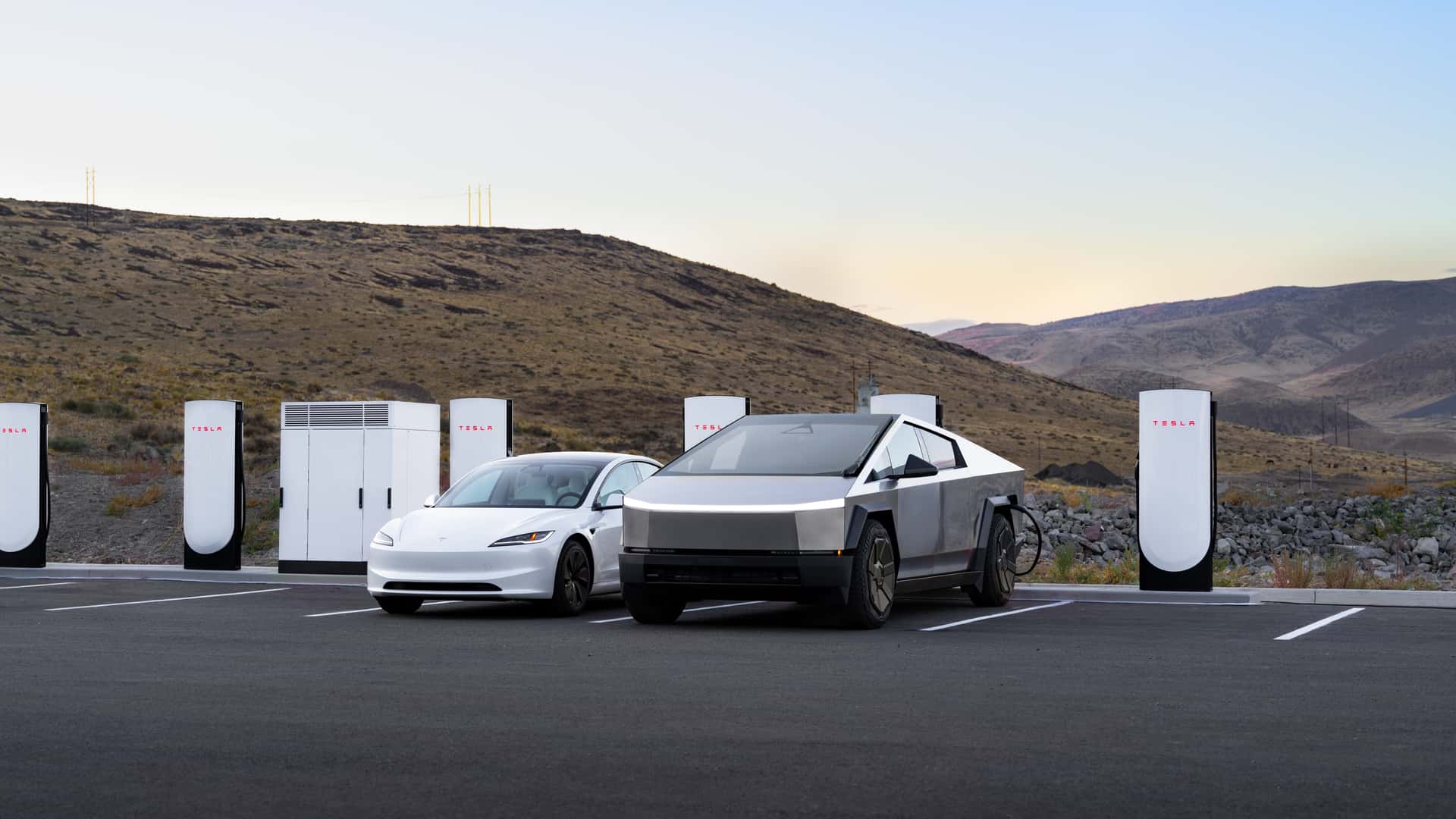
Italian charging innovator Alpitronic also introduced new chargers designed to deliver up to 1,000 kW for semi-trucks and up to 600 kW for passenger EVs. A company spokesperson confirmed that these cutting-edge units are slated for deployment in the U.S. market early next year. Even Tesla, the dominant player in the American charging ecosystem, is progressively upgrading its Supercharger network, transitioning from historical caps of 250 kW or 325 kW to more powerful 500 kW V4 stations.

Enhancing Efficiency Through Advanced Power Distribution
Beyond sheer speed, these advanced high-power EV charging stations offer substantial operational benefits. They are engineered to enable multiple EVs to charge simultaneously at exceptionally high speeds without experiencing power degradation during periods of heavy traffic. This sophisticated architecture allows for the delivery of megawatt charging speeds to a single port, or for the intelligent distribution of that substantial load across several chargers.
Loren McDonald, CEO and chief analyst at Chargeonomics, elucidated this strategic approach: “The idea is to be able to distribute load across the individual chargers based on EVs’ power draw capacity and current need.” This dynamic load balancing system, though present in earlier forms, is being significantly enhanced to manage the vastly increased power outputs.
Consider a scenario where an older-generation Chevrolet Bolt and a high-performance Lucid Gravity arrive at the same charging location. The system intelligently allocates power, ensuring the Bolt receives the 55 kW it can accept, while the Gravity can still charge optimally at 400 kW, preventing any wasted energy or compromise in charging speed for either vehicle. The industry is now pushing this capability further, aiming to provide megawatt speeds to individual ports while maintaining robust power levels across all stalls during peak demand.
The Disparity: Infrastructure Ahead of Vehicle Capability
Despite the rapid advancement in high-power EV charging infrastructure, a critical challenge persists: the current generation of U.S. passenger EVs is largely not equipped to fully utilize these blistering charging speeds. Presently, no passenger EV widely available in the U.S. can accept more than 500 kW of power.
While the Tesla Cybertruck has been observed drawing 500 kW at V4 Superchargers, its official specifications still list a maximum of 325 kW. Other leading fast-charging EVs currently on sale or slated for imminent release in the U.S., such as the Lucid Gravity, Porsche Cayenne Electric, and BMW iX3, generally feature a 400 kW charging ceiling.
Future-Proofing for Expected Growth and Global Shifts
The decision by U.S. charging companies to push ahead with this advanced infrastructure, even with a temporary vehicle-readiness gap, is a calculated move. It reflects an expectation that EV demand will eventually rebound and that more capable, high-tech electric vehicles will inevitably arrive on American shores. This strategic investment serves to future-proof the networks.
“Some of the high-power Chinese cars may find their way to the U.S. in the next five years, so these higher-power capable chargers future-proof them,” McDonald noted, further predicting, “We might also see some 500 kW capable BEVs in the next few years in the U.S.” This outlook anticipates a convergence of advanced battery technology and vehicle design that will enable cars to harness these greater power inputs.
Industry Voices on the Path Forward
Seth Cutler, CEO of Ionna, a prominent charging network backed by several major automakers, affirmed the company’s current deployment strategy. Ionna currently operates 400 kW stations, which Cutler believes are entirely sufficient for today’s electric vehicles. However, he emphasized a forward-looking approach in an interview on the Plugged-In Podcast.
“We are evaluating higher power,” Cutler stated, adding, “I think it’s just a question of timing—when does it make sense to go make those changes—and at which sites in which parts of the country.” This indicates a cautious but committed approach to scaling up as vehicle technology evolves and market demand dictates.
Globally, regions like China and Europe are already making significant strides with bleeding-edge high-power EV charging technology. Examples include BYD’s 1.5-megawatt “Flash” charging stations, demonstrating the potential for even faster charging. While North American charging networks are not idle, this highlights the collaborative effort required across the automotive and infrastructure sectors.
The Symbiotic Relationship: Chargers and Vehicles
Ultimately, the full realization of ultra-fast charging capabilities hinges on a symbiotic development between charging infrastructure and electric vehicles themselves. The infrastructure is progressively being put in place, but it is incumbent upon automakers to develop and introduce vehicles that can truly capitalize on these blistering speeds. The readiness of vehicles to accept higher power is the missing piece.
As Cutler succinctly put it: “It takes two to tango, so to speak, right? So we can put in whatever high-power charger we want. The vehicles have to be there to accept it.” This sentiment encapsulates the current dynamic, where an advanced high-power EV charging ecosystem is poised and waiting for the automotive industry to catch up, promising a future where range anxiety and long charging times become relics of the past.
Key Takeaways
- Rapid Infrastructure Evolution: U.S. EV charging companies are deploying next-generation chargers capable of 500 kW to 1.2 MW, a significant leap from previous 300 kW standards.
- Major Players Involved: ChargePoint, ABB, Kempower, Alpitronic, and Tesla are spearheading the rollout of these ultra-fast charging units.
- Enhanced Efficiency: These systems feature dynamic load balancing, allowing multiple EVs to charge at high speeds simultaneously without power reduction, improving overall network efficiency.
- Vehicle Readiness Gap: Most current U.S. passenger EVs cannot fully utilize these speeds, with very few accepting over 500 kW (e.g., Tesla Cybertruck observed at 500 kW, though officially lower).
- Future-Proofing Strategy: Charging networks are investing proactively, anticipating increased EV demand and the eventual arrival of more capable vehicles, including potential imports from technologically advanced markets like China.
- Automaker Collaboration Crucial: Industry experts emphasize that automakers must develop EVs with higher power acceptance to fully leverage the burgeoning high-power EV charging infrastructure.
FAQ Section
What is ‘high-power EV charging’ and how fast is it getting?
High-power EV charging refers to stations delivering significantly more electricity than previous generations, now reaching 500 kW, 600 kW, or even 1.2 megawatts. This is a substantial leap from older 300 kW systems, designed to drastically reduce charging times for electric vehicles and heavy-duty trucks.
Which companies are leading the rollout of these advanced EV chargers in the U.S.?
Several key players are at the forefront of deploying next-generation high-power EV charging technology. Companies like ChargePoint, ABB, Kempower, Alpitronic, and Tesla (with its V4 Superchargers) are actively introducing units capable of delivering these higher power outputs across the United States.
How do these new high-power EV charging systems manage power distribution?
These advanced systems utilize dynamic load balancing. This technology intelligently distributes power based on each electric vehicle’s capacity and current charging needs. This ensures that multiple vehicles can charge simultaneously at optimal speeds, preventing power reductions during peak usage and maximizing efficiency across the charging network.
Are current electric vehicles in the U.S. able to use these ultra-fast chargers?
Currently, most passenger EVs in the U.S. cannot fully utilize the top speeds offered by these new high-power EV charging stations. While some vehicles like the Tesla Cybertruck have shown higher intake, officially available EVs typically cap at around 400 kW, indicating a gap between infrastructure and vehicle capabilities.
Why are charging companies investing in such powerful chargers if cars aren’t ready?
Charging companies are future-proofing their networks. They anticipate a rebound in EV demand and the eventual introduction of more capable electric vehicles, including those potentially imported from markets like China, which already feature megawatt charging compatible cars. This proactive investment ensures infrastructure readiness for future advancements.
What is the ‘Megawatt Charging System’ (MCS) connector?
The Megawatt Charging System (MCS) connector is a new standardized charging plug designed to handle extremely high power outputs, specifically in the megawatt range. It is crucial for charging heavy-duty electric trucks and next-generation passenger EVs, enabling them to accept power levels far beyond current CCS standards.
What role do automakers play in the future of high-power EV charging?
Automakers play a crucial role by developing electric vehicles with advanced battery architectures and charging management systems capable of accepting and safely utilizing these higher power inputs. The full potential of high-power EV charging infrastructure can only be realized when vehicle technology evolves to match the speed and efficiency of the charging stations.