
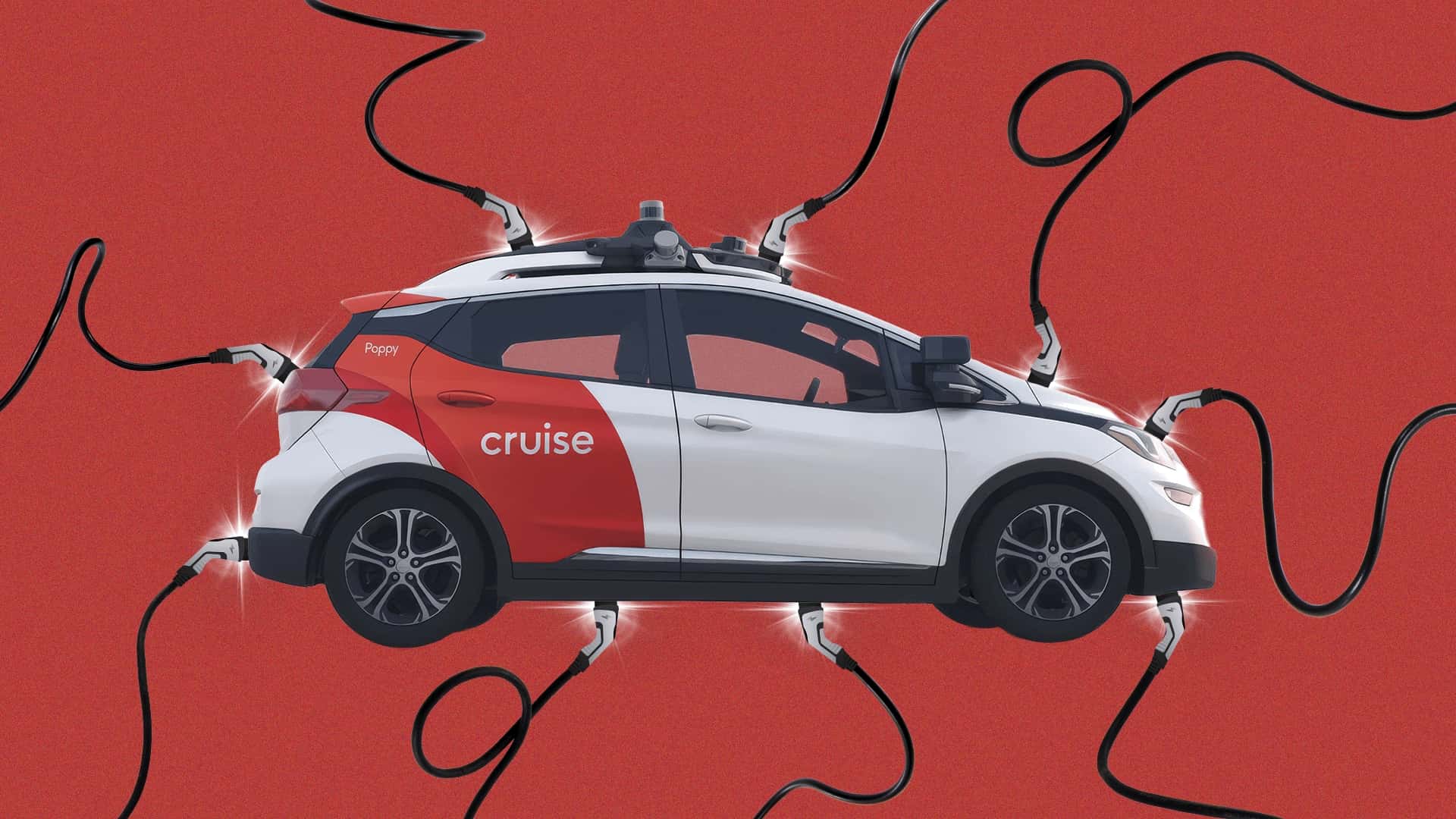
While electric vehicle (EV) owners are well-acquainted with factors like extreme temperatures, heavy loads, and high-speed driving diminishing their vehicle’s range, a significant yet often overlooked energy consumer is emerging: advanced autonomous and semi-autonomous driving systems. These sophisticated autonomous driving technology platforms demand substantial amounts of electricity to collect and transmit data, train artificial intelligence (AI) models, and power increasingly complex computers and sensor suites. The implications of this growing power demand are profound, potentially challenging the very efficiency and sustainability promises of the electric vehicle revolution.
Key Takeaways
- Autonomous and semi-autonomous driving technology consumes significant electricity for data collection, AI, and computing, impacting EV range.
- A 2023 MIT study projected that a fully deployed fleet of autonomous cars could consume more energy than all global data centers did in 2023.
- Robotaxis, envisioned to operate nearly 24/7, intensify energy demands, with early models consuming 1.5-3 kilowatts for autonomy alone.
- Industry leaders like Lucid and Rivian, in partnership with Uber, are investing heavily in Level 4 autonomy for robotaxis and consumer vehicles.
- Newer autonomous driving technology aims for significantly lower power consumption, targeting around 1-1.1 kilowatts, down from earlier averages.
- Automakers are developing custom silicon (e.g., Rivian’s RAP1 SOC) and optimizing sensor efficiency (e.g., solid-state Lidar) to reduce energy footprint.
- The industry is coalescing around a target of 500 watts for future self-driving technology to ensure decent range for electric autonomous vehicles.
The Exponential Rise in Energy Consumption
The energy footprint of advanced driver-assistance systems (ADAS) and autonomous driving technology is escalating at an alarming rate. As vehicles transition towards higher levels of autonomy, the demand for computing power and data processing grows exponentially. This surge in electrical requirement directly affects the practical range and operational costs of electric vehicles, particularly in large-scale applications such as robotaxi fleets.
According to Kay Stepper, Lucid Motors’ vice-president of ADAS and autonomous driving, “autonomy directly impacts your range and miles-per-charge, and also how often you have to recharge,” He further noted, “We’re seeing an exponential increase in memory and compute demands,” highlighting the core challenge facing EV manufacturers and autonomous tech developers.
The Robotaxi Revolution and its Demands
The vision for autonomous vehicles extends beyond personal cars to large-scale robotaxi services. Companies like Uber, whose CEO Dara Khosrowshahi has articulated a “trillion-dollar-plus” market opportunity, project between 700,000 and 3 million robotaxis on global roads by 2035. This ambitious scale-up raises critical questions about energy infrastructure and vehicle efficiency.
Unlike human-driven taxis, robotaxis are designed for near continuous operation. Stepper emphasized this operational model, stating, “As an asset, a robotaxi has the ability to be operated even 23 hours a day, with maybe an hour for DC charging, maintenance and cleaning.” This relentless operational cycle, while economically attractive, places immense pressure on battery capacity and charging logistics, making energy efficiency for autonomous driving technology paramount.
Case Study: Uber’s Strategic Partnerships
Leading the charge in autonomous mobility, Uber has forged significant partnerships with EV manufacturers. In April, Uber substantially increased its investment in Lucid Motors to $500 million, committing to acquire at least 35,000 Gravity SUVs and future midsize models for taxi services in numerous cities, commencing with San Francisco later this year.
Similarly, Rivian is set to receive up to $1.25 billion from Uber to deploy robotaxis across 25 cities in the U.S., Canada, and Europe by 2031. This initiative will begin in 2028 with a fleet of up to 10,000 R2 SUVs in San Francisco and Miami. These high-stakes investments underscore the urgency for automakers to develop more energy-efficient autonomous driving technology, as range and charging frequency directly impact the profitability of these vast fleets.
Understanding the Power Drain: Sensors and Computing
The core of autonomous driving technology relies on an intricate network of sensors and powerful onboard computers. Each component contributes to the overall energy consumption. Kay Stepper elaborated on the data demands: “A typical camera frame rate is 30 frames per second. Then you have five to 8 million pixels per frame. Now multiply that by 14 cameras, and add Lidar, radar and ultrasonic data.” These numbers, he noted, become “dizzying fast” when considering real-time processing.
These demands intensify as vehicles progress to higher levels of autonomy and navigate complex urban environments, where the majority of autonomous vehicles (AVs) are expected to operate. The computing power needed to synthesize this vast amount of data and make split-second decisions is a primary driver of energy consumption.
Early Models vs. Next-Generation Efficiency
Early iterations of autonomous vehicles demonstrated significant power demands. The Chevy Bolt from General Motors’ Cruise division, for example, consumed an “eye-opening 1.5-to-3 kilowatts” solely for perception and safe driving, according to Sam Abuelsamid, vice-president of market research at Telemetry. This was in addition to the regular power needs for propulsion, HVAC, and infotainment.
Such consumption levels translate to approximately 40 kilowatt-hours over a 20-hour shift for autonomy alone, equivalent to two-thirds of the Bolt’s original 60-kWh battery pack. This would necessitate frequent charging, hindering continuous operation. A stark example is the 2022 Ioniq 5-based AV developed by Hyundai for Motional, which had an EPA-estimated driving range of 168 miles, a 46-percent reduction from the consumer version’s 303 miles. This reduction was primarily attributed to its power-hungry autonomous driving technology.
However, newer AVs are showing improved efficiency. Rivian aims for approximately 1.1-kilowatt consumption for its Level 4 robotaxis, equating to 22 kWh over a 20-hour shift. Lucid’s system, in collaboration with AI company Nuro, targets similar usage. Even Waymo’s Jaguar I-Pace taxis dedicate about 1 kilowatt to self-driving, despite their extensive array of 29 cameras and five Lidar units. Newer models featuring Waymo’s sixth-generation AI “Driver,” such as Hyundai’s latest Ioniq 5 AVs and Zeekr’s Ojai minivan, are also expected to maintain similar power profiles.
The Broader Energy Footprint: Cloud Computing and Global Implications
The energy demands of autonomous driving technology extend beyond the vehicle itself. A 2023 MIT study highlighted the potential global energy impact, calculating that if one billion AVs drove for just one hour daily, utilizing 840 watts for autonomy—a figure well below current levels—they would collectively consume as much energy as the world’s data centers did in 2023. This projection underscores the critical need for efficiency gains, with the study suggesting each vehicle’s computing power should remain below 1.2 kilowatts to prevent AV emissions from exceeding 2023 data-center levels.
Sertac Karaman, an MIT professor of aeronautics and astronautics and a co-author of the study, emphasized the ongoing nature of this challenge: “One kilowatt per car seems a reasonable goal for the next three to five years, but we expect that the compute portion of transportation is going to be significant, and in many ways we’re just getting started.” He also noted that cloud-based training for AVs and the management of autonomous traffic systems, including smart city functions, would require boosted data center capacity, adding another layer to the overall energy equation.
Innovations in Efficiency: Automakers’ Strategic Responses
Automakers are actively tackling the energy challenge posed by autonomous driving technology through innovative approaches. Rahul Rithe, Rivian’s director of sensing systems, affirmed this industry-wide commitment: “There’s an industry-wide push to be more efficient.”
Lucid’s “Radical Efficiency” Approach
Lucid Motors is leveraging its core philosophy of “radical efficiency” across batteries, motors, and aerodynamics to counterbalance autonomy’s energy losses. This includes a strategy of designing smaller, yet highly efficient, battery packs. For instance, its sleek Lunar—a two-seat robotaxi concept—is projected to deliver up to 6 miles of driving range per kilowatt-hour of battery. A relatively small 55 kWh battery, compared to the forthcoming Cosmos model’s 69 kWh, could still achieve approximately 310 miles of range. Coupled with Lucid’s target for ultra-fast charging—adding around 200 miles of range in just 15 minutes—these efficiencies aim to minimize downtime and maximize the economic viability of robotaxi operations.
Rivian’s In-House Silicon Strategy
Rivian has opted to develop custom silicon in-house, moving away from previous Nvidia Orin processors and the newer Nvidia Drive Thor chips, which operate between 40 and 130 kilowatts. The company’s powerful “RAP1” system-on-a-chip (SOC) is central to its ambitious plans, capable of computing 800 trillion operations per second (TOPS) for sparse data. Rivian intends to combine two RAP1 chips to power its Gen3 autonomy module, set to debut in the R2 later this year, alongside its first onboard Lidar unit.
This integrated approach allows Rivian an edge in performance and efficiency. Compared to its previous Nvidia Orin unit, the Gen3 module offers four times the computing power and a twofold gain in TOPS utilization for its Large Driving Model, while consuming only 50 percent more power. Rithe emphasized, “Power wasn’t an afterthought. We saw an 8x improvement in performance without exploding our power budget.” Rivian also implements a “data flywheel” where real-world driving data from opt-in owners is offloaded to the Rivian Cloud, used for AI training, and then deployed back to customer cars via over-the-air (OTA) updates, focusing on unusual “edge cases” to optimize data transfer.
Advancements in Lidar Technology
Lidar, once a notable energy consumer due to motorized mirrors and bulky housings creating aerodynamic drag, has undergone significant transformation. The advent of solid-state circuitry has drastically reduced Lidar’s size, cost, and power requirements. Vidya Rajagopalan, Rivian’s senior vice-president of electrical hardware engineering, noted that its power usage can now be measured in the “tens of watts.” This advancement is critical for integrating efficient Lidar units, such as the streamlined sensor destined for the R2’s roofline, into modern autonomous driving technology systems.
The Path Forward: Industry Targets and Future Outlook
The automotive industry is actively working towards defining and achieving specific energy efficiency benchmarks for autonomous driving technology. Kay Stepper of Lucid Motors indicated a coalescing industry target: “We’re working to cut today’s power requirement by half, and get it down to 500 watts. That’s a working target, not published in any Lucid product plan, but a community and industry target.”
Sam Abuelsamid of Telemetry concurs that 500 watts is a realistic and crucial goal, suggesting it would be challenging to go significantly lower given the escalating compute needs. “Still, it’s crucial to get that number as low as possible to maintain decent range for an electric AV,” he stated. While the future scale of autonomous vehicles and their impact on overall miles driven remains uncertain, the concerted efforts by automakers and researchers to enhance the energy efficiency of autonomous driving technology are vital for a sustainable electric future.
Frequently Asked Questions (FAQ)
Q1: How does autonomous driving technology impact an EV’s range?
Autonomous driving technology significantly impacts an EV’s range by consuming substantial electricity for its sensors, computers, and AI processing. This additional power draw reduces the battery available for propulsion, leading to fewer miles per charge compared to a non-autonomous EV, especially in early models.
Q2: What is Level 4 autonomy and how does it affect energy consumption?
Level 4 autonomy means the vehicle can perform all driving tasks under specific conditions without human intervention. This advanced capability demands extensive sensor arrays and powerful onboard computing, leading to higher energy consumption than lower autonomy levels due to the constant data processing and decision-making required.
Q3: Are robotaxis more power-hungry than personal autonomous vehicles?
Robotaxis are designed for near 24/7 operation, which makes their total energy consumption significantly higher over a day. While their individual autonomous driving technology might target similar efficiency as future personal AVs, their continuous usage amplifies the overall power demand and necessity for frequent, fast charging.
Q4: How much power do current autonomous systems consume?
Early autonomous systems, like those in GM’s Cruise Bolt, consumed 1.5-3 kilowatts for autonomy alone. Newer systems in models from Rivian and Waymo are targeting around 1-1.1 kilowatts. The industry is striving to further reduce this to an ambitious goal of 500 watts for future autonomous driving technology.
Q5: What are automakers doing to make autonomous driving technology more efficient?
Automakers are pursuing several strategies, including developing custom, energy-efficient silicon chips (e.g., Rivian’s RAP1 SOC), optimizing sensor technology like solid-state Lidar to reduce power draw, and implementing overall vehicle efficiency designs (e.g., Lucid’s “radical efficiency” approach with smaller batteries and fast charging).
Q6: What are the broader environmental implications of widespread autonomous vehicle adoption?
A 2023 MIT study projected that a billion AVs operating for an hour daily could consume energy comparable to all global data centers in 2023. This highlights the critical need for energy efficiency in autonomous driving technology to prevent a significant increase in overall energy demand and associated greenhouse gas emissions, even if powered by renewable sources.