
The landscape of electric vehicle (EV) adoption presents a stark contrast across continents, with Europe experiencing robust growth while the United States market faces significant headwinds. Recent analyses indicate a challenging period for the US EV sector, with sales estimated to have declined by 28% in the first quarter of this year. This follows a modest 2% decrease last year, partly attributed to the discontinuation of the $7,500 federal tax credit for certain electric vehicles.
Conversely, Europe’s electric car market demonstrates strong momentum, recording nearly a 30% increase in sales last year. This upward trend has shown no signs of abating in the initial months of 2024. This divergence prompts a critical question: Could a selection of successful European electric vehicles, renowned for their affordability and practical design, revitalize the American market by filling a crucial void?

Navigating the Disparate EV Markets
The current state of the US EV market reflects a preference for premium segments and larger vehicles, leaving a noticeable gap for more accessible, budget-friendly options. This phenomenon is distinct from Canada’s approach, which is reportedly preparing to integrate Chinese-made EVs, a strategy unlikely to be replicated in the United States.
However, European automotive manufacturers offer a diverse range of electric vehicles that could potentially resonate with American consumers seeking reliable, no-frills transportation. The key to their potential success in the US market would undoubtedly be competitive pricing, avoiding the pitfalls encountered by more expensive imports.
The Need for Accessible Electric Mobility
For many potential buyers in the United States, the entry cost of electric vehicles remains a significant barrier. While luxurious electric SUVs and high-performance sedans dominate headlines, a substantial segment of the population seeks practical, everyday electric cars that align with more conservative budgets. This unmet demand suggests an opportunity for smaller, more efficient European electric vehicles.

The absence of a broad selection of affordable EVs means many consumers are left without viable electric options. Introducing models that prioritize utility, efficiency, and a lower price point could democratize EV ownership, fostering broader adoption and contributing to the overall growth of the US EV market.
European Contenders for the US Market
Several European electric vehicles stand out as prime candidates to bridge the affordability and practicality gap observed in the American automotive landscape. These models, successful in their home markets, offer a blend of design, performance, and efficiency that could appeal to a diverse range of US consumers.
Cupra Born: A Sporty Hatchback Alternative
- Price in Europe: from €40,450 (approximately $46,700)
- Range (WLTP): from 428 km (266 miles)
Cupra, a performance-oriented brand under the Volkswagen Group, had previously explored an entry into the US market. However, these plans have been paused due to prevailing market instabilities. Should Cupra reconsider its American expansion, the Born four-door electric hatchback presents a compelling offering.
Based on the same modular electric drive matrix (MEB) platform as the Volkswagen ID.3, the Born distinguishes itself with a more engaging driving experience. Its revised chassis setup and rear-wheel-drive powertrain contribute to a dynamic feel, setting it apart from more conventional electric commuters. With a base trim offering 204 horsepower and a sportier variant reaching 326 horsepower, the Born could challenge established rivals such as the Nissan Leaf and Chevrolet Bolt EV, providing a spirited alternative for those seeking an electric vehicle that is genuinely engaging to drive.
Fiat Grande Panda: Practicality Meets Approachability
- Price in Europe: from €24,990 (approximately $28,900)
- Range (WLTP): from 320 km (199 miles)
Fiat’s current US portfolio primarily features the electric 500e, known for its compact dimensions and urban chic appeal. While stylish, the 500e can be perceived as both costly and somewhat restrictive in terms of interior space for certain buyers. The introduction of the new Fiat Grande Panda EV could effectively address these concerns.
Designed as a more spacious yet equally unpretentious option, the Grande Panda boasts a larger, albeit more streamlined, cabin and a significantly lower price point. Despite its compact nature, the addition of four doors enhances its practicality. Its no-nonsense attitude is underscored by functional features like a built-in Level 2 charging cable integrated into its design. The vehicle’s chunky, robust styling also contributes to a more substantial road presence compared to other city cars that have struggled to gain traction in the American market, positioning it as an ideal candidate for urban mobility and first-time EV buyers.
Renault 5: A Revival of Compact Charm
- Price in Europe: from €28,000 (approximately $32,350)
- Range (WLTP): from 312 km (194 miles)
The Renault 5 carries a legacy, albeit a challenging one, in the American automotive narrative, recalling the brand’s earlier attempt with the “Le Car.” While that venture did not yield widespread success, a new, entirely electric Renault 5 has emerged in Europe, garnering significant acclaim. This modern interpretation masterfully blends nostalgic design cues with contemporary electric vehicle technology.
The new Renault 5 is celebrated for its attractive aesthetics, pleasant driving dynamics, and accessible pricing. Although small hatchbacks have historically faced an uphill battle in the US market, the distinctive appeal and inherent charm of the new Renault 5 could potentially challenge this perception. Its practical features, coupled with its engaging character, make it a strong contender for urban American consumers seeking a unique and efficient European electric vehicle. The option of quirky accessories, like a baguette holder, further highlights its unique, user-centric design philosophy.
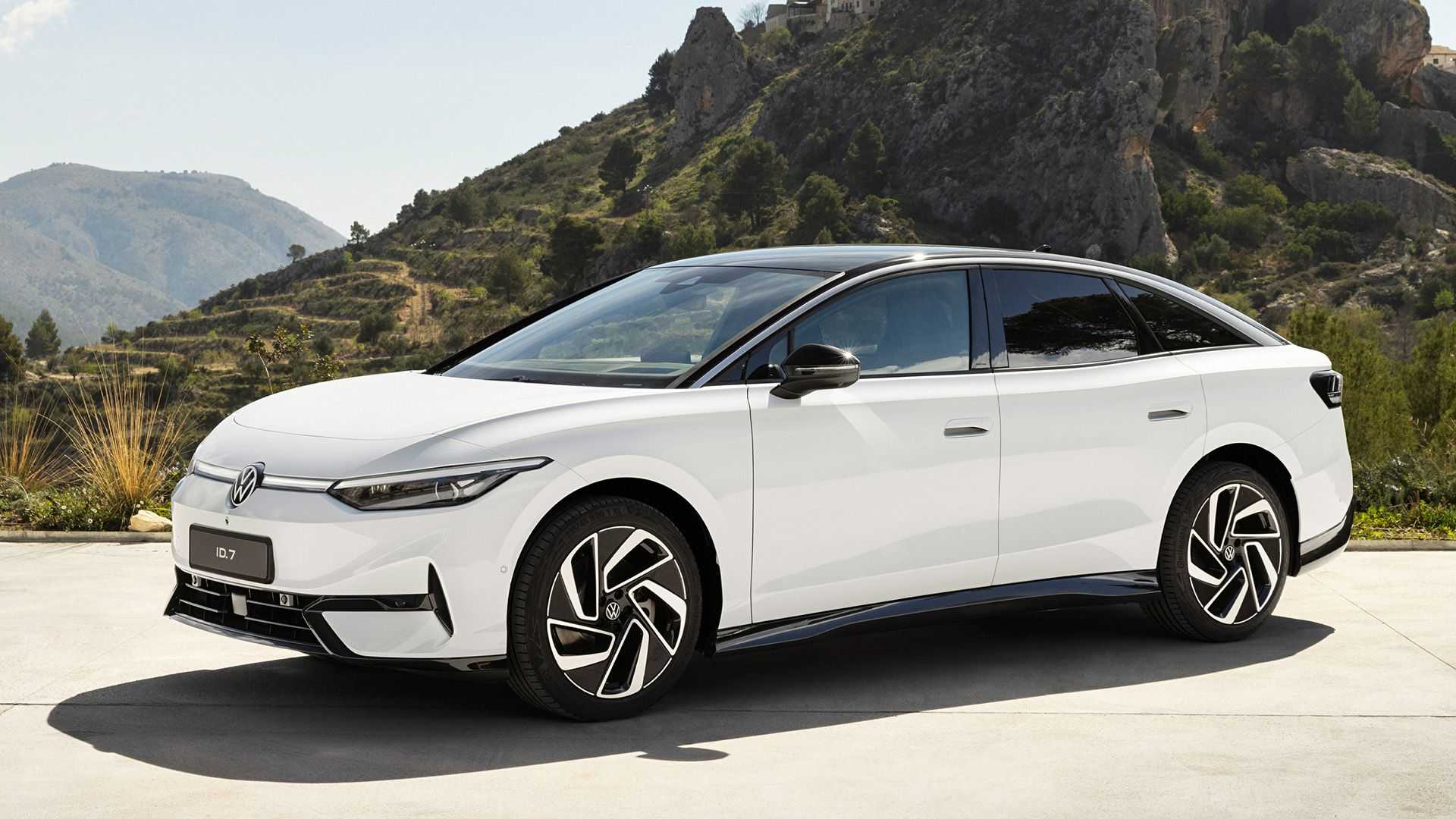
Volkswagen ID.7: The Electric Executive Sedan
- Price in Europe: from €54,505 (approximately $62,900)
- Range (WLTP): from 599 km (372 miles)
Among the vehicles listed, the Volkswagen ID.7 came closest to a definitive launch in the United States before the German automaker revised its plans. Citing a “challenging EV climate,” Volkswagen opted to defer its introduction. Positioned as an all-electric successor to the popular Passat sedan, the ID.7 offers a sophisticated and comfortable long-distance driving experience.
As observed by automotive journalists who have tested the battery-powered sedan on Germany’s Autobahn, the ID.7 excels as a smooth road-tripping machine. Its substantial range and refined ride quality could position it as a compelling alternative in the premium EV sedan segment, especially with the Tesla Model S exiting the market. The availability of a wagon version in Europe further expands its versatility, catering to families and individuals requiring greater cargo capacity. Reintroducing the ID.7 into Volkswagen’s US strategy could provide a much-needed, well-rounded electric sedan option.
The Path Forward for European Electric Vehicles in the US
The current state of the US EV market indicates a clear demand for greater diversity and affordability. While discussions around new federal incentives and charging infrastructure continue, the immediate opportunity lies in expanding the range of available models.
Introducing these successful European electric vehicles could serve as a strategic move to stimulate demand by offering practical, well-designed, and competitively priced alternatives to current market offerings. For the American consumer, this means more choices, potentially lower entry costs into electric mobility, and a broader embrace of sustainable transportation solutions.
Automakers considering this expansion would need to carefully assess market entry strategies, including pricing, homologation requirements, and establishing robust dealer and service networks to ensure a seamless experience for American buyers. The success of these vehicles would not only benefit individual brands but also contribute significantly to accelerating the overall transition to electric vehicles across the nation.
Key Takeaways: European EVs for the US Market
- The US EV market faces a significant slowdown, with a 28% sales drop in Q1, contrasting sharply with Europe’s nearly 30% growth last year.
- A critical gap exists in the American market for affordable, practical, and no-frills electric vehicle options.
- Four prominent European EVs—the Cupra Born, Fiat Grande Panda, Renault 5, and Volkswagen ID.7—are identified as strong contenders to fill this void.
- These vehicles offer diverse benefits, including sporty performance, urban practicality, unique design, and comfortable long-distance travel, at competitive European price points.
- Successful introduction into the US market hinges on strategic pricing and positioning to attract a wider consumer base seeking accessible and efficient electric mobility solutions.
Frequently Asked Questions (FAQ)
Why is the US EV market slowing down compared to Europe?
The US EV market’s slowdown, including a 28% drop in Q1 sales, is partly attributed to factors like the cancellation of certain federal tax credits. Europe, conversely, experienced nearly 30% growth last year, driven by different consumer preferences and regulatory environments that encourage EV adoption and offer a wider range of affordable models.
What gap could European EVs fill in the American market?
European electric vehicles could address the growing demand for affordable, practical, and no-frills options in the US market. Currently, many available EVs are in the premium segment, leaving a significant void for cost-effective models suitable for urban commuting or as secondary family vehicles, thereby broadening EV accessibility.
Is the Cupra Born a suitable alternative to current US EVs?
Yes, the Cupra Born, with its sporty rear-wheel-drive dynamics and 204-326 horsepower, offers a more engaging driving experience than many existing compact EVs. Priced from approximately $46,700 in Europe, it could serve as an attractive, spirited alternative to models like the Nissan Leaf and Chevrolet Bolt EV, targeting drivers seeking performance and style.
What makes the Fiat Grande Panda appealing for US consumers?
The Fiat Grande Panda’s appeal lies in its practicality, lower price point (from about $28,900 in Europe), and four-door configuration, addressing the cramped interior and higher cost concerns of the 500e. Its unpretentious, chunky styling and integrated Level 2 charging cable make it an attractive, functional choice for urban American buyers.
Could the new Renault 5 succeed where the ‘Le Car’ failed in the US?
Despite the original Renault 5’s limited success as the ‘Le Car’ in the US, the new electric Renault 5 offers a fresh opportunity. Its acclaimed design, pleasant driving dynamics, and accessible European price (from approximately $32,350) could captivate American consumers looking for a charming, efficient, and uniquely styled compact electric hatchback, challenging historical preferences.
Why was the Volkswagen ID.7’s US launch postponed?
Volkswagen postponed the ID.7’s US launch, citing an “ongoing challenging EV climate.” However, as an all-electric alternative to the Passat, offering a smooth ride and substantial range (372 miles WLTP from about $62,900 in Europe), it remains a strong candidate. With the Tesla Model S out of the picture, it could fill a premium electric sedan gap.
What are the primary challenges for European EVs entering the US?
Primary challenges for European electric vehicles entering the US include adapting to different regulatory standards (homologation), establishing charging compatibility and infrastructure, building brand recognition, and developing robust dealer and service networks. Crucially, pricing these vehicles appropriately to remain competitive and attractive to American consumers will be paramount for their market acceptance.